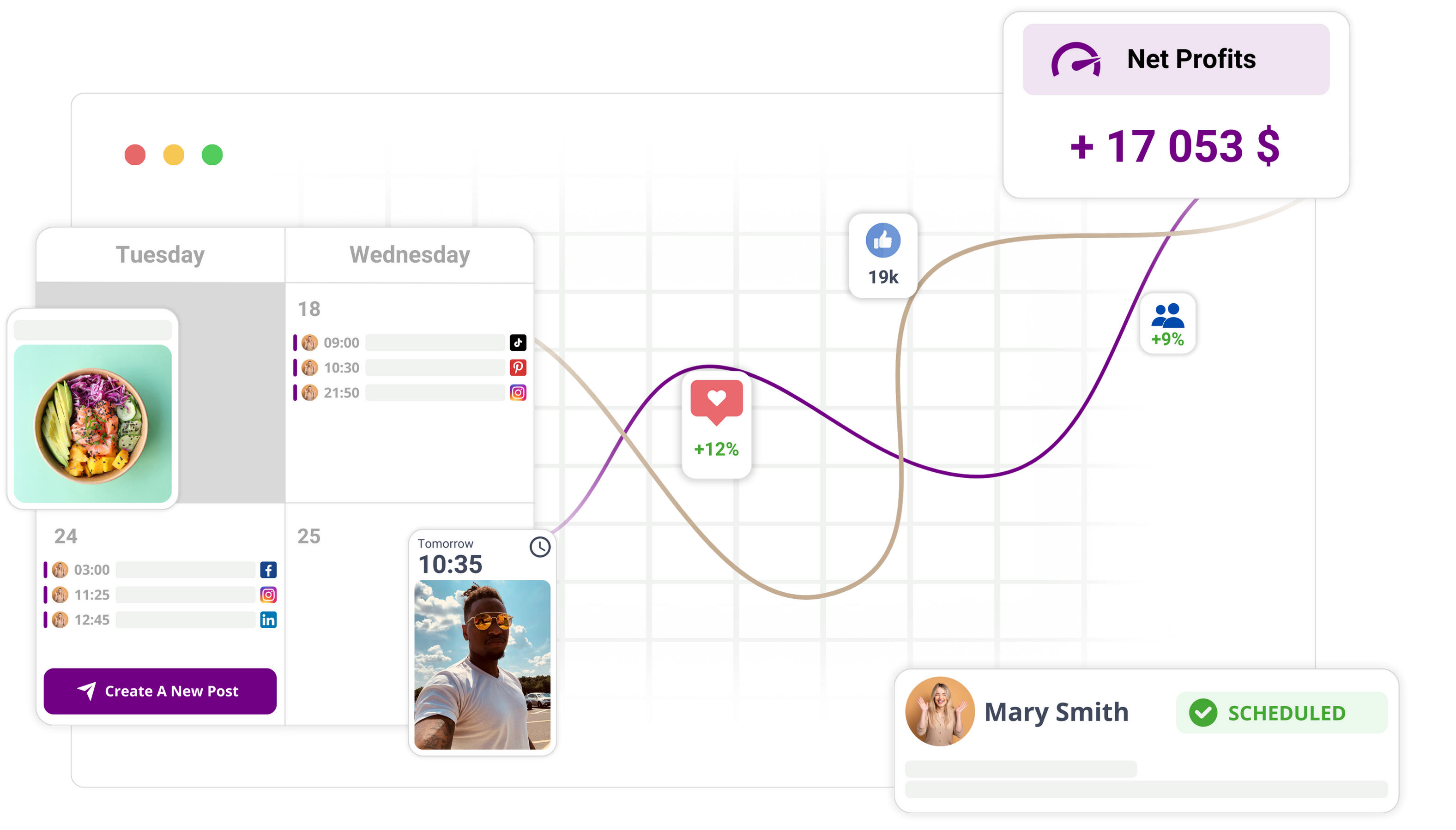
You will complete the setup of a controlled, repeatable social publishing workflow by the end of this guide. Using the Automation builder, you can remove repetitive manual tasks from your daily schedule and ensure that status updates and permissions remain visible across your team.
Before you start
Ensure you have completed these prerequisites to avoid errors during the configuration process:
- Verify that all required social profiles are connected and active under the Profiles tab.
- Confirm that you have the necessary administrative permissions for each social profile you intend to include in your workflow.
- Ensure your content or media assets are prepared and accessible for upload into the Mydrop gallery.
- Check your team access settings to ensure that relevant members can view the new automation status and history.
Building your first automation
Follow these steps to configure your automated publishing workflow.
- Open the Automations tab from the main navigation menu.
- Click the button to create a new automation. This opens the builder interface where you define your workflow settings.
- Select your target social profiles or profile groups. The builder will only allow you to proceed once at least one valid destination is chosen.
- Configure the trigger type. You can set specific time intervals, such as daily, weekly, or custom recurring patterns, to determine when Mydrop initiates the workflow.
- Input your content in the provided text area. You can also specify any required media or platform-specific options. Ensure all mandatory fields, marked by clear labels, are populated to avoid submission blocks.
- Review your workflow settings. Check that the chosen interval matches your intended publishing frequency and that all profiles are correctly mapped.
- Click the save button to activate the automation.
Verifying the setup
After saving, confirm the workflow is ready for execution.
- Navigate back to the main Automations dashboard to view your new workflow in the active list.
- Check the status indicator to ensure the system recognizes the configuration as active.
- Use the run once button if you need to perform an immediate manual test of the workflow before the scheduled time.
Managing your automations
Once your automation is live, you can modify its behavior at any time.
- To pause a workflow, locate it in the list and select the pause option. This prevents scheduled posts without deleting your configuration.
- If you need a similar workflow for a different set of profiles, use the duplicate function to copy your existing settings, then edit the profile selection.
- To make permanent changes, select the edit option. After updating parameters, remember to save the configuration again to apply the new settings.
- If a workflow is no longer needed, select the delete option. This removes the automation and stops all future scheduled actions associated with that specific rule.
Common mistakes and troubleshooting
Avoid these common issues to maintain smooth operation:
- Selecting profiles without verifying they are still connected can lead to failed workflow triggers. If an automation fails, check the Profiles tab to ensure no connections have expired.
- Choosing invalid time intervals, such as dates in the past or unsupported frequencies, will prevent the save button from enabling.
- Neglecting to save after making adjustments is the most frequent cause of inactive workflows. Always verify the status on the dashboard after clicking save.
- If you receive a permission warning, check the specific social platform's settings within Mydrop to ensure your authorization has not been revoked.
Step 1: Open the feature
To begin creating a new workflow, navigate to the main Mydrop menu and select the Automations tab. This section serves as your central dashboard for all automated publishing tasks. Once the page loads, look for the button labeled to create a new automation, typically located at the top of the list or interface.
Click this button to open the Automation builder. This builder is a dedicated interface where you map out your publishing logic, from the initial trigger to the final post output. If you have existing automations, they appear in a list below the create button. Your new automation remains in a draft state within this builder until you complete the required configuration fields and save the workflow.
When the builder opens, you will see a series of sequential steps that guide you through the process. Ensure you remain in this interface throughout the setup. Navigating away from the builder without saving your current configuration may result in the loss of progress on your draft. If the interface does not load or you see a loading indicator that persists for an extended period, refresh the page and verify that your browser has an active network connection.
Step 2: Set up the basics
After opening the builder, you must define the foundational settings for your workflow. The first required step is selecting the profiles or profile groups that will receive the content generated by this automation.
- Locate the profile selection area within the builder.
- Select the specific social accounts or groups from the list.
- Confirm your selection to ensure the workflow knows where to distribute your content.
Choosing the correct profile group is critical. If you skip this step or select the wrong group, your content will not reach the intended destination, or it may be sent to the incorrect social media channels. Mydrop validates these selections based on the account permissions you established in the Profiles tab. If a profile group is grayed out or unavailable, verify that you have successfully connected that specific platform and that your authentication credentials are current.
Next, define the trigger type for your automation. The trigger determines when Mydrop initiates the publishing process. Within the builder, choose the trigger type that aligns with your campaign requirements. Depending on the type selected, you may need to configure specific interval details:
- Locate the trigger configuration section.
- Choose your preferred trigger type from the available options.
- If you select a time-based trigger, use the time-picker or date-interval fields to specify exactly when the automation should run.
- If the workflow requires recurring posts, set the frequency, such as daily or weekly, using the day-interval options provided.
Accurate configuration of these timing controls ensures that your publishing remains consistent. Double-check your interval settings to prevent overlapping posts or unexpected scheduling gaps. For example, if you intend for an automation to run once per day, ensure you have not accidentally configured it to trigger multiple times within the same hour.
After configuring the triggers, the builder will display the visual layout of your current setup. Review the selected profiles and timing parameters on the screen to confirm they match your intended workflow. If you notice an error in the timing or the selected account groups, you can return to these fields to adjust them before proceeding to the content configuration steps. The builder will indicate that the basics are defined before allowing you to move forward.
Step 3: Add the content or settings
With your triggers and profile groups defined, you must now provide the specific content or publishing requirements for the workflow. This ensures that when the automation triggers, Mydrop has the necessary instructions to generate your post according to your brand standards.
- Locate the content input area. You will see a text prompt field where you can draft the caption or message intended for your social channels.
- Enter your text. If you need to include placeholders or specific formatting, ensure it aligns with the platform-specific requirements for the profiles you selected in the previous step.
- Add your media. Use the media upload options to attach images or videos. If you are integrating designs from external services, ensure they are correctly imported into your gallery before attaching them here.
- Define your post options. Use the available dropdowns and toggles to specify any required publishing settings, such as link inclusion, tag placement, or comment management preferences.
- Check for completeness. If the form shows a loading state or validation alert, pause to ensure all required fields are filled. Missing media or an empty text prompt will prevent the automation from saving successfully.
This step is critical because it standardizes the output. By filling out the prompt carefully, you remove the need for manual edits later, allowing Mydrop to handle the publishing consistency across your chosen profiles. Verify that the content is appropriate for all selected profiles, as the automation will apply these settings to every destination in the group.
Step 4: Review the workflow
Before finalizing your work, you must verify the configuration to confirm the automation will behave as intended. Performing this review prevents errors such as incorrect publishing times or accidental delivery to unauthorized accounts.
- Scan the summary view. Mydrop displays the current configuration, including your chosen trigger type, the interval settings, the target profiles, and the content provided.
- Verify the schedule. If you selected an hour interval or a specific day setting, confirm that the timing matches your campaign goals. An incorrect interval is the most common cause of unexpected publishing frequency.
- Check permissions. Ensure that every profile in your selected group is still active and connected. If a profile displays a warning icon, you must return to the Profiles tab to refresh the connection before saving the workflow.
- Save the configuration. Click the save button to activate the automation. Once saved, you will be redirected to the main Automations dashboard.
- Confirm active status. In your dashboard, ensure the newly created workflow appears with an active status. You should see a clear visual indicator that the automation is ready to run.
Reviewing your work ensures that you have successfully handed over the manual task to Mydrop. If you notice an error immediately after saving, you can select the automation to edit the settings or delete the configuration to start over.
Once saved, the system tracks the status and permissions of each automated task. If a post fails to publish, the dashboard will provide a status alert, allowing you to quickly troubleshoot the issue rather than discovering it after a missed publishing window. If you need to test the workflow immediately, you can use the run once option to perform a single execution without waiting for the next scheduled interval. This allows you to confirm that the content and media appear correctly on your live social profiles before the system begins its automated cycle. After this verification, your workflow is fully operational and will continue to perform as defined until you decide to pause or delete it.
Troubleshooting and next steps
If you encounter issues while configuring or running your automation, review these common scenarios to resolve the problem quickly. If the automation fails to trigger, first check that the social profiles included in your selected group still maintain active connections. If you recently updated your credentials on a social network or revoked Mydrop access, you must visit the Profiles tab to refresh the connection before the automation can resume publishing.
If you find that posts are not appearing at the expected times, verify your interval settings. Ensure you have not selected conflicting time frames, such as overlapping hour or day intervals. You can adjust these settings at any time by selecting your active automation and choosing the edit option from the menu.
If your content prompt appears incomplete or contains errors, review the text prompt area in your configuration. Ensure that your text is correctly formatted and that all required media files are properly uploaded and attached to the workflow. If the system reports a missing requirement, check the platform-specific options for each social network you selected to confirm that the format meets the requirements of that specific channel.
For ongoing management, the Automations dashboard provides several options to keep your workflows current:
- Pause: Select this option if you want to temporarily stop an automation without deleting the configuration. This is useful for holiday periods or when you need to pause content production.
- Duplicate: Use this to create a copy of an existing, successful workflow. You can then adjust the profile group or time intervals for a new campaign without building the entire process from scratch.
- Run once: If you want to test your configuration immediately, select this option to trigger the workflow once outside of your scheduled interval. Use this to verify that the post formatting and media attachments appear as expected on your connected profiles.
- Delete: Use this to permanently remove an automation that you no longer need. Note that this action cannot be undone.
Regularly monitor the status column in your main Automations list. This view provides real-time information on whether your workflows are active, paused, or currently waiting for the next scheduled trigger. Keeping an eye on these status indicators ensures that you catch any permission or connection issues early, keeping your social publishing consistent and reliable.
Conclusion
By using the Automation builder, you have successfully transitioned from manual, repetitive social media tasks to a controlled, repeatable workflow. You now have the capability to schedule content across multiple platforms while ensuring that your publishing status and profile permissions remain visible and organized within Mydrop.
As you become more comfortable with this feature, consider creating separate automation workflows for different content types or specific campaigns. You can maintain multiple active workflows simultaneously, allowing you to manage diverse social strategies from a single location. By centralizing these processes, you reduce the risk of missed posts or scheduling conflicts, allowing you to spend more time focusing on your overall social media results. Use the tools provided in the Automations dashboard to refine your process whenever your content strategy evolves, ensuring that your publishing remains efficient and aligned with your goals.