

Scaling social media operations should not feel like managing a digital bureaucracy. When your team spends more time navigating tool permissions and rigid publishing queues than actually engaging with your community, you have outgrown the system, not the strategy. High-growth brands are moving away from legacy enterprise platforms to Mydrop because it replaces complex, isolated workflows with a unified, high-velocity workspace that finally lets teams move as fast as the trends they are chasing.
The quiet frustration of losing hours to platform friction-that sinking feeling when a simple multi-brand campaign requires five different approvals and three disconnected login sessions-is the first sign it is time to consolidate. You are likely paying an "enterprise tax" in the form of hidden hours lost to tool-hopping. Moving your team to a unified nervous system where the inbox, calendar, and analytics talk to each other in real-time is the only way to escape the grind.
TLDR: Teams switching to Mydrop see a 40% reduction in "handoff time" by eliminating fragmented tools in favor of a unified composer and integrated inbox-rules engine.
Why the old tool starts cracking at multi-brand scale
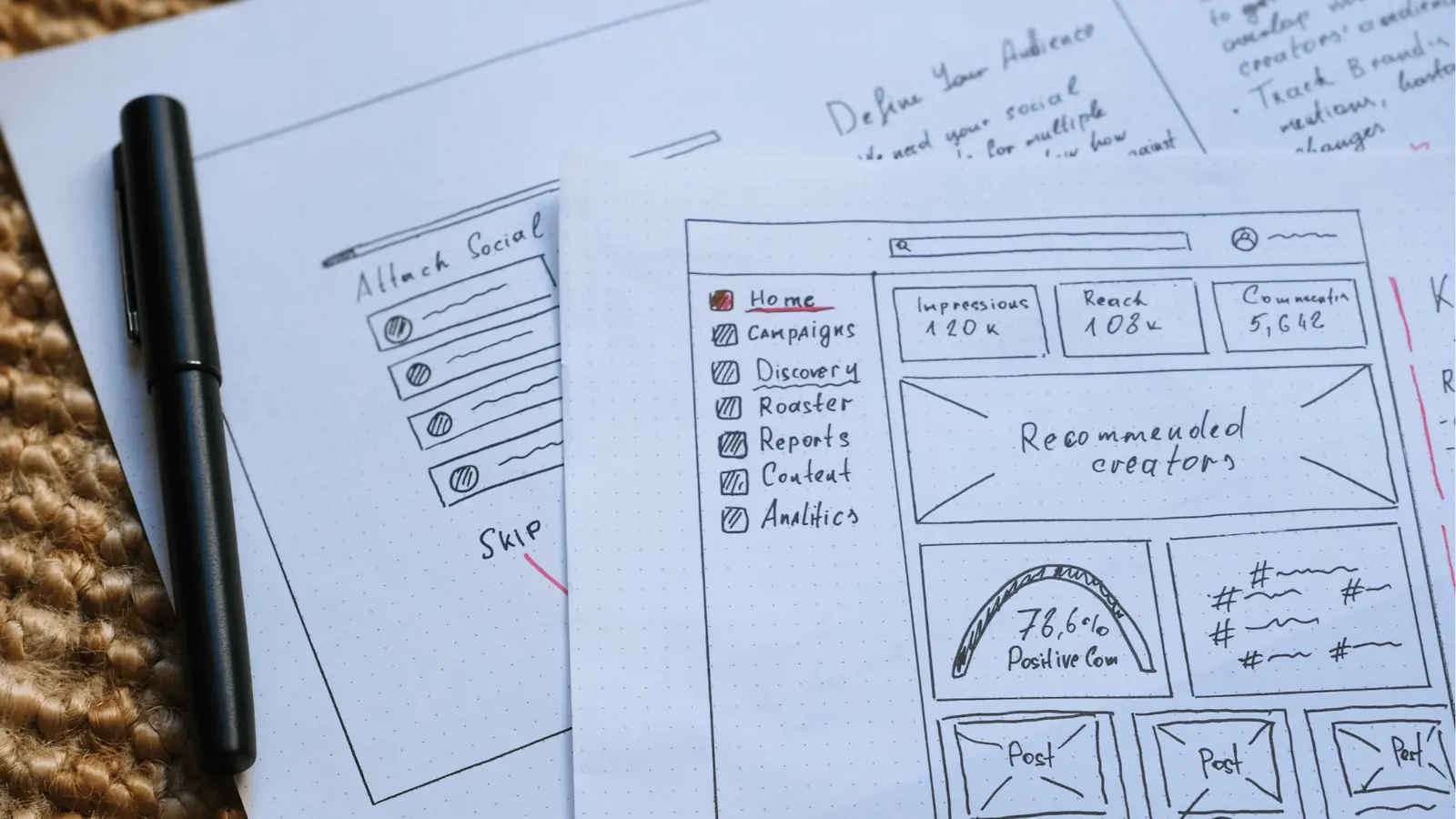
Enterprise social tools were built to solve the problem of "preventing rogue posts." While that was necessary ten years ago, today it acts as a bottleneck. When you manage five or more brands, you are not just managing content; you are managing context. Legacy tools treat every account as an isolated silo. To change your perspective, you have to log out, switch profiles, and lose your place.
This is where the High Velocity workflow breaks down. If your team is managing different market segments or sub-brands, they are likely jumping between disconnected tabs to check the inbox, review a calendar, and pull performance reports.
The real cost of this fragmentation shows up in three specific ways:
- Context Loss: Every time an operator switches brands, they lose the mental thread of the conversation.
- Delayed Handoffs: Approvals wait in a separate, clunky module that doesn't talk to the actual post-creation flow.
- Analytics Lag: You have to export data from three different places just to see if your morning campaign actually landed.
The real issue: Legacy platforms force you to work in silos because they were designed for risk containment, not collaborative speed. They treat your social presence like a static asset to be guarded rather than a live conversation to be nurtured.
If your current process requires you to manually copy-paste community insights into a separate spreadsheet just to inform next week's content calendar, you have a broken link in your chain. Modern teams need a system that treats community sentiment as the primary input for future creative.
When we look at high-performing teams, they prioritize fluidity over rigidity. Here is the framework they use to decide if they need to switch:
- Access: Can anyone on the team jump into a brand-specific inbox and see the current queue without a manual permission request?
- Compose: Does your composer allow you to map one core campaign idea to five different platform formats without losing the custom nuance of each?
- Analyze: Can you see the direct correlation between an inbox reply and a post's engagement metrics in the same dashboard?
If you answered "no" to any of those, your tool is actively slowing you down. The transition to a unified workspace like Mydrop isn't just about a new interface; it is about stopping the "tool-hopping" tax that kills campaign relevance before the post even goes live. Your tool should support your creativity, not manage your compliance. If it takes more than three clicks to move from an inbox reply to a post performance check, your workflow is leaking time.
The coordination cost nobody budgets for

Most teams treat their social software as a fixed utility, like email or office space, failing to realize it is actually a production machine. When your tool requires a specialized "handoff" for every single asset, you are effectively paying an invisible tax in time, focus, and creative energy.
Every time a community manager needs to ping a designer for a thumbnail tweak, then chase a compliance officer for an approval, and finally wait for a project lead to hit "publish," you aren't just losing minutes. You are losing momentum. If your team manages five brands, that friction multiplies across five sets of stakeholders, creating a chaotic web of Slack messages and half-finished email threads. This is the coordination debt that eventually cripples large teams, turning a creative department into a glorified clearinghouse for status updates.
Most teams underestimate: The cumulative cost of context-switching between your internal approval tools (like Slack or Jira) and your external publishing platforms. Every time you leave the workspace to ask for a status update, your team loses the thread of the campaign narrative.
When your software acts as a gatekeeper rather than a bridge, your best talent spends half their week doing administrative triage. You might see this as "process," but in a high-velocity environment, this is just operational lag.
| Coordination Challenge | Legacy Enterprise Tools | Mydrop |
|---|---|---|
| Approval Flow | Multi-step external email chains | Integrated, in-app notifications |
| Asset Handoffs | Shared drive links, manual syncing | Native media-to-post attachment |
| Status Updates | Manual Slack/DM follow-ups | Centralized Calendar & Reminder view |
| Cross-Brand Speed | Account switching/re-login | Unified profile switching |
How Mydrop removes the extra handoffs

The solution to coordination debt is not better communication-it is less communication. By pulling the entire lifecycle of a post-from the first creative seed to the final engagement report-into a single, high-velocity workspace, Mydrop allows teams to stop managing their software and start managing their community.
Instead of hunting for the latest version of a graphic across five different folders, the creative team links assets directly to the post in the composer. Instead of waiting for a calendar sync to understand the week’s schedule, community managers look at the shared calendar where the entire lifecycle of the campaign is visible, including pending tasks and upcoming reminders.
Operator rule: If a team member has to ask "What is the status of this?" more than twice, your tools have failed to provide the necessary visibility. Your workspace should act as a single source of truth, not a file cabinet.
Here is how high-growth teams typically shift their workflow when they switch to a unified pulse:
- Intake: Create a
Reminderfor a new campaign piece, setting the deadline, service links, and creative requirements directly in the calendar. - Creation: The designer attaches the final media file to the
New postcomposer, ensuring the metadata is captured from the start. - Review: Stakeholders receive an in-app notification to review the draft, eliminating the need to leave the platform or chase down links.
- Publishing: Once approved, the post moves automatically to the live queue without further manual intervention.
- Analytics: Engagement metrics flow back into the same
Post performancedashboard, showing you the real-world result of that initial creative idea within the same interface.
This is the Unified Nervous System in practice. By keeping your inbox, your publishing schedule, and your analytics in one place, you remove the "coordination tax" entirely. When your inbox-routing rules actually talk to your publishing queue, community feedback immediately informs your next content sprint. You stop guessing what your audience wants and start responding to the data in real-time.
When your tools stop acting as a barrier, the entire pace of your operation shifts. You find that you are not just publishing faster-you are publishing with more confidence, more consistency, and much less administrative dread. You don't need a larger team to handle more brands; you just need a platform that stops demanding you manage the mess between the channels.
The migration checks that prevent a messy switch

Moving your social operation to a new home is easier when you map out your "operational gravity" beforehand. Most teams fail during migration because they try to force their old, broken habits into a superior tool. Instead of lifting your entire legacy mess, audit your current setup to see what is actually essential and what is just noise.
Common mistake: Trying to replicate 1:1 every folder structure, permission quirk, and manual workflow from your legacy tool. Your goal is not to rebuild the past, but to fix the bottlenecks that made you look for a new platform in the first place.
Before you flip the switch, run this audit to ensure your team is ready for the velocity of Mydrop.
- Data hygiene check: Clean out stale social profiles and connected ad accounts that no longer serve a business purpose.
- Approval pruning: Identify which approval steps are actually mandatory for compliance and which ones are just "managerial theater" that slows you down.
- Rule simplification: Audit your current inbox triggers; if you have more than 15 automated routing rules, you are likely over-engineered and need a reset.
- Asset centralization: Ensure your team media is ready for upload, rather than scattered across five different cloud storage platforms.
- Stakeholder alignment: Define exactly who needs view-only access versus full collaborative publishing rights to avoid the "too many cooks" syndrome on day one.
Operator rule: A migration is a forced-choice moment. If a workflow or a specific report format is not helping you hit your growth targets, do not port it over. Treat the move as an opportunity to shed your operational baggage.
The low-risk pilot that proves the switch

The fastest way to validate the transition is to run a "shadow campaign" with a single brand or a focused team. Do not attempt a full-enterprise flip across all markets on day one. Choose a low-stakes, high-visibility project where the team can feel the difference in speed immediately.
This pilot phase allows your power users to experience the unified dashboard without putting your entire social strategy at risk.
KPI box: Monitor these three metrics during your first 30 days on Mydrop:
- Time-to-Publish: Average duration from content concept to live post.
- Handoff Latency: Hours elapsed between asset creation and final internal sign-off.
- Inbox Health: The percentage of community messages responded to within your target SLA window.
Use this simple, non-negotiable workflow to test the system during your pilot:
Content Flow -> Intake -> Approval -> Validation -> Publish -> Report
- Intake: Centralize all campaign assets and briefs directly into the calendar, using the Mydrop reminder system to track deadlines.
- Approval: Use the unified composer to ping stakeholders, keeping the feedback loop tight within the platform rather than trapped in email chains.
- Validation: Review post previews across platforms simultaneously to ensure formatting is crisp and on-brand before the final hit.
- Publish: Let the system handle the nuances of platform-specific requirements while you focus on the engagement itself.
- Report: Open the analytics view immediately after the post goes live to see initial performance data, effectively closing the loop on your decision-making.
If your pilot team hits their targets faster with less back-and-forth, you have the proof you need to scale the adoption. If you find yourself gravitating back to your old tool's "features," look closely at why-you will likely find that you are actually missing a specific type of control that Mydrop handles differently.
Transitioning isn't just about moving your content; it is about reclaiming the time you currently spend playing "tool administrator." When you stop managing your software, you finally have the bandwidth to manage your brand.
When Mydrop is worth the move

You should make the switch when your team spends more time managing the "plumbing" of social media than actually producing the content that moves the needle. If your current tool forces you into a rigid, linear queue where a simple caption edit requires a separate email chain or a forced "status change," you are paying the coordination tax in full.
Mydrop is the right choice for teams that have hit the ceiling of what their "all-in-one" platform can handle. When you need to manage cross-platform publishing speed, high-volume community inbox rules, and deep analytics without losing the ability to pivot your strategy in real-time, the complexity of legacy enterprise platforms becomes a liability.
Operator rule: If it takes more than three clicks to move from an urgent community mention in your inbox to an approved publishing action, your workflow is leaking time and burning your team out.
Consider migrating to Mydrop if your operations look like this:
- You manage multiple brands with distinct voices and separate approval workflows.
- Your team constantly fights with "channel silos" where inbox, calendar, and analytics data live in disconnected tabs.
- Your current approval process is a bottleneck, not a safeguard, causing you to miss cultural moments because of system latency.
Quick win: Audit your last three "urgent" social campaigns. Count every manual handoff, login jump, or spreadsheet pivot required. If that count is above five, the friction isn't your strategy-it is your workspace.
If you are ready to test if Mydrop can restore your velocity, try this three-step pilot:
- Connect one secondary brand profile: Sync it to Mydrop and let your team use the Unified Inbox for 48 hours to handle community interactions.
- Execute one campaign: Map your content from the Calendar through to the Multi-platform Composer to see how much faster a single asset can turn into platform-ready posts.
- Analyze the gap: Compare the "time-to-publish" metrics between your legacy tool and this 48-hour Mydrop experiment.
Conclusion

The transition away from legacy social software is rarely about finding a "better" set of features; it is about finding a tighter, more responsive feedback loop. When your tools stop feeling like a barrier to entry and start feeling like an extension of your team's collective brain, you finally stop managing a bureaucracy and start managing a community.
Success on social media isn't won by how many bells and whistles your platform provides. It is won by how quickly you can turn a data signal into a creative response, and a creative response into an actionable post. Your tools should support your speed, not define your limits. Moving to Mydrop is a pragmatic step for teams that have decided they are done paying the enterprise tax and are ready to reclaim their focus. A great strategy dies in the space between the idea and the post-fix that space, and the rest of your operations will follow.