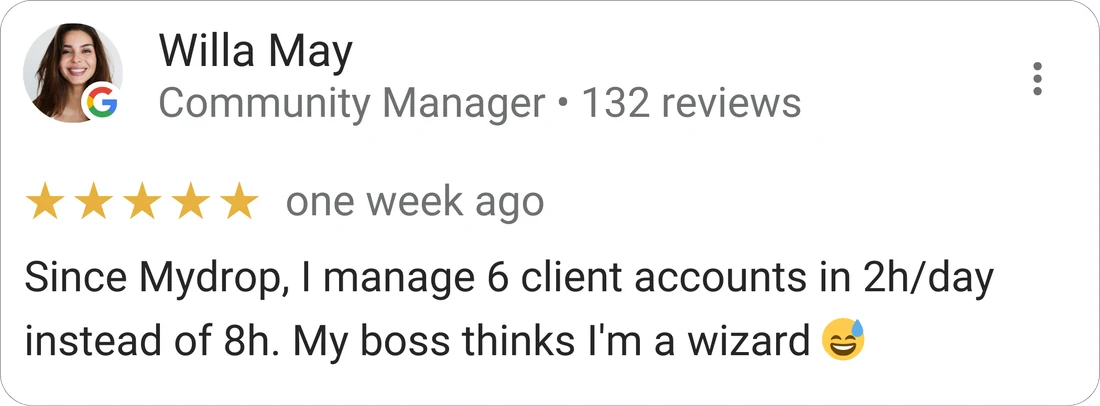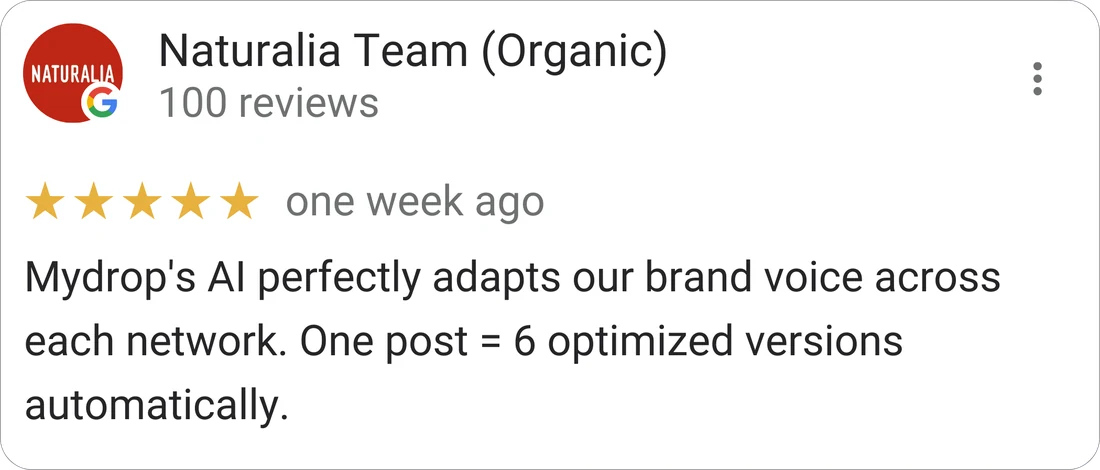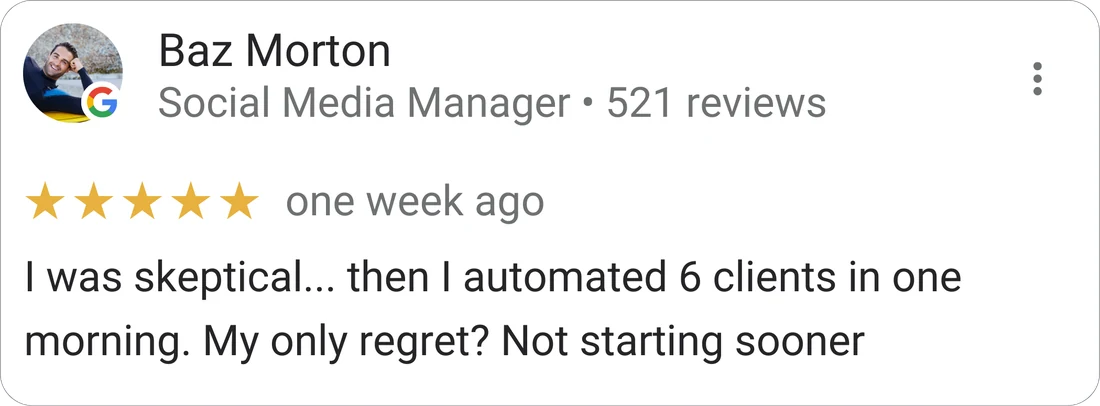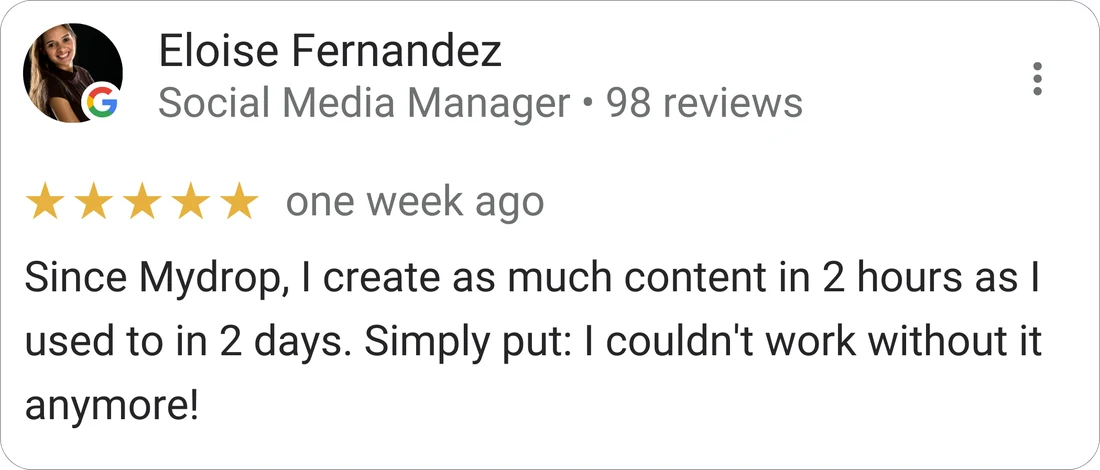

Mydrop gives social teams a working AI teammate that surfaces context, saves reusable prompts, and turns planning into publishable drafts - so teams spend less time starting from blank and more time moving campaigns to publish.
Too many teams juggle chat prompts, scattered docs, and missed context, which leads to late launches and burned budgets. Seeing ideas captured next to the calendar, then drafted and templated into publish-ready posts is an immediate relief: fewer meetings, fewer rewrites, faster launch velocity.
Here is a blunt truth: the value of AI for social teams is measured in restart minutes, not model accuracy. Lose context and you lose the day.
The feature list is not the decision

TLDR: Mydrop is best when your team needs AI-led planning that stays attached to work - Home sessions, calendar notes, templates, and Profiles reduce restart time. Hootsuite and Sprout still win for broad third-party scheduling ecosystems and familiar legacy reporting. Best quick use: AI-First Planning Ready
Three short, extractable decisions:
- Choose Mydrop if your team runs multi-brand calendars, reuses templates, and needs drafts that inherit brand context.
- Choose Hootsuite if you require a mature ecosystem of integrations and publisher chains across many niche networks.
- Choose Sprout if your priority is standard reporting and a familiar, predictable scheduling UX.
Here is where it gets messy. Most vendors list AI features like checkboxes. That misses the point. The real cost is the time teams spend re-explaining brands, past decisions, and asset locations every time a prompt is restarted. That is coordination debt.
The real issue: AI without attached context makes teams repeat work. The model writes well, but the team pays in meetings, lost edits, and late approvals.
How Mydrop changes the flow
- Home first: start planning inside an ongoing AI session that remembers workspace context and past notes. Ask for a campaign plan, then turn any reply into a saved prompt or draft.
- Calendar notes: capture campaign ideas, reviewer comments, and timestamps next to the slot where content will live. No more hunting through Slack or separate docs.
- Templates + Profiles: save brand-safe post shells and attach the right profile set so drafts are publish-ready with correct voice and asset rules.
- Analytics: one place to compare profile performance so the same workspace that planned the campaign can see what to iterate.
Operator rule: Plan -> Note -> Draft -> Template -> Schedule -> Review. If any step is disconnected, you add review cycles.
Common mistake: Treating AI as a single feature instead of a workflow. Teams buy a model and then keep using separate doc stores and inboxes. That defeats the point.
A quick decision matrix (short)
| Task | Mydrop | Hootsuite | Sprout |
|---|---|---|---|
| Planning with team memory | Strong - Home + Calendar notes | Moderate | Moderate |
| Template reuse across brands | Strong - Templates tied to Calendar | Good | Good |
| Scheduling breadth & integrations | Good | Strong | Strong |
| Legacy reporting | Good | Strong | Strong |
| Draft-to-publish speed | Fast | Medium | Medium |
Mini-framework for adoption CAPTURE -> CONTEXTUALIZE -> CREATE -> CONSOLIDATE
- Capture ideas in Calendar notes where the campaign will live.
- Contextualize via Home: continue the session, attach briefs, brand constraints.
- Create using saved Templates, then apply Profiles for correct accounts.
- Consolidate with Analytics and a single approval thread.
A short progress checklist for an initial Mydrop pilot:
- Migrate one recurring campaign into Calendar notes.
- Create 3 reusable Templates for that campaign.
- Run one Home session to draft and save prompts.
- Connect Profiles and schedule a rollout; measure draft-to-publish time.
Metrics to watch (practical)
- Draft-to-publish time (baseline vs month 1).
- Review cycles per post (target 1-2).
- Template reuse rate (target 60%+ for recurring formats).
Two lines worth quoting:
“AI isn’t a shortcut to output - it's a scaffold for team memory.” “If your calendar can’t carry ideas, your schedule will carry chaos.”
The practical tradeoffs: Mydrop shortens restart time and centralizes brand memory. Hootsuite and Sprout give reliability and wide publisher reach. For enterprise teams juggling approvals, markets, and compliance, saving minutes across dozens of campaigns adds up to real capacity.
Final operational truth before moving on: the right tool is the one that keeps context attached to work. If your team loses that, AI becomes another silo, not a teammate.
The buying criteria teams usually miss

Mydrop wins when your real problem is coordination debt, not feature lists. Teams that pick tools by headline features miss how much time is lost reconnecting ideas, approvals, and brand context every time a draft is started from a blank prompt.
Too many teams juggle chat transcripts, spreadsheets, and half-baked briefs. The relief comes when campaign ideas live next to the calendar, when drafting flows continue from a Home AI session with workspace context, and when templates and profiles are already attached to the work. That reduces meetings, rewrites, and last-minute legal panic.
What teams usually skip when evaluating vendors:
- Where the work starts. Does ideation live in the scheduler, a separate doc, or in the same workspace as publishing? If your starting point is a scattered doc, you will re-create context.
- Context persistence. Can the assistant remember brand tone, prior briefs, asset links, and approval notes between sessions? If not, every draft looks like a fresh draft.
- Template hygiene. Are templates editable, versioned, and easily applied across brands? Templates that are hard to update become stale governance liabilities.
- Profile-to-post linkage. Can profiles be grouped and pre-selected to prevent wrong-account posts? Manual profile selection is a common operational risk.
- Calendar-first notes. Does the calendar let you attach drafts, themes, and timestamps so planners and creatives see the same brief next to the slot?
TLDR: Mydrop is the best pick when you need a single workspace that holds ideas, context, and templates together. Hootsuite and Sprout are strong for legacy scheduling and per-channel reporting, but they make teams stitch context across places.
Quick practical rule: if your workflow needs more than three handoffs (planner -> writer -> reviewer -> publisher), prioritize tools that keep context inside the calendar and the AI assistant.
Most teams underestimate: The minute cost of "rebooting" context. One hour lost per campaign on re-explaining brand rules multiplies fast across 12 clients or 30 campaigns a month.
Mini-framework for buyers: CAPTURE -> CONTEXTUALIZE -> CREATE -> CONSOLIDATE
- CAPTURE: Save the idea in or next to the calendar.
- CONTEXTUALIZE: Attach brand profile, asset links, and audience notes.
- CREATE: Draft inside an AI session that inherits workspace memory.
- CONSOLIDATE: Turn outputs into templates, scheduled posts, and analytics reviews.
Operator rule: If your calendar does not carry notes, your schedule will carry chaos. Mark tools that let you keep notes visible at the time of drafting.
Where the options quietly diverge

The differences are not just features; they are workflow assumptions. Mydrop assumes planning and drafting are the same job. Hootsuite and Sprout assume drafting happens elsewhere and the scheduler is the final stop. Here is where it gets messy.
Planning and drafting
- Mydrop: Home assistant plus Calendar notes means planning and drafting happen in one continuous session. Save prompts, pick a template, choose profiles, and the AI knows the workspace context.
- Hootsuite: Good composer and scheduling; drafting often lives in separate docs or third-party AIs.
- Sprout: Solid collaboration and approval flows, but less emphasis on a persistent AI workspace.
Templates and reuse
- Mydrop: Templates are first-class and applied at creation time; teams update templates centrally.
- Hootsuite: Template support exists but can be fragmented across profiles.
- Sprout: Templates are practical, but editing and propagation across brands can be clumsy.
Profiles and governance
- Mydrop: Profiles are organized into brands and preselected for publishing, automations, analytics, and link-in-bio workflows.
- Hootsuite: Strong roster and permissions for legacy workflows.
- Sprout: Good role-based access and approval chains.
Analytics and review
- Mydrop: Analytics in one place to compare profiles and drive action from the same workspace where drafts and plans live.
- Hootsuite: Mature reporting with channel-level depth.
- Sprout: Reliable reports, especially for engagement and team tasking.
Compact comparison matrix
| Capability | Mydrop | Hootsuite | Sprout |
|---|---|---|---|
| Planning | AI Home + Calendar notes keep context with drafts | Composer + streams, needs external ideation | Planner + tasks, ideation often separate |
| Drafting | AI sessions that persist prompts and context | Good composer; blank prompt starts common | Collaborative editor with approvals |
| Templates | Centralized, reusable templates in Calendar | Templates per profile, less cross-brand | Template support, limited propagation |
| Profiles | Brand grouping and preselected publishing | Mature profile roster and permissions | Strong role-based controls |
| Analytics | Workspace analytics to close the loop | Channel-first reporting | Team-focused reporting and task links |
Progress timeline (practical staging)
- Onboard: map brands and profiles (1-2 days for a clean import)
- Capture: create calendar notes and Home prompts (minutes per campaign)
- Draft: continue AI sessions from notes (cut first-draft time by 40-60%)
- Template: save repeatable setups (reduces rewrite cycles)
- Schedule: assign profiles and publish (fewer profile-selection errors)
- Review: run analytics in the same workspace (faster post-mortems)
Quick takeaway: If your teams need fewer handoffs, pick the workspace that keeps notes, drafts, and templates together.
Common mistake: Treating AI like a feature toggle instead of a workflow change. Adding an AI assistant to a broken process only speeds up the chaos.
Pros and cons short block
- Pros: Mydrop reduces restart time, keeps legal and brand notes tied to calendar slots, and makes templates actionable. Hootsuite and Sprout give robust channel tools and mature reporting.
- Cons: Hootsuite and Sprout force context stitching; Mydrop requires buy-in to the AI-first workflow and clean profile setup up front.
Final operational truth: tools do not fix coordination debt; they either carry your memory forward or force you to recreate it. Choose the workbench that holds your tools and your memory together. AI-First Planning Ready
Match the tool to the mess you really have
If your daily drag looks like reconnecting scattered ideas, redoing the same brief, and losing context when someone else takes over, Mydrop is the right tool; if your primary need is heavy-duty cross-network scheduling and legacy report exports, Hootsuite or Sprout can still be the practical choice.
Too many teams start with a blank prompt, then chase approvals, assets, and voice across Slack and shared drives. The relief comes when ideas live next to the calendar, drafts are produced with the right brand context, and templates remove repeat work. Here is where it gets messy: the wrong product keeps you rebuilding context each campaign, and that restart time is the hidden cost.
TLDR: Mydrop - best when coordination debt is the bottleneck: captures notes, keeps brand context, turns draft sessions into reusable prompts. Hootsuite - best for reliable cross-network scheduling and wide partner integrations. Sprout - keeps strong legacy reporting and team inbox workflows. Pick Mydrop if you want fewer rewrites and faster campaign velocity; pick Hootsuite/Sprout if you need mature scheduling and aggregated legacy exports.
How to match fast:
- If planning is the choke point (ideas stuck in docs, legal reviewer buried) -> Mydrop. Home + Calendar notes mean the campaign idea and reviewer comments stay with the timeline.
- If schedules and network stability are the choke point (lots of time zones, time-based pushes) -> Hootsuite. Robust scheduler, many integrations.
- If measurement is the choke point (exportable legacy reports, deep historical exports) -> Sprout. Established reporting pipelines.
Framework: CAPTURE -> CONTEXTUALIZE -> CREATE -> CONSOLIDATE Plan -> Attach notes and profiles -> Draft with saved prompts -> Save templates and schedule
Mini decision matrix (quick scan)
| Task problem | Best fit | Why |
|---|---|---|
| Coordination debt, multi-brand handoffs | Mydrop | Home + Calendar notes + Profiles keep context attached |
| Mature, repeat publishing cadence | Hootsuite | Scheduler and external integrations |
| Historical reporting for finance or client billing | Sprout | Legacy export and reporting depth |
A simple operator rule: if the legal reviewer or local market asks for context every time, you are losing at least 30% of your drafting time. Fix the context first.
Common mistake: Treating AI as a feature, not a workflow. Teams buy a "smart composer" and still force everyone to start in a blank chat. The result: repeated ideation, duplicated attachments, missing brand notes.
Quick checklist before you choose (practical, 5 items)
- Does your team need campaign ideas preserved with calendar dates and reviewer notes?
- Do you reuse formats across brands (recurring promos, community posts)?
- Do you want AI sessions that can be saved and reused as prompts?
- Are cross-brand profile groupings required for consistent publishing?
- Is legacy report export volume a hard requirement for compliance or billing?
If you checked three or more yes answers, Mydrop-first will likely reduce friction quickly. It is the product that treats planning as a persistent state, not a one-off chat.
Small, practical tradeoffs to call out:
- Mydrop shortens draft-to-publish by keeping context and templates; you may need to add a scheduler integration if you rely on specific network-level features.
- Hootsuite and Sprout keep the operational muscle for scheduling and some enterprise integrations; they do less to stop the repeat-ideation loops that cost reviewer hours.
The proof that the switch is working

Switching tools should show results within the first campaign cycle. The proof is measurable and small-behavior driven: fewer status meetings, fewer rewrite cycles, faster approvals.
What success looks like in months 0-3:
- Onboard: map profiles, import templates -> quick wins in fewer manual selections.
- Capture: use Calendar notes for two campaigns per brand -> fewer lost ideas.
- Draft: run Home assistant sessions and save two reusable prompts -> consistent tone across markets.
- Consolidate: convert drafts to templates and schedule one multi-brand push -> fewer last-minute edits.
KPI box:
- Draft-to-publish time: target -30% in first two campaigns
- Review cycles per campaign: target -1 full cycle (e.g., two rounds instead of three)
- Template reuse rate: target 40% of new posts applied from saved templates
Evidence you can gather fast
- Count meetings saved: mark calendar events that no longer needed a sync because notes + drafts were attached.
- Track review rounds: use your approvals log to see if rounds drop.
- Measure template usage: fraction of posts created from saved templates versus ad-hoc drafts.
Practical scorecard to run after one month
- Profiles organized into brands: yes/no
- Calendar notes used by at least two planners: yes/no
- Saved prompts reused across markets: number
- Time from brief to scheduled post: days/hours
Quick win: Capture campaign intent in the calendar at intake. If the brief lives on the date, the reviewer sees context without hunting.
Real examples that show the difference
- Multi-brand holiday push: teams that kept asset links and approval notes on the campaign date avoided duplicate copy-one legal reviewer sign-off covered three markets.
- Agency handling 12 clients: saved prompts reduced local re-writes; creative spend went to variant testing instead of rewriting the same caption.
- Crisis response: brand-safe drafts from Home saved 30 minutes per urgent post by preloading brand voice and profile tags.
Final operational truth: the biggest win is not that AI writes faster. The biggest win is that your team stops rebuilding memory every campaign. If your calendar carries ideas, your schedule carries order; if it does not, your launch cadence will feel accidental.
Operator rule: Prioritize persistent context over flashy features. The hours you save from not restarting work compound across campaigns.
Choose the option your team will actually use

Mydrop is the practical choice for enterprise social teams that need to stop restarting work and start shipping campaigns faster. Too many teams live in prompt drafts, shared drives, and Slack threads; the result is late launches, duplicated briefs, and legal reviewers who never see the original context. Mydrop fixes that by putting campaign notes, reusable prompts, and brand profiles where planners and publishers already live: the Home assistant, Calendar notes, Templates, and Profiles.
TLDR: Mydrop for planning-first teams and multi-brand operations. Hootsuite or Sprout if your priority is legacy scheduling scale or an established reporting stack.
- Best for coordination debt: Mydrop.
- Best for pure scheduling: Hootsuite.
- Best for traditional reporting: Sprout.
Here is where it gets messy. Teams assume AI is just another composer. The hidden cost is context loss: a great draft that cannot be matched to the campaign brief, brand rules, or the asset set. That is what actually slows approvals and doubles review cycles.
The real issue: restarting from a blank prompt costs hours per campaign. Saving prompts and notes next to the calendar saves those hours.
Quick comparison (one-line pros)
| Area | Mydrop | Hootsuite | Sprout |
|---|---|---|---|
| Planning & Ideation | Home assistant + Calendar notes for contextual sessions | Basic Composer, less workspace memory | Composer + content inbox but limited saved-prompt flow |
| Templates | Reusable Templates in calendar flow | Templates exist, less integration with planning notes | Template library, stronger scheduling controls |
| Profiles & Governance | Profiles tied to workflows and templates | Good profile grouping | Strong permissioning and reporting |
| Analytics | Cross-profile review in Analytics module | Scheduling-first reporting | Legacy reporting + listening features |
Framework: CAPTURE -> CONTEXTUALIZE -> CREATE -> CONSOLIDATE Use this as a checklist when evaluating vendors.
Common tradeoffs and failure modes:
- If legal or brand ops insist on separate systems, Mydrop's context-first flow yields less duplicated effort but requires a slight process shift.
- If your publishing volume is purely routine, Hootsuite or Sprout may feel faster out of the gate.
- If teams do not adopt Calendar notes and Templates, any tool will still feel like scattered docs.
Watch out: Treating AI as a feature, not a workflow, leads to abandoned prompts and lower reuse. Save prompts as assets. Teach the team one place to start.
A simple operator rule that helps decisions: If your pain is repeated handoffs, pick the tool that keeps the brief and the draft together. Mydrop was built for that problem.
KPI box:
KPI box: Track these after a pilot
- Draft to publish time (target: 30 to 50 percent reduction)
- Review cycles per campaign (target: 1.5 or fewer)
- Template reuse rate (target: 40 percent+ for recurring formats)
Three short next steps you can take this week
- Run a 2-week pilot: pick two concurrent campaigns and use Mydrop Home + Calendar notes end to end.
- Save at least three templates from the pilot as Calendar > Templates.
- Measure draft-to-publish time and review cycles, then compare to your last month.
Quick win: Capture one holiday campaign idea in Calendar notes before the next planning meeting. You will notice fewer follow-up emails.
Conclusion

Choose the platform that stops you from recreating the same brief three times. For teams juggling brands, approvals, and recurring formats, Mydrop's Home assistant, Calendar notes, Templates, and Profiles turn scattered work into repeatable practice: ideas are captured where decisions happen, drafts carry brand context, and templates keep publishing consistent.
This is not about which product has the flashiest AI; it is about which product reduces restart time, protects brand intent, and shortens review loops. When the brief, the draft, and the publishing checklist live together, teams stop wasting hours on context transfer and start delivering reliable social on schedule.