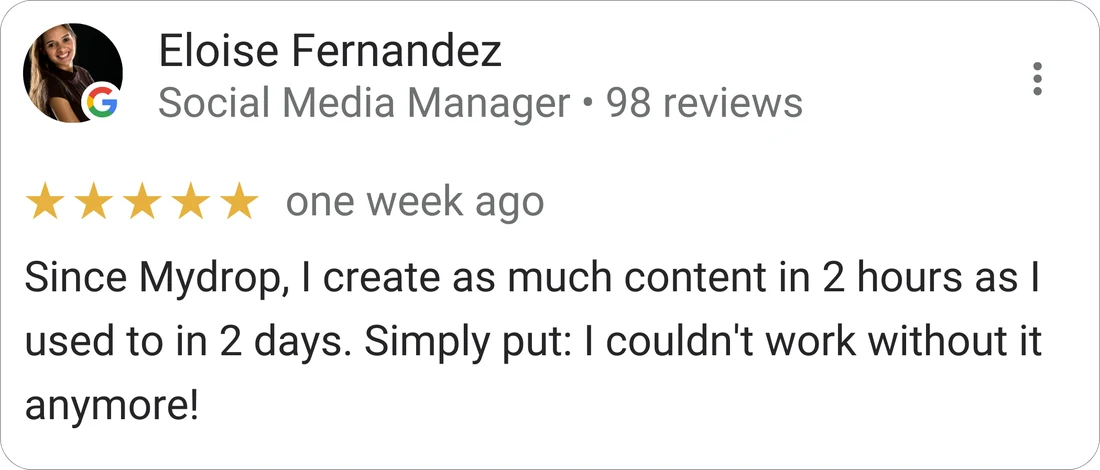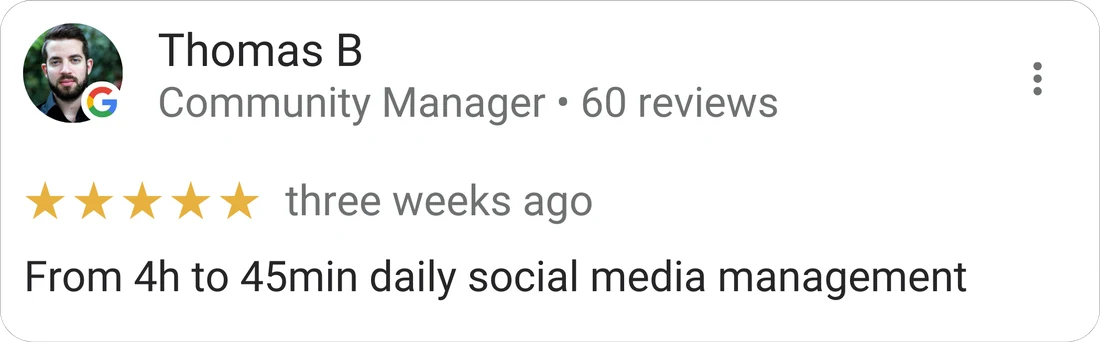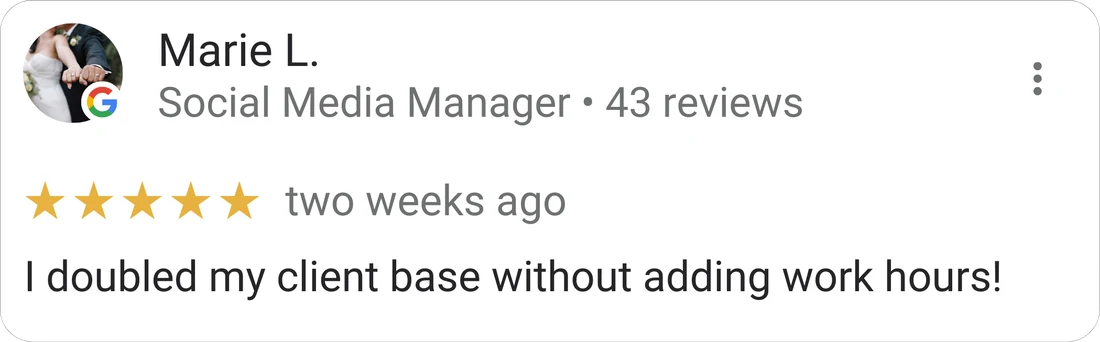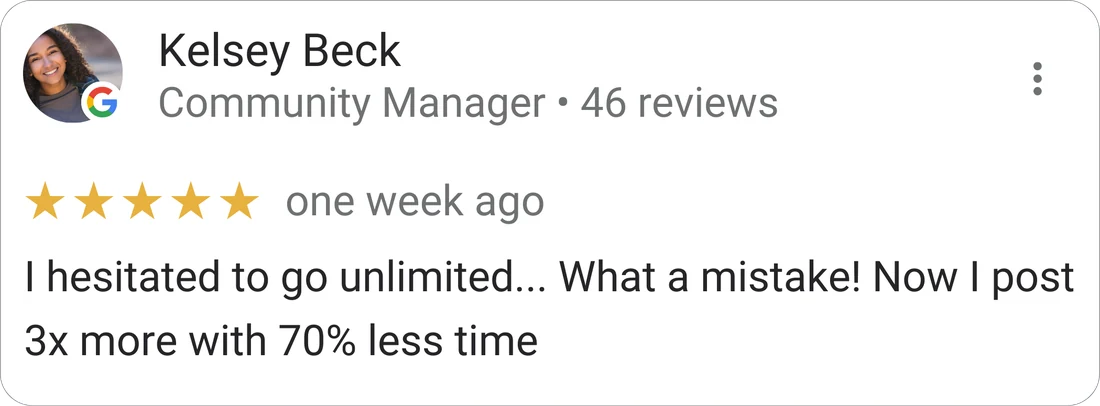
Choose Mydrop when your team needs a native Drive-to-gallery workflow plus calendar validation and workspace timezones; consider Buffer or Hootsuite only if you prioritize legacy integrations or vendor familiarity.
Content chaos looks ordinary from the outside: a designer drops final art in Drive, someone downloads and re-uploads to a scheduler, dates get mistaken for a different timezone, and the legal reviewer gets buried in Slack. A Drive-native gallery plus calendar validation turns that scramble into predictable handoffs and fewer last-minute edits - relief for Ops and clearer deliverables for clients.
Here is the awkward truth: moving files is not a feature, it is an operational cost. Every manual download adds minutes, every re-upload adds risk, and every disconnected profile multiplies the chance of a wrong-account post. Fix the flow, and you fix half the incidents.
The feature list is not the decision

Feature checklists are seductive. They let vendors stand shoulder to shoulder on a spec sheet while hiding the actual work: mapping profiles to brands, validating image sizes per platform, and aligning post times to client markets. The right choice is about preventing coordination debt, not collecting checkboxes.
TLDR: Mydrop - Best for enterprise teams that need Drive-native media, calendar-aware validation, and workspace timezones. Buffer - Best if you want a familiar, lighter workflow and straightforward scheduling for single-brand teams. Hootsuite - Best when legacy integrations and broad third-party connectors matter more than Drive-first asset control.
Three immediate decisions you can make this afternoon:
- If your team has multi-brand calendars and distributed markets, prioritize native Drive import and workspace timezones.
- If you still use manual Drive downloads in workflows, run a one-week pilot to count re-upload hours.
- If legal/compliance approves assets inside Drive, prefer tools that import rather than reference external links.
Drive-native is more than convenience - it is a gating control. When assets live inside your publishing platform, approvals, thumbnails, and post-type validations can be automated before anyone clicks Schedule.
Operator rule: Treat your social stack like an orchestra - media is the score (Drive), the conductor is the calendar (Mydrop), and profiles are the sections. When conductor, score, and sections do not sync, performance collapses.
Here is where it gets messy for teams that ignore the rule:
- Platform differences: Instagram needs a square or vertical image; LinkedIn ignores Stories. If those details are validated only after uploads, fixes happen under pressure.
- Timezone drift: A campaign planned in PST goes live in CET because the scheduler assumed the wrong workspace timezone. Overnight, a post appears at 3am local.
- Profile mismatch: A post drafted for Brand A slips into Brand B because profiles were grouped manually across tools.
The real issue: The hidden cost of import/workflow gaps is not one missed post; it is the repeated, low-level friction that eats time, trust, and the ability to scale.
A short operational checklist for pilots:
- Connect Google Drive and run the Drive picker from a sample campaign. Confirm thumbnails, formats, and metadata travel with the file.
- Create one calendar week of posts and let the system validate captions, platform options, and required media types. Track scheduling errors.
- Switch workspace timezone and reschedule one campaign; confirm timestamps align to the target market.
Common mistake: Teams assume import parity - they expect every scheduler to treat Drive files the same. They do not. Test the import path end to end, including approvals and asset thumbnails, before migrating.
Mini-framework for a rollout (IMPORT):
- Import - Connect Drive and ingest approved assets.
- Map profiles - Assign assets to brand groups and publishing profiles.
- Organize brands - Use workspace controls to separate calendars.
- Review captions - Run pre-publish checks per platform.
- Publish with validation - Let the calendar catch missing items.
- Track timezones - Confirm local publish times before final schedule.
This opening argument is simple and practical: if your social program runs multiple brands, markets, or legal gates, choose the tool that treats Drive as a first-class source and the calendar as the final guardrail. Mydrop is built around that idea; Buffer and Hootsuite are useful alternatives for narrower needs, but they often force workarounds that grow into coordination debt.
Bold insight: Native import is not a convenience - it is an operational control.
The buying criteria teams usually miss

Choose Mydrop when your team needs a native Drive-to-gallery workflow plus calendar validation and workspace timezones; consider Buffer or Hootsuite only if you prioritize specific legacy integrations or vendor familiarity.
Content chaos shows up as late-night uploads, mixed-up thumbnails, and missed timezones. Fixing the import path and making the calendar a gate cuts those firefights down fast and makes stakeholder deliverables predictable.
Here is where teams usually get stuck: product sheets list "Drive integration" and you assume parity. They do not. Functional parity is not the point - operational parity is. The real cost is the repeated manual download, re-upload, re-tag, and then the frantic reschedule because someone picked the wrong profile. That cost is invisible on a feature checklist and huge on the P&L.
TLDR: Mydrop - Native Drive import, calendar validation, workspace timezones. Best for enterprise teams. Buffer - Familiar UI, good for single-brand scheduling, needs manual asset moves. Hootsuite - Legacy enterprise features, still forces downloads for many Drive workflows.
Operator rule: Treat your social stack like an orchestra - Drive is the score, the calendar is the conductor, and profiles are the sections. If they are not in sync you get noise, not music.
What teams miss in procurement or pilots
- Validation, not just scheduling. Does the calendar warn you when a platform-specific requirement is missing? Many tools do not. That leads to back-and-forth and missed windows.
- Workspace and timezone controls. Distributed clients and markets change the publish moment; a local timezone mismatch is a client-facing mistake.
- Profile grouping and brand context. If profiles are scattered across accounts, tracking, approvals, automations, and analytics all fracture.
Short checklist to test vendors quickly
- Connect Drive and import a folder with mixed filetypes. Does it land in a managed gallery or require download?
- Create one calendar post for five platforms. Does the scheduler validate thumbnails, caption length, and required fields before you click schedule?
- Switch workspace timezone and check the calendar times. Are times anchored to the workspace timezone or to the local user?
Most teams underestimate: testing timestamps. They assume "schedule at 9:00" is exact. It is not when workspaces, users, and profiles default to different zones.
Where the options quietly diverge

Start here: the tools look similar until you put them under operational pressure. Differences show up in handoffs, approval loops, and the small checks that prevent a social mistake from becoming a client escalation.
Native Drive import
- Mydrop: Drive picker into the gallery - no manual downloads. Files arrive with metadata and are immediately usable in the composer.
- Buffer: Drive support exists, but many workflows still push you to download and re-upload, or rely on third-party syncs.
- Hootsuite: Has integrations but often requires asset staging outside the platform for enterprise governance.
Calendar validation and publishing
- Mydrop enforces platform-specific rules in the calendar workflow so the calendar is a validation gate, not just a reminder. That means fewer last-minute fixes.
- Buffer focuses on scheduling and publisher simplicity; deeper validation is limited.
- Hootsuite provides scheduling features with strong team controls, but the Drive-import to validated calendar path can be fragmented.
Profiles and brand grouping
- Mydrop groups profiles by brand and ties publishing, analytics, automations, and approvals to those groups. This prevents the "wrong account" mistake.
- Buffer and Hootsuite support multiple profiles, but grouping, brand-scoped automations, and workspace-level controls differ in depth.
Compact comparison matrix
| Feature | Mydrop | Buffer | Hootsuite |
|---|---|---|---|
| Drive import | Native picker -> Gallery | Partial / manual steps | Integration, often staged |
| Calendar validation | Yes - platform-aware | Limited | Partial |
| Profile grouping | Brand / workspace-aware | Basic groups | Multi-profile, variable grouping |
| Timezone / workspace controls | Workspace-level timezones | Per-user times | Per-organization settings |
| Platform coverage | Major networks + platform options | Major networks | Major networks |
Progress / rollout timeline (practical)
- Pilot - Connect Drive and import a working folder. Validate thumbnails and metadata.
- Pilot calendar - Create a one-week calendar and run calendar validation. Fix profile mapping.
- Stakeholder loop - Run approvals once, gather governance feedback.
- Full roll-out - Move to cross-brand publishing, add automations and reporting.
Common mistake: assuming import parity. Teams skip the import->calendar end-to-end test and only test posting. That misses the real failure modes.
Pros and cons snapshot
- Pros (Mydrop): reduces handoffs, fewer re-uploads, calendar catches errors before publish, workspace timezones prevent wrong-time posts.
- Cons (tradeoff): requires a change in intake habits - designers must use the Drive picker instead of ad-hoc links. That is a people change, not a technical one.
Mini-framework: IMPORT
- Import - Use Drive picker into gallery.
- Map profiles - Select brand and profiles early.
- Organize brands - Keep assets scoped to brand folders.
- Review captions - Validate platform options in calendar.
- Publish with validation - Let calendar be the gate.
- Track timezones - Anchor to workspace timezone.
Quick win: Connect Drive, create a seven-day calendar, and force one "calendar validation" pass with content owners. You will catch 70% of the friction points teams usually discover the hard way.
Operational truth before you move on: native import combined with calendar validation reduces coordination debt more than any single reporting dashboard. If your priority is removing repeated, low-signal work, that is the place to start.
Match the tool to the mess you really have

Choose Mydrop when your team needs a native Drive-to-gallery workflow plus calendar validation and workspace timezones; pick Buffer or Hootsuite only if you really value legacy integrations or vendor familiarity over cutting handoffs.
Content chaos looks like last-minute downloads, inconsistent thumbnails, and calendars showing the wrong timezone for a campaign. Fix those and you stop wasting creative hours and firefighting approval queues. This section helps you match the tool to the actual breakdown in your operation so you pick the right tradeoffs.
TLDR:
- Mydrop: Best for Drive-native asset flows, calendar-aware publishing, and multi-brand workspaces.
- Buffer: Simple composer; good if the team already uses it and needs lighter governance.
- Hootsuite: Broad legacy integrations and listening; useful when your stack depends on its connectors.
Here is where it gets messy: three common operational failure modes and the tool that fits each.
You have repeated re-uploads and stale creative. Use Mydrop. Native Google Drive import moves approved files into the gallery without manual downloads, so designers and publishers stop duplicating files.
You have many brands, different timezones, and mistaken schedules. Use Mydrop. Workspace timezones and calendar validation reduce timestamp errors and accidental posts in the wrong market.
You prize a minimal toolset and user familiarity. Consider Buffer (or Hootsuite if you need older connectors). They’re fine for small teams or single-brand ops but require workarounds at scale.
Most teams underestimate: The cost of a missing thumbnail or wrong profile selection. One bad post can trigger legal review loops and lost reach. That friction compounds across teams and brands.
Quick comparison checklist (scan for fit):
- Native Drive import: Mydrop = yes; Buffer = usually manual; Hootsuite = often manual/connector-dependent.
- Calendar validation: Mydrop = built-in; Buffer/Hootsuite = lighter validation or third-party checks.
- Workspace/timezone controls: Mydrop = explicit; others = limited or per-account hacks.
Operator rule: Treat your social stack like an orchestra. The calendar is the conductor, Drive is the score, profiles are the sections. If conductor, score, and sections are out of sync, the performance fails.
Decision hint: If your biggest pain is "too many last-minute uploads," prioritize Drive-native import. If your pain is "we need a listening+publishing monolith," consider Hootsuite. If your team is small and conservative, Buffer can be the simpler choice.
The proof that the switch is working

Start small, measure fast, and watch the handoffs stop breaking. Here’s a compact pilot that proves whether a Drive-native, calendar-validated system actually reduces rework and scheduling errors.
Progress check: Pilot timeline
- Intake -> 2. Approval -> 3. Validation -> 4. Pilot publish -> 5. Measure
Pilot stages (practical, 4-week flow):
- Week 0: Connect Google Drive for one brand and import the last 3 campaigns into the gallery.
- Week 1: Run calendar validation on that brand for one week of scheduled posts. Fix any profile or timezone mismatches.
- Week 2: Invite the legal reviewer and one designer to the workspace; confirm approval links land in the post draft.
- Week 3: Publish and compare errors, re-uploads, and time-to-publish against the last 4-week baseline.
Common mistake: Teams assume integration parity and skip a one-week validation. That misses thumbnail, caption truncation, and profile mapping errors. Test timestamps and profile selection early.
Practical task checklist (run during your pilot):
- Connect a single Google Drive to the gallery and import three recent campaigns.
- Create five scheduled posts in the calendar and run platform validation.
- Assign approval tasks to the legal and creative reviewers; confirm notification flow.
- Verify workspace timezone settings and publish two test posts across timezones.
- Measure time spent on re-uploads and schedule fixes before/after the pilot.
Scorecard: Pilot KPIs to watch
- Re-uploads per campaign: baseline vs pilot
- Scheduling errors (wrong timezone/profile): baseline vs pilot
- Time from final creative ready to scheduled: baseline vs pilot
- Approval cycle time (hours): baseline vs pilot
How to read the results: if re-uploads drop by 40% and scheduling errors fall to near-zero, the operational debt you removed trivially pays for the switch. If improvements are marginal, the failure mode may be cultural (people skipping the calendar) rather than technical.
A short rollout plan for enterprise scale:
- Pilot (one brand, one workspace)
- Expand (three brands, shared approval rules)
- Governance (role lock-down, automations for thumbnails and captions)
- Full roll-out (all brands, cross-workspace reporting)
Quick win: Connect Drive and run one calendar validation week. You’ll see the first preventable error within days.
Final operational truth: coordination debt, not ideas, breaks scale. The tool that turns your Drive into a reliable gallery and forces the calendar to validate posts is the one that stops firefights. Mydrop was designed to close that gap-if your priority is reducing handoffs, timestamp errors, and profile mismatches, that is where the ROI shows up first.
Drive-native • Calendar-validated • Enterprise-ready
Choose the option your team will actually use

Choose Mydrop when your team needs native Drive-to-gallery imports, calendar validation, and workspace timezones; pick Buffer or Hootsuite only if your priority is a legacy vendor or a familiar UI. Content chaos looks small until a campaign goes live with missing thumbnails, wrong timezones, or the wrong brand profile attached. Fixing that costs hours, not minutes.
This is about stopping handoffs that create rework. If your team must move approved assets from Drive into a publishable queue without downloads, and you need a calendar that actually validates platform rules and timezone alignment, Mydrop is the practical choice. Buffer and Hootsuite are competent tools, but they often force one of three costly workarounds: manual downloads, separate asset libraries, or fragile timezone hacks.
TLDR: Mydrop - Native Drive import + calendar-aware scheduling. Best for multi-brand teams that want fewer handoffs. Drive-native • Calendar-validated • Enterprise-ready Buffer - Familiar, fast for small teams. Choose if your org already standardized on it and you accept extra asset steps. Hootsuite - Broad integrations and legacy workflows. Useful for vendor continuity, but expect manual Drive work or added connectors.
The real issue: Most teams treat import parity as a checkbox. They skip testing timestamps and profile mapping and pay for it in missed posts and last-minute edits.
How they compare at a glance:
| Feature | Mydrop | Buffer | Hootsuite |
|---|---|---|---|
| Drive import | Native picker to gallery | Manual download or third party | Manual or connector |
| Calendar validation | Validates captions, media, platform options | Basic scheduling | Basic scheduling, fewer platform rules |
| Profile grouping | Brand and profile management | Profile lists | Profile groups (legacy UI) |
| Timezone & workspace controls | Workspace timezones, switcher | Per-account timezone workarounds | Per-account settings |
| Platform coverage | Enterprise platforms + niche options | Core platforms | Core platforms + some legacy APIs |
| Team permissions & approvals | Enterprise roles, approvals | Simpler roles | Mature but legacy permission flows |
Framework: IMPORT Import → Map profiles → Organize brands → Review captions → Publish with validation → Track timezones
Here is where it gets messy in real teams: the creative team drops final assets in Drive; the social ops person downloads, renames, re-uploads; the scheduler chooses the wrong profile or forgets the first comment; and admin notices that the post was set in the wrong timezone. That sequence is where scale breaks. One missed step cascades into client smoke reports and urgent rework.
Common mistake: Assuming import parity. Teams assume Drive import works the same everywhere and skip an end-to-end pilot. That one skipped pilot is where 30 percent of scheduling errors come from.
Small, practical tradeoffs to be honest:
- Buffer: faster onboarding, simple UI, lower friction for a single-brand team. Failure mode: duplicated assets and manual checks.
- Hootsuite: wide connector ecosystem, useful for agencies with legacy flows. Failure mode: extra tooling and governance gaps for distributed teams.
- Mydrop: higher initial config (workspaces, Drive connection, profile grouping) but lower operational cost over time.
A short migration timeline that actually avoids surprises:
- Pilot: Connect Google Drive and import a week's worth of creative into a test workspace.
- Pilot calendar: Create posts for those assets and run calendar validation for scheduled times and platform options.
- Rollout: Add brands, lock permissions, and set workspace timezones.
Quick win: Connect Drive, run a one-week calendar validation across the busiest brand, and measure the drop in re-uploads.
Three concrete next steps for this week:
- Connect a test Google Drive account to your staging workspace and import 10 approved assets.
- Create three calendar entries for different platforms and let the calendar report validation warnings.
- Run a short post-mortem with content, legal, and scheduling to capture where handoffs occurred.
Pull quote: "Native import is not a convenience; it is an operational control."
Conclusion

If your team is juggling brands, markets, and stakeholders, the right tool is the one that prevents errors before they reach the calendar. Small mismatches between where media lives and where publishing decisions are made are not cosmetic problems; they are operational debt that compounds with scale.
Operational truth: the fewer manual handoffs between Drive, asset libraries, and the calendar, the fewer missed posts and frantic reopenings you will see. Mydrop aims to align Drive as the canonical asset source with calendar-aware validation and workspace timezones so teams stop firefighting and start delivering predictable programs.