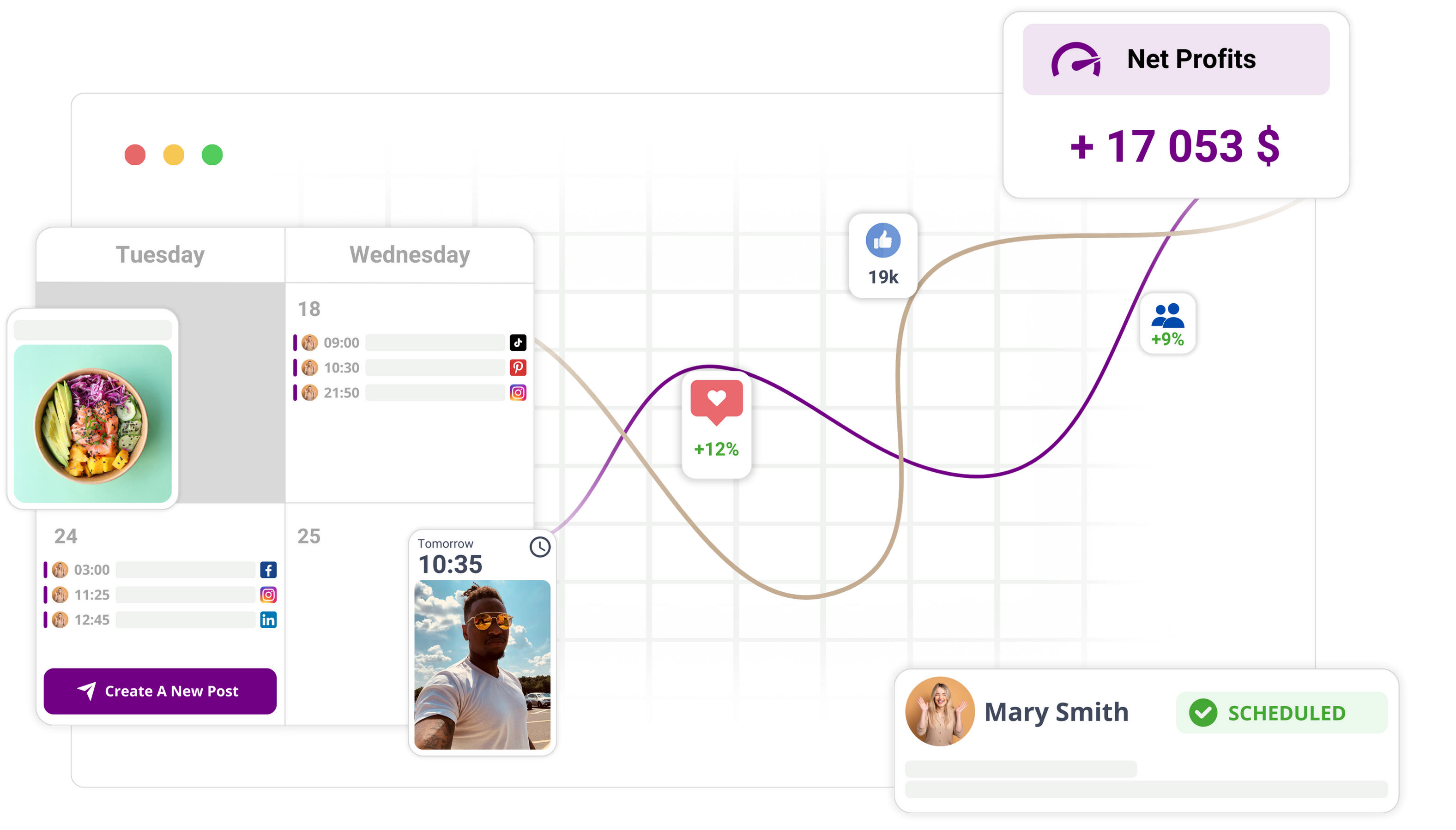
Turning a social media bio link into a revenue driver requires treating it as a dynamic storefront rather than a static directory. When you post high-production content, the bio URL should not be a catch-all link to your homepage; it must be an immediate, context-aware bridge to the specific checkout or sign-up path your audience just engaged with.
TLDR: Stop dumping traffic into a generic URL abyss. Build a high-converting bio page that dynamically updates to match your active campaigns, aligns with current content goals, and removes friction for your high-intent visitors.
The exhaustion in enterprise marketing teams is palpable. You coordinate cross-channel creative for weeks, manage dozens of stakeholders to hit a launch date, and then see the traffic die at the bio link because it hasn't been updated since last quarter. It is a massive missed opportunity that effectively wastes the entire budget of your social effort. Your team deserves a system that respects the audience's intent and rewards the hard work of creative production.
The hard truth is that every click is a high-intent signal. If your customer has to guess where to go after your CTA, you have already lost the sale.
The real problem hiding under the surface
Most teams underestimate the sheer volume of "coordination debt" created by manual link management. When your brand operates across multiple markets or platforms, updating a single URL is rarely just a copy-paste job. It is a fragmented, manual process that risks brand consistency and leaves money on the table.
The real issue: Legacy link tools treat the profile as a standalone, disconnected asset. In an enterprise environment, this creates a data silo where social traffic is untethered from your actual campaign calendar.
When the bio link is disconnected from your post-to-purchase workflow, three specific failures become inevitable:
- The Context Mismatch: Traffic from an Instagram product reveal hits a "Link-in-Bio" page that lists five other irrelevant campaigns, diluting the focus.
- The Stale Asset Trap: A high-performing organic post from three weeks ago is still driving clicks to an expired offer page, creating a terrible user experience.
- The Governance Gap: Without central control, team members often publish links to non-compliant or unapproved pages, bypassing your internal brand standards entirely.
Enterprise-Grade Reliability
Here is how you can tell if your current setup is leaking revenue:
- Update Cadence: Does your bio link update within 30 minutes of a new campaign launch?
- Attribution Visibility: Can you trace a sale directly back to the specific social post-to-bio click path?
- Brand Consistency: Do your profile links look and feel like your official website, or do they look like a third-party directory?
If you cannot confidently say yes to these, you aren't just losing clicks; you are losing control of the brand narrative at the most critical point of contact. The goal isn't just to "have links"; it's to build a High-Intent path that guides the user from curiosity to conversion without them having to think.
Operator rule: Your bio link isn't a directory; it's the checkout line for your content. If the line is blocked, disorganized, or leads to the wrong department, the customer leaves.
This is where the distinction between a "link tool" and a true Profile Management system becomes clear. You need a way to organize your social identities so that every piece of content-from the post caption to the landing page it hits-is synchronized. When you manage your brands and profiles as a unified workflow, your team stops guessing what needs to be updated and starts measuring where the conversions are actually happening. It’s about replacing frantic, manual updates with an automated, campaign-driven experience.
Why the old way breaks once volume rises
Scaling is the silent killer of the static link-in-bio page. When you manage one brand or a single recurring campaign, manual updates are manageable. When you oversee a portfolio of twenty brands, each with unique seasonal launches, regional content, and diverse audience segments, the manual approach becomes a liability that risks brand consistency and leaves money on the table.
Most teams underestimate: The hidden cost of coordination debt. Every time a social team launches a new campaign, they are forced to track down the current master link, update the bio, and notify stakeholders, all while balancing dozens of other priorities.
The result is a classic bottleneck. Assets are updated inconsistently, links break or point to 404s, and the conversion funnel inevitably suffers from "link atrophy." Your social team isn't failing to be diligent; they are struggling against a toolset that demands high-touch manual labor for every single iteration.
| Traditional Manual Updating | The Enterprise Bottleneck |
|---|---|
| Frequency | Reactive, only when a major campaign breaks. |
| Consistency | Highly fragmented across different regional teams. |
| Visibility | Zero insight into which links actually drive revenue. |
| Governance | High risk of off-brand links appearing on main profiles. |
When you treat your bio as a static file, you lose the ability to match intent. A user clicking a link after seeing a video about your new summer collection expects to land on the summer collection, not your general home page. When they land on the home page, the bounce rate spikes-the "traffic leak" is wide open.
The simpler operating model

Building an effective conversion engine starts with shifting from a "link directory" mindset to a "campaign mirror" workflow. Instead of asking what link you should post, you should ask what the user needs right now to complete their transaction.
Operator rule: Your bio-link page is a reflection of your current content calendar. If it doesn't align with the active posts across your social channels, it is failing your audience.
The goal is to remove the friction between the user's high-intent click and your conversion point. This requires centralizing your brand assets and automating the connection between social posts and their corresponding landing destinations.
- Strategic Selection: Organize your brand profiles into distinct groups, ensuring that analytics and publishing workflows remain tethered to the correct market or business line.
- Dynamic Templating: Use preset brand layouts so that no matter who creates the page, the design, tone, and navigation remain perfectly aligned with your enterprise standards.
- Intent Alignment: Link directly to the campaign landing page, the specific event registration, or the limited-time offer, rather than generic portals.
- Pre-Flight Validation: Ensure that before any campaign goes live, the link-in-bio destination is active and ready to handle the traffic spike.
When you use a platform like Mydrop, you aren't just managing links; you are managing the entire flow of intent from social post to checkout. The profile and brand management tools allow your team to switch between identities without getting tangled in logins or losing track of the correct assets.
Framework: The Contextual Click: Audience Interest + Timing + Frictionless Navigation = Conversion.
If your customer has to guess where to click after your CTA, you have already lost the sale. The most successful teams treat their link-in-bio not as a static directory, but as the final, critical step in the checkout line. Moving toward a centralized, branded, and validated model doesn't just save your team hours of manual updates; it effectively plugs the leaks that have been draining your social ROI for years. Stop managing URLs and start engineering a bridge that actually moves your audience from "social scroll" to "satisfied customer."
Where AI and automation actually help

The transition from manual updates to a responsive conversion funnel happens the moment you stop treating the bio link as a static asset. Enterprise teams often get stuck in the cycle of "update, publish, forget," leaving high-intent traffic to die on a landing page that no longer reflects the active campaign. Automation isn't about removing human oversight; it’s about removing the technical busywork that prevents your team from moving at the speed of the feed.
Operator rule: If your team isn’t updating the bio-link layout with the same urgency as the content calendar, you are losing 40 percent of your potential click-to-conversion lift.
You need a workflow that treats the bio-page as a native extension of the post composer. When you set up a campaign in a platform like Mydrop, the validation process should automatically flag if the corresponding link-in-bio update is missing. By centralizing the management of your profile links and brand pages, you eliminate the "orphaned URL" problem where posts from last week lead to pages that no longer feature the promoted offer.
Automation creates the space for your team to focus on the creative rather than the plumbing. When the system handles the synchronization of link assets across your portfolio, the legal and brand reviewers spend less time auditing manual links and more time refining the actual customer journey.
- Connect your primary campaign URL to the specific profile launch date.
- Set up a fallback "evergreen" link in your profile presets to ensure zero dead ends.
- Use pre-publish validation to confirm that every platform-specific post points to a verified, active bio-destination.
- Audit your profile group permissions to ensure only authorized leads can push updates to live landing pages.
- Configure automatic triggers to swap the hero link when a promotion expires or hits its stock limit.
Common mistake: Relying on a single, permanent link for all campaigns. This forces customers to hunt for what they just saw in your post, effectively turning a high-intent visitor into a frustrated user who just exits.
The metrics that prove the system is working

Data is the ultimate arbiter in the fight against "set-it-and-forget-it" thinking. If you cannot track the path from a specific post to a specific conversion, you are operating in the dark. Modern enterprise platforms provide the granular visibility needed to show stakeholders that these profile pages are not just directory cards, but actual revenue-generating storefronts.
KPI box: Monitor these three metrics to gauge the health of your bio-funnel:
- Contextual CTR: The percentage of clicks originating from a post-specific campaign link versus the primary site link.
- Navigation Friction: The bounce rate between your bio-page and the final checkout destination.
- Conversion Velocity: The time elapsed between the social post publishing and the successful purchase attributed to that specific profile link.
When you align your layout with your current content calendar, you should see an immediate shift in audience behavior. A well-organized, brand-controlled page shouldn't just be a list of buttons. It should act as an extension of the creative, guiding the user toward the action that matches the emotional tone of the post they just finished reading.
If your bounce rate remains high even after optimizing your links, look at your narrative alignment. Is the landing page copy matching the tone of your social creative? The "Bio-to-Buyer" bridge only holds weight if the landing page keeps the promise the social post made.
Pull quote: "If your customer has to guess where to click after your CTA, you've already lost the sale."
The ultimate goal is to remove the guesswork entirely. When the link-in-bio is as dynamic as your editorial calendar, it stops being a static directory and starts being the most valuable piece of real estate in your social media portfolio. Your metrics will quickly show the difference: when you remove the friction, the conversion isn't just possible; it becomes the natural next step for your audience. Consistency in your digital storefront, enforced by automated workflows, is the only way to manage that scale without drowning in coordination debt.
The operating habit that makes the change stick
The biggest bottleneck in social conversion is not your design; it is the synchronization gap. When your content team pushes a high-intent campaign live but the digital team is still running last month’s evergreen links, your conversion funnel effectively snaps in half. To turn this around, you need to treat the bio link as a final field in your publishing workflow-not an afterthought handled by a separate web team.
This requires shifting from a culture of "upload and forget" to a simple pre-publish validation habit. When your team builds a new post, they must ask one question: Where does this audience go if they click the bio right now? If the answer isn't the direct conversion page for that specific campaign, the post isn't ready.
Framework: The 3-Step Weekly Sync
- Asset Audit: During Monday morning planning, map the primary campaign link to the specific Profile in your management dashboard.
- Calendar Lock: When scheduling a post, use pre-publish checks to verify that the linked landing page is active and aligns with the post's offer.
- Conversion Review: Every Friday, check the click-through data against your active campaign landing pages to identify and kill "zombie links" that are no longer driving value.
Most teams struggle here because they keep their social scheduling tool and their link management tool in two different browser tabs. When you pull these into a single interface-like you do in Mydrop-you remove the friction of moving between tools, which is where most mistakes happen. If you can configure your link-in-bio page within the same environment where you manage your social profiles, the likelihood of a mismatched campaign link drops to near zero.
The move toward a faster, tighter loop

The true power of this shift is not just in cleaner links; it is in reclaiming the time your team wastes on manual updates and internal requests. When you stop chasing the web team to update a single URL and start managing your bio landing zones directly alongside your content calendar, you finally close the gap between social engagement and revenue.
If your customer has to guess where to click after your CTA, you have already lost the sale.
Consistency at scale is a product of coordination, not just effort. By building an operating model that treats every social post as a potential revenue driver, you stop treating your bio as a digital graveyard and start treating it like the checkout line it is. When the tools for organizing profiles, validating content, and managing landing pages are unified, the team spends less time fixing broken links and more time optimizing the paths that actually move the needle. Social media scale is rarely killed by a lack of ideas; it is killed by coordination debt. Clear the debt, fix the path, and let the traffic do the work.