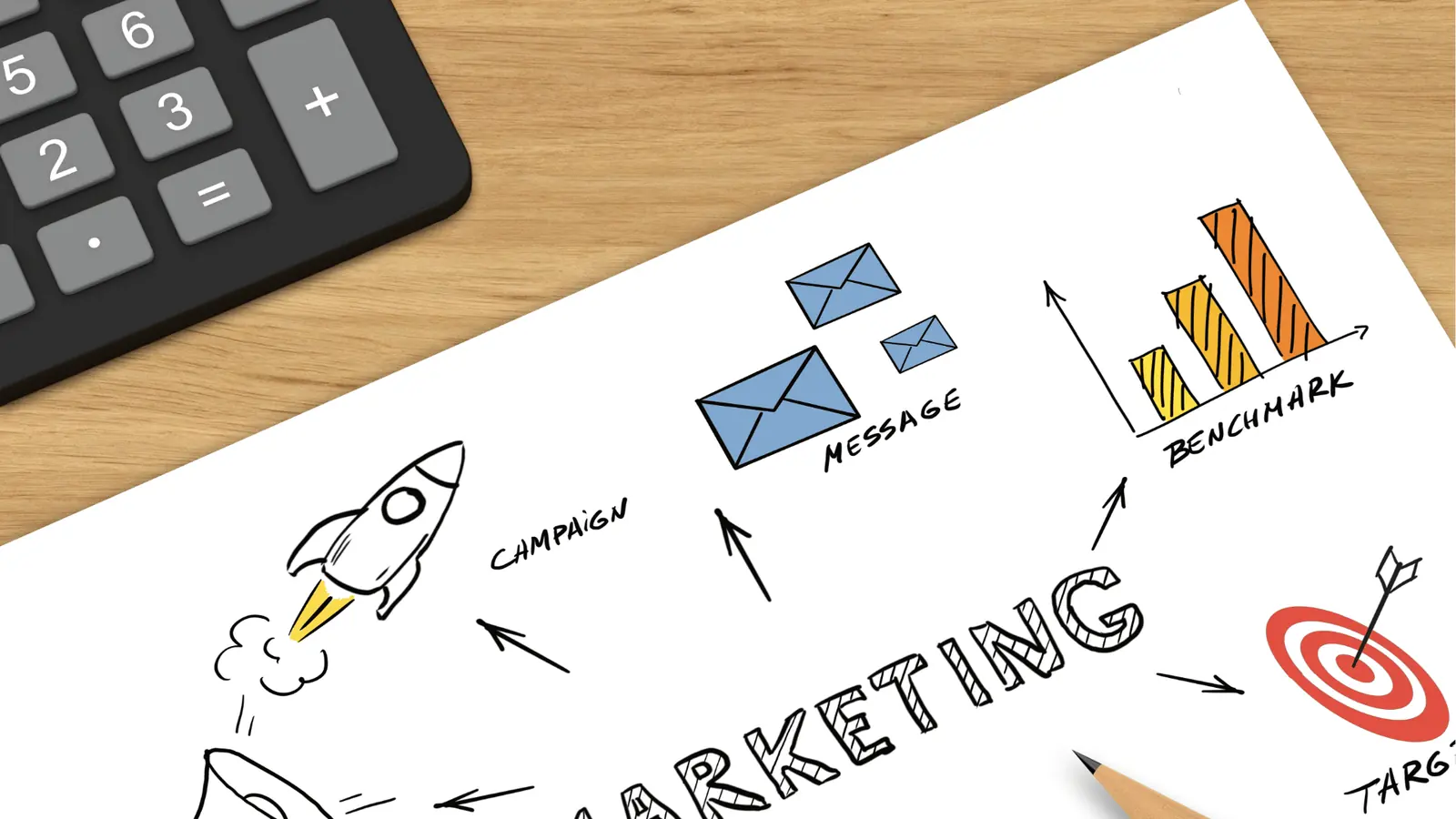

You turn a single campaign idea into a full month of social output by treating your content strategy like a software project: you build one robust Source-Code Concept and compile it into unique, platform-native builds rather than recycling the same asset everywhere.
The anxiety of staring at an empty calendar, wondering how to manufacture thirty days of relevance, usually evaporates once you stop viewing each day as a new creative burden. Instead, you gain the quiet, professional confidence of knowing your narrative is locked, sequenced, and ready to deploy. It is the difference between constant, frantic improvisation and the smooth execution of a pre-planned, multi-platform movement.
TLDR: Adopt a "Source-Code Strategy": Ideate once, partition your core message into platform-specific buckets, and automate the distribution cycle.
The real problem hiding under the surface

Most teams fail to scale their social presence not because they lack creativity, but because they suffer from coordination debt. They treat social media like a high-stakes daily performance, leaving their content calendar fragmented and their brand messaging diluted.
When you manage multiple brands or large-scale operations, the "fill the calendar" mindset is actually your worst enemy. It forces your team into a cycle of manual, high-friction tasks: resizing imagery for six different aspect ratios, hunting down the latest legal-approved caption for LinkedIn versus the casual tone needed for Threads, and scrambling to ensure the first comment on Instagram matches the conversation.
Here is the operational reality of that scramble:
- Inconsistent Governance: Brand voice drifts when individual channel managers are forced to invent daily content on the fly.
- Approval Bottlenecks: Every post requires a manual, high-context check because the strategy was never solidified upstream.
- Resource Inefficiency: Highly skilled creatives spend half their week on copy-paste work instead of high-value campaign design.
Operator rule: If a campaign idea cannot survive 30 days of adaptation, it isn't an idea; it is just a blip.
If you are constantly chasing the next post, you are failing to lead the conversation. You are reacting to the calendar, not orchestrating it. The hidden cost isn't just the time you lose; it is the fact that your audience receives a series of disjointed pulses rather than a coherent story. Even for teams with top-tier assets, the inability to manage the workflow across platforms-moving from a single, high-level campaign brief to specific, platform-ready deliverables-is where most systems break down.
To fix this, you must treat your campaign as a singular, living document. Instead of opening a blank editor every morning, you should be using your planning phase to capture campaign context in a space where it actually sticks. When you use Calendar Notes to document the intent, target audience, and key assets, the "creative" part of the job becomes a matter of assembly, not invention. You stop asking "What should we post?" and start asking "How does our core story show up on this specific network today?"
This shift in perspective is what separates a team of social media "posters" from a true enterprise social operation. Once the operational friction is removed through better documentation and clearer workflows, the calendar ceases to be a source of stress and becomes your most visible commit log for brand growth.
Why the old way breaks once volume rises

Most teams try to solve the content volume problem by simply adding more hours to the clock. They start with a single, high-effort video or research piece and then treat every other post as a separate, manual sprint. This is where coordination debt silently destroys your output.
When you treat each social platform as an isolated silo, your team ends up performing the same manual tasks dozens of times a week. You are manually resizing images for three different aspect ratios, hunting for brand-compliant file versions in shared folders, and manually tweaking captions to fit platform character limits.
The real breakdown happens during the handoff. Because there is no single, shared record of the campaign’s "source code," stakeholders in legal, design, and brand management have to review fragmented pieces. They cannot see how a single idea evolves into a full month of messaging. They end up bottlenecked by repetitive questions-like "is this on-brand?" or "has this been approved for LinkedIn yet?"-that drain the energy needed for actual strategy.
Most teams underestimate: The massive hidden cost of "context switching" between five different native platform interfaces. Every time a team member logs out of a tool to open a native app or a separate spreadsheet, they lose the thread of the campaign’s original intent.
The daily scramble isn't just exhausting; it is systematically risky. When you are improvising to fill gaps, you are not governance-checking your posts against internal policies or monitoring the health of your cross-platform engagement. You are simply hoping that the ad-hoc work you just posted won't trigger a compliance audit or a brand misalignment.
| Feature | The Daily Grind | Modular Campaign (Source Code) |
|---|---|---|
| Strategy | Reactive / Filling slots | Proactive / Campaign-focused |
| Workflow | Manual / Tool-hopping | Centralized / Integrated |
| Governance | Informal / Hidden risk | Standardized / Rule-based |
| Visibility | Fragmented / Siloed | Transparent / Collaborative |
| Output | Inconsistent volume | Consistent / Modular |
The simpler operating model

Shifting to a modular framework means you stop thinking about "posts" and start thinking about "assets." You build one core concept-the anchor-and then treat all subsequent content as variations optimized for the specific "environment" of a platform like TikTok or LinkedIn.
Here is how you turn a single, heavy-lift idea into 30 days of consistent output without drowning your team:
- The Anchor Point: Identify one high-value asset, such as an industry whitepaper, a long-form product video, or a significant research report. This is your source of truth.
- Platform Partitioning: Instead of asking "what should we post today," ask "how does this source material map to our specific audience behaviors on LinkedIn vs. Instagram?"
- Operational Cadence: Use the Calendar to set hard dates for asset collection, filming, and stakeholder review. When these become visible commitments rather than hidden chores, the "empty calendar" panic disappears.
- Context Capture: Use Calendar Notes to attach the "why" and "how" to your campaign. By keeping the campaign brief, target metrics, and brand guidelines right next to the schedule, you eliminate the need to dig through email threads.
Operator rule: If a campaign idea cannot survive 30 days of adaptation, it isn't an idea-it's a blip. An enterprise-grade campaign should be able to support a week of awareness, a week of engagement, a week of conversion, and a week of community advocacy.
This model changes the daily routine from "creation" to "curation." You use your AI home assistant not to generate generic fluff, but to help map your existing source assets into formats that fit platform-specific requirements. You are no longer building from a blank prompt; you are refining a pre-approved, cohesive story.
When you stop treating social media as a series of disconnected events and start treating it as a managed operational queue, you gain control over the brand narrative. You move from being a team of frantic creators to being a team of highly efficient curators, ensuring that every post is a deliberate piece of a larger, month-long conversation.
The goal is to reach a state where you aren't just "posting more"-you are orchestrating a multi-platform movement where every single touchpoint feels familiar, intentional, and perfectly calibrated.
You stop guessing where the campaign stands and start managing the actual momentum. When you move away from manual spreadsheets and scattered email threads, automation acts as the connective tissue that keeps a month-long campaign from unraveling by day four. AI is your force multiplier here, not a replacement for your team's creative judgment. Instead of burning your best writers on tedious tasks like resizing assets or rewriting captions for different platforms, use your AI home assistant to handle the heavy lifting of adaptation. You feed it the core concept-the source code-and let it propose platform-native variants that your team then reviews, polishes, and pushes to the calendar.
Framework: Concept -> AI Adaptation -> Human Polish -> Approval -> Platform Schedule
This keeps your brand voice consistent while ensuring your LinkedIn post doesn't sound like your Instagram caption. The goal is to offload the repetitive "how do we say this here" struggle so your team can focus on "does this actually resonate with the audience here."
The metrics that prove the system is working
When you move to a modular, campaign-based model, you have to stop obsessing over individual post likes and start looking at how your campaign idea performs across the entire social ecosystem. If your engagement on LinkedIn is spiking while your X traffic is flat, the problem isn't the campaign-it's the build. You need to identify these discrepancies early.
KPI box: Cross-Platform Sentiment Correlation
- Trend Alignment: Are key topics appearing across all networks at the same time?
- Volume Efficiency: Is the cost-per-post dropping as you reuse core assets?
- Response Rate: Are we maintaining sub-two-hour reply times during the campaign peak?
- Governance Check: Is the content hitting compliance and brand safety benchmarks automatically?
The most successful teams use their inbox and rules views to track not just volume, but the quality of the conversation triggered by the campaign. If your community is asking questions, your system should automatically route them to the right product leads rather than letting them die in an unmonitored queue.
Watch out: The "Set and Forget" Fallacy Automation handles the distribution, but it cannot handle the empathy. If you stop reviewing community messages because you are too busy planning next month's campaign, you are sacrificing your brand reputation for operational efficiency. Your rules and inbox health views should be the first thing your team checks every morning.
Checklist: The 5-Point Platform-Ready Audit
- Are all assets resized specifically for the host platform?
- Is the first comment already drafted and queued for high-engagement posts?
- Did you include platform-specific calls to action instead of generic links?
- Have you verified that all stakeholder approvals are logged in the calendar notes?
- Is the community team briefed on the specific campaign goals to handle the incoming traffic?
True scalability in social media isn't about being everywhere at once; it is about being in the right place, with the right message, at the exact time your audience expects to hear from you. The operational debt that kills most enterprise social teams is the constant, grinding friction of manual coordination. When you turn that coordination into a repeatable, modular workflow, the work ceases to be an act of survival and becomes a predictable, repeatable engine of growth. You are no longer scrambling to fill slots; you are curating a presence.
The operating habit that makes the change stick

The biggest hurdle for enterprise teams isn't finding the next great idea; it is the habitual decay of the workflow once the first week of a campaign ends. You must institutionalize the review process so it becomes a background hum rather than a scheduled crisis.
This starts by shifting from static documentation to living campaign context. Stop letting your campaign notes, source assets, and stakeholder feedback live in isolated siloes like email chains or disconnected document folders. When you attach these directly to your calendar via notes, you keep the operational "why" visible to everyone involved, from the creator to the final compliance reviewer.
Framework: The 3-Stage Operational Loop
- Ideation & Context: Capture the campaign intent using central notes; link relevant docs and creative specs immediately.
- Modular Compilation: Use a multi-platform composer to transform the core asset into platform-native builds; set first comments and specific thumbnails early.
- Health Check: Monitor the campaign queue through consolidated inbox views to ensure community responses and rule-based routing remain active throughout the 30-day window.
The goal is to stop the manual chase for status. When you set clear, recurring calendar reminders for asset collection, filming, and performance reviews, you replace "is this done?" with a transparent, shared timeline that everyone can see at a glance.
If your team is still spending Friday afternoons manually resizing images for different platforms or hunting for the latest caption draft in an email thread, you are paying a heavy tax on your own creativity. You aren't just losing time; you are burning out your best talent on administrative busywork that technology should be handling for you.
How to start this week
- Consolidate one active campaign: Move your scattered strategy documents into a single, accessible calendar note that maps your goals to your upcoming post dates.
- Standardize the assembly: Audit your current workflow for one network; identify the repetitive tasks (like adding recurring first comments or tags) and create a template for future posts in your composer.
- Set the cadence: Create three recurring calendar reminders for the next month: one for mid-campaign asset check-ins, one for community response routing, and one for a final analytics review.
Conclusion

Success at scale is rarely about who has the most creative sparks. It is about who can best maintain momentum once the initial excitement of a launch fades. When your process is modular, your team spends less time manually moving bits of data between tools and more time ensuring your brand voice is consistent across every channel.
You reach a point where you stop thinking about "posting" and start thinking about "orchestrating." This is where coordination debt vanishes and your calendar becomes a reliable engine for growth. The most effective social teams are those that accept that execution is just as creative as ideation. Mydrop exists to take the friction out of that execution, giving your team the space to focus on the conversation rather than the mechanics of the broadcast.