

You find your next winner by isolating the business incentive from the creative execution. If your engagement is high but your revenue is flat, you do not have a content problem; you have an offer problem. To bridge the gap between reach and revenue, you have to stop over-indexing on "engaging" updates and start treating your social feed as a laboratory for business offers.
It is a specific kind of exhaustion-the "content treadmill" where every post feels like a shot in the dark. You see the notifications climb and the comments stack up, yet the internal pressure from leadership to "show the ROI" never lets up because those views are not moving the needle. There is a massive relief that comes with finally knowing which lever to pull to turn engagement into an enterprise-level pipeline.
Reach is a vanity metric until it is tethered to a tested incentive. If your social strategy is built on "consistent posting" rather than "consistent testing," you are not actually marketing; you are just making noise.
TLDR: Stop trying to "hack the algorithm" with better lighting or trending audio. If the math of your offer does not work, no amount of 4K resolution will save it. You need a testing laboratory, not just a film studio.
To start testing effectively, your team needs to agree on three things before a single post goes live:
- Identify a single variable to test (Price, Bonus, or Urgency).
- Use a "control" creative style to ensure the offer, not the video, is what is being measured.
- Commit to a 7-day data window in Mydrop Analytics to decide the winner.
The real problem hiding under the surface

Here is where it gets messy: most enterprise teams are trapped in the "Viral Vacuum." This is that awkward reality where a million views mean absolutely nothing because the "Link in Bio" leads to a generic landing page with a stale 10% discount that the market rejected six months ago. We see it all the time in large marketing operations. The creative team is winning awards for storytelling, but the sales team is asking why the lead quality is in the basement.
The hidden cost of being "content first" is the months wasted polishing high-production assets for an offer that lacks market-fit. When you focus on the package instead of the prize, you end up with a very expensive, very beautiful megaphone that nobody is listening to.
The part people underestimate is how easy it is to fall into the "Multi-Variable Trap." This happens when you decide to test a new video format and a new discount code at the same time. If the post flops, was it the script? Was it the price point? Was it the fact that the legal reviewer got buried and the post went out three hours late? You will never know. You have to isolate the offer if you want to find a winner you can actually scale.
The real issue: Offer fatigue is often mistaken for creative burnout. Teams often think they need a "fresh look" when they actually just need a fresh reason for the customer to say yes.
In a complex multi-brand environment, this coordination often breaks down in the handoff. This is why we suggest using Mydrop Calendar Notes to document the "Offer Variable" right next to the work. Instead of losing the hypothesis in a 50-page strategy deck or a chaotic Slack thread, you can tag the specific campaign idea-like "BOGO vs. Free Trial"-directly on the calendar. This keeps the operational context visible for everyone from the social lead to the brand manager.
To visualize the difference between just "posting" and actually "testing," look at how the variables shift when you move from a safe update to a high-impact tested offer:
| Variable | The "Safe" Update (Low Impact) | The "Tested" Offer (High Impact) |
|---|---|---|
| Pricing | "Check out our new rates" | "Lock in 2024 pricing for 48 hours" |
| Value Prop | "We help you scale" | "Reduce social ops overhead by 30%" |
| Incentive | A generic "Sign up" button | A tiered "Early Bird" bonus |
Operator rule: Never change the creative and the business offer in the same post. If you change both, you have learned nothing.
When you are managing dozens of profiles across global markets, the "Multi-Variable Trap" becomes even more dangerous. A strategy that works for a brand in London might fail in Singapore, but without a systematic way to compare results, you are just guessing. By using Mydrop Workspace settings to align these offer launches across timezones, you ensure that your "7-Day Sprint" is actually happening in a controlled environment.
You are looking for the "Winner"-the specific combination of words and math that makes your target audience stop scrolling and start clicking. Once you find that, the content part actually becomes easier because you are no longer guessing what to say. You are just finding new, creative ways to package a deal you already know people want.
Why the old way breaks once volume rises

Managing five posts a week for a single brand is easy; managing five hundred across ten global markets is where the "consistent posting" dream turns into an operational nightmare. When you are small, you can survive on intuition. You know what your audience likes because you are the one reading every comment. But as volume rises, the distance between the person making the decision and the person seeing the data grows. This is where coordination debt starts to eat your margins.
The legacy approach to social media treats the feed as a billboard. You polish the graphics, you obsess over the "vibe," and you push it out the door. But in an enterprise environment, every post requires a chain of custody. You have the creative team, the brand manager, the legal reviewer, and the local market leads. Here is where it gets messy: the legal reviewer gets buried under a mountain of "urgent" requests that all look the same, and the creative team starts burning out because they are asked to "make it pop" for the fourteenth time this week without any clear business objective.
When you scale a "content-first" strategy, you aren't scaling success; you are just scaling noise. If your offer is weak, no amount of high-definition video or clever copywriting will save it. The hidden cost of this volume is that it masks the lack of a real business incentive. You see the reach climbing and assume things are fine, but the "Link in Bio" is a ghost town.
Most teams underestimate: The psychological toll of the "Content Treadmill." When teams are forced to publish at high volume without seeing a direct link to revenue, the work becomes transactional. Quality drops, compliance risks rise, and the "brand voice" starts to sound like a series of automated templates.
The break point usually happens when you try to launch a new product or enter a new market. Without a history of testing, you have no data to guide the launch. You end up guessing on the price point, guessing on the bundle, and guessing on the creative. If it fails, you don't know if the creative was bad, the timing was off, or the market simply didn't want what you were selling.
| Operational Element | Manual "Vibe" Ops | Scaled "Tested" Ops | | :--- : | :--- : | :--- : | | Intake Process | Email threads and "hey" messages | Structured Mydrop Calendar Notes | | Approval Flow | Scattered chat screenshots | Centralized "Post Approval" workflows | | Global Alignment | Manual timezone math | Automated Mydrop Workspace settings | | Design Handoff | Drag-and-drop file chaos | Direct Canva Gallery service imports | | Reporting | Manual spreadsheet assembly | Real-time Mydrop Analytics review |
The simpler operating model

You need to stop treating every post as a creative masterpiece and start treating your social feed as a series of high-speed business experiments. A simpler operating model shifts the focus from "what should we post?" to "what are we testing today?" This isn't about being less creative; it's about being more intentional. By isolating the business offer from the creative execution, you can find your winners faster and with less waste.
This "Offer-First" model relies on a tight feedback loop that turns your social media manager into a laboratory technician. Instead of guessing what might work, you deploy a series of controlled tests.
- Isolation: Strip away the creative fluff to identify a single "Offer Variable." Are you testing the discount percentage, the free bonus, or the urgency of the deadline?
- Hypothesis: Use Mydrop Calendar Notes to document exactly what you expect to happen. If you change the offer from "10% off" to "Free shipping," capture that intent next to the post so the reviewer knows the context.
- Deployment: Launch the offer across three different creative styles. This ensures you are testing the business incentive, not just the color of the button.
- Extraction: Open Mydrop Analytics to compare the results. Look past the likes and shares; you are looking for the "Claim Rate" or the "Click-Through-Rate" that indicates real market interest.
Quick takeaway: Stop changing the creative and the offer in the same post. If you change both, you won't know which one drove the result. Operator rule: One variable per test.
This model creates a massive amount of relief for the team. Designers love it because they have a clear goal: "Make the 'Free Trial' offer look as compelling as possible." Managers love it because the approval flow is tied to a specific business outcome, not just a subjective aesthetic preference. And the legal team loves it because the offers are documented, consistent, and easier to verify across different timezones using Mydrop Workspace controls.
The tradeoff of the "Laboratory" approach
Pros
- Stops the guesswork and kills internal "vibe-based" arguments with cold data.
- Identifies revenue winners in 7 days rather than waiting for quarterly reports.
- Reduces creative burnout by focusing production on proven "winner" offers.
- Makes it easier to scale across global markets by identifying "universal" incentives.
Cons
- Requires a more disciplined intake process and strict documentation.
- Can feel "less artistic" to teams used to chasing awards over ROI.
- Demands that everyone-from legal to creative-understands the testing framework.
Watch out: The "Multi-Variable Trap." The moment you try to test a new video format, a new influencer, and a new discount in the same week, your data becomes useless. Discipline is the only thing that separates a test from a guess.
By adopting this model, you move from a state of "constant production" to "constant validation." You are no longer just filling the calendar; you are building a repository of what your audience actually buys. When you find a winner, you don't just celebrate-you use Mydrop Analytics to confirm the margin, then you use the Canva import workflow to quickly generate ten more variations of that specific offer to maximize the reach while the signal is still strong.
The operational truth: In an enterprise environment, speed is a competitive advantage, but only if that speed is directed toward a tested goal. If you are running fast in the wrong direction, you just hit the wall sooner. Fix the incentive, document the test in your Calendar Notes, and let the data tell you where to invest next.
Where AI and automation actually help

Automation is not a replacement for a strategy; it is the engine that makes a high-velocity testing strategy actually feasible at the enterprise level. If you have to manually resize every creative asset for twelve different markets just to test a "Buy One Get One" offer against a "Free Trial," you will never test a second offer. You will simply stick to the one that is "good enough" because the friction of changing it is too high. This is where most large teams get stuck in the Coordination Debt trap, where the cost of managing the work exceeds the value of the results.
The real win for AI in this 7-day loop is not having a robot write your captions. It is about using generative tools to handle the heavy lifting of creative production and variation. When you have a hypothesis about a pricing change or a new bundle, you need a high volume of visual "hooks" to see what grabs attention. Using something like the Mydrop Canva export options allows your designers to build one core template and then quickly bring those assets into the gallery in every format needed for every platform. It turns a three-day production cycle into a twenty-minute task.
Watch out: The "Set and Forget" trap is the fastest way to kill a test. Automation should handle the routing of the post, but a human must still handle the context of the result. If you automate the posting but forget to check the Mydrop Analytics, you are just making noise at scale.
Beyond production, automation solves the "Where is that file?" problem. Large teams often lose momentum because the legal reviewer is buried in a chat thread or the brand manager is on a different timezone. Mydrop's approval workflows keep these handoffs from becoming bottlenecks. Instead of chasing people down, you set the rules once: the post goes to Legal via WhatsApp, then to the Regional Head via email. The "7-Day Plan" only works if the approval doesn't take five days of that week.
The Operational Testing Checklist
- Define the Variable: Choose one business incentive (e.g., 20% off vs. $50 gift card) and stick to it for the full 7 days.
- Batch the Production: Use AI tools to generate 10 to 15 creative variations of that one offer so you don't run out of "fresh" looks.
- Sync the Timezones: Use Mydrop Workspace Settings to ensure the offer launches at the peak time for every specific market simultaneously.
- Route the Approvals: Assign your legal and brand reviewers within the Mydrop workflow so they can approve with one click from their phone.
- Drop a Calendar Note: Use the Mydrop Home notes to tell everyone on the team exactly what you are testing so nobody accidentally posts a conflicting discount.
- Lock the Analytics Window: Set your date range in the analytics dashboard before the test starts so the data is clean and isolated.
Operator rule: Never change the creative style and the business offer in the same post. If you change both and the post bombs, you won't know if the audience hated the colors or the price.
The metrics that prove the system is working

Stop looking at engagement rate as a measure of success for your offers. A post can have ten thousand likes and still be a total failure if nobody clicked the link to claim the incentive. To find your next winner, you have to look at the bridge between the social interaction and the business outcome. We call this the Incentive Efficiency Score. It's the simple realization that reach is just the top of the funnel; the real money is made in the transition from a "scroll-stopper" to a "click-through."
When you open Mydrop Analytics, ignore the "Vanity Totals" for a moment. Instead, look for the Conversion Delta between your control posts (the regular content) and your test posts (the specific offers). You are looking for a significant lift in click-through rates (CTR) that holds steady even as you increase the frequency of the posts. If the CTR drops off after three days, you don't have an "offer" problem; you have "creative fatigue." That is a signal to swap the image, not the discount.
KPI box: The Offer-Testing Scorecard
Metric What it tells the Operator Target for Success Incentive CTR How many people actually want the deal. 2x higher than your average brand post. Claim Velocity How fast the "Link in Bio" gets used after posting. Peak activity within 90 minutes of publish. Cross-Profile Lift If the offer works in London and New York. Within 15% variance across different markets. Coordination Speed How long it took to get the test live. Under 48 hours from idea to "Scheduled."
The goal of the 7-day loop is to find the Repeatable Winner. This is the specific combination of pricing, urgency, and value prop that you can "set and forget" for the next quarter. Once you find it, you stop testing and start scaling. You use your Mydrop Workspace switcher to move that winning offer into every brand profile you manage.
Framework: Hypothesis -> Creative Production -> Approval Routing -> Distribution -> Analytics Review -> Scale
Here is where it gets messy: teams often get "Attribution Anxiety." They worry that they can't track every single dollar back to a specific Instagram Story. Don't let the perfect be the enemy of the profitable. Use your analytics to find the directional truth. If you run a "BOGO" offer for seven days and your total sales volume spikes by 20% compared to your "10% off" weeks, you have your answer. You don't need a PhD in data science; you just need a clear view of the performance across all your connected profiles.
The final operational truth is that testing is a muscle. The first time you run a 7-day sprint, it will feel clunky. The approvals will be slow, and the creative won't be perfect. But by the third or fourth cycle, your team will stop asking "What should we post today?" and start asking "What are we testing this week?" That shift in mindset is what separates the teams that just "do social" from the ones that actually drive the business. Reach is a vanity metric until it is tethered to a tested incentive. Stop making noise and start making offers.
The operating habit that makes the change stick

The secret to moving from lucky viral hits to a predictable revenue engine is not a single brilliant campaign. It is the boring, repetitive habit of the weekly offer review. Most teams fail here because the excitement of the "launch" is high, but the discipline of the "debrief" is low. If you do not have a dedicated slot on your calendar to look at what the audience actually bought, you are just expensive noise.
This is where the excitement usually dips and the operational friction kicks in. You have a hundred variations running across three timezones, your legal reviewer is buried under a mountain of compliance requests, and the data is scattered across five different platform logins. The relief comes when you stop treating testing as a special project and start treating it as the core operating system of your marketing department.
Operator rule: Never change the creative format and the business offer in the same post. If you change the video style and the discount percentage at the same time, you have learned nothing. You have just made a guess.
To make this stick, you need an "Offer Log" that lives exactly where the work happens. In Mydrop, this looks like using Calendar Notes to drop a permanent marker on your timeline. Instead of hunting through email threads to remember if last Tuesday was the "Free Shipping" test or the "Buy-One-Get-One" test, you have a visible record right next to the posts. It is about reducing the cognitive load on your team so they can focus on the strategy instead of the admin.
The Enterprise Offer-Testing Scorecard
Use this simple matrix during your Friday review to decide if an offer is a "Winner," a "Pivot," or a "Kill."
| Metric | The "Winner" (Scale This) | The "Pivot" (Fix the Creative) | The "Kill" (Drop the Offer) |
|---|---|---|---|
| Reach/Impressions | High | Low | Low |
| CTR (Click Rate) | Above 2% | Below 0.5% | Below 0.5% |
| Claim Rate | Above 15% | High | Below 2% |
| Operational Effort | Sustainable | High Friction | High Friction |
Quick win: Set your Mydrop Workspace timezone to the primary market you are testing. It sounds small, but aligning your "Offer Launch" to the exact moment your audience is drinking their morning coffee is the difference between a 1% and a 5% claim rate.
The real bottleneck in large teams is usually the approval lag. If it takes four days to get a simple pricing test approved by legal or the brand lead, your 7-day sprint is dead on arrival. Moving approvals into the Mydrop workflow -- where the reviewer can see the post, the offer note, and the creative in one view -- removes the "I missed that email" excuse. It turns the approval from a roadblock into a high-speed checkpoint.
The 3-Step Implementation Workflow
If you want to start this next week, follow this sequence:
- Isolate: Pick one product and define two different offers (e.g., a "20% Discount" vs. a "Free Bonus Gift").
- Standardize: Import your creative assets through the Mydrop Gallery service. Ensure your video orientation and image quality are locked in so the "creative" variable stays consistent.
- Audit: At the end of Day 7, open Mydrop Analytics, select the specific profiles involved, and compare the results side-by-side.
Framework: The 1:5 Ratio For every 1 core business offer you test, deploy 5 different creative variations. The creative gets the attention; the offer gets the credit card.
Here is where it gets messy for agencies: managing this across ten different client brands. The "Workspace switcher" is your best friend here. It allows you to keep the "Offer Log" for Brand A completely separate from Brand B, ensuring that a winning offer in the beauty space doesn't accidentally influence a failing strategy in enterprise SaaS.
Conclusion
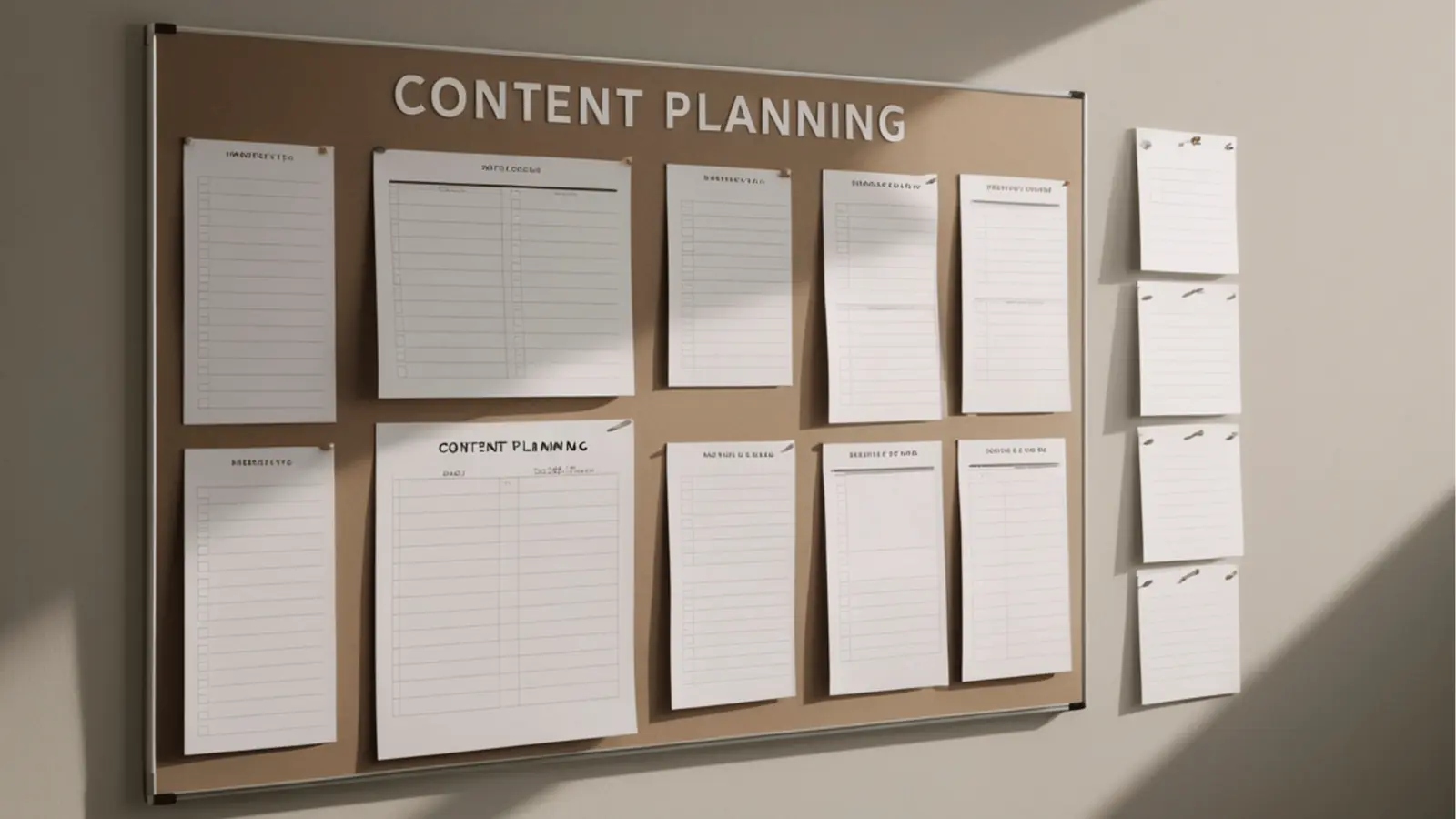
The "content treadmill" is a choice. You can keep running at full speed, producing endless videos and hoping for a spike in the charts, or you can step off and start building a laboratory. The teams that win at scale are the ones that realize social media is not a broadcast channel; it is the world's largest, fastest focus group for your business incentives.
Stop obsessing over the lighting in your latest Reel and start obsessing over the value you are putting in front of your customers. When you isolate the offer from the creative, you gain a level of clarity that most marketing teams never achieve. You stop guessing what "feels" right and start knowing what converts.
Success in social media operations comes down to coordination, not just inspiration. If your team has to fight their tools to get a post live, they will never have the energy to run a proper test. When your planning notes, creative assets, and performance data live in a single, connected workflow, the "7-Day Sprint" stops being a theory and starts being your competitive advantage. You do not need more content; you need better offers, and a system like Mydrop that is built to help you find them.