
You stop wasting time on repetitive edits by shifting your workflow from manual, ad-hoc creation to a template-first model that standardizes brand quality without burning out your team. The "copy-paste-tweak" loop is the primary drain on your social team’s production speed, forcing high-value strategists to waste hours formatting posts rather than focusing on creative direction.
TLDR: Stop recreating the wheel. Save your most effective post formats as reusable templates in Mydrop to ensure brand compliance and slash setup time.
When every post feels like a fresh emergency, your team lives in a state of reactive exhaustion. Transitioning to a template-first culture replaces the constant, low-level anxiety of "what do I need to include again?" with the calm of a pre-validated, brand-safe structure.
Creativity thrives in structure, not in manual overhead. When you fix the container, you liberate your team to focus exclusively on the contents.
The real problem hiding under the surface

Most teams believe they have a "volume problem" or a "staffing problem" when they are actually drowning in Creative Debt. This is the invisible accumulation of slow, manual tasks that kill team morale and degrade your brand voice.
The real issue: Every time a team member manually re-formats a post for a different region or channel, they make dozens of tiny, subjective decisions. At 4:00 PM on a Friday, those decisions become inconsistent, leading to branding errors that ripple through your entire social presence.
When volume is low, "bespoke" manual work feels like a high-touch craft. When you are managing enterprise-scale accounts, that same workflow is a structural liability. You aren't just losing time; you are losing control of the brand voice. The physics of scaling are unforgiving: 10 posts are a manageable task, but 100 posts with manual inputs create a chaotic environment where compliance risk rises and visibility into what actually works vanishes.
To break the cycle of manual exhaustion, your team needs to move away from "starting from scratch" and start operating with a modular mindset. Before you build your next campaign, evaluate your current workflow against these three criteria:
- Frequency: If you are creating a similar post type more than three times a week, it should be a template.
- Complexity: If the post requires specific disclaimers, brand assets, or cross-functional approval tags, it must be templated to prevent errors.
- Consistency: If your brand voice fluctuates between team members, the template serves as the non-negotiable guardrail.
Standardization isn't the enemy of creativity; it is the infrastructure that allows creativity to scale. By using tools like Mydrop's Calendar > Templates, you transform your most successful, brand-safe post setups into reusable assets. Your team stops being a group of manual data-entry specialists and becomes a group of high-impact strategists.
Operator rule: Treat your template like a product. It should not be static. If your analytics show a drop in engagement for a specific post format, update the master template immediately based on the data.
The hidden cost of manual work is that it prevents you from doing the "real" work. When you stop worrying about whether the hashtags, image dimensions, or legal disclaimers are correct, you gain the mental bandwidth to focus on the content that actually moves the needle for your enterprise goals.
Why the old way breaks once volume rises

The physics of social media management are unforgiving. At ten posts a week, a small team can survive on "bespoke" workflows-copying a caption from a Google Doc, grabbing the asset from a folder, manually setting up the tracking parameters, and hitting publish. It feels like craft. But at 100 posts, that same process becomes a death march of coordination debt. Every manual choice is a chance for a typo, an off-brand tone, or a missed compliance tag.
Most teams underestimate: The cumulative cost of minor formatting errors across a year of content. One broken link or misaligned brand voice in a single post is a nuisance; the same error multiplied by 1,000 posts is a systemic brand failure.
When your team is stuck in a loop of manual assembly, you aren't just losing time. You are actively choosing to pay the "Customization Tax." Every time someone spends fifteen minutes setting up the same recurring post format, that is fifteen minutes they aren't spending on high-leverage strategy or community engagement.
Manual Ad-Hoc Creation vs. Template-Driven Scaling
| Feature | Manual Ad-Hoc | Template-Driven |
|---|---|---|
| Setup Time | 15-20 minutes | 2-3 minutes |
| Brand Consistency | Subject to mood/haste | Locked to brand guidelines |
| Compliance/Tags | Optional/Easily forgotten | Baked into the structure |
| Team Scaling | Senior staff manual labor | Delegatable to junior staff |
| Production Ceiling | Hits a wall at high volume | Virtually unlimited |
The "bespoke" approach creates a hidden ceiling on your operations. Eventually, you reach a point where you cannot publish more without hiring more heads, simply because the process itself is the bottleneck. You aren't scaling your brand; you're just scaling your overhead.
The simpler operating model

Shifting to a template-first culture isn't about removing the human element. It is about removing the friction so your team can focus on the creative substance. You standardize the container, which gives your team the freedom to experiment within a safe, pre-validated structure.
In Mydrop, you do this through Calendar > Templates. Instead of starting every campaign from a blank slate, you save your best-performing structures-the ideal combination of caption length, link placement, and media sizing-as reusable templates.
The 3-Step Path to Template Mastery
- Audit: Identify your top-performing post types from the last month. Look for the patterns that actually drive results.
- Normalize: Strip out the campaign-specific creative and save the skeletal structure as a Mydrop template. Define the mandatory meta-data and brand-compliant elements once.
- Systematize: Require all recurring content to originate from these templates. If you are doing it three times, you should have a template for it.
Operator rule: Treat your template like a product. It should be versioned and updated based on actual performance data, not just static preferences. If a specific template structure consistently underperforms, iterate on the container.
This model changes the tone of your daily work. The anxiety of "what do I need to include again?" disappears, replaced by the calm of a ready-to-publish structure. When your team pulls up a template, the legal disclaimers, UTM parameters, and brand-standard formatting are already there. All they have to do is provide the creative.
Watch out: Avoid the "Template Trap" where every post starts to look like a carbon copy. Use templates for the scaffolding-the structural elements that keep you compliant and consistent-but always leave room for the specific, human voice that makes a post resonate.
The goal is to eliminate the drudgery so that when a team member sits down at 4:00 PM on a Friday, they aren't fighting with formatting. They are simply shipping excellence. When you stop treating every post like a bespoke emergency, you finally free your team to treat their work like a high-performance operation.
Where AI and automation actually help

Automation is often sold as a magic button that creates content for you, but in an enterprise setting, the real value lies in removing the coordination debt that strangles your team. When you use Mydrop to connect your strategy to your execution, you stop asking humans to remember routine tasks like tagging local teams or ensuring the correct link-in-bio is attached to every post.
Here is the secret: AI is best used to handle the boilerplate, while your team keeps the context. You can set up an automation trigger in Mydrop to alert specific regional managers the moment a brand-safe template is populated with new copy, ensuring that your global voice is maintained while local nuance is protected. This removes the "who does what" anxiety that usually leads to missed deadlines or, worse, off-brand posts going live without proper oversight.
Operator rule: Automation should handle the flow, not the flair. If you are using automation to write your copy, you have already lost the battle for your audience's attention. Use it to automate the handoff, the tagging, and the status updates instead.
When you use the Mydrop Automation builder to pair a pre-validated template with a specific publishing workflow, you essentially build a digital guardrail. Your junior team members can confidently push content through the system because the "rules" of the post are already baked into the template. The creative lead spends their time reviewing the final output, not checking if the UTM parameters are formatted correctly or if the right asset folder was referenced.
The metrics that prove the system is working
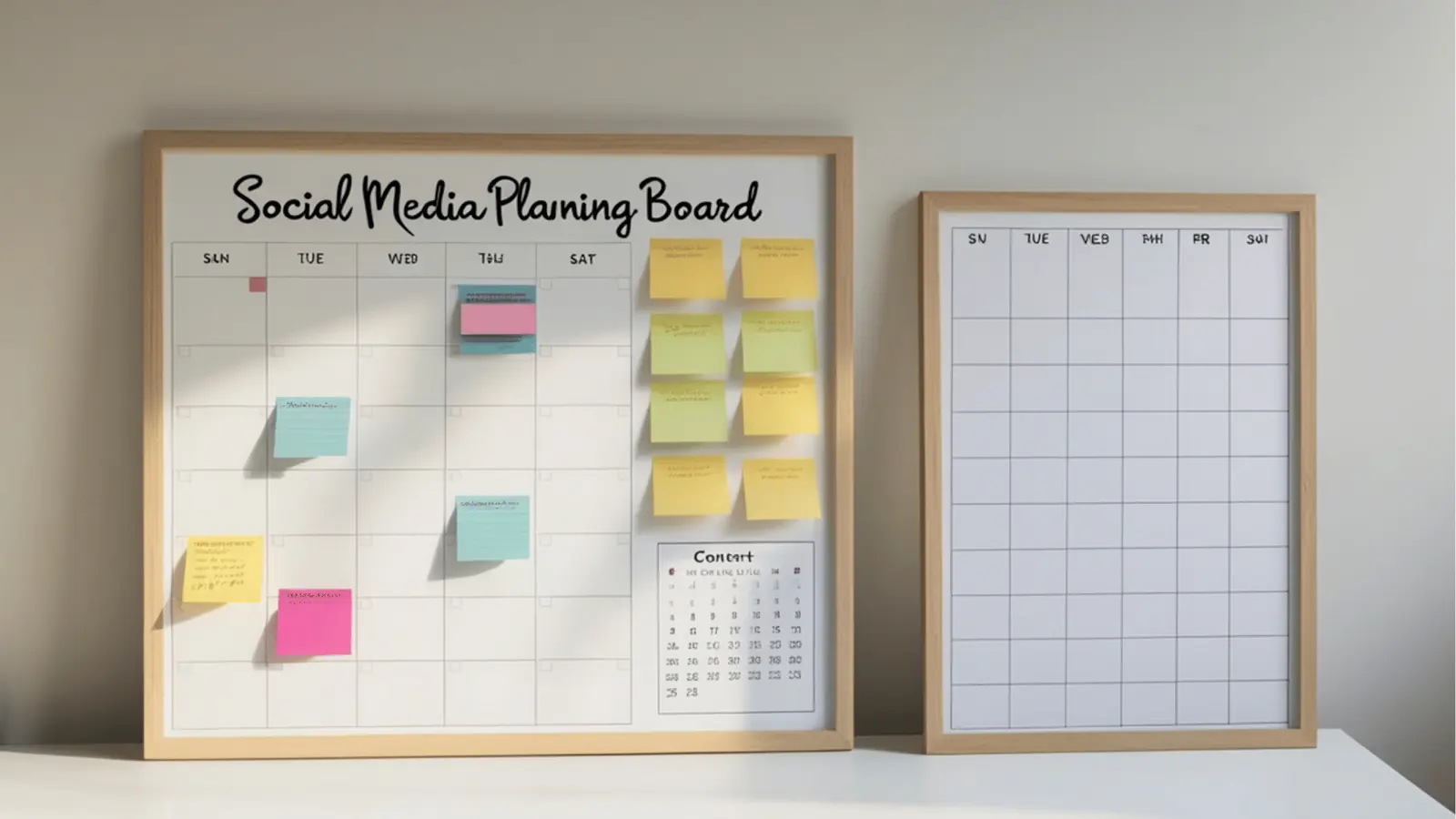
If you cannot measure the relief your team feels, you can certainly measure the impact on your bottom line. Transitioning to a template-first culture transforms your publishing output from a series of frantic, isolated events into a predictable, measurable production line. You need to stop tracking "total posts" as your North Star and start looking at the efficiency of the machine that creates them.
KPI box: Track these three metrics to validate your shift to templates:
- Production Velocity: Total time spent from ideation to approval per post.
- Revision Rate: Percentage of posts returned for non-creative corrections (e.g., wrong formatting, missing links).
- Template Utilization: Ratio of posts built from templates vs. ad-hoc "bespoke" creations.
As you implement this system, your Revision Rate should plummet. Since your brand-safe templates in Mydrop act as the source of truth, there are fewer opportunities for human error to slip through. The legal team or the brand managers aren't wasting time flagging typos in your disclaimer text for the thousandth time; they are looking at the actual creative impact of your campaign.
To keep your system healthy, use this audit checklist to ensure your templates remain effective assets rather than just stale files.
- Review template performance: Check your analytics in Mydrop monthly to see if a specific template's engagement is dipping.
- Refresh brand assets: Ensure all logos and legal disclaimers inside templates match the current identity guidelines.
- Simplify workflows: Identify any manual step that still exists between selecting a template and hitting "Publish" and try to automate it.
- Gather team feedback: Ask your creators if the current structure feels like a foundation or a cage.
- Clean up the library: Archive templates that are no longer used to reduce choice fatigue for your team.
Watch out: Do not fall into the "template trap" where you over-optimize for consistency at the expense of engagement. A template is a starting point, not the final product. If your metrics show that a specific format is flatlining, your template is the first thing you should break, not the last.
Ultimately, your goal is to reach a state of creative autonomy where your team spends 90 percent of their time on strategy and only 10 percent on the mechanics of publishing. That is the point where you stop just managing social media and start leading it. You move from being a reactive, high-stress shop to a high-output, brand-first machine. The best work happens when the process is invisible, and that only happens when you stop rebuilding the wheel every single day.
The operating habit that makes the change stick
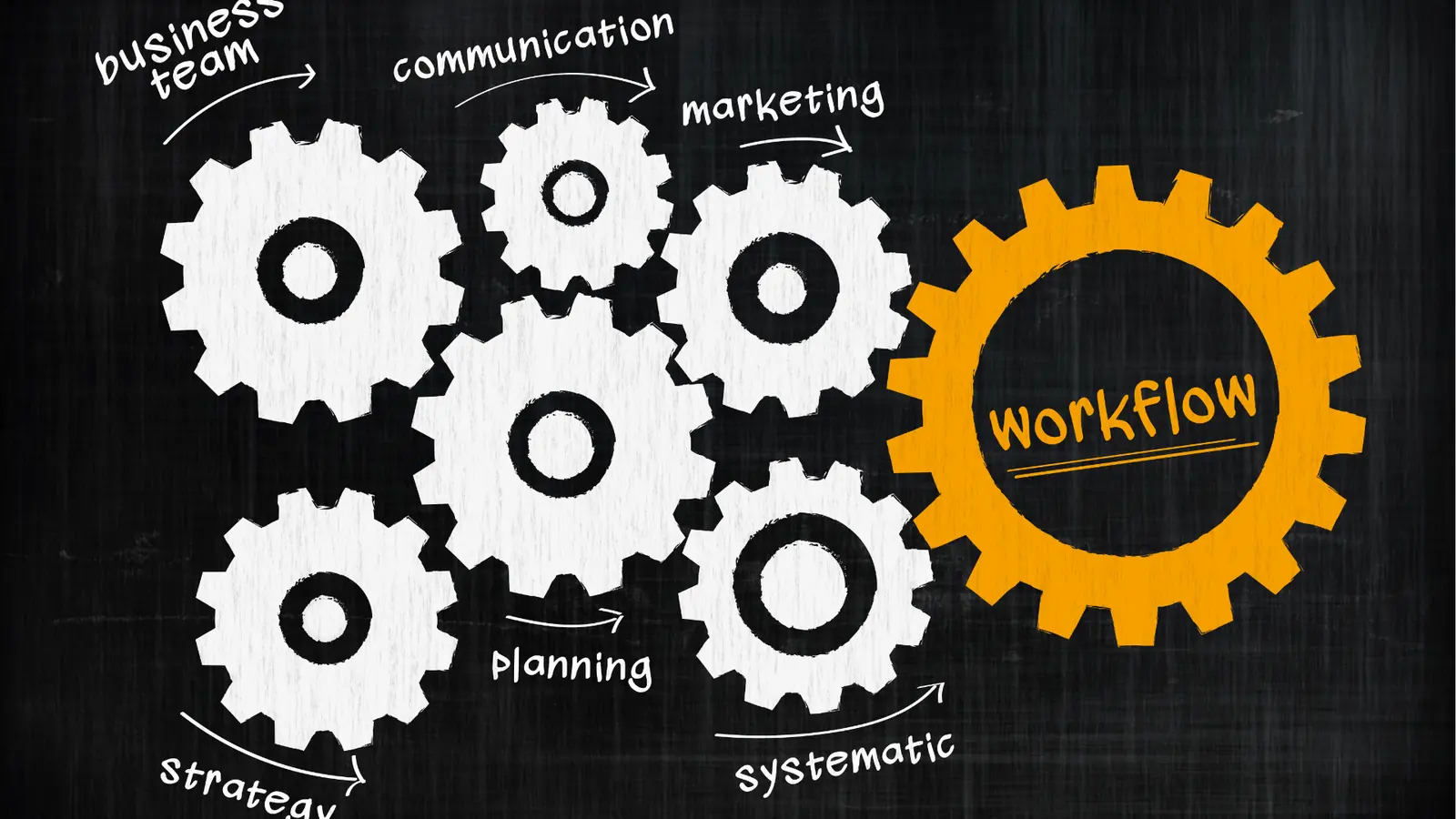
The biggest hurdle to scaling isn't the software; it is the human tendency to over-customize. Even the most polished template will fail if your team treats it as a suggestion rather than a starting line. You need to formalize the handover.
Most teams struggle because they view templates as static files. Instead, treat them as living product iterations. Every time a campaign underperforms or a stakeholder requests a minor format change, update the base template in Mydrop immediately. This ensures that the next person assigned to that task isn't working from a legacy version.
Operator rule: If you are doing the same manual task for the third time in a week, stop. Build the template. Then, mandate its use for the next five campaigns to see if it actually holds up under real-world pressure.
To lock this in, set up a simple weekly "Template Review" in your team rhythm. It takes ten minutes, but it prevents the slow drift toward inconsistent brand quality that plagues large marketing operations.
Your Action Plan for this week:
- Inventory: Pick your three most common post types (e.g., event announcements, product updates, team features).
- Standardize: Open
Calendar > Templatesin Mydrop and convert those three types into your master versions. Include placeholder media slots and verified brand-compliant caption structures. - Deputize: Assign one team member to review the next batch of scheduled content to ensure they are applying these templates correctly rather than building from scratch.
Conclusion

Scaling content isn't about working faster; it is about building a system that requires less cognitive load to produce the same high-level output. When you remove the need to decide on every font, tag, and structure, you leave your team with the headspace to actually improve the creative.
The goal is to move your department out of the reactive, "what do I need to include again?" panic and into a state of steady, predictable production. Once the workflow is standardized, your team stops being a group of manual laborers re-creating the same posts and starts acting like a true editorial operation.
True enterprise efficiency is not about pushing more buttons. It is about removing the friction of coordination so you can focus on the one thing that actually moves the needle: the quality of the message itself. Even the best-designed processes eventually break without a solid platform to hold them together; the right tool simply provides the structural integrity to keep your team aligned while you grow.