
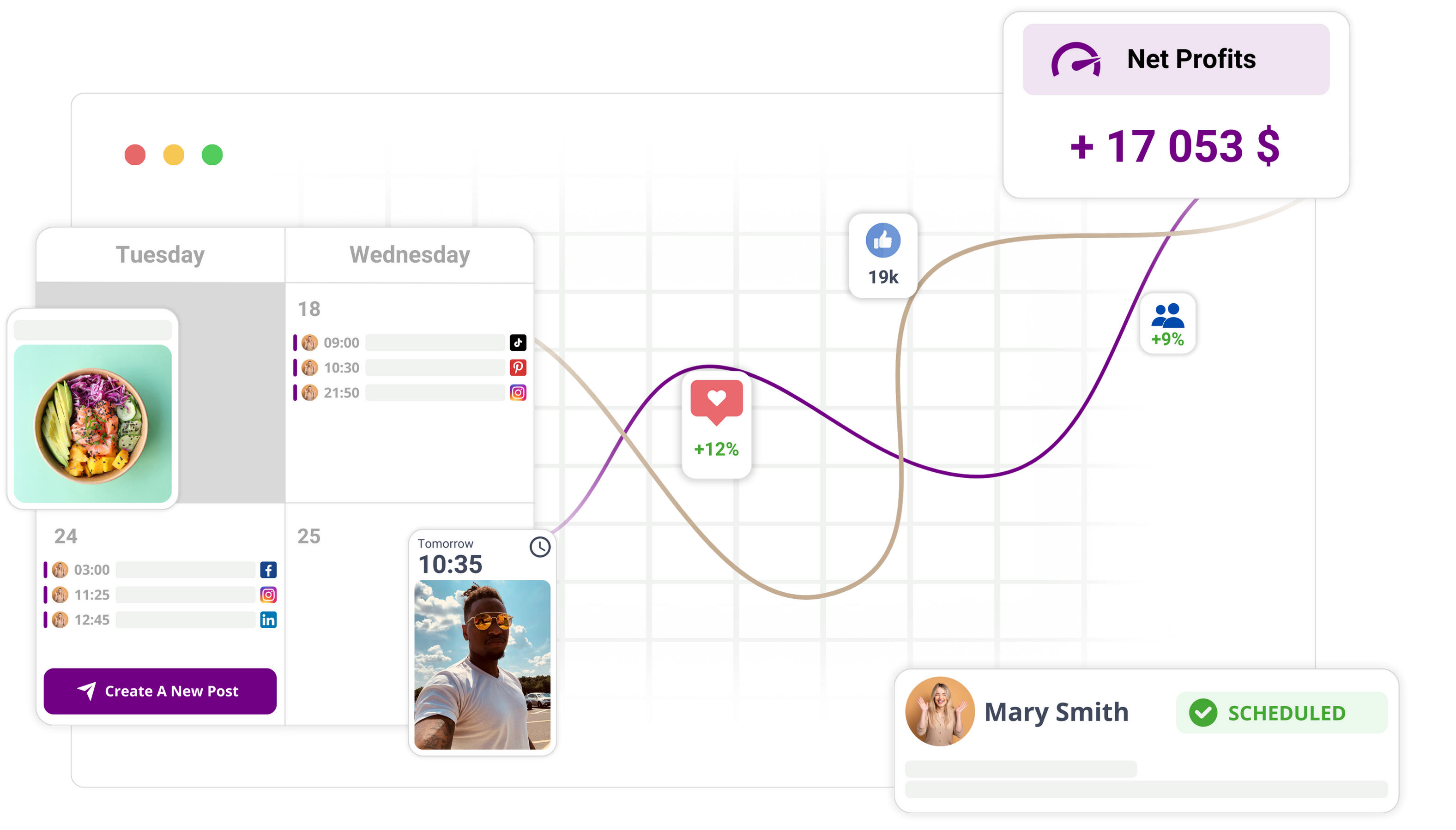
By the end of this tutorial, you will have configured a functional, automated workflow that handles your repetitive social media publishing tasks without requiring manual intervention for every individual post.
Before you start
To successfully create and run an automation, confirm that you have met the following requirements:
- Ensure that all social profiles where you intend to publish content are already connected to your Mydrop account.
- Verify that you are currently logged into the correct workspace. You can confirm your active workspace using the switcher in the main navigation.
- Have your content, captions, or media files ready. While you can configure automation triggers in advance, the workflow requires valid input to publish successfully.
- Confirm that you have the necessary permissions to manage automations within your selected workspace.
Step 1: Open the automation builder
Navigate to the Automations tab located in the main navigation menu. You will see a list of your existing workflows, if any. Click the new automation button to initialize the builder. This opens the configuration interface where you will define the logic for your automated publishing tasks.
Step 2: Configure the trigger and profiles
Inside the builder, begin by selecting your desired trigger type. The trigger determines when and how your automation initiates. After choosing the trigger, select the social profiles or predefined groups you want this automation to target. You can select multiple profiles at once if the content is intended to reach various platforms simultaneously. Carefully verify these selections, as the automation will attempt to publish to every profile included in this list.
Step 3: Configure content and timing
Once your profiles are set, move to the content and scheduling section of the builder. Depending on the trigger type you selected, you will be prompted to configure timing intervals. Use the time picker and interval settings to define how often the automation should run. For instance, you might set an hour interval or specify certain days for publication.
Next, input your content into the provided text prompt areas. If your workflow requires visual assets, use the integrated media picker to attach the files you previously prepared. Ensure all text prompt areas are filled and your media files are correctly uploaded before proceeding. Leaving required fields empty is a common cause for save errors or failed publication attempts.
Step 4: Review and save the workflow
Before finalizing, review all settings within the builder to ensure your timing intervals, content, and profile selections are correct. Once you are satisfied with the configuration, click the save button to activate the automation.
After saving, the automation will appear in your main Automations list. You can monitor the status of the workflow here. An active status indicates that the system is ready to execute based on your triggers. You can also view associated permissions or check if any notifications are enabled for the workflow.
If you notice that the automation is not triggering as expected, return to the builder to check that the time picker settings are accurate and that the selected social profiles are still properly connected. You can pause, duplicate, or edit any automation at any time from the main list. If you no longer require a specific workflow, you can permanently delete it to remove it from your active list.
Step 1: Open the feature
You start creating your automated publishing workflow by accessing the dedicated control center within your workspace. Following this step ensures you are working within the correct environment and using the correct tools to build your publishing logic.
- Log in to your Mydrop account and ensure the correct workspace is active. You can verify your current workspace by checking the name displayed in the workspace switcher at the top of the interface. If you manage multiple brands or clients, switching to the appropriate one prevents you from applying automation rules to the wrong set of profiles.
- Locate the main navigation menu, typically found on the left side of your screen.
- Click on the tab labeled Automations. This action redirects you to your automation dashboard, which displays all existing workflows you have configured.
- Locate and click the New automation button. This action triggers the automation builder interface, which acts as the primary tool for defining your new task sequence.
When you click the button, you should see an empty configuration form appear on your screen. This form provides the fields necessary to define your trigger conditions and specify the social media platforms that will receive the content. If you do not see this form, check your internet connection or refresh the page, as it requires a stable connection to interact with the Mydrop server settings. You are now inside the builder and ready to map out your first automated task.
Step 2: Set up the basics
With the builder open, you must define the foundational logic of your workflow. This setup determines when Mydrop should act and which social media profiles will receive your content. Defining these basics early prevents errors that occur when the system lacks clear instructions on where to send posts or how frequently to trigger the publishing action.
- Look for the Trigger type option in the configuration form. Click the dropdown menu to view the available options, which define the logic Mydrop uses to start a task. Select the trigger that best matches your goal, such as a time-based interval. Choosing the correct trigger is essential because it dictates the rhythm of your posts.
- After selecting the trigger, locate the profile selection section. You will see a list of all your connected social media channels.
- Select the specific social profiles or groups you want to include in this workflow. You can choose one or multiple channels. To select multiple, click each profile icon. Selected profiles should appear highlighted in the interface, confirming they are linked to the current automation.
- If you have created profile groups in your workspace settings, you can select these instead of individual profiles. Selecting a group is an efficient way to apply the same automation rules to multiple channels simultaneously, especially for campaigns that span across several platforms.
Review your choices before moving forward. Ensure that the selected profiles are the ones intended for this specific content. If you accidentally select an incorrect profile, simply click it again to deselect it. Once you confirm the trigger type and profile selection are correct, you have completed the structural foundation for your automation. The builder will now allow you to proceed to the specific content details and timing configurations.
Step 3: Add the content or settings
In this step, you define the substance of your posts and determine when the automation should trigger. The builder uses dedicated fields to ensure your content is ready for its intended social channels.
- Locate the text prompt area in the builder. This is where you enter the captions or messages that will accompany your social posts. Use the available text boxes to draft your content.
- If your workflow includes images or videos, open the media picker. You can select files directly from your device or use available integrations to bring in assets from cloud storage or your existing Mydrop gallery.
- Configure the trigger frequency. Depending on your needs, you can choose between hour-based intervals or specific days of the month. Use the time-picker tool to ensure the publishing window aligns with your audience engagement habits.
- If your workflow requires repeated actions, check for settings that allow you to set specific day intervals. This ensures that the automation repeats on the exact schedule you intend.
- Review all fields for completeness. Mydrop requires specific inputs for captions, media, and scheduling logic. If a field remains empty, the builder will not allow you to finalize the setup.
Taking time to verify these settings prevents common errors, such as empty posts or content being sent at incorrect times. Check that your media files are attached properly and that the text prompt area does not contain typos, as this content will be distributed automatically.
Step 4: Review the workflow
After configuring your content and timing, you must perform a final check before saving the automation. This step confirms that your configuration is error-free and ready for deployment.
- Scan the summary view of your automation. Verify that the correct social profiles are selected, the timing intervals are set accurately, and all necessary media files are attached.
- Look for any warning messages in the interface. Mydrop will highlight missing information or configuration conflicts, such as an unselected profile or an invalid time setting. Resolve these items before proceeding.
- Click the save button to register the workflow in your workspace. Once saved, the automation becomes active and will follow the schedule you have established.
- Return to the main Automations dashboard to confirm the status of your newly created workflow. You should see it listed with an active indicator, confirming that Mydrop has accepted your configuration.
- Review permissions and notification settings for this automation. Ensure that your team members have the necessary access levels to view or modify this workflow if collaboration is required.
To confirm the setup worked, wait for the first scheduled interval or perform a test run if the builder provides a run once option. Monitor the dashboard to see if the status changes as the trigger conditions are met.
If you notice that the automation is not triggering as expected, double-check your workspace timezone settings. Mydrop follows the time of the active workspace, so a mismatch between your local time and the workspace time is a frequent cause of unexpected scheduling behavior.
You can manage your workflow at any time from the main dashboard. If you need to make changes, click the edit button to adjust the trigger type or content. If the workflow is no longer needed, you can pause it to stop execution without deleting your work, or use the delete function to remove it entirely. You can also duplicate an existing workflow to create a similar task without repeating the configuration process from scratch. Following these steps ensures your repetitive publishing tasks remain consistent and reliable.
Troubleshooting and next steps
If your automation does not trigger as expected or fails to publish content, verify your settings to ensure all required information is correctly entered. Review these common issues to identify and fix problems with your workflow setup:
Check your social profile selections. If a post fails to appear on a specific channel, open the automation, click the edit button, and confirm that the intended profile or group is selected in the profile configuration area. An automation only publishes to channels explicitly included during setup.
Verify time and interval settings. Mydrop uses specific time-pickers and interval selectors to determine when to trigger actions. If an automation runs at the wrong frequency, revisit the timing configuration. Ensure the selected hour interval or day interval matches your intended publishing cadence. Double-check that your workspace timezone settings are correct, as these influence when the automated task initiates.
Confirm content and media are present. If your automation saves successfully but generates empty posts, re-open the configuration form. Ensure the text prompt area contains the necessary caption or message and that any required media files are properly attached. Missing input in mandatory fields often prevents the automation from creating valid posts.
Review automation status. If you paused an automation for maintenance or testing, it will remain inactive until you manually change its state. Check the Automations list in your dashboard. An active status is required for the workflow to trigger according to your configured schedule.
Once you have verified your settings, you can manage your automations to maintain your publishing schedule:
- Pause an automation: Use the pause option to temporarily stop an active workflow without deleting its configuration. This is useful for seasonal campaigns or when you need to pause social media updates.
- Duplicate an automation: If you have a successful workflow that needs slight adjustments for another channel or brand, click the duplicate button. This creates a copy of your current automation, allowing you to modify specific settings while keeping the overall structure intact.
- Delete an automation: If a workflow is no longer needed, use the delete option to remove it permanently from your dashboard. This cleans up your list and prevents accidental triggers.
- Run once: Use this feature to test your automation by triggering it immediately rather than waiting for the next scheduled interval. This helps confirm that your content and profile mappings work as intended.
Monitoring these settings regularly helps keep your automated workflows consistent and prevents gaps in your publishing schedule. By keeping your automation status, permissions, and settings updated, you ensure that Mydrop continues to manage your repetitive tasks without requiring manual intervention for every individual post.
Conclusion
Automating your social media publishing with Mydrop reduces manual effort and ensures consistent content delivery across your social channels. By using the Automation builder, you define your own triggers, content, and scheduling intervals, transforming repetitive tasks into controlled, reliable workflows.
You have now learned how to navigate the Automations tab, initialize a new automation, configure triggers, and manage your active publishing workflows. These tools allow you to focus on content strategy and creation while Mydrop handles the routine execution of your social media schedule. Use the troubleshooting steps outlined above to refine your automations and maintain the health of your published posts. Your automated publishing setup is now ready to support your social media operations.