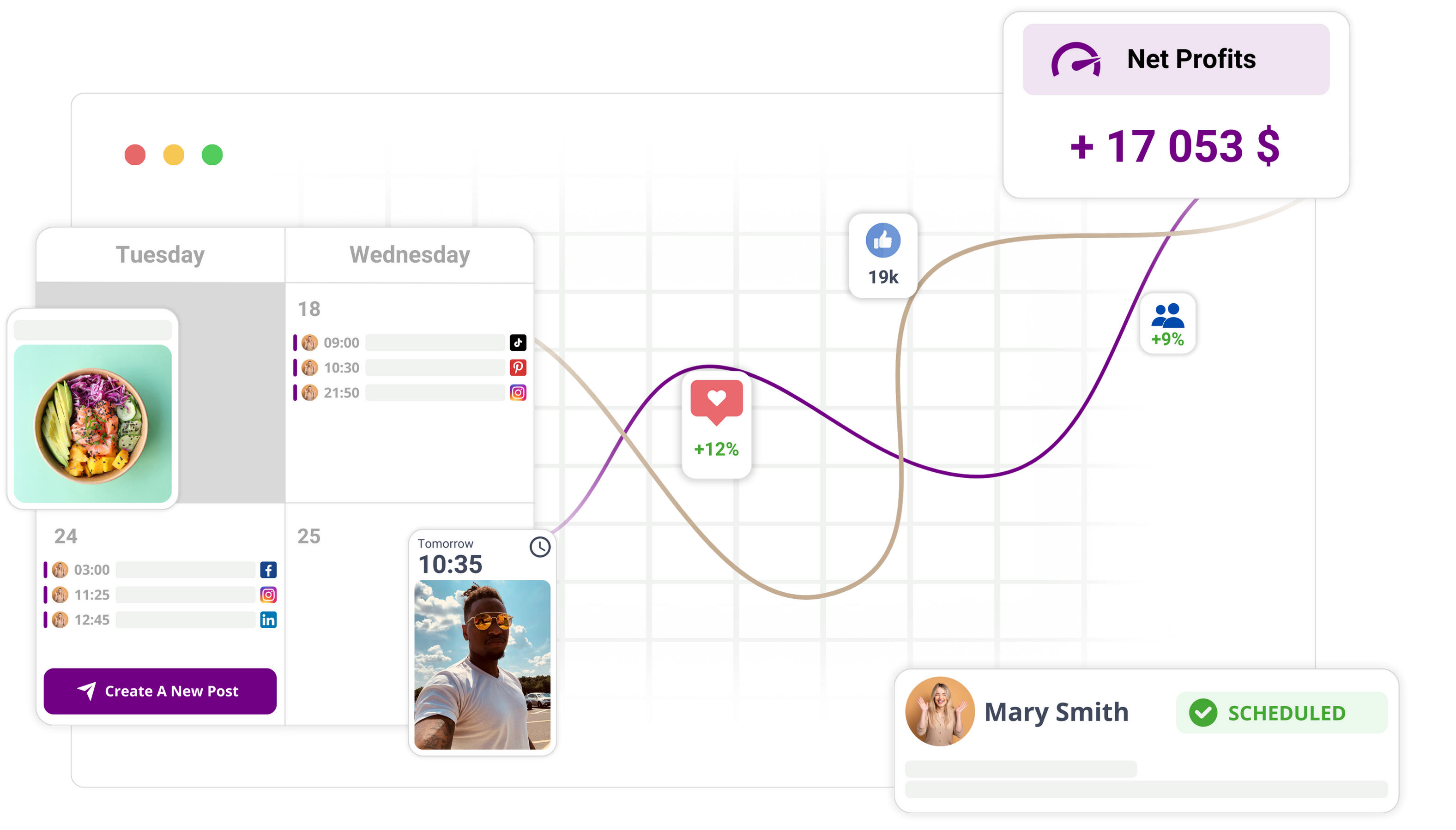

The best social media approval tool is the one that forces your team to stop using email and DMs to review content, and instead anchors every piece of feedback directly to the asset within the publishing workflow. If the feedback doesn’t live on the asset, it effectively doesn’t exist until someone discovers a critical error minutes before a post goes live.
TLDR: Traditional standalone tools treat approval as a separate "project," while an integrated platform like Mydrop treats approval as a locked step in the publishing journey. Choose based on whether you want a faster notification system (email/Slack) or a faster resolution system (integrated workflow).
Marketing teams are currently trapped in what I call the "approval scavenger hunt." You know the feeling: you are toggling between Slack threads, searching through email chains for that one specific PDF version, and checking a Trello board to see if Legal actually signed off. It is an exhausting, high-stakes guessing game where the primary goal is simply not losing track of the work. When your review process lives exactly where the scheduling happens, the relief isn't just speed-it is the genuine peace of mind knowing the brand won't be compromised by a forgotten comment buried in a chain.
Here is the awkward truth: most "social media management tools" actually create more silos by separating the conversation from the content. They give you a place to schedule, but force you to take your feedback to a different tab, effectively turning your review process into a high-stakes guessing game.
Operator rule: If the feedback isn't connected to the post, it's just noise waiting to become an error. Stop managing the tool and start managing the campaign.
To cut through the noise, you need to filter your current options based on three specific criteria:
- Integration Density: Can you reply, react, and edit feedback inside the publishing flow, or do you have to copy-paste links?
- Approval Accountability: Does the tool force an explicit sign-off from your required stakeholders, or is "an emoji reaction in Slack" considered good enough?
- Context Preservation: When an asset is edited based on feedback, is the history of that change visible to the next reviewer, or do you have to start the explanation over?
If you are currently using a stack of three or more apps to get one post live, you are paying a heavy "context-switching tax" that is likely eroding your team's creative focus.
The feature list is not the decision

It is tempting to pull up a spreadsheet and compare tools by the number of supported networks or the presence of a "calendar view." But those features are table stakes in 2026. The real difference between a tool that helps you scale and one that just adds more admin work lies in how it handles Coordinated Friction-the moments where Legal, clients, or brand managers need to step in and stop the flow.
Most enterprise teams fall into the trap of buying "best-in-class" tools for every specific job: one for design, one for scheduling, and one for communication. While this feels efficient at first, it creates a massive coordination debt. Every time you ask a reviewer to log into a new platform or switch from a native social preview to a PDF attached to an email, you introduce another point of failure. The goal of a serious social media operation is to remove the obstacles between a great idea and a live, compliant post. If your review tool requires you to explain where to look for feedback, you’ve already lost.
The buying criteria teams usually miss

Most organizations approach the procurement of an approval tool like they are buying a utility. They map out a list of features-can it handle video files? Does it integrate with Adobe? Can we set up a three-tier approval hierarchy?-and assume the rest will fall into place. They treat the tool as a static container, failing to realize that the most critical criteria isn't what the tool does, but what it prevents.
The criteria you should actually be prioritizing is the cost of context drift.
When a legal review happens in a PDF markup tool, while the creative feedback happens in a Slack thread, and the final publishing schedule lives in a spreadsheet, your team is paying a hidden tax on every single post. This tax manifests as "coordination debt." It is the time spent hunting for the "final_final_v2_approved.mp4" file that somehow went missing right before the campaign launch. If your tool doesn't bridge the gap between creative assets and the publishing calendar, you are just managing a series of disconnected work-in-progress silos.
Most teams underestimate: The sheer amount of institutional knowledge lost when feedback is detached from the content. If a legal objection is whispered in a meeting and then manually applied by a designer, the reasoning behind the change is lost to the rest of the team forever.
True enterprise-grade approval isn't just about getting a green light; it is about building an audit trail that lives as long as the asset itself. You need to ask yourself: Does this tool turn our approval process into a searchable historical record, or does it simply act as a temporary mailbox for approvals that expire the moment the post goes live?
Where the options quietly diverge

Not all platforms are built to sustain this level of operational integrity. Most scheduling tools treat approvals as a "bolt-on" feature-a simple toggle you flip-which works fine for a team of two, but falls apart at the enterprise level. When you are managing ten markets, twenty brands, and a rotating cast of stakeholders, you need a workflow that mirrors how your team actually works.
Here is how the common categories of tools stack up against the realities of a high-stakes publishing environment:
| Capability | Basic Schedulers | Standalone Review Apps | Mydrop Unified Flow |
|---|---|---|---|
| Asset-Feedback Link | Broken | Strong | Native/Persistent |
| Publishing Context | Yes | No | Yes |
| Multi-Channel Sync | Partial | No | Full |
| Governance/Audit | Weak | Strong (for creative) | Complete |
The divergence becomes obvious once you step outside of a single-channel workflow. A standalone creative review app is excellent at managing design revisions, but it is effectively a "blind" room-it has no idea that you are planning to cross-post that asset to TikTok, LinkedIn, and Instagram simultaneously. It requires you to export the asset, move it into your scheduler, and manually replicate the approval status.
Common mistake: Using a "creative-only" review tool and assuming it satisfies your legal and brand compliance needs. Legal doesn't just need to see the video; they need to see how the video behaves in the specific context of the post, with the caption, the link-in-bio, and the first-comment interaction.
If you want to move from "just getting it done" to "scaling with confidence," you have to stop thinking about approvals as a final checkpoint and start seeing them as an integrated part of your creative development.
- Intake & Briefing: Start the workflow with centralized assets in the gallery.
- Conversation & Iteration: Thread feedback directly onto the preview, keeping context alive.
- Formal Review: Use defined approval gates that notify stakeholders via their preferred channels.
- Final Sync: Publish directly from the approved state, ensuring the "approved version" is exactly what the audience sees.
The difference between these approaches is the difference between chaos and control. When your tools are fractured, your team spends 30 percent of their time on "meta-work"-explaining where things are and why they changed. When the work is anchored to the asset, the process becomes invisible. You stop managing the tool and start managing the campaign.
The ultimate goal of a social media approval system shouldn't be to make your team faster at clicking "approve." It should be to make it impossible for a compliance risk or a brand inconsistency to slip through the cracks, simply because the right people were looking at the wrong version of the truth.
Match the tool to the mess you really have

You are not choosing between software interfaces; you are choosing how much "coordination debt" you are willing to carry into the next quarter. If your team is struggling with platform fragmentation, your primary goal isn't just "approvals," it is visibility. You need a system that forces the conversation to live and die on the asset itself, not in a separate chat window that eventually gets deleted or buried.
Framework: The Three C’s of Review
- Content: Does the creative meet the brief?
- Context: Does the caption, link, and platform-specific formatting fit the audience?
- Compliance: Have the legal, brand, and stakeholder reviewers actually signed off?
If your current setup requires jumping from a Slack thread to an email chain, and then finally to a spreadsheet to track the status of a post, you have a fragmented process. This is where teams find themselves hunting for "the latest version" three minutes before a scheduled push.
Instead, look for a workflow that anchors the review process directly within the tool. In Mydrop, for example, the approval workflow is tied to the post itself. When a legal or brand reviewer needs to provide feedback, they do it right inside the publishing flow.
Common mistake: Using a general project management tool for creative reviews. While they are great for tasks, they lack the native platform previews (like seeing how an Instagram Reel actually looks on mobile) that keep reviewers from saying "It looks fine," only to realize later that the aspect ratio was wrong or the text was cut off.
When your review process is coupled with the publishing tool, you eliminate the "shadow feedback loop"-that dangerous habit where designers and managers agree on changes in a DM, but the person scheduling the post never gets the memo.
The proof that the switch is working

How do you know if moving your review process into an integrated environment is actually saving your team? It comes down to how quiet your "urgent" channels become. When the process is anchored to the asset, the frantic "Where are we on this?" messages start to vanish.
You should measure your success not just by speed, but by governance. If you can pull a report showing exactly who approved which post and when, you’ve moved from reactive chaos to professional operations.
KPI box: Expected efficiency gains
- Review Cycle Time: Reduce by 30-50% by eliminating handoff friction.
- Version Control Errors: Near-zero reduction in "wrong asset" publishes.
- Stakeholder Sync: 100% of feedback consolidated in one history log.
If you are ready to audit your current workflow, start with this checklist. If you cannot answer "yes" to these, your current tool is likely costing you more in human labor than it is saving you in software fees.
- Can a reviewer see the live platform preview without logging into a secondary tool?
- Is there a single, persistent history of all comments and edits linked to this specific post?
- Are approval permissions granular enough to distinguish between a "Brand" review and a "Legal" sign-off?
- Can I push a post to live the second the final checkmark is clicked, without manual re-uploading?
- Does the system alert me if a mandatory reviewer hasn't seen the asset within my set SLA?
Pull quote: "Feedback that isn't connected to the post is just noise waiting to become an error."
Ultimately, the best transition is the one that goes unnoticed by your audience but is deeply felt by your team. When you stop managing the tool and start managing the campaign, you spend less time playing detective in your inbox and more time ensuring your content actually hits the mark. The goal is simple: ensure that when a post goes live, it does so with the confidence that every stakeholder has already had their say, right where the work was happening.
Choose the option your team will actually use

The most sophisticated approval software is worthless if your creative team keeps defaulting to Slack, email, or a quick tap on the shoulder because the "official" tool feels like an administrative hurdle. If your tool adds clicks without removing chaos, adoption will fail within a month.
When choosing your platform, look for frictionless integration. You need an environment where the conversation doesn't just happen near the asset, but is physically tethered to it. If a reviewer needs to jump between an email thread and a dashboard to see if their feedback was addressed, they will eventually stop checking the dashboard.
Operator rule: If your team has to ask "Did you see my comment on the file?" while pointing at a different screen, your workflow is already broken.
The goal is to force a migration from shadow feedback loops-those fragmented DMs and hidden email chains-into a unified workspace. For high-volume teams, this means choosing a platform that treats the approval workflow as the primary "home base" for production. When every stakeholder knows exactly where to find the latest version, the "approval scavenger hunt" disappears, replaced by a simple, reliable cadence.
To begin this transition, take these three steps this week:
- Audit your current "Shadow" channels: Survey your team to identify which apps (Slack, WhatsApp, Email) are currently used for creative feedback.
- Standardize the asset handoff: Mandate that all initial review requests must originate from a single source, using a platform that creates a permanent, immutable record of approvals.
- Set a "No Comment Outside" policy: Once a project moves into the review phase, enforce a rule where any feedback provided outside the designated platform is officially ignored until it is logged correctly.
Conclusion
The persistent struggle of marketing operations is rarely a lack of talent or ambition; it is the silent, grinding weight of coordination debt. Every time a brand manager has to copy-paste a critique from a chat thread into a production tool, you are paying a tax on your team’s focus. That tax compounds until you are no longer managing a social strategy-you are simply managing a collection of administrative bottlenecks.
True operational maturity comes when you stop viewing "publishing" and "approving" as two separate tasks. They are parts of the same rhythmic process. When you unify these workflows, you remove the guesswork that causes compliance errors and missed deadlines.
Pull quote: "Feedback that isn't connected to the post is just noise waiting to become an error."
Ultimately, the best tools are invisible. They don't demand more of your team's time; they reclaim the time that was previously lost to toggling between tabs and chasing down status updates. Mydrop is built on this premise-anchoring conversations, assets, and approvals into a single, cohesive publishing flow so that your team can stop worrying about whether the right feedback was caught and focus entirely on the quality of the work hitting the feed. Stop managing the tool, and start managing the campaign.