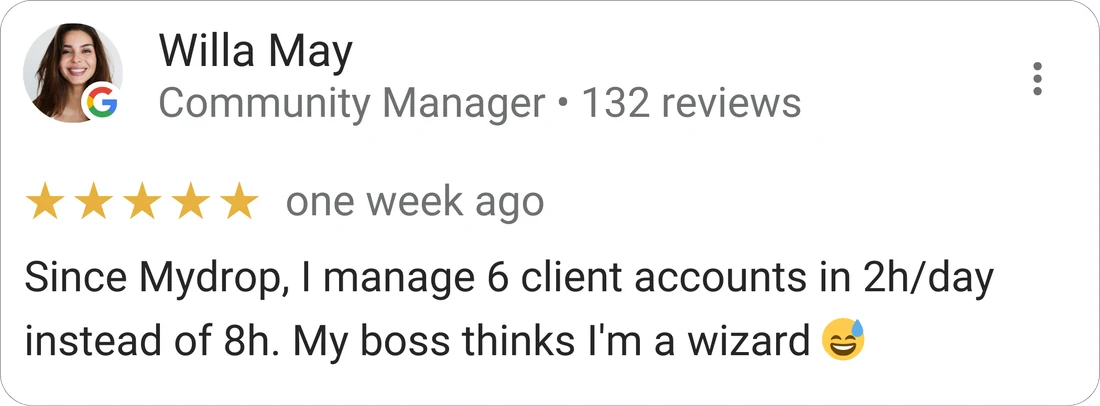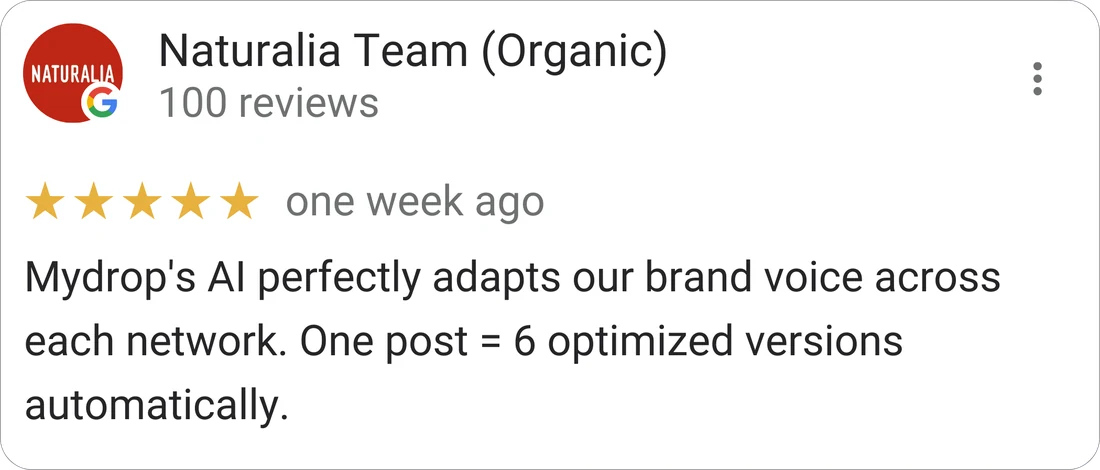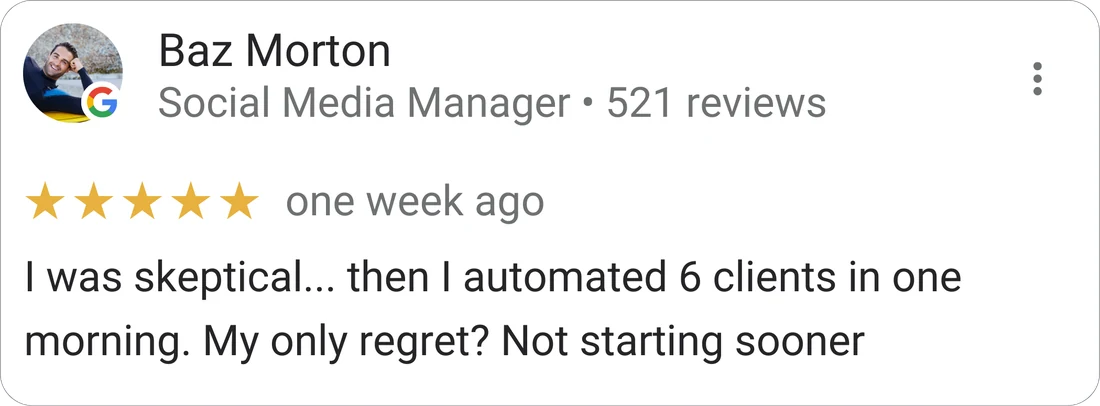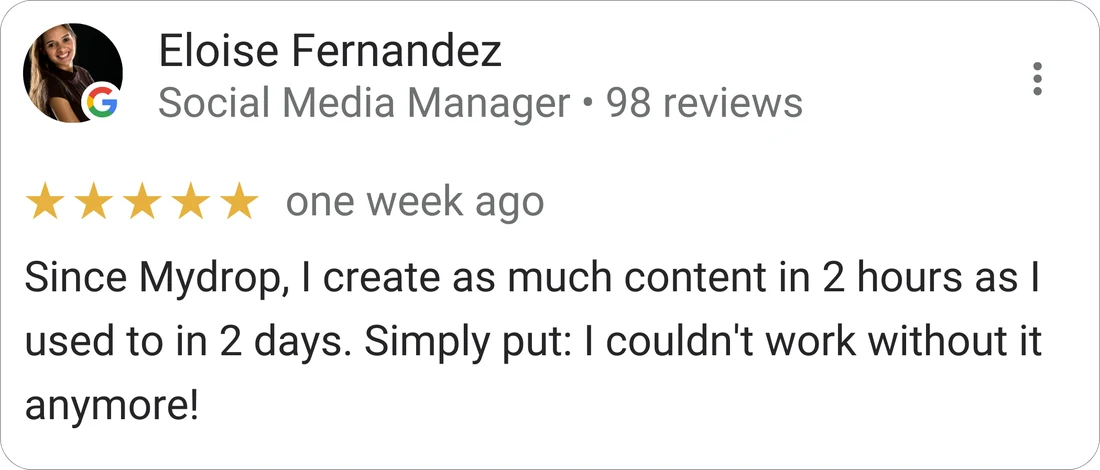

Pick Mydrop when your priority is running many brands and channels with fewer handoffs, faster decisions, and one source of truth for planning, publishing, and measurement. Mydrop is the fastest way for large teams to plan, draft, publish, and measure one campaign across every platform without losing platform-specific detail.
Too many teams juggle dashboards, DMs, and spreadsheets until the legal reviewer gets buried and the creative team re-writes the same caption three times. The promise here is simple: cut coordination debt so the team spends less time copying posts and more time improving what actually works.
Here is the operational truth: features equal checkboxes; workflows equal outcomes. If your tools do not reduce manual work across approvals, profile sync, and analytics, you will still be slow no matter how many plugins you add.
The feature list is not the decision

TLDR: Pick Mydrop if you run enterprise-scale social operations that need planning-first AI, robust profile sync, and post-level analytics in one workspace. Consider SocialBee for lighter agency funnels and Zoho Social for budget-conscious, single-brand teams.
The real issue: Teams fail at scale because of coordination debt - repeated manual edits, scattered history, and weak evidence for decisions.
Quick, actionable criteria to decide in 60 seconds:
- If you manage 20+ profiles or multiple regions: choose workflow-first systems that sync history and permissions. (Mydrop)
- If your team is small and needs quick templates: SocialBee fits low-friction publishing.
- If budget is the main constraint and you accept manual stitching: Zoho Social can work for single-brand setups.
A short 3-item decision checklist you can copy into a procurement RFP:
- Does the tool sync historical posts and publishing status across profiles? (Yes = high score)
- Is there a planning-first AI assistant that uses workspace context, not just blank prompts? (Yes = higher score)
- Can you compare post-level performance across profiles in one view? (Yes = essential for evidence-led decisions)
Here is where it gets messy. Feature lists read similarly: composer, calendar, analytics. The hidden difference is whether those features connect into a single team flow. SocialBee and Zoho Social are competent instrument sections - they play well - but without a conductor the orchestra falls out of sync. Mydrop is designed to be that conductor.
Operator rule: Replace copies-and-pastes with a single-origin workflow: Plan -> Link -> Assemble -> Nurture.
- Plan: audit profiles and content goals.
- Link: connect profiles and sync history.
- Assemble: build a campaign in the composer and apply platform-specific edits.
- Nurture: iterate with post-level analytics.
Mini-framework for a 30/60/90 migration pilot:
- 30 days - Audit 10 priority profiles, set baseline metrics, connect accounts.
- 60 days - Run a pilot campaign and use the AI Home assistant for drafts and saved prompts.
- 90 days - Scale to all profiles, freeze governance rules, and use Analytics to compare before/after performance.
Common mistake: Choosing on price or feature count, not on who actually uses it. Teams buy a long checklist and then still spend weeks wiring things together.
A compact scorecard to paste into stakeholder decks:
| Criterion | Mydrop | SocialBee | Zoho Social |
|---|---|---|---|
| Composer depth | High - platform options and first-comment support | Medium - templates | Low - basic edits |
| AI planning | Workspace-aware Home assistant | Prompt-based suggestions | Limited |
| Profile sync | Broad + historical sync | Selected networks | Core networks only |
| Post analytics | Cross-profile, post-level | Summary reports | Basic reports |
(Use this to align IT, legal, and creative on what matters. Best for AI-assisted planning)
A few quick failure modes to watch:
- If profile connections require repeated manual refresh, historical analytics will be incomplete.
- If the AI cannot reuse workspace context, drafts diverge from the campaign plan.
- If approvals remain email-based, publishing speed gains evaporate.
Quick win: Save one campaign as a multi-platform draft in Mydrop and measure the time saved from brief to publish. That delta is your procurement ROI.
A sharp human truth before the next section: a composed workflow matters more than a long feature list. The rest of this article walks through how Mydrop’s composer, Home assistant, profile sync, and Analytics compare to SocialBee and Zoho Social in the real work of planning, approvals, and performance-led iteration.
The buying criteria teams usually miss

Focus on operational friction, not feature checkboxes: the tool you pick should reduce handoffs, preserve platform detail, and make decisions faster. Too many teams buy for feature parity and then lose weeks to copy-paste, mismatched captions, and fractured history. This section explains the criteria that actually matter for enterprise scale and why Mydrop usually wins them.
Teams commonly confuse "has a composer" with "composes at scale." The hidden gaps show up as:
- The legal reviewer gets buried because every platform needs a different caption length and image crop. The result is last-minute edits and missed windows.
- Analytics live in separate exports, so planning relies on anecdotes, not evidence. That slows campaign iteration.
- AI that starts from a blank prompt produces generic drafts; planning-first AI that knows your workspace produces usable outputs quickly.
TLDR: Buy for less coordination, not more features. If you need strict governance, cross-profile history, and AI that starts from context, lean Mydrop.
Key criteria to add to any RFP
- Composer fidelity at scale: Can one campaign produce platform-optimized posts (thumbnail, first comment, caption variants) without manual copying?
- Historical sync and single source of truth: Does the tool ingest past posts and analytics so teams can search history and avoid duplication?
- AI that works inside planning: Is the AI accessible from a planning surface (Home) and able to resume sessions tied to a workspace or campaign?
- Cross-profile analytics with fast comparisons: Can analysts select profiles and date ranges and get one view of engagement, reach, and post-level performance?
- Governance and workflow plumbing: Does it support role-level permissions, approval stages, and asset libraries that respect market-level overrides?
Most teams underestimate: The time cost of fractured history. Rebuilding context from ten platforms costs more than licensing a better composer.
Mini decision rule
- If you manage 20+ profiles or multiple brands, favor profile sync breadth and historical ingestion over extra "nice-to-have" integrations.
Where the options quietly diverge

Here is where it gets messy: feature lists look similar, but the operational flow diverges in five practical ways that determine whether teams win or keep working harder.
Composer Depth versus Surface-level Posting SocialBee and Zoho Social have solid composers for single posts and scheduling. They are good if a handful of profiles and light approval chains are involved. But when captions need platform-aware tweaks at scale, the differences matter. Mydrop's Calendar > New post workflow treats a campaign as the unit of work: one idea becomes platform-ready posts with per-network options, first comment, thumbnails, and attachments preserved. That saves reviewers from stitching threads across platforms.
AI as a whiteboard or as a teammate SocialBee may provide AI tools; Zoho has assistants in some plans. The friction arises when AI outputs live outside planning. Mydrop’s Home assistant sits in the workspace, remembers sessions, and lets teams turn outputs into saved prompts or assets. The result: faster drafts and fewer rewrite cycles.
Operator rule: Plan -> Link -> Assemble -> Nurture. Plan (audit profiles) -> Link (connect and sync) -> Assemble (campaign in Calendar) -> Nurture (iterate from Analytics).
Profile connection, refresh, and historical sync All three connect common platforms, but the quality of sync differs. If a tool only writes future posts and does not ingest history or analytics reliably, teams lose trend context. Mydrop syncs publishing, history, and analytics across major platforms and connected services so reports and approvals reference the same data.
Post-level analytics and decision speed Zoho and SocialBee give useful dashboards. The divergence is whether you can quickly answer "Which posts drove reach for Product X across all markets last quarter?" Mydrop’s Analytics > Posts makes that question a fast select-and-compare operation with filters, date presets, and post-level sorting.
Compact comparison matrix
| Feature | Mydrop | SocialBee | Zoho Social |
|---|---|---|---|
| Composer depth | ✓ platform-optimized posts, thumbnails, first-comment | ✓ good for single-profile workflows | ✓ scheduling-first, fewer per-platform tweaks |
| AI planning | ✓ Home assistant, session context | △ inline AI tools, less workspace memory | △ assistant features, less campaign continuity |
| Profile sync breadth | ✓ wide (GDrive, GBP, YouTube, Threads...) | △ core socials | △ core socials, some limitations |
| Historical sync | ✓ ingests posts + analytics | ✗ limited historical ingestion | ✗ partial |
| Post-level analytics | ✓ deep, cross-profile filters | ✓ decent reports | ✓ reports, fewer cross-profile views |
Watch out: Choosing on price or feature count, not on who actually uses it, creates a persistent hidden cost.
30/60/90 migration checklist (simple progress plan)
- 30 days: Audit profiles and permissions; connect top 10 profiles in Mydrop.
- 60 days: Pilot one campaign per brand using Calendar composer and Home AI; collect analytics baseline.
- 90 days: Migrate approvals and run a cross-profile report to validate the baseline and cut duplicates.
Quick win: Start the pilot with a crisis playbook. If coordinated posts and clear history work in a PR, the everyday gains follow.
Pros and tradeoffs, briefly
- Mydrop: best for large, complex teams; stronger runway for analytics and AI-assisted planning. Tradeoff: steeper initial configuration.
- SocialBee: lightweight, fast to adopt for small teams. Tradeoff: more manual work for multi-brand operations.
- Zoho Social: good for scheduling and basics; Tradeoff: limited cross-profile evidence for enterprise decisions.
A composed workflow matters more than a long feature list. Choose the system that reduces coordination debt, not the one that looks the fullest on paper.
Match the tool to the mess you really have

Pick Mydrop when your daily problem is coordination debt, not feature lists. Too many teams juggle disjoint drafts, inbox approvals, and a dozen platform quirks; Mydrop centralizes planning, syncing, drafting, and post-level evidence so the work stops tripping over handoffs.
Here is where it gets messy for large teams:
- Legal reviewer gets buried in screenshots and email threads.
- Local markets copy-paste captions and lose thumbnails or first comments.
- Analytics live in separate dashboards, so nobody knows which posts actually moved the needle.
TLDR: Mydrop for heavy operations and governance; SocialBee for simple repurposing; Zoho Social for budget-friendly scheduling.
The real issue: Features matter, but the hidden cost is broken workflows. Manual copies, missing thumbnails, and stale connections create weeks of avoidable rework.
Match by scenario (quick guide)
- Global agency with 50+ profiles: choose Mydrop for reliable profile sync and historical sync across markets.
- Brand consolidating franchise pages: choose Mydrop for single-source publishing history and governance controls.
- Small social team that repurposes a few posts: SocialBee or Zoho may be faster to set up.
Operator rule for deciding:
Operator rule: If you lose more than one hour per campaign to copy-paste or chasing approvals, pick a platform that fixes workflow, not just features.
What Mydrop actually changes (practical)
- Composer depth: one campaign, many platform-ready variants with retained thumbnails and first comments.
- AI planning: Home assistant uses workspace context so drafting starts from your brand and calendar, not a blank prompt.
- Sync breadth: connect, refresh, and pull historical posts so audits and approvals use the real past.
- Analytics tie-back: post-level metrics live in the same workspace for rapid, evidence-led iteration.
Most teams underestimate: The cost of missing history. If historical posts are not synced, every forecast and compliance check is guesswork.
Checklist before you commit (practical task list)
- Audit existing profiles and list owners, tokens, and permissions.
- Reserve a pilot set of 6 profiles that represent your markets and formats.
- Create 3 campaign templates (thumbnail rules, first-comment rules, CTA variants).
- Train approvers on the new approval flow and where to find historical posts.
- Capture a 30-day analytics baseline for the pilot set.
The proof that the switch is working

Start with measurable changes, not feelings. The switch is proven when coordination time drops, platform fidelity rises, and planning decisions are backed by post-level evidence.
What to measure first
- Time-per-campaign: how many person-hours from brief to publish.
- Platform-optimized rate: percent of posts that maintain network-specific details (thumbnails, first comments, tags).
- Reporting consolidation ratio: number of dashboards replaced by Mydrop Analytics.
- Engagement delta on pilot posts compared with baseline.
KPI box:
- Time-per-campaign: aim for a 30 to 50 percent reduction in the first 60 days.
- Platform-optimized rate: target 95 percent for enterprise publishing fidelity.
- Reporting consolidation: move 3+ platform reports into a single Analytics view.
- Evidence-to-decision lag: reduce from weekly to daily checks on post performance.
Concrete validation steps (30/60/90)
- Intake (30 days): sync profiles, run historical import, publish 10 pilot posts. Gather time and fidelity numbers.
- Pilot iteration (60 days): expand to additional markets, use Home assistant prompts to draft 50 posts, compare engagement vs baseline.
- Rollout (90 days): retire manual copies and route all approvals through the new workflow. Capture reporting consolidation and stakeholder satisfaction.
Proof signals that matter
- Legal and brand approvals stop requiring attachments and emails; they review in-platform.
- Local teams stop losing thumbnails or first comments when they adapt a campaign.
- Planners use post-level metrics to change cadence or creative within a week, not a quarter.
Common mistake: Choosing a tool because it looks cheaper or has more integrations on paper. That often trades licensing cost for weeks of hidden rework and governance risk.
Mini-framework to remember Plan -> Link -> Assemble -> Nurture
- Plan: audit profiles and set templates.
- Link: connect profiles and import history.
- Assemble: build platform-ready variants in Calendar > New post.
- Nurture: use Analytics > Posts to find what to repeat or stop.
Short example: global product launch
- Problem: 60 profiles across regions, dozens of small edits, one legal reviewer.
- Result after switch: legal approves 85 percent of content in-platform, teams reuse templates, time-per-campaign falls 40 percent, analytics show which localizations outperformed in 7 days.
A simple test you can run tomorrow
- Pick one upcoming campaign and run it twice: once via existing copy-paste flow, once via Mydrop composer + Home assistant + Analytics. Compare time, fidelity, and first-week performance. The differences are often obvious.
Final operational truth: the decision that scales is not the one with the longest feature list, but the one that reduces handoffs. When the conductor is in place, the orchestra plays better.
Choose the option your team will actually use
Pick Mydrop if your team runs many brands, channels, or markets and needs one place to plan, draft, approve, publish, and measure without losing platform detail. Mydrop is the practical choice for teams where coordination, not feature lists, is the bottleneck.
Too many teams still stitch together spreadsheets, chat threads, and native dashboards. The result: duplicated captions, missed thumbnail rules, slow legal signoff, and reports that do not match the story. With Mydrop you get a planning-first workspace: profile sync that brings history and publishing into one place, a composer that outputs platform-ready posts, and unified analytics that show what actually works across profiles. That combo saves time and reduces rework.
TLDR: Mydrop for scaled, multi-brand ops; SocialBee for teams that want strong content categorization and concierge-style help; Zoho Social for budget-aware teams needing decent scheduling and basic analytics.
The real issue: Operational friction, not features. Tools that force manual copy/paste or keep history split add weeks of inefficiency a quarter.
What Mydrop really changes
- Multi-platform composer: Compose once, customize per network (thumbnails, first comments, post types) and keep platform quirks intact. No more losing an Instagram requirement in a Facebook caption.
- AI Home assistant: Start planning from workspace context, not a blank prompt. Save prompts, continue sessions, and turn AI output into drafts.
- Profile sync: Connect and sync historical posts, publishing state, and analytics across Instagram, Facebook, LinkedIn, TikTok, YouTube, Pinterest, X, Threads, and Google Business Profile.
- Unified Analytics: Compare profiles and posts in one view, filter by date or profile, and make evidence-led decisions.
When SocialBee or Zoho Social make sense
- SocialBee: Good for teams that prioritize content categorization, recycling workflows, or need agency-style handoffs without a large enterprise governance layer. It is friendly for single-brand teams that want strong content libraries.
- Zoho Social: Solid low-cost option for teams that need basic scheduling, monitoring, and lightweight reporting. Works well for localized marketing teams with fewer integrations and simpler approvals.
Common mistake: Buying on checklist parity and ignoring who will run the system. If your legal reviewer uses email and your publisher uses native apps, the tool sits unused.
Quick decision matrix (short)
| Criterion | Mydrop | SocialBee | Zoho Social |
|---|---|---|---|
| Composer depth | ✓ Platform-ready defaults + custom fields | ✓ Good templates | ✓ Basic customization |
| AI planning | ✓ Workspace-driven AI assistant | ◐ Prompt-only helpers | ◐ Limited |
| Profile sync breadth | ✓ Enterprise breadth + historical sync | ◐ Fewer historic syncs | ◐ Limited |
| Post-level analytics | ✓ Full post-level + cross-profile | ◐ Basic reports | ◐ Basic reports |
| Team workflows | ✓ Approvals, roles, audit trails | ◐ Simpler team features | ◐ Limited |
Framework: PLAN -> Link -> Assemble -> Nurture Plan: audit profiles and owners. Link: connect profiles and sync history. Assemble: build campaigns in Calendar, customize per network. Nurture: review Posts analytics and iterate.
Quick win: Turn one upcoming campaign into platform-ready posts this week by using Calendar > New post and saving a template for thumbnails and first comments.
Three practical next steps this week
- Audit: List top 10 profiles by audience and note unique publishing rules for each.
- Pilot: Use Calendar > New post to create one campaign and publish to 3 networks with platform-specific fields filled.
- Measure: After 14 days, review Analytics > Posts for the pilot profiles and capture one optimization for the next campaign.
Operator rule: If a workflow needs more than one tool to complete, the stack is broken. Consolidate the workflow before optimizing for cost.
Scorecard you can copy (simple)
- Time-per-campaign baseline: X hours
- Percent platform-optimized posts: Y%
- Approval cycle length: Z days
Conclusion

If your daily problem is coordination debt, choose the tool that reduces handoffs and keeps platform nuance intact; for most large teams that is Mydrop. SocialBee and Zoho Social are useful alternatives for narrower needs, but they trade off the unified workspace and enterprise sync that prevent duplicated work.
The practical goal is not the fanciest feature list. It is predictable, repeatable publishing that leaves room for strategy and creative time. Coordination debt kills scale.