
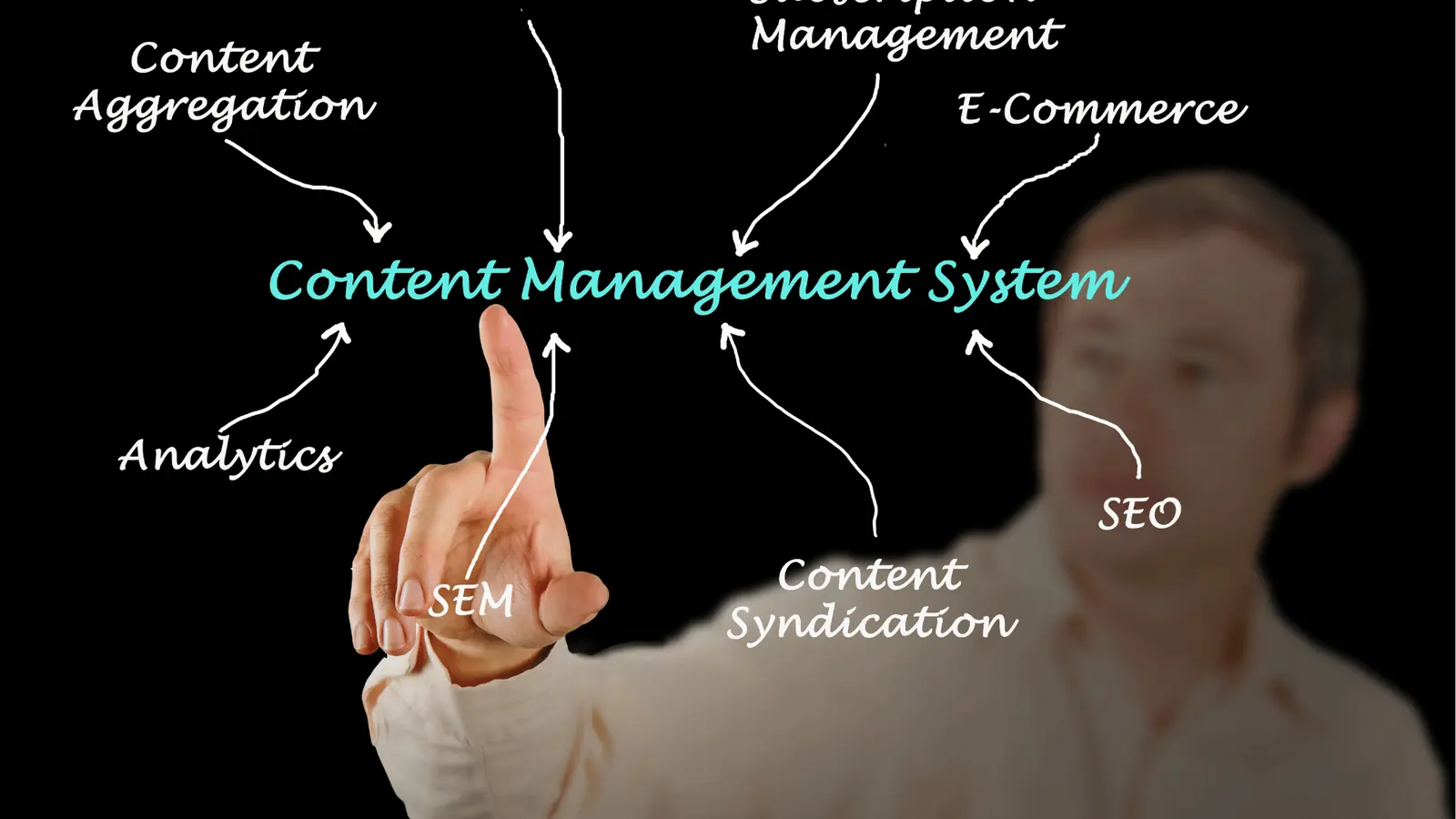
You aren't suffering from a lack of creativity; you are suffering from a lack of context. That viral post you labored over is performing like a stranger in a foreign city because it hasn't been introduced to the local customs of its destination. True resonance requires moving beyond simple content syndication to active, context-aware localization, using integrated operational systems to scale this precision.
TLDR: Stop cloning, start contextualizing. Your reach is dying because your content is failing to speak the specific language of each platform and region.
The exhaustion of constant production without seeing the corresponding engagement growth is real. We have all seen the team morale dip when a campaign, perfectly crafted in a boardroom, lands with a thud in a new market because of a missed cultural nuance or a wrong aspect ratio. Imagine the relief of knowing your assets are always tailored to the market before they ever hit the public queue, freeing your team from the endless, soul-crushing cycle of manual, last-minute platform adjustments.
- Audit your reach: Check if engagement drops by more than 40% when moving from your "home" platform to a secondary channel.
- Identify the gap: Determine if the issue is creative resonance (language/culture) or technical friction (format/time).
- Scale the fix: Replace manual "copy-paste" workflows with templates that allow for local variation.
Localization-Ready
The real problem hiding under the surface

Most brands treat "cross-platform" as a simple copy-paste job. The awkward truth is that this is the fastest way to kill your reach-each platform and region has a distinct dialect, and ignoring this is costing you your best work. When you broadcast a single message across global channels, you are essentially treating a global audience as a monolith. You aren't just losing engagement; you are actively training your audience to ignore you because you aren't speaking their language.
The real issue: Why "good enough" is losing you followers. Teams are trapped in a feedback loop where they produce high volumes of "global" content, see flatlining engagement, and respond by producing even more content to compensate. This is the definition of content fatigue. The friction between your production speed and the requirement for regional relevance is creating a massive, invisible drain on your team's resources.
The operational bottleneck often starts when the creative team sends a file that works perfectly on LinkedIn but is completely unusable for a specific regional TikTok campaign. The social manager then spends twenty minutes resizing, re-cropping, and manually scheduling, all while losing the original intent of the post.
Operator rule: Keep content intent fixed, but format fluid. Your core message should remain consistent, but its delivery-the tone, the visual crop, the posting window-must be as flexible as the platform demands.
When you ignore these platform-specific requirements, you are essentially asking your audience to do the work of translating your content for themselves. They won't. They will just keep scrolling. The cost of this "global default" is high: wasted ad spend, diluted brand equity, and a team that is too busy fighting the platform interface to actually innovate.
Coordination debt is the real killer here. It is not that your team lacks big ideas; it is that the infrastructure they use to distribute those ideas is actively fighting against them. Every time someone manually adjusts a caption for a different timezone or reformats a graphic because the tool didn't support a native export, you are paying a "coordination tax." This tax accumulates, slowing down approvals and increasing compliance risks as the team tries to hack together a process that should be handled by their software.
Efficiency, in this context, isn't about how fast you can hit "publish." It is about how accurately you can ensure the right content hits the right person at the right time. Precision, not volume, is your new competitive advantage.
Why the old way breaks once volume rises

Scaling your social presence by simply hiring more people to post more content is the fastest way to build coordination debt. The old model-manual spreadsheets, scattered email threads, and local file folders-works until your team hits a certain volume. Then, the process silently collapses. You end up with brand teams in different markets guessing what their counterparts in London or New York have already approved, leading to messy, inconsistent, or late posts.
Most teams underestimate: The total cost of "context switching" when your global team loses sight of local operational hours.
When you ignore the friction between your global strategy and local execution, you aren't just losing time. You are losing brand integrity. Your teams start "localizing" by cutting corners because they are under pressure to hit the calendar, not by tailoring the message for better engagement. The result is a chaotic feed where your global identity feels diluted, fragmented, or worse-irrelevant.
| The "Spray & Pray" Method | The "Context-Aware" Model |
|---|---|
| Strategy | Centralized, top-down mandate |
| Execution | Copy-paste across platforms |
| Governance | None (or reactionary) |
| Visibility | Siloed, spreadsheet-based |
| Outcome | High volume, low resonance |
This is where the cracks show. If your team has to manually resize assets for three different aspect ratios, check the local time for five different regions, and wait for an email approval on a copy tweak, you’ve already lost the momentum. You need systems that keep the operational context attached to the asset. When you manage multi-brand schedules, having clear workspace switches ensures that the Tokyo team isn't accidentally pushing content during their middle-of-the-night period, while your New York team stays focused on their own market pulse.
The simpler operating model

True resonance comes from shifting your focus toward a Content Fidelity over Content Volume mindset. Instead of trying to force a single asset to perform everywhere, you build a system where the core intent remains fixed while the format stays fluid. This is what we call the Locale-Platform-Format (LPF) Matrix-a way to ensure that every post is designed for its specific final destination.
The LPF Matrix
- Locale: Where does this live? (Market, culture, language).
- Platform: What are the rules? (Technical limits, user expectations).
- Format: How does it land? (Visual style, audio, interactive element).
To make this operational, stop treating every post as an individual chore and start treating them as part of a governed campaign. Your team should be able to look at their calendar and see exactly what is due, where it is going, and what still needs a final review.
Operator rule: If your calendar doesn't show you the operational status of your assets, you aren't planning-you are just guessing.
A truly professional social stack solves this by connecting your creative workflow to your publishing heartbeat. When your team can pull designs directly into a gallery workflow-choosing specific orientation and quality settings right at the point of import-they stop wasting time on manual re-uploads.
Putting it into practice
- Intake: Define the regional intent and assets needed.
- Refinement: Use platform-specific exports to align visual formats.
- Context: Add calendar notes to lock in campaign themes and regional nuances.
- Validation: Review against active rules and health signals to ensure compliance.
- Publish: Monitor the post impact within the platform-specific stream.
By anchoring your work in this way, you turn your team from a group of "posters" into a group of "operators." You stop reacting to the constant pressure of the next publish slot and start managing a high-performance content engine. The goal is to reach a state where you are not just pushing content; you are actively nurturing its translation across every touchpoint. In the end, scale should not mean the dilution of your message; it should mean the multiplication of its relevance.
Automation should not be an excuse to replace your strategy with a robot; it is your tool to handle the mundane tasks that keep you from doing the actual creative work. The goal is to strip away the low-value friction of resizing, re-formatting, and manual time-zone checking so your team can focus on regional nuance.
Operator rule: If your team spends more than ten minutes per post on manual formatting adjustments, you are not working-you are paying a "coordination tax" that eventually kills your output quality.
Here is where teams usually get stuck: they try to build perfect content at scale without a system to manage the assets. When you use integrated workflows, like connecting your design production directly into your gallery, the files arrive in the formats your social team actually needs. Instead of chasing down high-resolution masters, your editors pull ready-to-publish assets directly from the source.
Common mistake: Treating automation as a "batch-and-forget" switch. This inevitably results in generic, soulless content that feels out of touch because it was never tailored to the specific cadence or cultural norms of the region where it lands.
To keep your localization engine running smoothly, implement a standard pre-flight audit for every regional rollout:
- Verify that the copy tone matches the local market’s cultural shorthand.
- Ensure all regional holiday dates are accounted for in your calendar.
- Validate that video orientations and image aspect ratios are optimized for the target platform.
- Cross-reference the post time against the workspace timezone settings to avoid overnight publishes.
- Confirm that your community engagement rules are active and mapped to the right queue.
The metrics that prove the system is working

Most teams fall back on vanity metrics because they are easy to report. But if your goal is true cross-platform resonance, you need to stop staring at total reach and start digging into the data that measures depth. You are not trying to be everywhere; you are trying to be relevant where it counts.
KPI box: Metrics that move the needle
- Platform-specific engagement rate: Not a global average. Are your LinkedIn users in Germany engaging differently than your Instagram users in Brazil?
- Regional conversion velocity: How fast does a piece of content move a local audience from "like" to "click" or "sign-up"?
- Sentiment stability score: Are your community health signals consistent across regions, or are you seeing spikes in negative feedback in specific markets?
- Asset re-use efficiency: How often are your localized assets being successfully cross-pollinated into other relevant campaigns without needing a full rebuild?
When you look at your health views and inbox trends through these lenses, you stop reacting to noise and start managing the actual quality of your community footprint. If the engagement rate in one region is dipping, it is rarely because your content is "bad"; it is usually because the context has shifted and your team hasn't adjusted the local cadence.
Pull quote: "Scale shouldn't mean the dilution of your message; it should mean the multiplication of its relevance."
When your operational systems, like your calendar reminders and shared notes, provide the context for these decisions, you remove the guesswork. You start treating every post not as a final product, but as a conversation that is being translated and nurtured in real-time. This is the difference between simply posting to a schedule and actually building a presence that lasts.
The metrics will eventually follow. Once you stop treating every channel like a carbon copy of the last, you stop seeing your content vanish into the feed and start seeing your community grow. Your job is not to win the algorithm; it is to make your content feel like it belongs exactly where it is posted.
The operating habit that makes the change stick

The true test of a localization strategy is not the first campaign you launch, but the rigor you maintain when the team is tired, the deadline is tight, and the stakeholders are clamoring for more content. You make the change stick by shifting from a culture of "upload and forget" to one of "pre-flight review." This requires building a standard operating habit that happens before a single asset goes live.
Framework: The Pre-Flight Review
- Sanity Check: Are the regional timezone and language settings correct for this market?
- Context Audit: Have you reviewed the local notes and campaign themes in your calendar?
- Health Scan: Are the community response rules active and assigned for the destination channel?
This habit transforms social operations from a reactive fire-drill into a predictable, high-fidelity process. When you use an integrated workspace, these reviews don't require hunting through email threads or separate documents. You keep the context attached to the work. When your calendar entries include specific notes about regional cultural nuances or local campaign goals, the person hitting "publish" isn't guessing; they are executing a known, approved strategy.
If you aren't doing a 60-second review of your queue and health signals each morning, you are essentially flying blind. Using your inbox and health views to spot operational gaps isn't busywork; it is the difference between a brand that resonates locally and one that accidentally creates a PR headache. Consistency comes from these small, mandated pauses.
Conclusion

The difference between a brand that just makes noise and one that builds community is often found in the quiet, unglamorous work of operational precision. If you continue to treat every channel as a megaphone for the same identical message, you are not scaling your reach; you are slowly diluting your brand's voice until it means nothing to anyone.
The goal is to stop treating content as a finished product and start treating it as a living asset that requires different packaging for different homes.
Start by auditing your current workflow. Are your assets trapped in local folders? Are your team's notes disconnected from the calendar? Do you know if your content is actually hitting the mark in Tokyo versus London? The friction you feel isn't because you have too much to do; it is because your tools are fighting your strategy.
When you align your production with your operations, you stop managing chaos and start managing impact. True scale is the result of keeping your message constant while respecting the local context of every single person who sees it. Mydrop is built to provide that missing connective tissue, keeping your assets, schedules, and team context synchronized so your best content never stays hidden again.