
The reason your social followers aren't buying isn't an algorithm mystery or a lack of creative "spark." It is usually something much more boring and fixable: your internal operations are building a wall between your content and your checkout. If a follower has to hunt for a product link, deal with a broken tracking code, or wait four hours for your bio to update after a post goes live, they aren't going to buy. They are going to leave.
There is a specific, quiet frustration that hits when a campaign goes viral-we are talking 100,000 likes and a flooded comment section-but the revenue report stays flat. It feels like standing in front of a wide-open goal only to realize there is a broken bridge between you and the ball. You did the hard part of capturing attention, but the operational "bridge" collapsed under the weight of manual link updates and scattered spreadsheets.
Social commerce isn't failing because your audience isn't ready to spend; it is failing because you are asking them to take three extra clicks while your social team is stuck in a manual approval loop.
TLDR: Conversion dies in the gap between "Published" and "Linked." To fix social ROI in 2026, you must:
- Apply the 2-Tap Rule: If a user cannot reach a cart in two taps, you have lost them.
- Close the Time-to-Link gap to under 60 seconds using automation.
- Pivot from a "junk drawer" link-in-bio to a branded commerce landing page.
The real problem hiding under the surface

Here is where it gets messy. Most enterprise teams treat their "Link in Bio" as a digital junk drawer-a graveyard of expired promotions, broken UTM parameters, and links that haven't been relevant since the last quarterly meeting. While your creative team is busy obsessing over the lighting in a video, your customers are hitting a profile page that looks nothing like the content they just engaged with.
This is what we call coordination debt. The content team schedules the post, the web team manages the product pages, and the social manager is left in the middle, trying to remember to swap a bio link at 9:00 PM on a Tuesday. When those teams don't talk, your customers pay for it in friction.
The real issue: Your content team and your web team don't talk, and your customers are the ones paying for it with a disjointed checkout experience.
To bridge this gap, high-performing teams in 2026 are moving toward a 3-S Strategy to ensure their social presence actually feeds the bottom line.
1. Sync: Aligning content with commerce
The most common mistake is the "Ghost Link." This happens when you promote a product in a high-traffic post but forget to update the bio link for several hours. In the social world, attention has a half-life of minutes. If you are not synced, you are literally throwing away the highest intent traffic you will get all week.
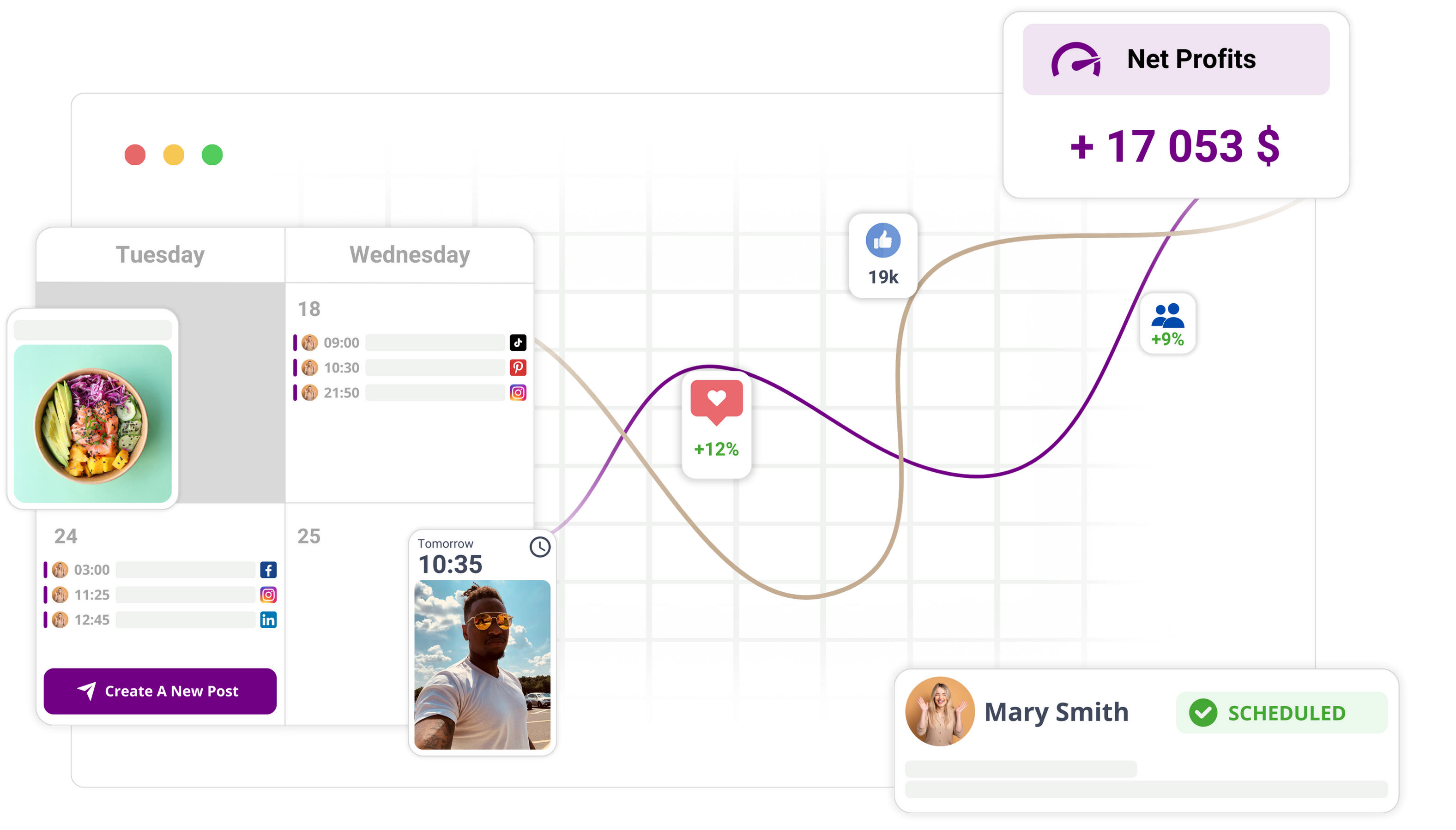
Using tools like Mydrop’s Calendar to schedule posts alongside link updates ensures that the second the "Publish" button is hit, the commerce hub is already updated. It removes the human error of the "I'll do it later" workflow.
2. Simplify: The 2-Tap Rule
Every click you add to a customer's journey reduces conversion by a measurable percentage. If a user clicks your profile, they should see a visual mirror of the post they just liked. If they have to scroll through a list of 20 generic buttons to find "Summer Collection," you have already lost the sale.
Operator rule: Never schedule a post without a corresponding link update in your commerce hub. If the post is live, the path to purchase must be active and visible within one tap of your profile.
| Feature | The Junk Drawer Bio | The Mydrop Commerce Hub |
|---|---|---|
| Link Latency | 2-4 hours (manual) | 0 seconds (synced) |
| Branding | Generic / Cluttered | 100% Brand-aligned |
| SEO | Non-existent | Search optimized |
| Analytics | Basic clicks | Full funnel visibility |
3. Sustain: Preventing link decay
Large marketing teams often suffer from "Link Decay"-the slow accumulation of dead ends. A link-in-bio page should not be a static list; it should be a living extension of your brand. Using a builder to mirror your current campaign aesthetic instantly, rather than just adding another button, keeps the user in the "buying mood."
[2026 Standard] Social operations are no longer just about "posting." They are about managing the infrastructure of intent.
KPI box: Post-to-Profile Conversion Rate. This is the percentage of post viewers who actually click your bio link. If this is under 2%, your "bridge" is broken, no matter how many likes you have.
This is the part people underestimate: the "Time-to-Link" gap is the single biggest leak in your social revenue bucket. By the time a manual link is updated, the initial surge of interest from the algorithm has already peaked and started to fade. Fixing this isn't a creative challenge; it is a workflow victory. When you automate the handshake between your calendar and your profile page, you stop leaving intent on the table.
Why the old way breaks once volume rises

Volume is a trap if your operations are built on manual hand-offs. When you are managing a single brand and posting twice a week, updating a "link in bio" is a thirty-second chore. But for enterprise teams running ten brands across four markets, that chore scales into a massive coordination debt that eventually defaults.
There is a specific kind of internal chaos that happens when a high-performing post goes live but the e-commerce team hasn't updated the landing page yet. Or worse, the legal team flags a link two hours after the post has peaked. These aren't creative failures; they are operational leaks where revenue simply drains away because the left hand doesn't know what the right hand is scheduling.
In a high-volume environment, the "old way" relies on someone remembering to swap a link at 9:00 AM on a Tuesday. If that person is in a meeting, sick, or simply busy with another fire, your social traffic hits a dead end. This creates a "Link Gap" -- the expensive window of time where your content is working but your bio is still stuck on last week's promotion. For an enterprise brand, even a thirty-minute Link Gap can represent thousands of dollars in lost intent.
TLDR: Scaling social commerce is not about hiring more people to move links around; it is about removing the manual hand-offs that cause 90% of link-in-bio friction.
The messiness usually starts when the content team lives in a scheduling tool and the commerce team lives in the CMS. Without a bridge, you end up with "The Junk Drawer Bio." This is the profile page that looks like a digital graveyard of expired promos, generic "Shop All" buttons, and broken tracking codes that no one has audited in months.
| Feature | The "Junk Drawer" Bio | The Mydrop Commerce Hub |
|---|---|---|
| Syncing | Manual, memory-based updates | Automated via the Mydrop Calendar |
| Aesthetics | Generic, mismatched buttons | Brand-consistent theme presets |
| Tracking | Often missing or broken UTMs | Auto-appended, consistent parameters |
| SEO | Non-existent or default metadata | Built-in, customizable SEO fields |
| Validation | Visual check only (if done) | System-wide link status checks |
When you try to force the old manual model into a high-volume strategy, your team starts to prioritize "just getting the post out" over "ensuring the post converts." This is where the Ghost Link problem happens. You promote a specific pair of boots in a video, the viewer is hooked, they click your profile, and they are greeted with a link to a generic homepage. The user has to search for the product themselves. In 2026, if you make a mobile user search for a product they just saw in a video, you have effectively told them to go buy it from a competitor who has a better 1-click experience.
Common mistake: Using a single, static link-in-bio for every post, which forces users to hunt through a long list of options to find the specific item that caught their eye in the feed.
The simpler operating model
The fix is to treat your social link-in-bio as a high-performance landing page that is synced to your content calendar, not a separate website that needs its own maintenance schedule. This is the "Sync" phase of the 3-S Strategy. By moving link management into the same workspace where you plan and approve your posts, you eliminate the Link Gap entirely.
The goal is to create a single source of truth. When an operator opens the Mydrop Calendar to schedule a post, the commerce link should be attached right there in the metadata. This means when the post goes live, the link-in-bio page updates automatically to mirror what the audience is seeing. No one has to set an alarm for 6:00 AM to swap a URL. No one has to ping the web team to ask if the product page is live.
This transition from "manual updates" to "integrated publishing" changes the internal energy of the team. Instead of feeling like they are constantly chasing the feed, social managers can focus on the performance of the links themselves. You start looking at Post-to-Profile Conversion Rates -- the percentage of people who see a post and actually make it to your commerce hub. If that number is low, the problem is usually click-depth.
- Integrated Planning: The e-comm link is selected and validated at the same time the caption is written.
- Cross-Team Approval: Legal and brand reviewers see the post and the destination link in one view, ensuring compliance before anything is scheduled.
- Automated Activation: Mydrop’s link-in-bio builder pushes the update the millisecond the post goes live.
- Performance Loop: Analytics show exactly which link-in-bio blocks are driving the most revenue, feeding back into next month's content plan.
Most teams underestimate: The "Link Decay" that happens when a campaign ends but the bio link stays stuck on a dead promotion for weeks because it wasn't part of the original takedown workflow.
A simpler model also relies on the 2-Tap Rule. If a customer cannot find the exact product they saw in your post within two taps of hitting your profile, the friction is too high. This is why a branded, visual link-in-bio builder is so effective for enterprise teams. It allows you to create a "Visual Mirror" of your feed. When a user clicks your bio, they see the same images they just liked in their feed, making the path to purchase feel like a natural extension of the content rather than a jarring jump to a different website.
Operator rule: If a product is not available in two taps from your social profile, it effectively does not exist to a mobile shopper.
This isn't just about making things look pretty; it is about governance and risk management. For large marketing teams, the risk of a "wrong link" is not just a lost sale; it can be a legal nightmare if the destination page hasn't been cleared for a specific market. By using a centralized builder like the one inside Mydrop, you can apply brand presets and SEO fields across all your profiles at once, ensuring that your 404 pages are branded, your meta tags are optimized, and your tracking codes are actually capturing the ROI of your social spend.
Operational friction is the silent killer of social ROI. You can have the most expensive creative in the world, but if your internal approval loop for links is broken, you are just spending money to frustrate your customers. The most successful brands in 2026 aren't the ones with the loudest content; they are the ones with the quietest, most automated backend that makes buying feel effortless.
Where AI and automation actually help

AI in 2026 is most useful when it acts as an invisible safety net rather than a flashy creative partner. While everyone else is arguing about whether a robot can write a catchy caption, the smartest social operations leaders are using automation to kill the "admin tax" that destroys commerce ROI. The real goal is simple: ensuring that every time a follower feels the urge to buy, the bridge to the checkout is already built, tested, and open for business.
Automation should handle the low-stakes, high-impact checks that humans usually skip when they are rushing to meet a deadline. It is the relief of knowing that your legal reviewer won't get buried under a mountain of Slack threads because the system routed the post to them automatically. It is the quiet confidence that a broken tracking code or a missing "link in bio" update won't cost you five figures in lost intent over a holiday weekend.
Watch out: The "Link Lag" is the silent killer of social commerce. This is the gap of time between a post going live and the commerce link being updated in your profile. If you post at 9:00 AM but the web team doesn't update the bio until 11:00 AM, you have effectively burned your highest period of engagement.
The most effective way to use these tools is to bridge the gap between your content calendar and your commerce delivery. Instead of treating the "Link in Bio" as a manual chore, modern teams use Mydrop to make it a dynamic extension of their publishing flow. When you schedule a post, the corresponding link update is already staged. There is no "I forgot" because the system treats the link and the post as a single unit of work.
Plan -> Sync -> Validate -> Launch -> Audit
This workflow ensures that "Content" and "Commerce" are no longer two different departments that only speak to each other during quarterly reviews. It turns your social presence into a high-performance landing page that updates itself based on what your audience is seeing in their feeds right now.
Operator rule: Never schedule a commerce-driven post without a corresponding, validated link update staged in your bio builder. If the link isn't ready, the post isn't ready.
Automation also solves the "Compliance Nightmare" that plagues enterprise teams. Instead of chasing a manager for a signature, you can set up approval workflows that keep the context attached to the post. The reviewer sees the media, the caption, and the destination link all in one view. They click "Approve," and the system handles the rest. This isn't about moving faster just for the sake of speed; it is about removing the friction that makes your team dread the publishing process.
The metrics that prove the system is working

If you are still reporting on "Likes" as your primary success metric, you are missing the story of your revenue. In a commerce-first social strategy, you need to look at the operational throughput of your team. You want to measure how efficiently you are moving a follower from a state of "casual interest" to "active intent." This requires a shift in focus from vanity numbers to conversion-path health.
The most important metric you aren't tracking is likely the Post-to-Profile Conversion Rate (P2P). This is the percentage of people who see a post and actually click through to your profile. If your creative is hitting 100,000 reach but only 50 people are visiting your profile, your content is entertaining but it isn't "selling." It's a sign that your Call to Action is weak or, more likely, your audience doesn't believe the destination will be worth the click.
KPI box: Social Commerce Health
- Post-to-Profile (P2P) Rate: Target > 2% for commerce posts.
- Time-to-Link Gap: Target < 1 minute (Zero is the goal).
- Link Decay Rate: The percentage of bio links that lead to 404s or expired promos.
- Revenue per Profile Click (RPC): The dollar value of every person who lands on your Mydrop link page.
When you use Mydrop's analytics, you stop guessing which posts are "working" and start seeing which ones are actually driving traffic to your commerce hub. You can sort by engagement, but you can also see which profiles are the most efficient at funneling users toward a checkout. For multi-brand companies, this is the only way to see which markets are actually hitting their numbers and which ones are just "generating buzz" that never turns into a transaction.
Another vital check is the 3-Second Commerce Audit. This is a manual or automated check of the mobile experience from the perspective of a new follower. If a user can't find the product featured in your latest post within two taps of landing on your profile, the friction is too high. You are asking your customers to do the work of a search engine, and in 2026, they simply won't do it.
The 3-Second Commerce Audit Checklist
- Visual Match: Does the landing page aesthetic match the post that sent me there?
- The 2-Tap Rule: Can I find the "Buy" button for the featured product in two taps?
- Mobile Load Speed: Does the link-in-bio page load in under 1.5 seconds on a standard 5G connection?
- CTA Clarity: Is it immediately obvious which link corresponds to the latest post?
- Tracking Integrity: Are UTM parameters correctly firing so the web team sees the attribution?
Scorecard: Social Commerce Maturity
- Level 1 (Reactive): Links are updated manually after a post goes live. High "Link Lag."
- Level 2 (Organized): Links are planned in a spreadsheet but updated manually.
- Level 3 (Integrated): Links are staged in Mydrop alongside the post. Verification is automated.
- Level 4 (Optimized): Real-time analytics drive link-in-bio layout. The "Hub" is the top-performing page on the site.
The operational truth of 2026 is that coordination debt is the biggest tax on your ROI. It isn't the cost of the tools or the price of the ads; it is the revenue lost when your team is too busy with manual updates to notice that the bridge to the customer is broken. When you move from "posting content" to "operating a commerce hub," the revenue report finally starts to match the engagement report. Fix the bridge, and the followers will cross it.
The operating habit that makes the change stick

The single biggest shift you can make is moving from a "post-then-link" workflow to a "link-with-post" requirement. Most enterprise failures happen in the gap between the content team hitting publish and the web team or social coordinator remembering to update the link-in-bio. In a high-volume environment, that gap is where revenue goes to die.
There is a specific, sinking feeling that comes with watching a campaign go viral while the "link in bio" still points to last month's clearance sale. It is the sound of thousands of customers knocking on a door that you forgot to unlock. Fixing this requires more than just a better tool; it requires an operational habit that treats the link-in-bio as a high-performance landing page rather than a digital junk drawer.
Operator rule: Never schedule a post without a corresponding link update embedded in the same workflow. If the destination isn't ready, the content isn't ready.
To make this change permanent, you need to solve for coordination debt. This is the hidden cost of "checking in" with three different departments just to swap a URL. When you manage dozens of brands or markets, manual hand-offs are a recipe for 404 errors and lost intent.
| Operational Obstacle | The Legacy Approach (Friction) | The 2026 Standard (Flow) |
|---|---|---|
| Link Latency | Manual bio updates 30 minutes after post. | Bio updates automatically at the scheduled time. |
| Visual Friction | Generic list of text links. | Visual, branded hub that mirrors the feed. |
| Governance | Sharing passwords in Slack. | Role-based permissions and approval flows. |
| Data Silos | Social likes and web sales never meet. | Integrated analytics from post to conversion. |
The most successful teams in 2026 operate under the 2-Tap Rule. If a customer cannot find the exact product they just saw in your video within two taps of landing on your profile, you have likely lost them. Large marketing teams often overestimate a follower's patience. We think they will hunt for the "Shop" button; in reality, they will just keep scrolling.
Framework: The 3-S Strategy for Social Commerce
- Sync: Align your content calendar with your link-in-bio availability.
- Simplify: Reduce the click-depth from the initial "Oh, I want that" moment to the cart.
- Sustain: Use automated reminders to prune expired links and prevent "ghost links" from cluttering the hub.
One common mistake is treating the link-in-bio as a static asset. In reality, it should be as dynamic as your feed. Using a tool like Mydrop's link-in-bio builder allows you to create a public landing page that stays in lockstep with your calendar. When the post goes live, the link appears. When the campaign ends, the link retires. No one has to set a 6:00 AM alarm to manually swap a URL.
Quick win: Mirror your current campaign aesthetic in your link-in-bio instantly. If your social creative is neon and fast-paced, but your link-in-bio looks like a 2005 spreadsheet, the "brand break" will kill your conversion rate.
Here is how you can close the "Time-to-Link" gap this week:
- Audit your click-depth: Pick your three most recent commerce-focused posts. Try to buy the products from your phone. If it takes more than 15 seconds or three taps, your operations are leaking money.
- Centralize the destination: Stop treating the link-in-bio as a "web team" problem. Move the landing page management into the same platform where your social team schedules content.
- Automate the validation: Use Mydrop's Calendar reminders to ensure that community management and link audits happen on a recurring, visible schedule rather than "when someone remembers."
KPI box: Post-to-Profile Conversion Rate Track the percentage of users who see a post and then click the bio link. If this is low, the issue isn't your product; it is the friction of the bridge you've built.
Conclusion
The secret to social commerce in 2026 isn't a more persuasive caption or a more expensive influencer. It is the aggressive removal of internal friction. Enterprise brands don't lose sales because their followers aren't interested; they lose them because the internal path from "Content Creation" to "Commerce Delivery" is blocked by manual silos and slow approvals.
When you bridge that gap, you stop fighting the algorithm and start serving the customer. High engagement is a beautiful thing to report, but revenue is what keeps the lights on. The goal is to create a system that works while you sleep--one where your content and your commerce move as a single, unified unit.
Operational excellence is the only sustainable competitive advantage in social media. By the time your competitor has manually updated their link, your Mydrop-powered workflow has already captured the first wave of intent. Stop building digital graveyards and start building high-performance hubs.