

The fastest way to kill a social campaign isn’t a lack of vision; it’s an abundance of contextless feedback. When you detach the strategic intent from the creative execution, you force stakeholders to hunt for meaning in email threads, turning a simple approval into a multi-day negotiation.
We know the drill. Your creative is ready and the strategy is sound, but the approval thread has been sitting in a stakeholder’s inbox for forty-eight hours. You are toggling between three platforms to find the "why," they are asking questions that were answered in a meeting you had two weeks ago, and everyone is feeling the friction. It is exhausting, and frankly, no one enjoys chasing approvals at 6 p.m.
The hidden cost of "collaboration" is high: when you separate work from its operational context, you aren't collaborating; you are manufacturing a coordination tax that compounds with every platform and stakeholder you add. Most teams do not have a content problem. They have a decision bottleneck.
Where the handoff is actually breaking

The breakdown rarely happens because someone forgot to hit "send." It happens because the work-the post, the asset, the copy-is being reviewed in a vacuum.
When a stakeholder opens a draft, they are looking for three things: alignment with the brand, accuracy of the information, and proof that this post serves a specific campaign goal. If those signals aren't baked into the presentation, their only way to contribute is to ask questions.
"What is the goal of this?" "Does this align with our Q3 pivot?" "Who is the target audience for this specific channel?"
These are valid, necessary questions. But when they are sent as reply-all emails or Slack messages, the answers disappear into the ether. You end up with a fragmented trail of information that lives everywhere except where the work actually happens.
In our experience across teams managing hundreds of brand profiles, the friction point is always the context gap. When the strategy lives in a slide deck, the calendar lives in a spreadsheet, and the creative lives in your publishing tool, you have created a scavenger hunt for your reviewers.
This isn't just annoying; it is a structural failure. You are forcing senior stakeholders to perform administrative work just to get to the point of giving a "yes." When you make it hard to approve, you make it easy for stakeholders to delay, default to subjective criticism, or simply go silent.
Operator rule: If your reviewers have to ask for context, your workflow is bankrupt. The work must explain itself.
To break this cycle, you have to stop treating approvals as a separate task from the planning process. Decisions should be a natural byproduct of seeing the work in its intended environment, surrounded by the strategic markers that explain why it exists in the first place.
The coordination debt checklist
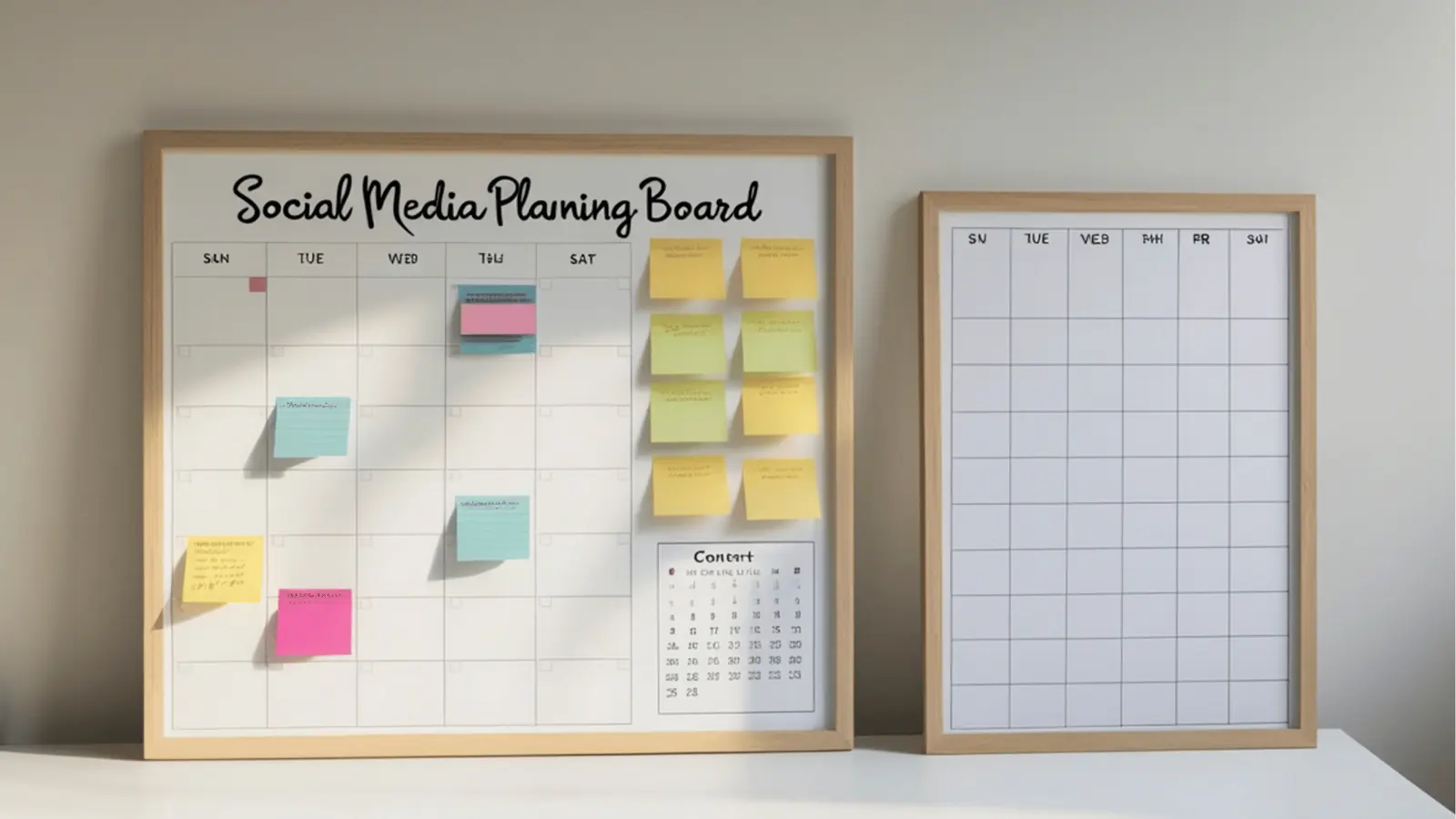
When your approval process breaks, the symptoms are rarely about the creative quality itself. Instead, you see a team burning hours trying to reconstruct the "why" behind a specific caption or creative asset. We call this coordination debt, and it grows every time you move a conversation out of the workspace.
Use this five-point audit to see if your current workflow is bankrupting your schedule:
| Audit Question | Sign of Bankruptcy | Impact |
|---|---|---|
| Where does feedback live? | Spread across email, Slack, and DMs. | 30+ minutes hunting for the final version. |
| Is the brief attached? | You send the brief in a separate doc or email. | Stakeholders lose the strategic link. |
| Can you see the full calendar? | You only see the single post in isolation. | Missing the forest for the trees. |
| Who is the single source of truth? | Multiple file versions exist in local folders. | Compliance risk and versioning errors. |
| How many touchpoints to publish? | More than 3 feedback loops. | "Approval paralysis" and missed timing. |
If you answered "yes" to more than two of these, your team is paying a hidden tax on every post that goes live. The real cost isn't just the delay; it is the slow erosion of trust between your creative team and your stakeholders.
How to move decisions closer to the work
The most effective teams we work with stop treating approvals as a separate administrative hurdle. They pull the decision-making context directly into the creative pipeline. When a stakeholder can see the "why" at the exact moment they look at the "what," the granular, subjective nitpicking usually vanishes.
At Mydrop, we see teams replace fragmented email threads with Calendar Notes to bridge this gap. Instead of chasing a VP for approval over email, you attach the campaign theme, the primary KPI, and the intended audience directly to the post on the calendar.
The Shift: From Email to Context-Rich Workflow
- Define the Strategic Anchor. Before a draft is even submitted for review, add a Calendar Note to the specific date or post. State the objective in one sentence: "Drive sign-ups for the summer cohort by highlighting the new feature set."
- Make Context Visible. When the stakeholder opens their view, the note is right there, pinned to the work. They don't have to go hunting for the creative brief you sent in a separate meeting two weeks ago.
- Decentralize Decision. Because the context is permanent and attached to the calendar, reviewers feel empowered to approve based on the stated goal, rather than asking questions about "why we are doing this."
Decision check: If a reviewer needs to ask "What is the goal of this post?", you have already failed. The work should explain itself.
This doesn't just save time; it changes the dynamic of your team. You move from being a "file sender" chasing signatures, to an operational partner delivering evidence-based social strategy. By pinning your rationale to the calendar, you create a shared mental map. Everyone sees the same vision, and the work starts moving through the pipeline at the speed of a single conversation.
The roles and rules that reduce rework
Approval stalls are rarely caused by the creative itself. They happen when roles are fuzzy, leading to "opinion inflation" where every stakeholder feels authorized to weigh in on every detail.
To fix this, you need to draw a hard line between strategic alignment and tactical execution. When someone from legal or leadership needs to review a post, their role is not to rewrite your headline. Their role is to verify the policy or the brand pillars.
Workflow check: Define the three-tier review hierarchy.
- Creative Owner: Full edit access, responsible for tone and asset quality.
- Strategic Stakeholder: Approval access, reviews for core messaging alignment only.
- Compliance/Legal: Binary access (Approved or Needs Changes), reviews for risk and fact-checking only.
If a stakeholder has questions about the "why," they should be looking at your Calendar Notes attached to the campaign. If they have to ping you on Slack to ask if a post is approved for a specific region, you have already failed the process. By forcing all context into the calendar view, you stop treating approvals like a scavenger hunt.
The weekly habit that keeps the system honest
You cannot fix a broken culture with a new tool, but you can definitely support a better culture with a consistent operational cadence.
We see the most successful teams running a "Context Sync" every Monday morning. This isn't a long meeting. It is a 20-minute scan of the Mydrop calendar where the leads ensure every campaign block has its corresponding brief, strategy link, and KPI target attached.
If a draft post is sitting on the calendar without a corresponding Calendar Note explaining the goal, it gets pushed. No exceptions. This rule keeps the team honest because it forces the strategist to do the work before the creator gets blocked.
The Weekly Integrity Checklist:
- Does every active campaign have a linked brief in the header?
- Have all platform-specific variations been validated against current brand standards?
- Are there any "orphan" posts without a clear stakeholder approval owner?
- Have all urgent feedback items from last week been resolved and closed?
- Is the content mix balanced across all primary channels?
Conclusion
At the end of the day, social media at scale is a game of logistics. You are managing thousands of touchpoints, dozens of stakeholders, and a relentless publishing cycle. When you treat the approval process as a series of disconnected emails, you are essentially paying a tax on every single post you ship.
By decentralizing the context and moving your decision-making directly onto the calendar, you reclaim the hours lost to back-and-forth threads. You stop being a project coordinator for every tweet or caption, and you start being a steward of your brand strategy.
When your work explains itself, the feedback loop shrinks, the friction vanishes, and the team finally has the breathing room to actually create.