
You should unify your social media calendars the moment you find yourself spending more time coordinating between teams than creating for your audience. If your biggest brand risks are misaligned messaging or missed collaboration windows, rather than platform-specific features, it is time to consolidate.
We get it. You are juggling a dozen brand voices, three different agencies, and a spreadsheet graveyard that spans four time zones. The work is inherently messy, and it feels like every time you gain control, the landscape shifts again. No one enjoys chasing approvals at 6 p.m. or realizing a campaign went live in the wrong market because the source document was hidden in a forgotten folder. This is harder than it looks, and you are not alone.
Most teams view this as a purely technical migration, but it is actually a shift in your operational culture. That awkward reality you see in your workflow? It is the friction caused by protecting silos that prevent your best ideas from scaling.
The decision teams usually frame too broadly
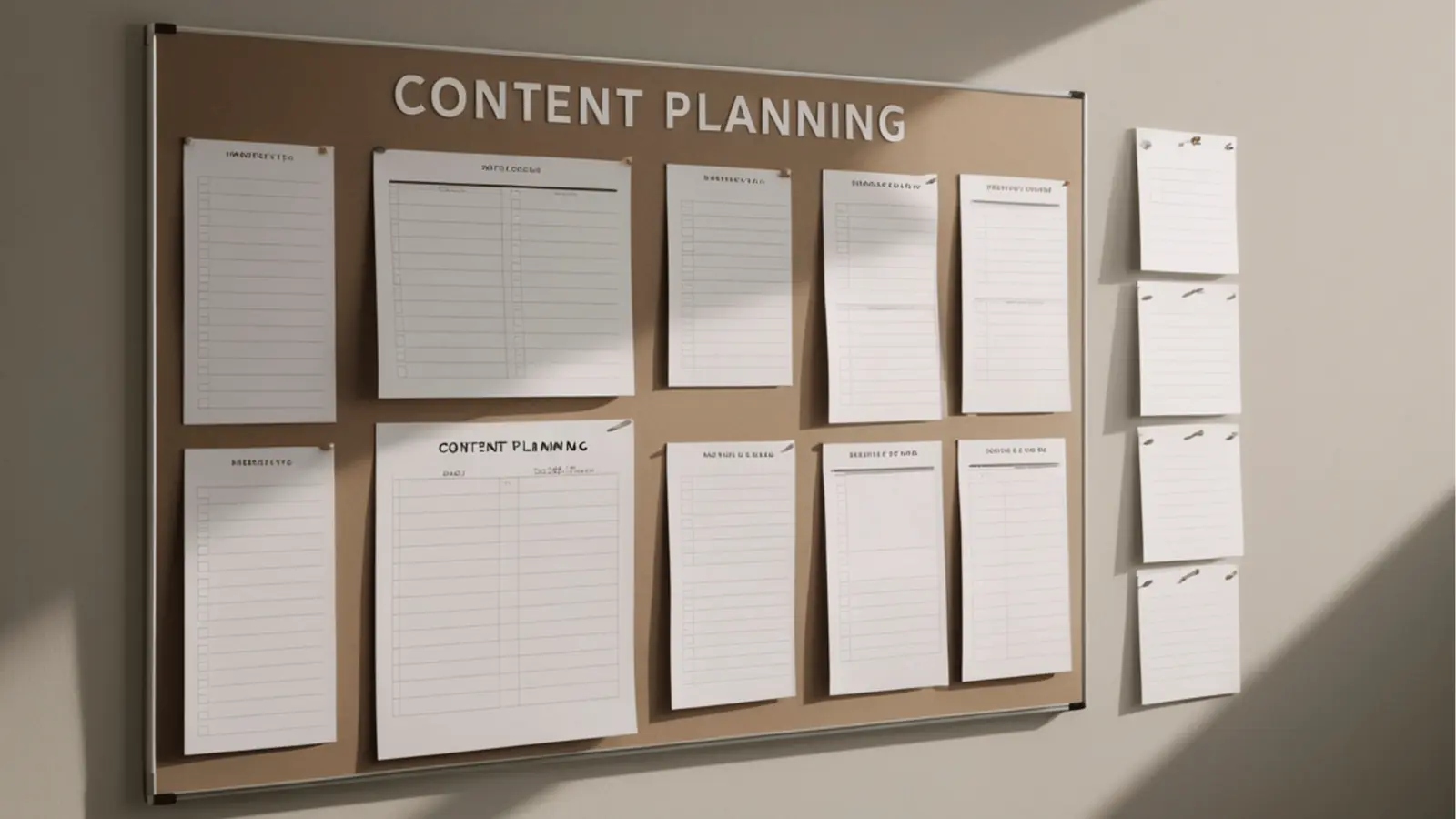
The most common trap is hunting for the "perfect tool" instead of diagnosing the actual work. You do not need a magical platform to solve your problems; you need a system that removes the friction of your daily handoffs.
At Mydrop, we often see teams with hundreds of brand profiles hitting a wall because their planning process is disconnected from their execution. They spend hours in status meetings just to align on what is going live next week. This is where a simple rule helps: if your internal status updates consume more time than the actual content creation, your current setup has become a bottleneck.
To decide if you are ready to bring everything into a single view, look at these five indicators of organizational friction:
| Indicator | The Symptom | Why It Costs You |
|---|---|---|
| Approval Friction | Cross-brand campaigns require more than three email threads. | Lost time and higher error rates. |
| Context Loss | You miss campaign overlaps because they live in separate docs. | Inconsistent brand narrative. |
| Redundancy | You recreate approved assets for every unique platform. | Wasted creative effort. |
| Analytics Blindness | You manually aggregate data to see portfolio performance. | Decisions based on stale guesses. |
| Onboarding Lag | New hires take over a week to learn the publishing flow. | Constant training overhead. |
If you check three or more of these boxes, you are not just experiencing minor growing pains. You are carrying significant weight that is slowing down your team's ability to respond to market shifts. The move to a single calendar is not about forcing everyone to act the same; it is about providing the visibility required to make sure your brand voices stay coherent while you scale the volume of your output.
Operator rule: If a campaign can launch without a central stakeholder seeing it in the master view, it is a liability, not a win.
What should stay manual and what can move faster

There is a dangerous urge to automate the soul out of your social presence. You might be tempted to pull every brand voice, every community engagement, and every creative brainstorm into a single, rigid automated flow. Please, do not do this. If you automate your empathy, you lose your audience.
Keep the high-touch creative work manual. Anything that requires a human to feel the room or interpret a current event should stay in your collaborative notes, not an automated queue. We see teams at Mydrop use Calendar notes to hold these "living" ideas-the stuff that needs a person to refine it, iterate, and sign off-rather than pushing them directly into a publishing engine.
Conversely, move your governance and distribution to a unified system. If you are still manually checking if a post was approved, or if the correct brand assets were swapped out for the right market, you are burning calories that should go toward strategy.
Decision check: If a task is a repetitive check, move it to an automated trigger. If it is a creative choice, keep it human-centered and visible in your planning context.
By centralizing these "plumbing" tasks, you stop playing the role of a human router. You want your team to spend their time looking at the Analytics dashboard to see what is actually resonating, not copy-pasting tracking links across five different regional spreadsheets.
The tradeoff matrix
Deciding to consolidate is not about finding the perfect tool; it is about recognizing when the friction of your current setup outweighs the effort of changing. Use this matrix to check your current operating model against the reality of a unified approach.
| Factor | Fragmented (Current) | Unified (Target) |
|---|---|---|
| Messaging Alignment | High risk of siloed brand voices | Consistent governance via shared profiles |
| Execution Speed | Manual re-keying across platforms | Template-based, repeatable workflows |
| Visibility | Buried in team-specific docs | Single-source-of-truth calendar |
| Compliance Risk | Difficult to track audit trails | Unified access, role, and approval logs |
| Metric Rollover | Manual, error-prone spreadsheets | Automated, profile-level performance views |
Look at the Compliance Risk row for a moment. In a fragmented setup, if legal changes a disclaimer, you have to remember which team lead in which region is holding the latest version of that post. When you consolidate, that disclaimer becomes a shared asset in a central library.
This is the hidden cost of your current workflow. It is not just that things are slow; it is that the "coordination tax" grows as your team size grows. At some point, you aren't managing brands-you are managing a constant stream of status updates just to keep everyone on the same page.
The goal is to stop being the middleman. If you have to tell three different people that the campaign launch moved to Tuesday, your system is failing you. Move to a unified calendar not because you want to be "organized," but because you want to be effective. A single source of truth lets you see the landscape clearly, so you can spend your time actually building a brand rather than just maintaining one.
How to pilot the workflow safely
You do not need to flip a giant "ON" switch and force every brand into a single calendar overnight. That is a guaranteed way to start a corporate fire. Instead, start by pulling one agile brand or one high-volume region into the new system as a test. This keeps your core operations stable while you verify the setup.
When we see teams successfully make the jump, they usually follow this 3-step migration path:
- The Mirror Phase: Keep your existing fragmented process active for two weeks but require the team to mirror all planned content in the new central calendar. This reveals every hidden workflow step you forgot to document.
- The Note-Taking Shift: Move campaign briefs, review notes, and stakeholder feedback into calendar notes inside the platform. If you can stop opening a separate document to find the latest "final_v3" asset, you have already won back an hour of your day.
- The Cutover: Pick a Monday to retire the old spreadsheets. If you need a fallback, keep the old files read-only for one month, then archive them to prevent anyone from accidentally updating the wrong source of truth.
Workflow check: Never migrate a broken process. If your team is struggling to hit deadlines because of manual approvals, fix the bottleneck before you move the work into a centralized system. A faster tool just helps you fail faster.
The operating rule to keep
The most common trap is assuming that once you consolidate, you must centralize every tiny decision. Do not do this. You want a single view of the truth, not a single bottleneck for every minor edit.
Keep the governance high-level but the execution distributed. Let individual brand managers own their daily posts while using your central platform to provide visibility, audit trails, and performance reporting. By using an automation builder to handle routine tasks, you can ensure that brand standards-like specific hashtags or link-in-bio placements-stay consistent without requiring a manager to sign off on every single post.
At Mydrop, we see the most effective teams treat their central calendar as a shared nervous system. Everyone can see the activity, but the regional leads still have the autonomy to react to local trends. If a central team has to approve a local meme, you have already lost the thread.
Conclusion
Consolidation is rarely about the tech stack; it is about acknowledging that your organization has outgrown its current level of transparency. You move to a single calendar not because you want to be "organized," but because you can no longer afford the cost of being scattered.
Once you have a unified view of your social profiles and performance, the focus shifts. You stop asking "Who is posting what?" and start asking "What is actually moving the needle?" Use your post performance analytics to spot the trends that matter, and stop spending your best hours chasing down status updates.
The goal is to get back to the work that actually builds your brand. Your spreadsheets have served their purpose, but it is time to stop acting like a collection of silos and start operating like a single team.