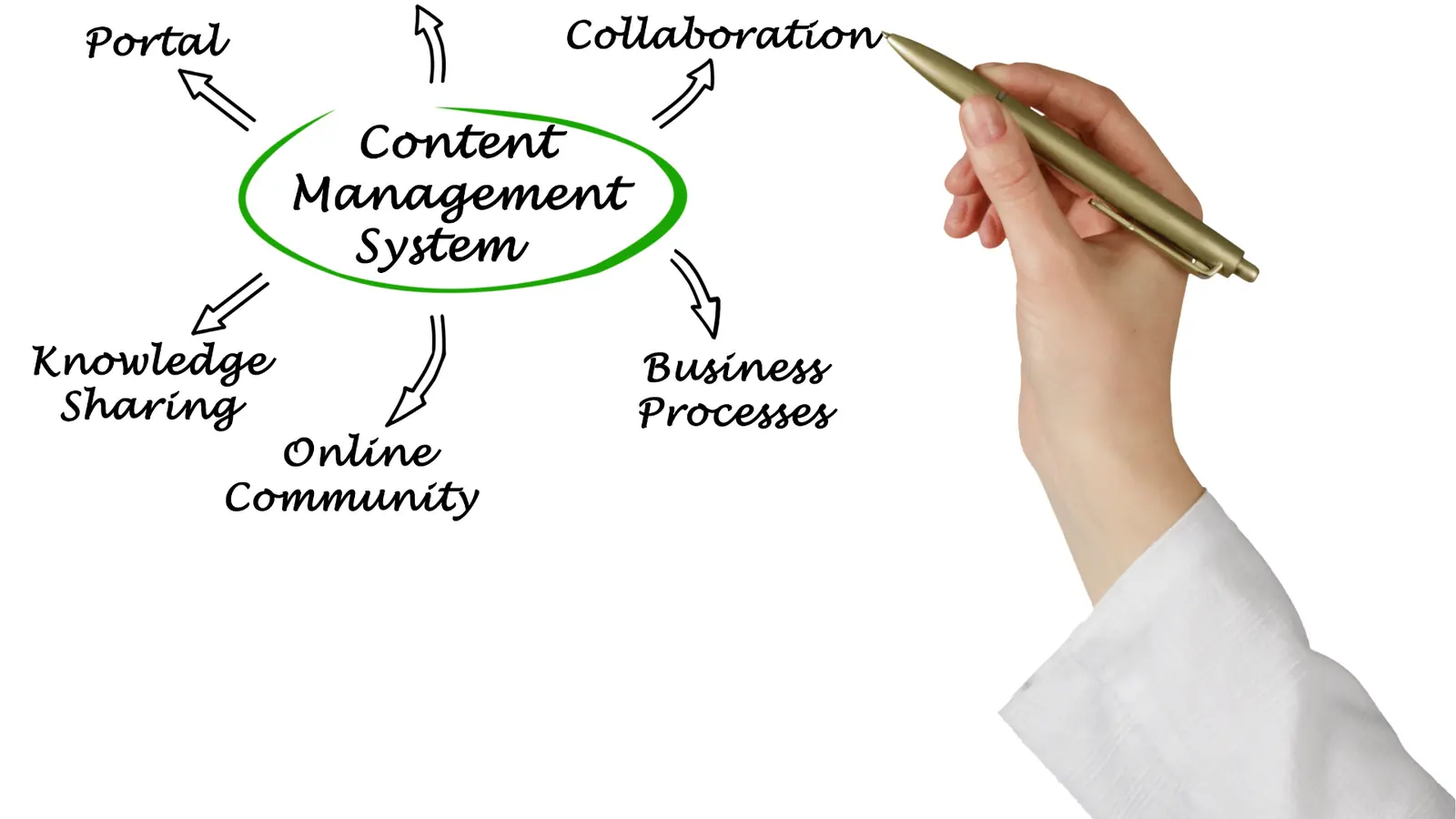
You stop the spreadsheet chaos by treating your social media calendar as a single, living architecture rather than a collection of static files. Instead of manually updating cells and hoping team members see the latest version, you migrate to a unified platform that forces alignment by design. When your planning, asset management, and scheduling happen in one place, the guesswork vanishes, and your team finally gets their time back to focus on high-impact strategy instead of low-value administrative maintenance.
TLDR: Stop syncing cells, start syncing strategy. You save your sanity by moving from fragmented, manual tracking to a centralized Enterprise-Ready calendar that validates your content before it ever touches a social platform.
The phantom anxiety of missing a critical update on the wrong brand page is real, and it is slowly eroding your team’s creative bandwidth. You deserve to move from reactive fire-fighting to proactive strategic planning, trading the crushing weight of manual tracking for the clarity of a synchronized calendar. It is time to treat your social presence with the same operational rigor as your product roadmap.
The secret killer of social media ROI is not a lack of clever ideas; it is administrative friction. Every minute your team spends checking tabs, re-linking media, or tracking email chains is a minute they are not optimizing engagement.
If you are currently managing your output via spreadsheets, consider these three immediate shifts:
- Centralize: Move all brand posting calendars into a single view to eliminate the "tab-switching" tax.
- Standardize: Require every post to undergo a system-level validation for media and timezone compatibility before it moves to a scheduled status.
- Categorize: Organize your profiles by region or business unit so you can filter your view and report on specific brand health at a glance.
The real problem hiding under the surface

Most teams believe the issue is simply "being unorganized." That is a dangerous simplification. The true culprit is coordination debt, the accumulated cost of every manual handoff, every timezone mismatch, and every version-control error that happens when your tools do not actually talk to each other.
When your strategy is trapped in a grid, you lose the ability to see the "Control Tower" view of your operations. Imagine trying to manage an airport where every gate crew uses their own paper ledger to track flight times; you would inevitably have collisions, delays, and frustrated passengers. Your social media team is currently that airport, and the spreadsheet is just a set of disconnected ground-level signals.
The real issue: The hidden cost of "context switching" between brands. Every time a team member leaves the spreadsheet to check a brand guideline document, then returns to paste a caption, then checks a separate tool to see if the video file is approved, you lose minutes of focus. Over a week, those minutes become hours of lost potential.
This is the part most teams underestimate: the silent impact of local timezone misalignments on global reach. Managing a global brand calendar across manual sheets means someone, somewhere, is doing math in their head to guess when a post should go live in Singapore versus New York. That is not just inefficient; it is a compliance and engagement risk.
True professional social management requires moving from tracking to orchestrating. When you build your workflow in a system designed for multi-brand oversight-like Mydrop-the calendar becomes the single source of truth. You are no longer managing rows; you are managing a synchronized fleet of content that only departs once it has been validated against the specific requirements of each channel.
Operator rule: Always audit the feed before you build the automation. If you cannot describe your manual process clearly enough to map it into a centralized system, then adding automation will only accelerate your mistakes. Clarity must come before speed.
If your strategy depends on a human remembering to update a row in a sheet, it is not a strategy; it is a gamble.
Why the old way breaks once volume rises

The moment you add a second brand or a third regional market to a spreadsheet, you cease to be a social media manager and start being a professional data janitor. You spend your morning hunting for the "latest version" of a file, cross-referencing cell formats, and worrying about whether the intern updated the link for the French campaign.
It feels like you are in control because the grid is right in front of you. In reality, you are just masking the coordination debt that is building up behind every tab.
Common mistake: Teams often assume that more rows and more complex formulas equal "better control." When you rely on manual entry for multi-brand calendars, you are not managing a strategy; you are running a high-stakes, low-visibility game of memory.
Here is how the cracks inevitably appear:
| Pain Point | Spreadsheet Reality | The Scaling Cost |
|---|---|---|
| Visibility | Siloed tabs per brand | Leadership has no bird-eye view |
| Accuracy | Copy-paste prone | Broken links and typos go live |
| Timezones | Manual math conversion | Posts miss the local peak window |
| Governance | No built-in approvals | High-risk content skips review |
The real issue is that spreadsheets are passive. They do not know what a "Facebook post" looks like, they don't care if a date is in the past, and they certainly cannot stop you from posting the wrong asset to the wrong account at 3:00 AM on a Sunday.
Most teams underestimate: The hidden drag of timezone management across global brands. When your calendar is a static file, you lose the ability to visualize how your content footprint actually looks in the user's local operating time.
The simpler operating model

If spreadsheets are the manual, ground-level traffic signals, the alternative is a central Control Tower. You stop asking "Did I update the row?" and start asking "Is this post ready to fly?"
Moving to a unified platform means shifting from a static document to a living workflow.
- Intake & Organization: Centralize your profiles into distinct brands or groupings so your navigation stays clean.
- Unified Planning: Drag content directly into a single calendar view that automatically validates for the specific social platform requirements.
- Active Validation: Use automated pre-publish checks to catch missing captions, incorrect media dimensions, or profile selection errors before you hit schedule.
- Timezone Alignment: Set your workspace operating times so that "9:00 AM" actually means "9:00 AM" for the target market, regardless of where your team is sitting.
- Performance Feedback: Feed your analytics back into the calendar to see which themes are actually working, allowing you to double down on what moves the needle.
Operator rule: Always audit the feed before you build the automation. Don't automate a broken process; use the transition to tighten up your brand standards.
This is the beauty of a centralized system: it separates the creative heavy lifting from the administrative grunt work. You stop worrying about whether the file is named correctly and start obsessing over the message itself.
True scaling isn't about working faster in the same broken way; it is about building a system that makes the right choice the default choice for every person on your team. When you stop syncing cells, you finally have the bandwidth to start syncing your actual brand strategy.
Where AI and automation actually help

Automation is not about offloading your creativity to a machine; it is about delegating the cognitive drain of maintenance so your team can focus on the message. Most enterprise teams fall into the trap of using manual labor for high-frequency, low-variance tasks-like formatting captions for five different networks or adjusting launch times across four time zones. This is where you bleed efficiency.
When you use an automated workflow, you stop treating every post like a bespoke craft project and start treating it like a reliable delivery system. You define the rules once-governing who approves what and how media assets must be tagged-and the system enforces them.
Operator rule: Always audit the feed before you build the automation. If the underlying human process is broken, automation only helps you fail faster.
For teams managing multiple brands, this looks like building conditional triggers within your planning tool. A post destined for a high-compliance region like the EU might automatically route to the legal team, while a low-risk internal update skips straight to the scheduled queue. By building these paths in Mydrop, you aren't just saving minutes; you are removing the human error that leads to brand-damaging compliance slips.
- Define the trigger (e.g., "Post tagged 'Regional Campaign'").
- Select the target profile groups to ensure brand alignment.
- Set mandatory approval steps for high-stakes content.
- Apply profile-specific constraints to catch platform-specific formatting errors before they go live.
- Assign a "Reviewer" role to ensure eyes are on the content before the schedule lock.
This shift changes the team dynamic. Instead of managers acting as content gatekeepers-chasing people for status updates in spreadsheets-they become process architects, tuning the system to move faster while keeping the quality bars high.
The metrics that prove the system is working
If you cannot measure the administrative friction you are removing, you cannot prove the value of your transition. Most teams rely on vanity metrics like "likes" or "follower growth" to judge success. While those matter for the audience, they tell you nothing about the health of your internal operation.
You need to look at the signals that reveal if your coordination debt is shrinking.
KPI box: Operational Health Scorecard
- Time-to-Publish: Average duration from content draft to final approval.
- Revision Cycle Count: Number of back-and-forth edits per post.
- Approval Bottlenecks: Percentage of posts delayed specifically due to pending sign-offs.
- Scheduling Errors: Instances of missed dates or incorrect profile tagging identified pre-publish.
When these numbers trend in the right direction, it means your team is spending less time "managing the calendar" and more time refining the strategy that drives those likes and follows. You start seeing the "invisible" work: the time reclaimed from not having to manually double-check that a post is going out in Tokyo at 9:00 AM local time instead of 9:00 AM your time.
Data visibility acts as the ultimate truth-teller. By using a centralized analytics view, you can quickly spot which profiles are underperforming. If a specific regional brand has consistently high engagement but low post volume, you know exactly where to shift your resources.
Common mistake: Treating analytics as a "look-back" exercise only. The best operators use the previous month's post-level data to adjust the next month's calendar strategy, essentially creating a continuous feedback loop that lives inside the planning tool.
The goal is to stop relying on "gut feeling" planning. If your team is still debating what performs well in a weekly meeting without a shared dashboard to back it up, you are still operating in the spreadsheet era.
Scaling a multi-brand presence isn't about getting faster at hitting "send." It is about ensuring the system holding your strategy together is robust enough to handle the pressure without collapsing. When you stop chasing the "next post" in a sea of disconnected cells and start managing the entire fleet from a single vantage point, you stop being a bottleneck and start being a driver of actual growth.
The operating habit that makes the change stick

The biggest hurdle to unifying your workflow is not technical; it is the habit of "shadow-scheduling." Even after you migrate to a central calendar, team members will instinctively keep a secondary spreadsheet open. They do this because they fear the system will break or they simply find comfort in the rows they know. You break this cycle by setting a hard "System of Record" rule.
If a post is not scheduled in the calendar, it does not exist. Period.
When a team member realizes their manual spreadsheet is no longer the source of truth, they will stop treating it as such. This habit requires consistent reinforcement during your weekly syncs. When someone asks if a post is approved, do not check your email or Slack. Look at the calendar. If the status is not marked as cleared in the UI, it goes back for validation.
This creates a high-pressure, high-clarity environment where administrative drift becomes impossible.
Operator rule: Make your dashboard the only place where final decisions are made. If a conversation happens in Slack, the outcome must be reflected in the calendar immediately. If the calendar is empty, the post is unapproved.
To transition your team this week, focus on these three steps:
- Audit the current state: Identify every spreadsheet currently tracking live social campaigns and lock them as "Read Only."
- Sync the source: Move all active posts for the next 14 days into your unified calendar view, ensuring every profile is correctly mapped and timezones are verified against local market hours.
- Delete the clutter: Once the calendar is live, delete the shared document links from your team bookmarks to stop the flow of stale information.
Quick win: Group your profiles into brand-specific containers within your dashboard today. You do not need to change your entire strategy to gain immediate clarity-just clearing the navigation clutter reduces the mental overhead of switching between clients or business units.
Conclusion

Scaling a multi-brand social operation is a game of managing entropy. As you add more markets, more brands, and more stakeholders, the "administrative friction" I mentioned earlier-the endless status checks, the cross-referencing of timezones, the panic of a broken link-does not just grow linearly; it compounds. You either build a structure that absorbs that chaos, or you become the bottleneck that forces your team to slow down.
The goal of centralizing your workflow is not to turn your creative team into data entry clerks. It is the opposite. It is about stripping away the administrative noise so that when your team sits down to plan, they are looking at a clear, accurate, and validated view of the entire global operation.
True coordination is a silent engine. It works best when the team stops thinking about how to publish, and starts thinking entirely about what to say. If you can stop the spreadsheet madness, you win back the focus required to actually build a brand. Systems like Mydrop exist specifically to be that radar in the tower, keeping the runway clear so your best content can land exactly where it needs to be.