
Your next month of social content is already written-you are just not reading the data properly. Instead of staring at a blank calendar hoping for a stroke of genius, you should be treating your previous month’s analytics as a blueprint. The content that resonated yesterday is the most reliable predictor of what will succeed tomorrow.
We have all felt the heavy, quiet panic of a looming content deadline. You feel the pressure to innovate, to chase new formats, and to avoid the "stale" label. But that cycle is exhausting. The relief comes when you stop chasing every shiny trend and start trusting the quiet, consistent signals your own audience has already sent you.
Evidence-based iteration is your greatest asset. When you stop guessing and start repeating your proven successes, you turn social media management from a high-stress creative gamble into a predictable, repeatable operation.
TLDR: Stop guessing what to post. Use your top-performing formats from last month to dictate next month's content calendar. Creative intuition is a luxury; performance data is a requirement for scaling.
The real problem hiding under the surface
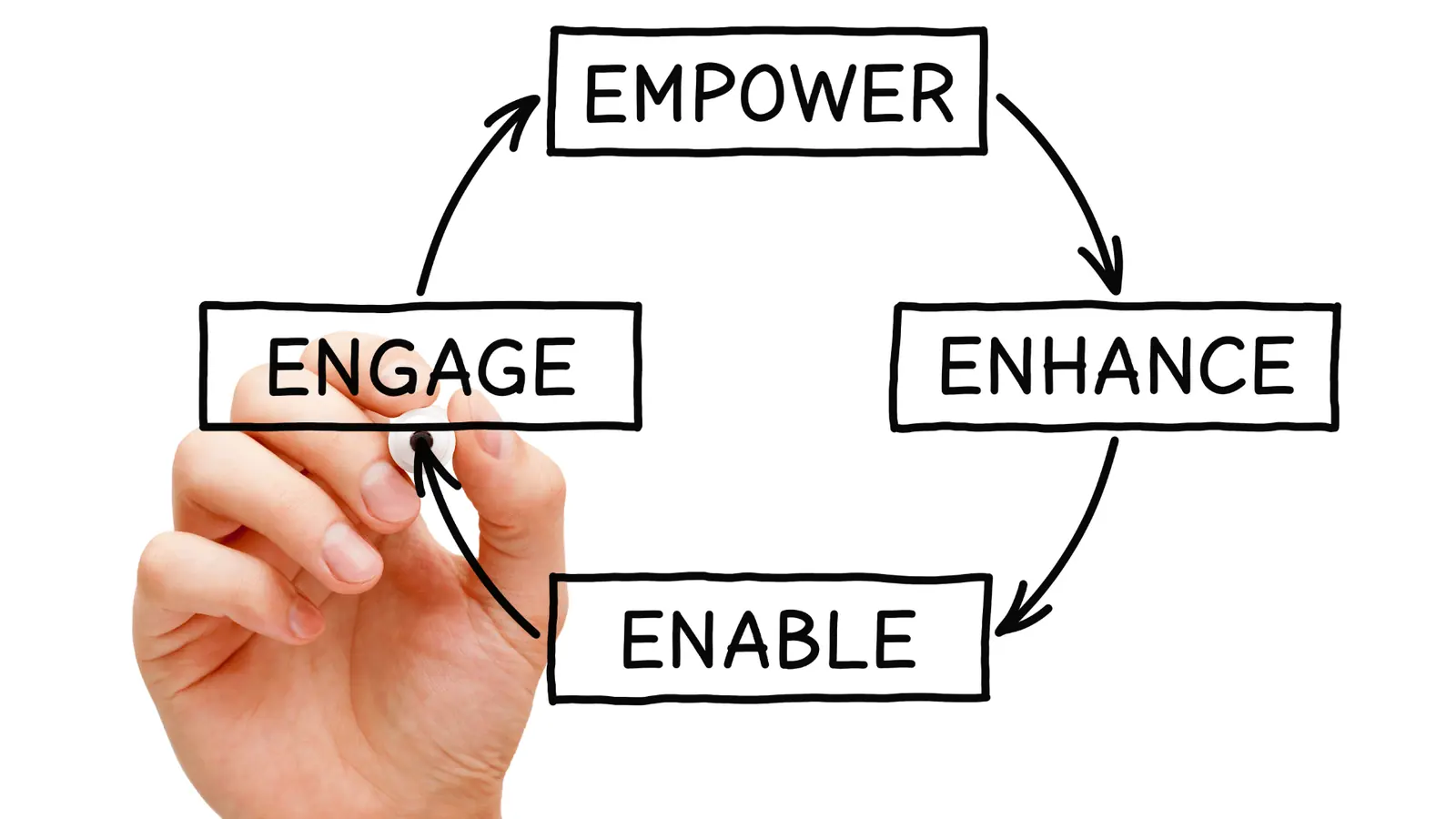
The real enemy of a large marketing team isn't a lack of creativity. It is coordination debt and the high cost of "creative intuition." When teams manage multiple brands and dozens of channels, relying on gut feelings leads to massive inefficiency. Everyone has an opinion on what "feels" like a good post, but nobody has the time to track if those feelings actually translate into reach or meaningful community engagement.
Here is where teams usually get stuck:
- The "Freshness" Trap: Teams burn hours conceptualizing entirely new content pillars while ignoring the evergreen formats that consistently generate 30% higher engagement.
- Data Fragmentation: Analytics live in one spreadsheet, the calendar in another, and the actual assets are scattered across various drives. Connecting the dots takes so long that the data becomes stale before it can inform the next month’s plan.
- The Review Bottleneck: Because there is no evidence-based framework for why a post was chosen, every stakeholder feels empowered to second-guess the creative, leading to endless feedback loops and missed deadlines.
When you operate this way, you aren't actually planning. You are reacting. You are constantly building content from scratch, waiting for approval, and then praying it performs. It is a High-risk handoff cycle that guarantees burnout.
Operator rule: Don't start a creative brief until you have performed a 15-minute data audit. If the previous month's metrics don't support the theme, the theme shouldn't hit the calendar.
Most teams treat planning as a brainstorming event. In reality, it should be a data-retrieval exercise. When you use a platform like Mydrop to centralize your Analytics > Posts view, the ambiguity disappears. You can filter by engagement rate or specific post types to see exactly what moved the needle.
Suddenly, your monthly planning meeting changes. Instead of asking "What should we post?" you are looking at a dashboard and saying "Our audience clearly loves these three formats, so let's schedule them for the next four weeks."
This is the part people underestimate: simplicity scales. When you move from "what do we feel like doing" to "what does the data prove works," you reduce the number of subjective decisions your team has to make. You free up time for your creators to actually make better versions of proven ideas, rather than constantly spinning their wheels on unproven experiments.
True content strategy isn't about better guessing. It is about turning the signal from your existing performance data into a repeatable operational calendar. If you aren't looking at last month's data, you aren't planning-you're just gambling with your brand's time and reputation.
Why the old way breaks once volume rises

Most teams try to solve the chaos of high-volume social planning by adding more layers: more weekly meetings, longer approval chains, and denser spreadsheets. The problem is that these additions don't fix the lack of evidence. They just create more coordination debt. When you are managing ten channels across four markets, your "creative intuition" isn't a strategy-it is a bottleneck.
Most teams underestimate: The silent cost of "calendar drift." When your team spends three hours debating a post concept that ignores last month's data, you aren't just losing time. You are actively training your audience to ignore your brand because you are prioritizing "freshness" over what actually drives engagement.
The traditional "creative brainstorm" assumes that every post is a blank slate. In an enterprise environment, this is rarely true. You have recurring themes, specific product cycles, and established audience behaviors. When you treat every calendar slot as a new creative mystery, you inevitably fall into the trap of high-effort, low-impact content.
| Symptom | Intuition-Led Workflow | Metric-Informed Workflow |
|---|---|---|
| Planning Basis | Guessing what "feels" relevant | Auditing past performance spikes |
| Primary Goal | Keeping the calendar full | Driving specific engagement types |
| Team Friction | High (debating subjective quality) | Low (debating data-backed results) |
| Post-Launch | Hope for the best | Iterate based on actual data |
When the volume of assets and stakeholders increases, the "old way" forces your team into a reactive posture. You spend your morning firefighting in the inbox or chasing down legal approvals, leaving no time to look at the scoreboard. This cycle of reactive output is the primary driver of burnout in social media leadership. You are working harder, but you are not getting smarter.
The simpler operating model

The secret to scaling isn't working faster; it is narrowing your focus to what works. Instead of treating planning as a creative event, treat it as a data-retrieval exercise. You want to move from "What should we post?" to "What evidence shows this will succeed?"
Here is the operational rhythm you can follow:
- Analyze: Use your
Analytics > Postsview to filter by top engagement rates. Don't look at vanity reach; look for the posts that actually got people talking. - Map: Compare those high-performing formats against your upcoming calendar. If a specific "how-to" video style spiked in engagement last month, why isn't it scheduled for the next three weeks?
- Automate: Use
Calendar > Remindersto turn those high-performing formats into permanent, recurring tasks.
Operator rule: If a format isn't hitting your benchmark after three attempts, kill it. Do not let "creative preference" keep a low-performing series on life support.
This is where your toolkit should do the heavy lifting. Instead of relying on a human to remember that "Tutorial Tuesdays" usually underperform, the data in your analytics dashboard should make that decision for you. When you have concrete evidence that certain content types consistently drive comments or saves, the calendar planning process becomes a simple exercise of slotting in proven winners.
The goal is to stop relying on the "gut feeling" of your most vocal stakeholder and start relying on the cold, hard numbers that your audience is providing every single day. When you shift the conversation from "I think this looks good" to "The data says this format drives a 12% higher engagement rate," the entire approval process moves significantly faster.
- Audit: 15 minutes reviewing last month’s top posts by engagement rate.
- Sort: Identify the top 3 evergreen formats that generated the most meaningful interaction.
- Commit: Lock these into the
Calendar > Remindersto ensure asset collection and filming happen on time. - Repeat: Treat this as a non-negotiable operational ceremony before any creative work starts.
You aren't removing creativity from the process; you are giving your creative team a precise target to hit. When everyone knows that the audience responds to specific, data-backed formats, the energy usually spent on guessing is redirected into actually making that content better. The best creative strategy is simply repeating what your audience has already told you they love.
Where AI and automation actually help

The most common trap in modern social teams is using AI as a glorified copywriter. You burn through hundreds of variations for a single caption, yet your engagement remains flat. That is not an AI strategy; it is just faster gambling.
When you shift to an evidence-based model, AI stops being a creative replacement and becomes your data analyst. Instead of asking for a list of hashtags, you use the Mydrop Home assistant to process your historical performance data. You want the machine to answer the questions that cause internal friction, like “Which content themes from last quarter actually drove clicks, not just hollow likes?” or “When does our audience drop off on video content?”
Automation then turns those findings into a non-negotiable schedule. You shouldn't have to manually chase your team to film, edit, or approve assets. By connecting your findings directly to Calendar > Reminders, you transform a "content calendar" from a static document into a live, pulsing operational workflow.
Operator rule: AI should be used to interpret your historical performance, while automation should be used to enforce the habits that drive your future results.
Stop asking the AI to "give me ideas." Start asking it to "summarize the top three high-performing formats from the last 30 days and suggest a production timeline for similar assets."
- Run a post-performance audit in
Analytics > Postsusing the last 30 days as your window. - Filter for high-engagement formats (e.g., carousel vs. single image vs. short-form video).
- Export the "high-performer" list to the Mydrop Home assistant for context.
- Ask the assistant to generate a recurring production reminder for these themes.
- Set
Calendar > Remindersfor the next four weeks to keep the production team on track.
The metrics that prove the system is working

If your team is still obsessed with "Total Reach," you are missing the signal. Reach is often a vanity metric influenced by volatile algorithm shifts. To run a stable, scalable operation, you need to focus on metrics that reflect the actual health of your content strategy.
KPI box: Stop reporting on "Total Impressions" and start tracking "Engagement per Content Type."
- Primary Metric: Engagement Rate (Comments + Shares / Impressions).
- Leading Indicator: Time to First Comment.
- Operational Health: Percentage of posts published according to the production schedule vs. ad-hoc "emergency" posts.
When you switch your focus, the internal conversation changes. You move from defending "why reach was down this month" to explaining "why this specific content format outperforms the others." It turns your monthly reporting into a strategic planning session.
Common mistake: The "Freshness" Trap. Teams frequently kill off a high-performing content series because they feel bored with it, assuming the audience is bored too. Data almost always proves otherwise. If a format works, repeat it until the engagement curve objectively flattens.
Consistency is the ultimate competitive advantage for an enterprise brand. When you can prove that specific asset types yield predictable engagement, you stop having to sell your strategy to leadership every month. You stop negotiating for resources because your data justifies the production cost.
The goal isn't to be a viral sensation every Tuesday. The goal is to move your social operation into a state where "what we do next" is never a guess, but a direct response to what your audience has already told you they value. That is the point where you stop just managing accounts and start building a high-output publishing machine.
The operating habit that makes the change stick

The biggest reason social strategies fail isn't a lack of creativity, but a lack of ceremony. If you don't anchor your data analysis into a fixed, non-negotiable rhythm, the "urgent" requests-the fire-drills, the last-minute approvals, and the endless inbox noise-will always push your strategic planning to the back burner. You need a dedicated Data Sync that happens before a single line of copy is drafted for the next month.
Here is how to structure that ceremony to move from reactive to proactive:
- The 30-Minute Audit: Block out a specific calendar time early in the month. Use your
Analytics > Postsview to filter for the last 30 days. Sort by engagement rate to isolate the three post formats that actually moved the needle. Ignore vanity metrics like "total reach" that don't translate into community action. - The Blueprint Transfer: Take those top-performing formats and turn them into templates. If your audience responds to short-form video tutorials on Tuesdays, set a recurring
Calendar > Reminderfor filming that specific format every Tuesday morning. This isn't just a placeholder; it’s an operational commitment to success. - The Governance Check: Before you finalize the calendar, look at your current inbox health. If your
Inboxrules aren't keeping up with the volume your content is generating, you are planning a catastrophe. Adjust your routing rules while you are building the calendar, not after the posts go live.
Framework: The 3-Step "Analyze, Schedule, Repeat" Cycle
- Analyze: Use
Analytics > Poststo find your high-engagement patterns.- Schedule: Use
Calendar > Remindersto turn those patterns into recurring production tasks.- Repeat: Audit the results from those scheduled tasks, adjust, and do it again.
Quick win: Next week, don't brainstorm a single new idea. Instead, look at the bottom 20% of your posts by engagement from last month and explicitly exclude those formats from your next calendar. You will instantly free up operational bandwidth.
Teams that thrive don't work harder; they work more predictably. When you treat your analytics dashboard as a production manual rather than a report card, you stop being a creative service bureau and start acting like an editorial lead. The goal is to build a rhythm where the "what to post" question is already answered by the data you gathered yesterday.
Conclusion

The divide between high-performing social teams and those stuck in an endless loop of firefighting is simply visibility. When your planning is tethered to the reality of your engagement data, the pressure to "go viral" vanishes, replaced by the quiet confidence of knowing exactly what your audience wants and when they want it.
Planning shouldn't be an act of invention; it should be an act of curation based on what has already worked. When you align your Calendar > Reminders with the hard evidence found in Analytics > Posts, you create a system that scales without breaking.
Content is only as good as the operations that support it. Once you stop guessing and start measuring, you find that the best creative strategy is simply repeating what your audience has already told you they love. Consistency is the only hack that matters, and Mydrop provides the engine to keep that cycle turning.