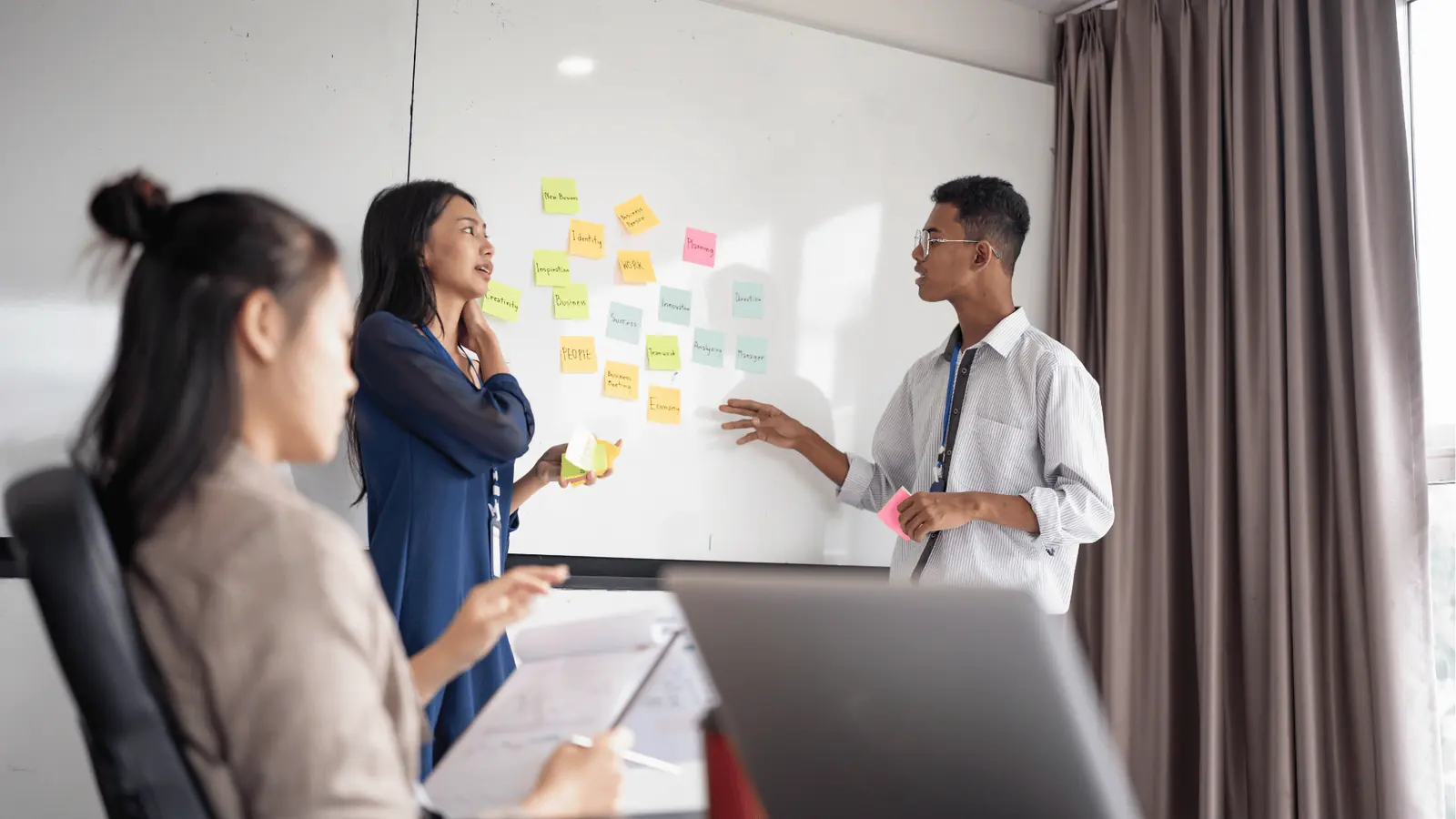

Burnout in social media isn't a symptom of over-producing; it is the inevitable tax you pay for managing a broken publishing pipeline. When your team spends more time auditing formatting constraints, checking timezone math, and chasing approval threads than actually creating, you have effectively turned your best talent into expensive manual quality-assurance testers.
The persistent feeling that you are sprinting to stay in place isn't a personnel failure. It is the weight of a system that treats every post as a manual, bespoke project rather than a repeatable, validated asset. You don't need a vacation; you need a system that removes the cognitive friction of "Is this ready?" so you can focus on "Is this worth sharing?"
TLDR: Stop trying to outwork a broken process. Burnout occurs when your workflow forces human brains to perform mechanical validations that should be handled by an integrated system. Shift your focus from output volume to operational throughput by automating your audit steps.
The real problem hiding under the surface

The silent killer of creative momentum is the "manual check." Every time a team member stops to verify if a video file meets platform specs, checks if the timezone is correct for a global release, or ensures the caption matches the profile guidelines, they are switching contexts. This context-switching tax is what drains energy long before the actual workday is over.
Most teams attempt to fix this by adding more people, which only creates more communication overhead. When the process is fragmented-ideation in one doc, creative in another, and scheduling in a third-the risk of a "hidden" mistake grows exponentially. The fear of that mistake is what creates the high-pressure environment that eventually leads to burnout.
The real issue: The bottleneck isn't the creative idea. It is the administrative overhead required to get that idea through your internal gauntlet and onto a live feed.
If a task is repetitive-like validating image dimensions or verifying regional compliance-it should never be a human decision point. When you force a human to do what a machine can validate, you are actively manufacturing burnout.
To break this cycle, you have to shift the burden of "operational sanity" from your people to your toolkit. Here is how your team can audit their current friction points and decide what to automate today:
- The Handoff Lag: Track how many minutes a post sits idle while waiting for someone to manually verify a requirement. If it takes more than two minutes, the process is too manual.
- The Compliance Audit: Identify if you are manually checking platform specs, image ratios, or character counts. These are binary data points that a system should flag instantly.
- The Scheduling Gap: Audit how many times your team has to open a calendar, switch a workspace, and double-check a time conversion. If this isn't unified in one view, you are losing hours a week.
Operator rule: Never manually check what a machine can validate. If you find yourself doing a "final look" for mechanical errors, your publishing system is failing your team.
This shift isn't just about saving time; it's about protecting your team's creative capacity. When Mydrop acts as an AI teammate, it takes over these repetitive validation steps during the draft phase. This allows your team to stop acting as human firewalls against technical errors and start acting as strategists who own the narrative. Creativity is expensive; don't waste it on spreadsheet management.
Why the old way breaks once volume rises
The moment your team moves from managing three social channels to thirty, the traditional manual workflow shifts from a manageable task to an operational debt trap. You start with good intentions: a spreadsheet to track posts, a shared folder for assets, and a team that communicates through chat. But volume introduces a silent, grinding friction. The hours you once spent on creative strategy are cannibalized by the administrative overhead of making sure the right version of a graphic is attached to the right copy, in the right timezone, for the right brand workspace.
Most teams underestimate: The "context-switching tax" when human beings act as the system's connective tissue. Every time a designer asks a manager, "Is this the final copy for the Q3 campaign?" or a social lead manually re-checks a caption character count, you are losing minutes that accumulate into wasted days.
This is the hidden cost of "manual sanity." When your team relies on willpower and vigilance to avoid posting errors, they are not just working; they are performing a high-stakes, low-value audit every single time they hit "schedule." Eventually, the system snaps. The human checkers get tired, the legal review threads get lost, and the brand consistency you worked so hard to establish starts to fray.
| Scaling Trigger | Manual Workflow Reality | The Resulting Debt |
|---|---|---|
| New Market Expansion | Manual timezone conversion | Scheduling collisions/Off-peak posts |
| Multi-Brand Portfolio | Shared, cluttered spreadsheets | Brand voice drift/Compliance risk |
| Increased Cadence | Batch-manual validation | High burnout/High error rates |
| Stakeholder Review | Email/Chat approval chains | Lost feedback/Delayed publishing |
Adding more people to this mess rarely fixes the issue. It usually just adds more communication layers, creating a bloated "coordination tax" where your team spends more time talking about work than actually creating it. The goal shouldn't be to hire more people to watch the gears; it should be to upgrade the gears so the machine runs quietly on its own.
The simpler operating model

If you want to end the burnout cycle, you must stop treating "process management" as a creative task. Shift your mindset toward the C.O.P.E. Model: Centralize, Optimize, Pre-validate, and Execute. This framework separates your high-value creative work from the low-value administrative friction that currently drags down your output.
- Centralize: Move every piece of content, approval, and asset into a unified workspace. If information is siloed in email or disconnected docs, it is effectively lost to the team.
- Optimize: Standardize your ideation through a shared AI assistant. Instead of starting from a blank page, use a home assistant that keeps your brand guidelines, past successes, and current campaign goals in its active context.
- Pre-validate: Stop the "manual review" habit. Let the system handle the mundane constraints-media dimensions, character limits, timezone alignment, and required tags. If the machine can catch it, a human should never have to look at it.
- Execute: Once the validation is clear, push to live. Your team's role shifts from "gatekeeper" to "strategic overseer."
Operator rule: Never manually check what a machine can validate. If you find your team spending time on platform-specific formatting checks, your system is failing you.
This shift provides an immediate sense of relief. You aren't asking your team to work harder; you are removing the invisible ceiling that prevents them from working smarter. By shifting these mechanical burdens onto an integrated system-one where Mydrop acts as your teammate rather than just another dashboard-you free up the cognitive bandwidth required for actual creative breakthroughs.
Creativity is an expensive, non-renewable resource. Don't waste it on spreadsheet management. The teams that thrive at scale are those that treat their publishing pipeline with the same rigor they apply to their brand identity. A team running on willpower is a team waiting to crash, but a team running on a resilient, automated system can handle complexity without losing its soul. The burnout ends the moment you stop blaming the people and start fixing the architecture.
Where AI and automation actually help

The mistake most teams make is thinking AI needs to replace the creative spark. It does not. The real magic happens when you delegate the administrative drag that turns great ideas into stale, overdue posts. When you stop using your best talent to manually cross-reference timestamps against global market calendars, you finally give them the space to do the work you hired them for.
Think of AI not as a generator of fluff, but as a silent partner that manages the constraints you are too tired to remember at 4:00 PM on a Friday.
Operator rule: Never manually check what a machine can validate. If your team is spending hours confirming image aspect ratios or ensuring a caption doesn't exceed a specific character limit for a platform you haven't touched in a week, you have already lost the efficiency battle.
Here is how you shift that load:
- Intelligent Ideation: Stop staring at blank prompts. Use a persistent home assistant that actually knows your brand history, past successful assets, and current campaign goals. It turns a "what should we post?" session into a "here is what has worked for this audience before" brainstorm.
- Context-Aware Drafting: Instead of hunting through shared drives for the right tone or legal disclaimer, the AI pulls from your existing workspace context. It bridges the gap between your brand guidelines and the platform-specific nuances that usually trigger a compliance redo.
- Pre-Flight Logic: Before a human even touches the approval screen, automated validations catch the "invisible" errors-the missing thumbnails, the wrong timezone settings, or the mismatched profile selection. This is the difference between a smooth launch and a scramble to pull a live post that was published to the wrong audience.
The metrics that prove the system is working

When you move to a unified, validated system, your data becomes actionable rather than just observational. You stop looking at vanity metrics and start tracking the health of your operational pipeline. If your team is still burnt out, your data will tell you exactly where the friction is-usually in the handoffs between teams or the time spent in the "approval limbo."
KPI box:
- Validation Failure Rate: Percentage of posts returned for non-creative reasons (e.g., wrong format, bad link, timezone error). Target: < 2%
- Approval Velocity: Time elapsed from "first draft" to "ready to schedule." Target: 48-hour reduction
- Context-Switching Frequency: How many times a team member pivots between tools per session. Target: Eliminate external spreadsheet reliance
- Platform-Specific Coverage: Percentage of content successfully published without manual intervention. Target: > 95%
A healthy system does not just produce more posts; it produces predictable results. When you track these metrics, you can identify if your burnout is actually a volume issue or a coordination debt issue.
Common mistake: Many managers look for "output per head" to solve burnout. This is the wrong metric. If you double the output of a broken system, you just double the number of mistakes you have to fix later. Instead, look for Reduction in Rework. That is your true North Star.
To audit your current system, run this diagnostic check with your team:
- Does every team member know the current status of a post without needing to ping a colleague?
- Are we still manually validating media specs for every platform before hit-testing schedule?
- Is our timezone logic documented or is it just "tribal knowledge" prone to human error?
- Do we have a single source of truth for assets, or are we hopping between cloud drives and email threads?
- Can we prove which profile-level settings caused a publication failure last month?
Framework: Intake -> Contextual AI Support -> Unified Validation -> Execution.
If your team struggles at the Validation stage, no amount of creative genius will save the schedule. Your goal is to move the burden of "operational sanity" from your human team onto the system itself. When the machine handles the constraints, your team is free to handle the craft. That is not just a productivity hack; that is how you build a sustainable social operation that scales without breaking your people.
The operating habit that makes the change stick

Real system change is not a one-time project; it is a shift in how your team treats every piece of content that crosses their desk. If you want to stop the burnout cycle, you must stop treating "publishing" as a creative act and start treating it as an engineering process.
The habit that breaks the cycle is Automated Verification. Instead of asking "Did we check this?" in a Slack thread, force the system to answer for you. When your team knows that Mydrop will catch a missing asset, an incorrect timezone, or a broken link before the calendar event turns live, they stop checking their own work with a sense of dread. The cognitive load drops instantly.
Operator rule: Never manually review what a machine can validate. If you find yourself repeatedly checking for the same "silly" errors in your weekly review, your current process is the culprit, not your team.
To transition your team this week, start with these three steps:
- Conduct a friction audit. For the next three days, have every team member note every time they stop working to ask, "Wait, is this the right size?" or "Who was supposed to approve this?"
- Centralize the constraints. Move these common pitfalls-those "silent" time-sinks-into a single Mydrop workspace, allowing the system to flag them automatically during the creation phase.
- Shift the review focus. Once the system handles the technical validation, use your team meetings to discuss strategy and creative direction instead of debating file formats and timezones.
Framework: The C.O.P.E. Model
- Centralize: Keep all brand assets, calendars, and profiles in one workspace.
- Optimize: Use AI Home assistant to handle drafting and repetitive ideation.
- Pre-validate: Let the system catch format and platform errors before scheduling.
- Execute: Schedule with confidence, knowing the audit was handled.
Quick win: Audit one recurring "last-minute" panic from last month. Map out the specific step that caused the delay (e.g., waiting for a file resizing or manual approval). Replace that manual step with a set workspace rule in your management platform to ensure it never happens again.
Conclusion

The persistent exhaustion your team feels is not a tax on hard work. It is an operational penalty for relying on manual effort where logic and automation should prevail. You have a limited supply of high-level creative energy; spending that energy on administrative firefighting is the fastest way to drain your team of their best ideas.
Great brands do not scale because they work harder than their competitors. They scale because they remove the friction that makes high-volume publishing feel like a high-risk gamble. When you replace manual gatekeeping with automated guardrails, you finally create the space required for genuine creativity.
Social media scale is a coordination challenge, not a content one. Solving it means building a foundation where the system works for you, ensuring that every post is a deliberate move rather than a desperate reaction. That is the point where Mydrop stops being just another tool and becomes the engine that keeps your team firing on all cylinders without the risk of collapse.