
If your team measures live success by viewers and likes, but the finance team measures it by orders and return rate, you have a gap. This playbook is for the folks stuck in the middle: social ops who need repeatable outputs, brand leads who require governance, and commerce teams who demand predictable fulfillment. Over 30 days we trade bespoke stunts for a relay-style cadence: attract, engage, convert, scale. The point is not to invent new tech; it is to make predictable daily work that maps cleanly to approvals, inventory, CRM, and measurement.
This will feel like operations as much as creative. Expect quick rehearsals, daily checklists, and offers you can explain on one slide. Expect disagreements about risk and speed. Expect legal reviewers to get buried and spreadsheets to explode. A simple rule helps: pick the smallest offer that still moves revenue, automate the handoffs you can, and set rollback triggers before you go live. Here is where teams usually get stuck: they leave approvals and checkout integration until week zero, and then wonder why a 10k viewer stream only produces 0.5 percent conversions.
Start with the real business problem

Live video often produces spikes in attention and near-zero operational maturity for capturing that attention. A realistic example: 10,000 live viewers, 0.5 percent conversion rate, average order value of 45, yields 50 orders and about 2,250 in revenue. That looks fine on paper, but it also creates a dozen messy downstream tasks: order validation, inventory reservations, shipping splits across regions, VAT or tax checks, and multistage returns. For an enterprise CPG launch or a retailer holiday promo, that velocity exposes weak links fast. The legal reviewer gets buried. Customer service gets flooded with variant questions. Inventory that looked fine in the product catalog disappears in three minutes. This is the part people underestimate: attention is easy, fulfillment is not.
Enterprise constraints change the math. Compliance teams will force scripted language for claims, creatives need version history, and one hurtful misclaim can require an immediate takedown. Your CRM integration may be asynchronous: tags applied from a stream need to land in the right brand account, with the right lifecycle campaign, and the right reporting dimensions. Multibrand companies add another layer: shared Live schedules mean brand owners must sign off on offer copy, and finance needs consolidated revenue attribution. An agency running a holiday split test can produce great engagement but still fail because the checkout path wasn't consistent across variants. Those failure modes look like: high view-to-cart, low cart-to-checkout, and reports that never reconcile.
Operational pain comes from two root causes: scattered tools and weak handoffs. Teams use chat, email, shared drives, separate commerce dashboards, and ad hoc spreadsheets to coordinate one show. That duplication slows approvals and creates audit gaps. Here is what needs deciding before day one so the relay can start cleanly:
- Operating model: Centralized brand-run, Agency-managed, or Hybrid. This determines who signs the check and who signs the copy.
- Offer complexity: Single SKU, tiered bundle, or time-limited bundle. Keep offers small and testable.
- Primary conversion path: in-platform checkout, brand landing page, or QR-to-checkout. Pick one and instrument it.
Those three decisions determine your approval matrix, your inventory guardrails, and how compliance will be enforced. For example, a centralized model buys speed but concentrates risk: one mistaken claim will ripple across all brands. An agency-managed model gives creative freedom but increases the number of handoffs and approvals. Hybrid often wins for large portfolios: local brand teams select products and offers, while a central social ops team owns schedule, checkout integration, and reporting. Tradeoffs are real. Faster equals more manual exception handling. More control equals slower iterations.
Make the problem tangible with a failure scenario. A retailer runs a gift bundle as a live-only offer. The copy promises "next-day delivery" for all orders. Legal suggested adding regional exclusions, but that language was buried in an email thread and not included in the host script. During the stream, 200 orders hit a fulfillment node that cannot fulfill next-day in two states. Customer support escalates, PR gets involved, and the stream is paused. That pause costs attention, damages conversion on future shows, and triggers complex refunds. Preventable? Mostly. A preflight checklist that includes legal signoff on spoken copy, a mapped inventory reserve, and an automated webhook to mark affected SKUs as unavailable would have stopped it.
There is a human side to the math. Social teams want to push more shows because attention is cheap and metrics look good. Commerce and legal want fewer, rock-solid events. A useful pragmatic stance is this: treat the first two weeks as operational beta. Run small offers with clear fallbacks, automate what trips up people most, and keep a visible audit trail so the person who approved the script is answerable if something breaks. Mydrop can help here by anchoring approvals, versioning live scripts, and wiring commerce events into one view so finance and social ops are looking at the same numbers. Mentioning a platform is not a silver bullet, but when teams are swapping files and chasing signatures, a single tool that captures approvals, assets, and post-live attribution reduces the friction that kills conversions.
Finally, remember the simple objective: convert attention into customers without making every show a custom project. If you can baseline one predictable offer, instrument the checkout, and commit to short decision loops for exceptions, you get learnings you can scale. This playbook gives you day-by-day structure to do exactly that: stop improvising at scale, start rehearsing at speed, and build a repeatable handoff rhythm so the creative people can focus on the show and the operational people can focus on delivering the orders.
Choose the model that fits your team
Picking a model is the single practical decision that shapes everything that follows. There are three repeatable options: Centralized (brand-run), Agency-managed, and Hybrid. Centralized means the brand owns the calendar, scripts, and commerce rules; it gives tight control over messaging and compliance but slows you down because every legal and product reviewer sees the draft. Agency-managed hands execution and experimentation to a partner for speed and creative variety, but it can fracture governance if the agency does not follow the brand's checklist. Hybrid puts social ops and the brand in a daily rhythm: ops runs the machine, brand approves the offers and scripts, agency supplies episodic creative. Most enterprises end up on Hybrid because it balances speed and control for multi-brand portfolios.
Practical role matrix helps remove guesswork. Below is a short mapping of who does what and the approvals each role needs. Use this to fill your own org chart, not as a frozen org chart. The legal reviewer gets looped for offer copy and compliance checklist items; product owners confirm inventory and bundle rules; social ops manages scheduling, broadcast infra, and comment routing; commerce or payments owns checkout links and order tagging. If you use Mydrop, slot it into the flow where versioning, approvals, and analytics must live - e.g., Mydrop becomes the single source of truth for approved scripts and for handing the post-live asset to commerce and reporting teams.
Expect and accept tradeoffs. Speed vs control is the obvious one: Centralized gives fewer compliance slips but longer cycle times. Agency-managed gives rapid creative iteration but can cause duplicated assets and inconsistent metadata across markets. Hybrid reduces those risks but requires investment in clear SLAs and a single tool for approvals or you will recreate the same sticky situations: duplicated spreadsheets, late-morning Slack panics, and last-minute creative rework. Here is a compact checklist to map choices and break ties when the team is stuck:
- Decision point: Who signs final copy - Brand Legal, Agency Legal, or Social Ops with escalation rules?
- Approval window: 48 hours (fast), 5 business days (standard), 10+ days (slow) - pick one per campaign.
- Inventory control: Central catalog with reserved SKUs, or per-market hold - who owns the TTL?
- Measurement owner: Commerce for orders, Social Ops for engagement, or a combined dashboard owner.
- Fail-safe: Who triggers rollback and who authorizes a live offer cancellation?
Turn the idea into daily execution
This is the part people underestimate: turning strategic choices into a daily, executable calendar with clearly assigned micro-tasks. The 30-day calendar below is compact but actionable; each day has a primary objective, the actors who own it, and one concrete deliverable. The week-by-week relay works well: Week 1 - Plan and prep; Week 2 - Audience building and rehearsals; Week 3 - Offer sprint and conversion; Week 4 - Scale and handoff. But don’t stop at "week." Each day needs a person who executes and a person who signs off. For example, Day 7 is "Compliance sign-off on offer details" and the deliverable is a timestamped approval note; Day 16 is "A/B format test" with a short experiment brief and expected metric delta.
Compact 30-day sample calendar (high level):
- Days 1-3: Strategy sprint - pick offer, SKU list, bundle rules, and primary KPIs. Deliverable: Offer spec with fulfillment owner.
- Days 4-7: Scripts and compliance - host script draft, visual shot list, legal checklist complete, commerce link ready. Deliverable: Approved script versioned in the platform.
- Days 8-14: Audience push and rehearsal - paid amplification plan, creative variants, 2 host rehearsals, backend order test. Deliverable: Rehearsal recording and live order test report.
- Days 15-21: Offer sprint - daily live shows with rotating creative and a core CTA. Deliverable: Daily conversion snapshot and an experiment log.
- Days 22-26: Optimization - swap creatives that underperform, tighten CTAs, adjust inventory holds. Deliverable: Updated offer rules and AOV-focused tweaks.
- Days 27-30: Scale and wrap - cadence for repeat weeks, post-mortem, asset handoff to commerce, and final reporting. Deliverable: Post-mortem with action items and a repeatable week template.
Every single day should include an actor checklist you can paste into daily briefs. Keep it short and copy-paste friendly:
- Producer: Confirm stream health, switcher scene, and backup stream key.
- Host: One-line opening, three demo bullets, and the exact CTA read.
- Comms: Post copy queued, link shortener set, community comments prioritized.
- Inventory/Fulfillment: Inventory holds set, reserve SKUs flagged, and order flow tested.
- Legal/Brand: Quick check on offer language or a pre-approved waiver if needed.
Templates make life easier. Keep these tiny and standard across markets so reviewers spend seconds instead of hours. Use them as the canonical copy that can be localized, not rewritten.
Promo copy template (short): "Exclusive TikTok Live deal: [Product Name] + [Freebie/Bundle] for [Price]. Live-only stock. Tap to buy - limited until stocks run out." CTA read (host): "Hit the link now - the bundle is only available while I’m live and once we hit 200 orders, the bonus goes away." Urgency language variants: "Limited stock", "Live-only price", "First 100 orders get bonus", "Ends when the stream closes".
A few operational rules to reduce common failure modes. First, never let untested commerce links go live. A simple rule helps: the link is only live in the broadcast if a test order has cleared to payment and reached a CRM tag that the reporting team can see. Second, make the accept-or-escalate decision binary for legal - either sign, or return with line-level edits and a 24-hour SLA for re-review. Third, automate the handoff to commerce and to reporting: after each show, the producer pushes the day's asset package (VOD, timestamps, offer copy, KPI snapshot) to the shared workspace; commerce then marks orders with a campaign tag within 24 hours.
For enterprise examples, here are quick callouts showing how the calendar adapts. A CPG brand running rotating demos uses Day 17-19 to cycle through three demo variants and reserves inventory bucketed by SKU. An agency running a holiday sprint uses Days 8-14 to split-test thumbnail hooks and promo copy across regional feeds. A multi-brand company centralizes the Live schedule in a shared calendar and rotates brand ownership weekly with ops ensuring consistent checkout flows. Social ops leaders should create a single "go/no-go" checklist for the hour before any show: stream health, payment test, legal green light, and a rollback contact list.
This daily plan is meant to slip into existing enterprise QA and martech without bespoke plumbing. If you have a platform like Mydrop, use it where versioning, approvals, and cross-market scheduling are required; treat the platform as the place where the baton is tracked, not where creative is invented. The goal is simple: no surprises on day zero of a live offer, and an automated, auditable path from audience attention to order fulfillment.
Use AI and automation where they actually help

Most teams waste the first week asking whether AI will replace the host. The short answer is no. The useful answer is this: use AI to make repeatable, low-risk work faster and to reduce the manual handoffs that break live commerce at scale. Here is where teams usually get stuck: the legal reviewer gets buried in version 7 of the script, the producer chases the wrong SKU image, and comment moderation lags during peak viewership. Automations that generate shot lists, tag comments by intent, and pre-fill offer copy shave hours off the workflow without changing approval gates. Those are the wins you want.
Implementation matters. Start with narrowly scoped automations that have a clear human in the loop. Examples that actually work in enterprise live commerce: auto-generate a 6-shot demo checklist from product specs; create three headline variations for the promo that the copy lead chooses from; route comments tagged "order" into a commerce queue with SKU and offer code attached. Train models on your product catalog and past scripts so suggestions are relevant, then freeze the legal and price terms behind a final approval step. The tradeoff is speed versus control: if you automate too much you risk inconsistent claims; if you keep everything manual you kill momentum. A simple rule helps: automate anything that reduces repetitive manual copying, but never automate final compliance, price, or contractual language.
Small, concrete integrations are what move the needle. Use a short list like this to sketch an MVP:
- Auto shot list: parse product attributes and output a two-column shot plan (action, assets required). Producer reviews in 15 minutes.
- Comment triage: NLP tags comments as Intent=Order/Question/Complaint and routes to the correct responder with SKU and offer code.
- Offer copy varianter: generate 3 copy options with a consistent CTA template; copy lead selects and legal stamps the chosen template. These are quick to instrument with webhooks to your order system and CRM tagging, and they create clear handoffs between content, ops, and commerce. Rollout in a single brand or region first. Capture failures as well as wins: keep an "undo" or rollback trigger if an automated offer goes live with the wrong price. For enterprise scale, Mydrop or similar platforms can centralize those automations into governed workflows so agencies and brand teams see the same history and approvals without emailing spreadsheets.
Measure what proves progress
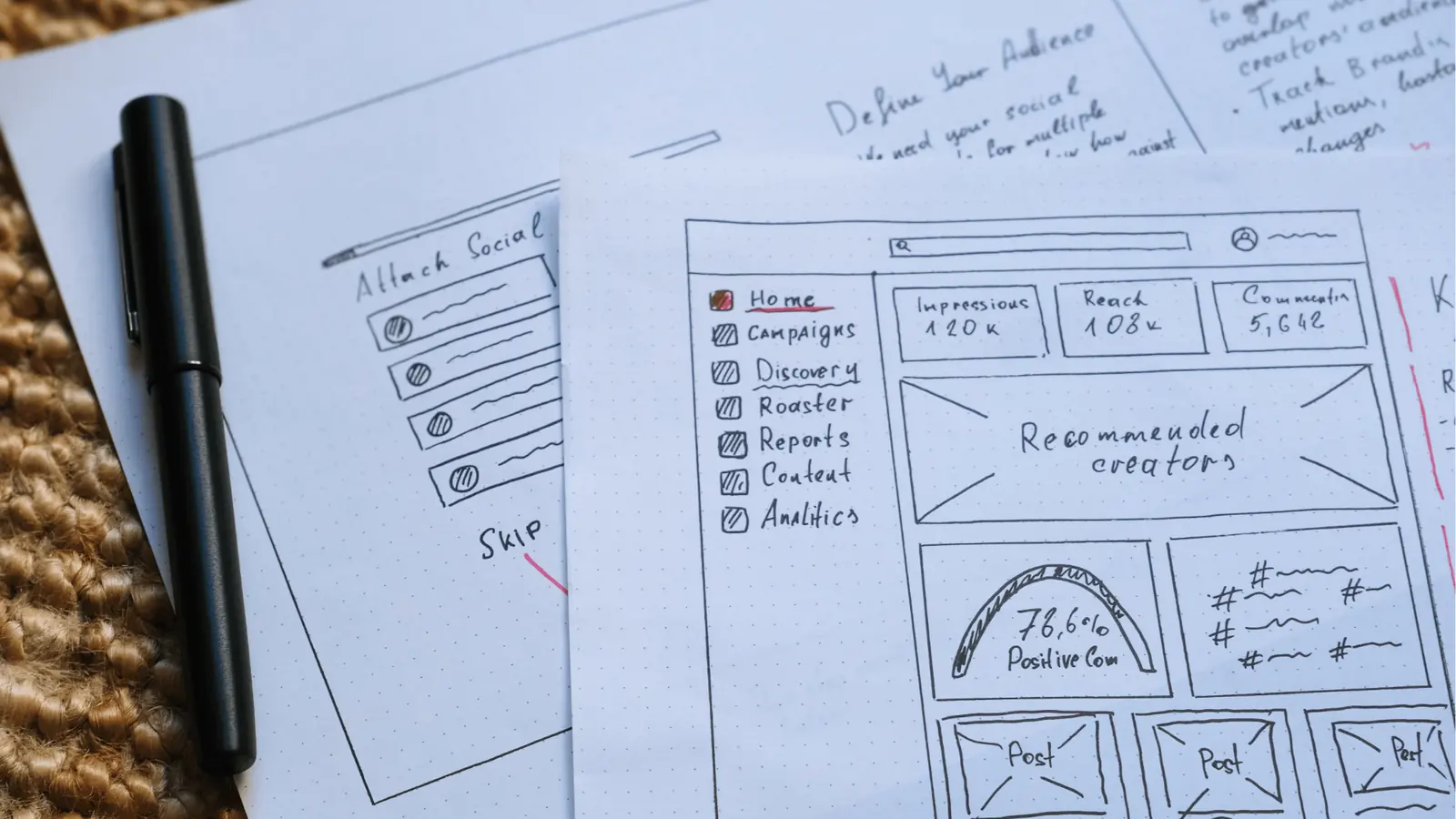
If you measure success by viewers and likes, you will keep getting more viewers and the finance team will keep asking why sales did not follow. Measure what proves progress: not just attention, but the steps that reliably lead to revenue. Five enterprise KPIs are the backbone: view-to-cart rate, cart-to-checkout rate, average order value (AOV) for live sessions, time-to-fulfill for live orders, and ops SLA for approvals and incident response. Define each clearly. For example, view-to-cart is sessions with an added live offer to cart divided by unique live viewers over the same session. A target could be 0.8% for a CPG launch where past paid channels show 1.2% conversion; set a hypothesis and test it instead of guessing.
Instrumentation is the hard part and the part people underestimate. Map events from the player to commerce: viewer_start, offer_seen, add_to_cart_with_offer_id, checkout_started, order_completed, and return_initiated. Use unique offer codes or session-level tokens so offline systems can attribute orders back to a specific Live event. Watch out for two common failure modes: delayed fulfillment skews the correlation between session and orders, and returns or cancelled orders create ghost success. Do not let a single daily revenue spike determine success; instead use rolling windows and cohort comparisons. Privacy and CRM integration matter too. If the session tags feed into the CRM, make sure consent flows and data retention rules are respected so analytics do not break compliance.
Operationalize the data with a tight cadence and simple dashboards. Daily scorecards should show the five KPIs and a short explanation field for anomalies. Weekly tactical reviews look for trend shifts and A/B test results; monthly cross-functional reviews feed product, legal, and operations lessons back into the playbook. A lightweight dashboard layout that helps teams act: top row-session metrics and conversions; middle row-comment routing and response times; bottom row-fulfillment latency and returns. For example, an agency running a holiday promo might set up split tests across days 8 to 14 and monitor view-to-cart per format. If one format lifts view-to-cart by 40% with no adverse effect on time-to-fulfill, promote it into week 3. If fulfillment latency for live orders jumps beyond SLA, trigger the rollback plan and pause the next offer until inventory and packing rates are confirmed.
Reporting cadence must match decision speed. Daily numbers inform host cues and offer pacing. Weekly numbers inform format and creative choices. Monthly numbers inform staffing and tooling investment. Keep the reporting lightweight and focused on actions: each KPI should point to a next step. If cart-to-checkout is low, the next step is a checkout friction audit and a short usability test. If time-to-fulfill is creeping up, reassign fulfillment capacity or throttle live offers. These are concrete operations, not academic metrics.
Finally, tie the metrics to governance and accountability. Assign KPI owners by role: social ops owns view-to-cart and comment routing; commerce owns cart-to-checkout and AOV; logistics owns time-to-fulfill. Build simple alerting thresholds into the dashboard so the right person gets pings when a metric crosses a threshold. Platforms like Mydrop can help by exposing the same dashboard and approval artifacts to every stakeholder so an audit trail exists when things go sideways. That traceability makes post-mortems faster and less political. In practice, start with a single brand pilot, prove the five KPIs for two months, then replicate the instrumented playbook across other brands with the same event mapping and reporting templates.
Make the change stick across teams

This is the part people underestimate: repeatability is not just templates, it is a practiced handoff rhythm. Start by codifying the Weekly Relay into simple SOPs that live where people already work. One page should state who owns the offer on each day, who signs off creative and legal, and who owns inventory and fulfillment. Another should be the rollback playbook: clear triggers (payment gateway errors, 5xx responses, or a surge in chargebacks), the communications script to pause the live, and the person who pulls the commerce toggle. For an enterprise CPG launch that rotates demos across SKUs, the SOP must include SKU substitution rules, fallback bundles, and inventory thresholds that automatically flag operations so the host can pivot without calling a meeting.
Training matters more than you'd expect. Run two dry runs per channel with the full approvals loop in place. One is a technical rehearsal - stream health, product shots, overlay cadence, and comment routing. The other is a governance rehearsal - legal signs off on the final CTA, finance confirms promo pricing, and customer service reads the post-checkout SMS flow. Use short checklists the producer checks in real time: Host ready, Camera framing, CTAs queued, Checkout link verified, Inventory flagged. For agency-managed work like a holiday promo run by a retailer, require the agency to submit a "policy bundle" 72 hours before a promo window: final copy, screenshot of the checkout, and a signed legal exception if anything deviates. That single demand eliminates 70 percent of last-minute rework.
Make post-mortems a habit and keep them lean. After each offer day, run a 30-minute standup with four slides: What shipped, what broke, why it broke, and what the immediate fix is. Capture one owner for each item and a target resolution date. Over time this creates a living playbook of failure modes - the classic ones are comment moderation queue overflow, wrong SKU shown on camera, and approvals stuck waiting on a single reviewer. Where tradeoffs arise, document the decision and the monitoring rule: if you grant an emergency pricing override to speed to market, require hourly checkout sampling for 6 hours. For multi-brand rollouts, use a shared post-mortem board so brand owners can see recurring issues and avoid reinventing mitigations. A simple rule helps: if an issue repeats twice in a month, escalate to a process change, not a tactical patch.
- Run a full governance rehearsal 72 hours before any live sell event, with legal, finance, and fulfillment on the call.
- Create a single-source Live calendar and attach the final approved promo bundle to each session.
- After each offer, run a 30-minute post-mortem and assign fixes with deadlines.
Conclusion
Small operational changes buy big returns fast. The real lever is not a new checkout integration; it is removing the person who says "wait" in the middle of the show. Replace that blocker with a clear approvals matrix and a fallback plan. For social ops leaders, that means a compact approvals matrix that lists reviewers, acceptable response time, and who to CC when a reviewer is late. For an agency running a retailer promo, it means one person with approval authority during the window and an agreed escalation path. The payoff shows up in two ways: fewer aborted offers and faster iteration cycles so you can test formats rather than chase process.
If you want one practical next move, build the three artifacts that make change operational: the Live SOP, the approvals matrix with SLA, and a one-page rollback playbook. Put them in the same place your teams already use for calendars and assets. If your stack includes Mydrop or a similar enterprise platform, use it to attach the approved bundle to the session, push automated notifications when signoffs happen, and centralize post-mortems so the insight travels with the schedule. Do that and the 30-day relay becomes a repeatable weekly rhythm, not a heroic sprint.