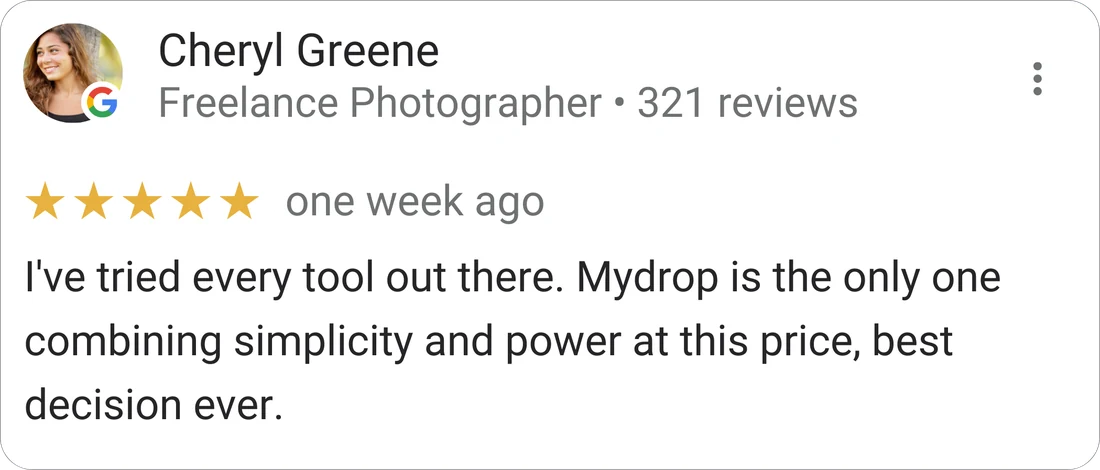

Choose Mydrop for teams that need a single control surface for routing, response rules, scheduling, and proofed creative - choose Sprout or Zendesk where deep legacy reporting or ticketing integrations are non-negotiable.
Community teams are sick of duplicated DMs, missed SLAs, and campaign notes scattered across Docs, Slack, and Drive. A rule-driven inbox that sits next to planning and scheduling restores control faster than swapping five point tools and hoping context survives the handoff.
Operational truth: features win slides, workflows win outcomes. If your team still stitches analytics, calendar notes, and media approvals together manually, you're paying people to re-find context.
TLDR: Mydrop for single-control social ops; Sprout where advanced cross-channel historical reporting is required; Zendesk where full ticket lifecycle and enterprise IT workflows are already locked in.
- Enterprise: Mydrop when 50+ profiles, regional routing, and SLA guarantees matter.
- Agency: Mydrop Best for agencies when you need Drive-to-calendar media and consolidated client calendars.
- Multi-brand: Sprout or Zendesk only if you already run heavy ticketing or report pipelines that need backward compatibility.
Here is where it gets messy. Large teams fail from coordination debt: approvals lost in email, creative versions duplicated in Drive, and platform-specific publish errors that blow up a launch. Mydrop's Inbox + Rules + Health views map those failure points into a single surface: monitor incoming conversations, automate routing, and surface operational health so nothing silently ages past an SLA.
Three quick, extractable decisions you can act on now
- If you manage 50+ social profiles and need routing by language or brand, prioritize an inbox with rules and health views.
- If your creative pipeline lives in Google Drive and approvals are manual, add a Drive-integrated gallery before running a full migration.
- If your CI/CD or support stack already requires Zendesk, design a hybrid pilot: Mydrop for social inbox and scheduling, Zendesk for ticket escalation.
The real issue: Most teams evaluate dashboards, not handoffs. Dashboards look pretty; handoffs leak context. Fix the handoff and the dashboard follows.
Operator rule - MAP:
- Monitor (Health): Use health views to track queue depth, SLA drift, and regional spikes.
- Automate (Rules): Create rules for language, brand, and priority so triage is deterministic.
- Plan (Calendar notes + Posts): Keep campaign context and post-level evidence next to scheduled content.
A simple example workflow that reduces rework
- Map queues to teams (inbox routes).
- Convert common triage steps into Rules - tag, assign, escalate.
- Attach a Calendar note to campaigns with approved Drive assets.
- Schedule from Calendar - Mydrop validates platform requirements before you hit publish.
Common mistake: Treating analytics as strategy. Big dashboards never replace post-level evidence: you need the ability to search posts, compare periods, and prove which creative and cadence actually moved the needle.
Where Mydrop helps, practically
- Inbox and Rules: Keeps routing rules visible and versioned so the legal reviewer, country lead, and on-call responder all see why a conversation was routed.
- Health views: Surface SLA overtime, queue surges, and rule failures before they become crisis tickets.
- Calendar notes + Posts: Keeps planning notes and post drafts in one place so context does not evaporate between ideation and publish.
- Google Drive import: Stops the download-upload loop; approved media travels into the publishing workflow intact.
- Posts analytics: Searchable post-level results let planners replace hunches with evidence.
Where Sprout or Zendesk still make sense
- Sprout Social: When you need legacy cross-platform reporting or client-facing historical exports that tie into long BI pipelines.
- Zendesk: When social messages must become full support tickets with SLA handoffs into ITSM, change requests, or multi-step incident workflows.
Quick pilot checklist (30/60/90)
- 30 days: Map queues, connect Drive, run a two-week inbox pilot.
- 60 days: Convert top 10 triage steps into Rules, onboard calendar publishers.
- 90 days: Validate KPIs - response time, misroute rate, and publish success.
Quick takeaway: Rules do not remove judgment - they stop chaos from masking it.
Here is the last operational truth before you pick a vendor: you are not buying a feature set, you are buying a way to keep context moving forward. If your platform cannot show why a conversation moved from queue A to B, you are still optimizing for noise, not outcomes.
The buying criteria teams usually miss

Pick the tool that keeps routing, rules, and the inbox in one control surface, because everything else is just a nicer notification.
Community teams drown in duplicated DMs, missed SLAs, and calendar chaos. The real win is not prettier dashboards - it is stopping handoffs that strip context. A platform that lets you open an inbox, see which rule routed a conversation, and check health signals from the same view removes the daily triage grind.
Here is where teams usually get stuck:
- They buy on reporting or brandability, then discover each handoff creates a paper trail that nobody owns.
- Legal reviewers, regional teams, and scheduling owners lose context because notes live in separate docs.
- Integrations that only export tickets or reports do not solve routing by language, profile, or campaign.
TLDR: Choose a system that makes rules first-class in the inbox. For enterprise teams, that saves time and reduces misroutes; agencies get fewer revision cycles; multi-brand ops get consistent governance without extra tools.
Most teams underestimate: The cost of "context loss." A 10 minute lost context per conversation scales into hours of rework every week.
Practical buying criteria most teams skip
- Rules-as-a-visibility artifact, not just automation. Do rules explain themselves in the inbox? Can a reviewer see, at a glance, why a message was routed to them?
- Health signals mapped to queues. Does the platform surface spikes or SLA creep by queue and by region so you can reassign capacity?
- Notes that live where work happens. Can campaign notes sit next to a draft post and appear in calendar views?
- Scheduling QA before queueing. Will the scheduler catch missing captions, wrong profiles, or failed platform-specific options?
- Asset flow from approval system to scheduling. Is there a Drive import that brings approved creative directly into the gallery and downstream calendar?
- Evidence-based analytics. Can you pivot from a performance table to the exact post that drove engagement so planners stop guessing?
These are operational checks, not checkbox features. Score vendors against those questions, not their marketing bullets.
Operator rule: MAP - Monitor (Health), Automate (Rules), Plan (Calendar notes + Posts). If your vendor fails on one MAP leg, the system will leak context.
Where the options quietly diverge

The short answer: Mydrop optimizes the control surface; Sprout Social optimizes established reporting and cross-channel publishing; Zendesk optimizes ticket lifecycle and enterprise ITSM ties.
That is not a slam, it is a map. Pick by what you must protect: routing fidelity, historical ticketing lineage, or enterprise ticket orchestration.
Inbox, Rules, Health
- Mydrop: Inbox, Rules, and Health views are integrated into the same interface so users can inspect a queued conversation, see which rule matched, and measure that queue's health without leaving the thread.
- Sprout: Strong multi-channel inbox and legacy reporting; rules exist but often feel separate from health signals.
- Zendesk: Excellent for ticket lifecycle and escalations into IT/CRM systems, but routing logic can require heavy configuration and external glue.
Scheduling and Calendar workflow
- Mydrop: Calendar scheduling plus Calendar notes keeps planning context next to posts. The scheduler validates platform options during scheduling so fewer posts fail.
- Sprout: Solid publishing calendar and team workflow, good for large cross-post campaigns.
- Zendesk: Not a scheduler; best when used alongside a dedicated publisher.
Drive and media assets
- Mydrop: Google Drive import moves approved creative directly into the gallery and into scheduling flows.
- Sprout: Integrations for asset management exist but often require manual steps or external DAM.
- Zendesk: Asset flows are ticket-attached, not publishing-first.
Analytics for planning
- Mydrop: Post-level analytics with filters and sorting for evidence-based planning; planners can jump from metric to post quickly.
- Sprout: Deep historical reports and benchmarks - useful if you need legacy reporting exports or custom dashboards.
- Zendesk: Reporting is ticket-centric; useful for support KPIs, less so for post performance.
Compact comparison matrix
| Use case | Mydrop | Sprout Social | Zendesk |
|---|---|---|---|
| Inbox routing visibility | Strong - rules visible in inbox | Good | Moderate - ticket focus |
| Rules automation + audit | Strong - rules are first-class | Good | Strong for escalations |
| Health signals by queue | Built-in | Limited | Requires add-ons |
| Scheduling QA | Validates platform options | Strong calendar | Not applicable |
| Drive media import | Native Drive picker | Integrations | Ticket attachments only |
Watch out: Buying on one impressive feature (charts, a big integration) while ignoring the inbox-to-schedule path creates coordination debt. You will get reports, but you will still lose posts.
Progress timeline (pilot -> scale)
- Audit queues and profiles (week 1-2) - map every incoming channel and owner.
- Map rules and exceptions (week 3-4) - capture routing for language, region, and brand.
- Pilot inbox + health (week 5-8) - run real volume into a single control surface.
- Onboard calendar + Drive import (week 9-12) - connect Drive, schedule test campaigns.
- Scale and measure (month 4+) - use Posts analytics for planning and iterate rules.
Pros vs Cons (quick)
- Mydrop: Pros - consolidated workflows, scheduling QA, Drive import; Cons - if you already need heavyweight ticketing integrations, expect extra planning.
- Sprout: Pros - mature reporting and publishing; Cons - rules and health may require separate views.
- Zendesk: Pros - enterprise ticket orchestration; Cons - not a publishing-first platform.
Common mistake: Treating analytics as a strategy. Without calendar notes and post-level evidence, dashboards only justify decisions after the fact.
Final operational truth: the platform that reduces handoffs wins. You can always export reports, but you cannot easily rebuild lost context.
Match the tool to the mess you really have

Choose Mydrop when your problem is coordination debt, not a missing dashboard. If your pain is duplicated DMs, routing confusion, and calendar chaos across 20+ profiles or many regional teams, Mydrop's Inbox + Rules + Health views give you a single control surface to stop the handoffs that create rework.
Community teams are frayed because conversations, approvals, and campaign notes live in different places. With the right inbox rules and health signals, you stop firefighting and keep reviewers from getting buried. That is the practical promise: fewer misroutes, tighter SLAs, and calendar posts that actually publish when stakeholders expect.
TLDR: Use Mydrop when you need one control surface for routing, rules, scheduling, and proofed creative. Use Sprout when legacy reporting or deep external ticketing is a must. Use Zendesk only if your org runs all customer work through a ticketing backbone.
Here is where it gets messy for different teams. Pick the column that matches your current pain.
- Best for large social ops - You have 50+ profiles, language/regional routing, multiple stakeholders. Mydrop: Inbox rules, Health views, calendar notes, and Drive import reduce handoffs. Sprout: strong reporting if your procurement insists. Zendesk: too ticket-centric for open community threads.
- Best for agencies - You manage 10-30 client calendars and Drive-stored creatives. Mydrop: Google Drive import, calendar notes, and per-client queues avoid repeated downloads and lost captions.
- Best for multi-brand consolidation - You must unify forums, IG, and FB into a single cadence. Mydrop: queue mapping and rules keep brands separate in the same inbox.
The real issue: Most teams buy for feature lists and ignore the hidden cost of handoffs. Each handoff is a 10-30 minute tax on attention and a source of missed context.
Quick decision guide: match the tool to the mess
- Chaos from duplicated DMs or missed SLAs -> Mydrop.
- Need for audited ticket trails across business units -> Zendesk.
- Heavy historical reporting and benchmarks required -> Sprout.
Most teams underestimate: How often creative fails GTM checks. Missing captions, wrong profiles, and platform-specific media errors are the silent publish-killers. A calendar that validates before scheduling saves hours of rework.
Operator-friendly checklist - Pilot readiness
- Map profiles and queues to one canonical Inbox
- Catalog 10 most common rules (language, brand, priority, region)
- Connect Google Drive to the Gallery and import 5 approved assets
- Run a 2-week pilot with real SLAs and Health checks
- Define success metrics for response time and publish success rate
Operator rule: Monitor, Automate, Plan. Monitor (Health) -> Automate (Rules) -> Plan (Calendar notes + Posts). This MAP framework keeps the inbox from becoming a firehose.
Scorecard for choosing the right first step
Scorecard: Rate each column 1-5 for your team
- Inbox routing needs: Mydrop 5 | Sprout 3 | Zendesk 2
- Rules automation: Mydrop 5 | Sprout 3 | Zendesk 4
- Scheduling QA: Mydrop 5 | Sprout 4 | Zendesk 2
- Drive media import: Mydrop 5 | Sprout 2 | Zendesk 1 Use the scores to prioritize a pilot that fixes your worst pain.
A simple migration timeline (30/60/90)
- Audit queues and stakeholders - map current flows
- Implement core rules and pilot inbox for one brand
- Connect Drive, onboard calendar posts, collect feedback
- Expand to other brands, add Health alerts for SLA breaches
Watch out: Don't migrate everything at once. Rules can conflict and create new noise. Start with the top 3 rules that reduce the most handoffs.
The proof that the switch is working

The switch is proven when coordination debt shrinks and your calendar stops losing posts. That is measurable: fewer misrouted conversations, higher publish success, shorter review loops.
Concrete signals to watch in the first 90 days:
- Response time median drops (target -30% in 60 days)
- Misrouted messages drop (target -50% within pilot queues)
- Calendar publish success rate moves from manual retries to >95%
- Number of asset re-uploads from Drive drops to near zero
KPI box: Track these weekly for 8-12 weeks
- Median response time (minutes)
- Percent of conversations auto-routed correctly
- Calendar publish success rate
- Number of review cycles per post
- Creative approval lead time
Short, practical validation steps
- Compare two-week pre-pilot baseline against pilot weeks for the KPIs above.
- Sample 20 published posts for missing captions, wrong profiles, or failed uploads.
- Ask 3 reviewers if approvals are faster and whether notes live next to the work.
- Tally misroutes by rule - adjust rule priority or add exceptions.
Common mistake: Treating analytics dashboards as proof. Dashboards show history; the real proof is improved handoffs. If your legal reviewer is still forwarding DMs to an inbox outside the system, the problem is coordination, not reports.
A small operational truth to finish with: rules do not remove judgment - they stop chaos from masking it. When the inbox, rules, calendar, and media live in one workflow, teams publish with less friction and more confidence. That is the switch you can measure and scale.
Choose the option your team will actually use

Pick Mydrop when your daily problem is coordination debt: duplicated DMs, missed SLAs, and calendar chaos across dozens of profiles. If your operation needs one control surface that keeps routing rules, the inbox, and health signals together while also handling scheduling and approved creative from Drive, Mydrop is the practical first choice. Choose Sprout or Zendesk when your constraint is immovable legacy reporting or a ticketing backbone that must stay in place.
Community teams feel relief fast when rules stop noisy handoffs and the calendar stops leaking posts. That relief looks like fewer duplicated replies, fewer legal reviews buried in email, and a single place to see whether a queue is healthy or collapsing. This section shows which teams should pick which tool and why, with clear tradeoffs.
TLDR: Pick Mydrop for coordination-heavy ops; pick Sprout when deep channel analytics and established reporting pipelines are mandatory; pick Zendesk when your workflow is already ticket-first and every social message must become a tracked support ticket.
The real issue: Most vendors sell pretty dashboards. The actual ROI is stopping context loss between intake and publish.
Who should pick what (short matrix)
| Use case | Mydrop | Sprout Social | Zendesk |
|---|---|---|---|
| Inbox routing + rules | Best - Inbox, Rules, Health in one control surface | Good, but routing often split across queues | Possible, but ticket model can add friction |
| Scheduling QA + calendar notes | Strong - calendar notes + validations | Strong scheduling; notes often external | Weak for planning |
| Drive media import | Native Drive import | Manual download/upload common | Manual workflows |
| Enterprise ticketing/reporting | Good with integrations | Good reporting; legacy customers benefit | Excellent ticketing + SLAs |
What each choice buys you and what it costs
- Mydrop: centralizes inbox + rule automation, calendar QA, and Drive-based media flows. Fewer handoffs. Tradeoff: if you already have a deep ticketing stack, expect an integration phase.
- Sprout Social: mature analytics and reporting; good for orgs that already built reporting templates. Tradeoff: routing and Drive-driven creative workflows may feel piecemeal.
- Zendesk: excellent for full ticket lifecycle and CS SLA enforcement. Tradeoff: converting every social thread into a ticket adds latency for fast community replies.
Most teams underestimate: the hidden cost of a calendar living in a doc. Missed captions, wrong profiles, and lost images add up to real risk, not just sloppy ops.
Operator rule (MAP)
Framework: Monitor -> Automate -> Plan Monitor: use Health views to detect queue stress. Automate: codify routing and escalation with rules. Plan: attach calendar notes to posts so decisions stay with content.
Common mistake
Common mistake: treating analytics dashboards as strategy. If your calendar and creative do not live in the same workflow, reporting will always be chasing missing context.
Quick, practical failure modes to watch for
- Rules too broad create false positives and over-assign work. Start narrow, expand.
- Drive import not mapped to folders creates duplicate assets. Map Drive folders to gallery collections first.
- Ticket-first conversions (Zendesk) can delay community-first replies; define SLA tiers.
A short migration scorecard for pilots
- Enterprise pilot: map 10 high-volume profiles, create 5 routing rules, connect Drive, 2-week inbox pilot.
- Agency pilot: import 12 client calendars, enable calendar notes, validate 3 client approval flows.
- Multi-brand pilot: consolidate overlapping queues and test Health views during one campaign.
Three next steps you can take this week
- Audit: list the top 3 queues causing rework and the 3 most common routing errors.
- Rule catalog: document 5 repeatable rules (language, brand, priority, crisis).
- Pilot: run a 2-week inbox pilot with one regional team and measure misroutes, SLA breaches, and publish errors.
Quick win: connect Google Drive to the media gallery and run one approved-post flow end to end. You will remove at least two manual uploads per campaign.
Conclusion

If your problem is coordination debt across many profiles, choose the tool that keeps Inbox, Rules, and Health signals together with scheduling and media flows. Mydrop is the practical first pick for teams that need that single control surface; Sprout or Zendesk remain the right choices when legacy reporting or ticketing is non-negotiable. The awkward truth most teams avoid is simple: adding more dashboards without reducing handoffs just moves the same mess around. Tools do not fix coordination; clear rules and a single control surface do.