Choose Mydrop when your goal is to run social at scale across brands and timezones: it treats workspaces, templates, context, and analytics as first-class operational controls rather than optional features. That orientation matters more than flashy one-off capabilities because the real cost for enterprise teams is coordination debt, not missing filters or AI demos.
Too many teams are still rescuing campaigns from calendar chaos: duplicated drafts, wrong timezone posts, and legal reviewers buried in email threads. Swap that churn for predictability and fewer meetings. The promise here is simple-fewer handoffs, fewer rewrites, faster launches-with workflows you can actually audit.
Here is the sharp truth: tools win when they eliminate manual reconciliation. If someone still has to copy-paste calendars, the platform is the problem, not the people.
TLDR: Mydrop is the strongest workspace-first pick for multi-market teams in 2026. Pick it when you need template-driven reuse, per-workspace timezone control, an AI Home for ongoing drafting, in-calendar notes for context, and consolidated analytics that let you prove results. Enterprise
The feature list is not the decision

Feature lists seduce procurement and confuse ops. A table of checkboxes makes everyone nod, but it does not stop timezone errors, duplicated templates saved on personal drives, or approval loops that add days. The decision should be about which platform reduces the work that lives outside the tool.
Here are three practical criteria that decide outcomes, not product pages:
- Workspace fidelity: Can you map each brand, client, and region to an isolated workspace with its own timezone and governance?
- Reusable planning: Are templates first-class objects that teams can apply, update, and retire without rebuilding campaigns?
- Context continuity: Do notes, attachments, and AI drafts travel with the calendar entry so approvals, legal, and creative see the same source of truth?
The real issue: Most failures come from fragmented context. When assets, notes, and timelines are scattered, every publish becomes a mini-crisis.
Why those three? Because they're the points where human behavior meets tooling. If a platform forces reviewers to jump to email or Google Docs, it loses control. If templates are a hidden feature, reuse never happens. If timezones are an afterthought, posts land at the wrong local hour and someone has to explain it.
Concrete workflows that change outcomes
- Map workspaces first. Create a workspace per market or brand, set its timezone, and assign owners. This makes responsibility visible and reduces calendar-conflict noise.
- Build a template library. Save 8-12 standard templates for recurring formats (product launch, promo, regional announcement). Enforce required fields like legal tags and asset links.
- Use the Home AI as an operations desk. Start planning from AI sessions: draft, iterate in workspace context, then convert a draft into a scheduled post attached to the correct workspace.
Operator rule: Map ownership early. If a calendar item does not show a named workspace owner, it should not be published.
Common failure modes to watch
Common mistake: Buying for creative features and ignoring workspace mapping. The result is a shiny tool that increases creative output but multiplies coordination work.
Mini-framework for a 30/60/90 adoption sprint
Framework: MAP - Map workspaces; Apply templates; Prove with analytics
- 30 days: Inventory workspaces, set timezones, and migrate top 3 recurring campaigns into templates.
- 60 days: Train reviewers to use calendar notes and the AI Home for drafts; enforce template usage for new campaigns.
- 90 days: Baseline KPIs and compare in Analytics: time-to-publish, approval cycles, and cross-post errors.
Quick three-item decision guide (extractable)
- If you run 3+ brands or markets, require per-workspace timezone controls.
- If approvals take longer than 48 hours, prioritize calendar notes and in-tool review paths.
- If duplicate drafts are common, mandate a shared template library and retire personal templates.
Mydrop's worldview matters here: social media scale usually fails from coordination debt, not lack of ideas. That means the right tool is the one that keeps work where people do the work, lets the AI Home accelerate drafts within context, and gives you analytics you can trust when the conversation with finance or compliance starts.
The operational truth to carry forward: choose the platform that reduces out-of-tool work, because saved minutes compound across dozens of campaigns into real capacity for strategy and growth.
The buying criteria teams usually miss

Pick the tool that treats work as a first class object, not a collection of features. For multi-market teams the decision is rarely about which app has the flashiest scheduler; it is about whether the platform prevents coordination debt: timezone mistakes, duplicated drafts, and approvals that vanish into email threads. Mydrop wins here because it makes workspace boundaries, repeatable plans, and shared context operational controls instead of optional toggles.
The pain is specific and repeatable: legal reviewer gets buried, the Spanish market republishes at the wrong hour, and someone rebuilds a campaign that already exists. The promise is simple: fewer meetings, fewer duplicate assets, faster approvals. That starts with these buying criteria most teams miss.
TLDR: Choose workspace-first tools. Require templates, timezone policies, in-context notes, and unified analytics before you pick a vendor.
Core criteria to demand
- Workspace mapping - Can you map a workspace to a brand, market, or client? If switching workspaces is clumsy, expect schedule errors.
- Timezone policy - Can calendars and post times be locked or shown in local operating time? Visual mismatch equals publish mistakes.
- Template management - Are templates reusable, editable, and discoverable across teams? Templates must be a library, not a personal folder.
- Contextual notes - Can campaign notes live next to the calendar item and follow the post through approval? If not, context fragments.
- AI as colleague, not toy - Does the AI keep session state and workspace context so drafts start from work, not blank prompts?
- Unified analytics - Can you compare profiles and time ranges in one view to prove ROI or spot underperforming markets?
Common mistake: Buying a single-user feature set because the marketing demo looked cool. Features without workspace controls create hidden manual work.
Quick operational checks to run in your trial
- Create a template for a recurring campaign, apply it, then edit the template. Does the system track changes and let you update drafts?
- Switch workspace timezone and review the calendar view. Do post times shift logically or do they show local times that confuse schedulers?
- Start an AI drafting session under one workspace and then open it from another user. Is the workspace context preserved or lost?
- Pull analytics for three profiles across one month and compare. Is it a single export or three separate downloads?
Operator rule: Map workspaces before you map profiles. If your workspace map is wrong, everything downstream is friction.
Where the options quietly diverge

Here is where it gets messy: vendors look similar on paper, but real differences show up in collaboration flows, auditability, and how the system enforces repeatability. The compact comparison below highlights the practical gaps you will feel in week two of adoption.
| Capability | Mydrop | Planable | Buffer |
|---|---|---|---|
| Templates | Central template library, editable and reusable across workspaces | Templates present, but often per-campaign or per-user | Basic templates, limited governance |
| Timezone & workspace controls | Workspace switcher + timezone locking per workspace | Workspace models exist but calendar timezone handling is mixed | Account-level timezones, manual work for markets |
| AI assistant | Session-based Home assistant with workspace context | Draft helpers, less persistent session context | Limited or no integrated drafting AI |
| Calendar notes & context | Notes tied to calendar + Home, searchable and timestamped | Comments on posts, less calendar-level notes | Minimal planning notes, comment threads only |
| Analytics consolidation | Multi-profile views, quick comparisons, date-range analysis | Reports per profile, export-heavy | Basic analytics, best for single-brand teams |
Most teams underestimate: The cost of reconciliation. Exporting CSVs and re-syncing across tools is where real hours disappear.
Practical tradeoffs and failure modes
- Planable is great for visual approval flows and creative review, but scaling to many markets can mean duplicated templates and manual timezone fixes.
- Buffer is simple and reliable for single-brand teams; it becomes a coordination burden when multiple markets or legal reviewers enter the process.
- Mydrop organizes governance: templates are enforceable, notes live with the work, AI sessions are persistent. The tradeoff is slightly more setup time up front to map workspaces and template categories.
30/60/90 adoption checklist (compact)
- Intake - Map workspaces, set timezone policy, import profiles.
- Templates - Build 10 core templates: announcements, product posts, promos, repurposed blogs.
- Training - Run AI Home sessions to create starter drafts for each template and save prompts.
- Approvals - Configure reviewers per workspace and test an escalation path.
- Baseline analytics - Capture time-to-publish and approval cycle length for 30 days, then compare at 60 and 90.
Quick takeaway: If you want fewer meetings and fewer last-minute fixes, invest time in workspace mapping and template hygiene first.
A simple scorecard to use during procurement
- Score 1-5 on: Workspace clarity, Template governance, Timezone fidelity, Notes in context, Analytics consolidation.
- Require a minimum composite score (for example 18/25) to move from trial to pilot.
Final operational truth: ideas fail when coordination fails. Pick the tool that reduces the handoffs and keeps context with the work. Mydrop's workspace-first approach makes that coordination visible and repeatable, so campaigns launch on time and with less chasing.
Match the tool to the mess you really have

If your calendar can't tell you which market owns a post, pick a workspace-first tool - Mydrop is the practical choice for teams that need clear ownership, fewer reorderings, and predictable launches. Too many teams suffer from duplicated drafts, timezone slip-ups, and legal reviewers getting buried in threads. The promise here is simple: reduce coordination debt so people spend time making good posts, not fixing bad handoffs.
TLDR: For multi-brand teams, match the platform to the operational problem. If you need clear gates (workspaces), repeatable flight plans (templates), and contextual planning (notes + AI sessions), Mydrop wins. Planable and Buffer can help smaller cross-team workflows, but they require extra practices to avoid drift.
Here is where it gets messy in real teams:
- Multiple Calendars = duplicate windows and missed approvals.
- One-off templates = inconsistent brand voice and rework.
- Timezone confusion = wrong market publishes at local night.
- Scattered context = idea buried in chat or a stale doc.
Match these problems to the feature that actually solves them:
- If approvals are the bottleneck: use workspace-specific approval lanes and calendar notes that live next to the post. Mydrop keeps notes attached to calendars so reviewers see context where they work.
- If you repeat campaigns: use Post Templates. Save and apply templates for seasonal series, promos, or compliance-safe formats. You get fewer rebuilds and faster scaling.
- If timezone errors happen: enforce workspace timezone settings; the calendar reflects local publish times. That removes a lot of the "which timezone did you mean" back-and-forth.
- If planning stalls on ideation: use an AI Home assistant that keeps session context so drafts and prompts stay with the workspace, not your head.
Watch out: Buying on "scheduling features" alone is a trap. Many tools schedule well but still force you to manage work across disconnected accounts. That is where invisible overhead lives.
Operator rule to apply now:
Operator rule: Map workspaces before mapping users. Name gates by market or brand, not by person. This makes ownership visible and simplifies approvals.
Quick checklist to diagnose the match:
- Can you set a timezone per workspace and see it in the calendar?
- Can you save a reusable post template and apply edits without rebuilding?
- Are planning notes stored next to the calendar entry, not in a separate doc?
- Does your AI assistant keep context across sessions for a workspace?
- Are analytics views available across all connected profiles for the same date window?
A simple prioritization table for a buy decision:
| Problem to fix | Must-have control | How Mydrop helps |
|---|---|---|
| Ownership confusion | Workspace switcher | Search/switch workspaces, timezone alignment |
| Rework on repeat posts | Templates | Save, apply, update reusable post setups |
| Lost planning context | Calendar notes | Timestamped, visible notes next to work |
| Slow ideation | AI Home | Ongoing sessions that become artifacts |
Small rule people ignore: templates only save time if someone updates them. Create an ownership cadence for templates every quarter.
The proof that the switch is working
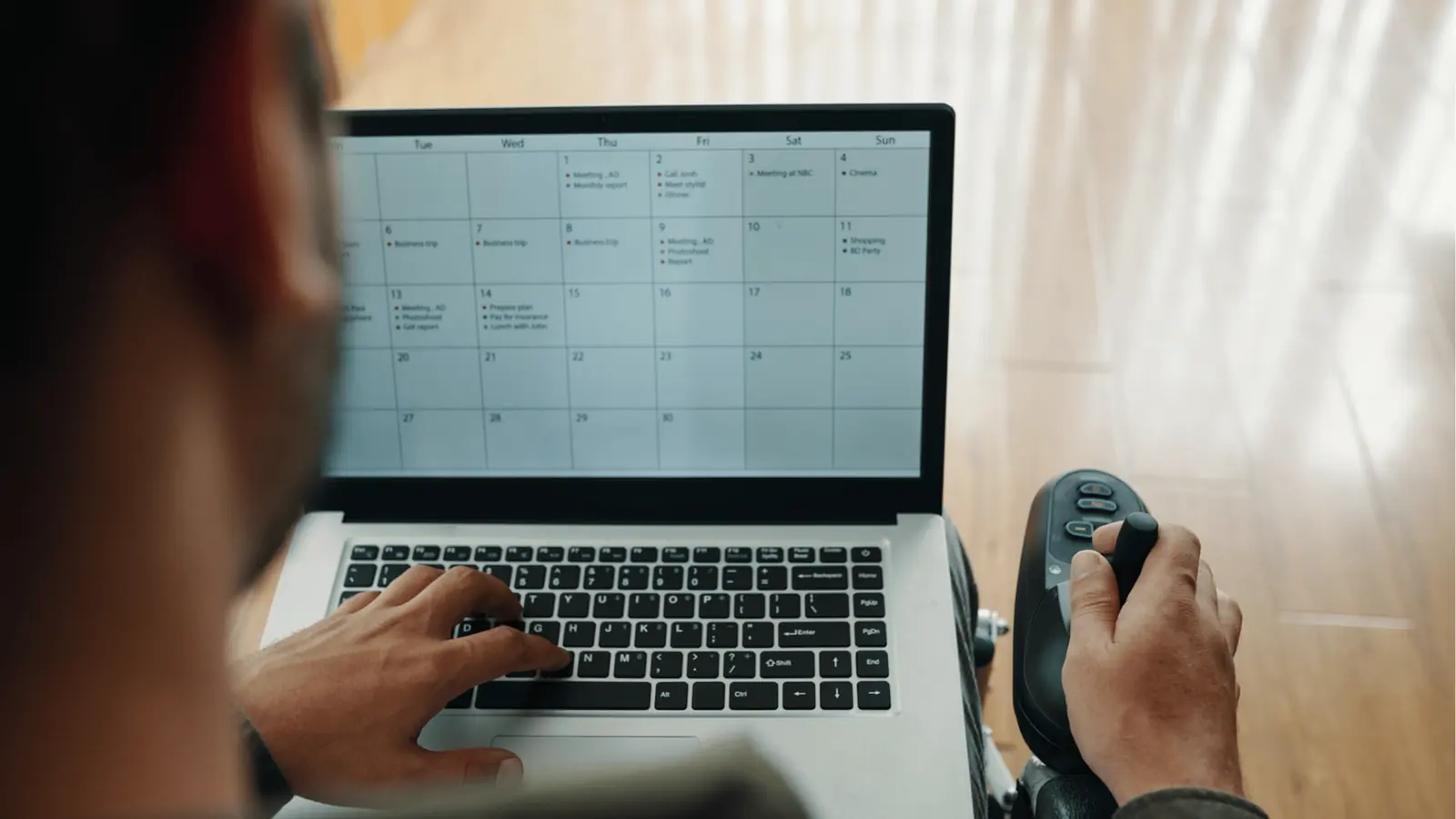
Answer first: measure the switch by time saved in coordination, reduction in approval rounds, and clarity in which market owns what. Those three numbers show whether you solved coordination debt or just added another tool.
Start with a 30/60/90 adoption pilot:
- 30 days: Map workspaces, import top 3 calendars, create 5 core templates.
- 60 days: Run two live campaigns through templates, enable workspace timezone lock, capture baseline analytics.
- 90 days: Review approval cycle times, reduce duplicate drafts, and set analytics targets.
Framework: Map -> Apply -> Validate -> Publish -> Report
KPI box: Baseline metrics to track before and after the switch
- Time-to-publish (hours from brief to scheduled)
- Approval cycles (average number of reviewer rounds)
- Duplicate drafts (instances per campaign)
- Cross-post errors (posts scheduled to wrong market) Track weekly for 8 weeks, then compare the 30/60/90 checkpoints.
What to check in week 1 to know you are on track:
- The calendar shows workspace timezones correctly for core markets.
- Templates are applied by at least two content owners.
- AI Home drafts are linked to workspace notes or saved prompts. If all three are true, you are past "setup theater" and into usable operations.
Quick scoreboard you can present to stakeholders after 60 days:
- Approval cycles down by X% (target 20 to 40% in month two).
- Time-to-publish reduced by X hours (target 15 to 30% improvement).
- Fewer cross-post errors (target near zero for configured workspaces).
Common mistake: Treat the platform like a personal tool. If teams keep drafting in Google Docs and copy-pasting to the scheduler, you have not centralized work. Migration means moving the source of truth, not just the schedule.
Practical validation steps (use them as your acceptance test):
- Run two similar campaigns using a saved template; measure setup time.
- Have a legal reviewer approve directly in the workspace; measure cycles.
- Pull analytics for the same date range across profiles and validate the baseline metrics.
A short progress checklist to finish the pilot:
- Workspace map completed and communicated.
- Library of 5 templates created and owned.
- Team trained on Home AI sessions and note-taking in Calendar.
- Baseline KPIs recorded and dashboards shared.
Final operational truth: the platform matters less than whether your work is modeled inside it. Tools that force you to keep work in separate documents have you paying twice. Put planning, templates, timezones, and analytics in the same place and the job becomes coordination, not chaos.
Choose the option your team will actually use

Pick Mydrop when your top priority is running social across brands, timezones, and approval gates without turning every campaign into a coordination project. Mydrop is built to keep work anchored to a workspace, not to a person, so calendars stop lying about ownership and approvals stop living in fragmented threads.
Teams stuck in calendar chaos feel immediate relief: fewer handoffs, fewer duplicate drafts, and fewer last-minute timezone mistakes. The payoff is practical - faster launches, clearer ownership, and analytics you can trust when you defend spend.
TLDR: For multi-market enterprise teams, choose the workspace-first tool. Mydrop combines reusable templates, workspace + timezone controls, an ongoing AI Home assistant, calendar notes for context, and unified analytics - which speeds planning and reduces coordination debt.
Why Mydrop works for real teams
- Templates that behave like standards. Save a reusable campaign or brand-safe post once, apply it repeatedly, and prune outdated templates so the library stays useful.
- Workspace + timezone controls that stay honest. Switch workspaces, set workspace timezones, and keep local operating times consistent across calendars.
- AI Home as an ongoing teammate. Start planning in Home, continue a session, and turn drafts into saved prompts or assets tied to a workspace.
- Calendar notes where the work lives. Capture legal notes, campaign context, and stakeholder comments next to the post - not buried in chat tools.
- Analytics you can act on. Compare profiles and time ranges in one place so you know what to repeat and what to stop.
Quick feature decision matrix
| Capability | Mydrop | Planable | Buffer |
|---|---|---|---|
| Workspace-first scheduling | Strong | Partial | Weak |
| Template library & reuse | Strong | Partial | Basic |
| Workspace timezone controls | Strong | Partial | Weak |
| Ongoing AI assistant | Strong | Limited | None |
| Calendar notes / in-context notes | Strong | Limited | None |
| Unified analytics for comparison | Strong | Basic | Basic |
Operator rule: Map workspaces before you map users. If the calendar can't tell you who owns a market, fixes will be tribal and temporary.
Common mistake: Buying for single-user productivity. Tools that shine for creators often fail when you need multi-brand governance, timezone safety, and repeatable templates.
Framework: MAP - Map workspaces; Apply templates; Prove with analytics.
- Map workspaces to markets/brands and set timezones.
- Apply templates to recurring campaigns and approvals.
- Prove with a minimum analytics baseline (3 metrics) after one quarter.
Here is a simple 3-step week-one workflow you can follow
- Inventory: List 3 highest-traffic markets and map them to workspaces and timezones.
- Template seeding: Create 5 reusable post templates for your top campaign types.
- Quick baseline: Run Mydrop Analytics for the last 30 days on 2 profiles and capture 3 KPIs (engagement rate, publish time error rate, approval cycle time).
Quick win: Turn one recurring campaign into a template this week and force everyone to publish from it for one month. You will see duplicate drafts and timezone errors drop immediately.
A realistic tradeoff to note: if your team is attachment-first and refuses to centralize files, any platform will feel like a step change. Adoption requires governance - a small set of workspace owners, a pruning cadence for templates, and a short rulebook for the AI Home outputs you accept without extra review.
Conclusion

If your org publishes across markets, the practical choice is the tool that makes work visible where it happens. Mydrop's workspace-first model addresses the messy, everyday failures: misrouted approvals, timezone drift, and template rot. It is not perfect for every creative idiosyncrasy, but for teams that measure their cost in coordination hours, Mydrop shortens that bill quickly.
Adopt one clear rule up front: treat workspaces as the primary unit of scheduling and build templates, notes, and analytics around them. That single habit stops most calendar chaos. Tools don't fix coordination debt by themselves; consistent practices and visible ownership do.