

Your best content isn't waiting in the next viral challenge or industry-wide trend report. It is buried in the DMs, comments, and support tickets your team is already fielding, disguised as "just another question." When you stop treating social as a broadcast megaphone and start treating it as a research lab, you move from reactive content production to proactive authority building.
TLDR: Stop chasing trends that vanish in 24 hours. Instead, aggregate the recurring questions in your DMs and community comments to build an evergreen content library. This shifts your team from a state of constant, high-pressure output to a sustainable, intent-driven engine that solves actual customer problems.
You feel the exhaustion of the content treadmill-the high-pressure cycle of chasing algorithms that reset every day. The relief comes from building a system that turns those endless customer questions into a self-filling content calendar, moving your team from "what should we post today?" to "here is exactly what our audience needs."
The hidden cost of trend-hopping is brand dilution. Every time you pivot to match a fleeting trend, you erode your brand's unique point of view. You aren't building a community; you're building a rental audience that leaves the second the trend dies.
Data-Backed Strategy
To stop the cycle, you need to filter your incoming noise. Start by auditing your current engagement volume against these three criteria:
- Frequency: Is this question coming up at least three times a week?
- Intent: Does this question precede a purchase or a critical support hurdle?
- Specificity: Does the answer require nuance that a standard link to your FAQ page fails to capture?
The real problem hiding under the surface

The real issue is that most teams suffer from coordination debt, not a lack of ideas. You are likely sitting on a goldmine of customer insights that never make it to the content team. The data is locked in siloed inboxes, scattered across different regional accounts, or trapped in the heads of frontline community managers who are too busy fighting fires to document the patterns.
The real issue: When marketing teams are disconnected from the daily reality of the inbox, they end up creating content that they think is clever, rather than content that the market finds useful. This is why so many brands feel like they are shouting into the void.
You might have the metrics, but if you don't have a way to synthesize the sentiment, the numbers are just noise. You need a way to move from raw, fragmented signals to structured, actionable content briefs without adding more manual overhead to your team's already heavy workload.
When you treat every customer question as a potential content brief, you change the entire physics of your editorial process. You are no longer guessing what might land; you are responding to a verified demand. This is the difference between writing a blog post because the calendar says it is "Tuesday" and writing one because you know exactly how many people are currently struggling with that specific technical setup or product use case.
Operator rule: Only build content that solves a verified customer pain point. If you cannot trace a content asset back to an actual customer interaction or support trend, it is likely just noise.
The shift is small but profound. Once you start tracking the questions, you stop being a content creator who needs to invent reality. You become a curator who simply reflects the needs of the audience back to them, wrapped in your brand's expertise.
Why the old way breaks once volume rises

Most teams start with a "hero" workflow where one person manually tracks every comment and DM, hoping to catch the next big content idea before their coffee gets cold. This works fine when you manage one brand with a single channel. But as soon as you scale to multiple markets, seasonal campaigns, or a distributed team, this manual effort creates a massive bottleneck. The information is trapped in individual team members' heads or scattered across disparate notification logs, and the coordination debt starts to pile up.
You eventually reach a point where you are spending more time playing detective than actually creating content. When you have dozens of profiles across platforms, the sheer volume of noise makes it impossible to find the signal. Your team becomes reactive because they are drowning in tasks, not because they lack creativity.
Most teams underestimate: The hidden cost of "manual synthesis." If your social media managers spend two hours every morning just scanning feeds to find "what to talk about," you have already lost ten hours of productive output per week, per person, before the actual work of drafting even begins.
The breakdown happens because the old model lacks institutional memory. If an agent in the London office spots a recurring frustration about your shipping times, the US team might never hear about it until it blows up in their own inbox. You end up duplicating work, ignoring clear customer signals, and missing the chance to build the exact content your audience is begging for.
| Scaling Phase | Strategy | Primary Risk |
|---|---|---|
| Solo / Small | Manual Monitoring | Burnout / Missed Signals |
| Team / Mid-size | Spreadsheet Tracking | Fragmented Insights |
| Enterprise | Centralized Listening | Coordination Debt |
The simpler operating model

Moving from reactive trend-hopping to an intent-driven system requires a shift in how you view the inbox. Think of your inbox not as a service queue, but as the primary research database for your entire marketing strategy. When you treat incoming questions as content briefs rather than support tickets, you remove the guesswork from your calendar.
A robust operating model relies on three distinct stages. You don't need a massive research budget to execute this, just a tighter process for filtering the noise.
- Intake & Routing: Automatically map incoming social conversations into organized views, where community managers can tag questions by topic, product, or pain point rather than just resolution status.
- Synthesis & Ideation: Instead of forcing your team to stare at a blank prompt, use your workspace context to feed these recurring questions into an AI assistant. This gives the team a structured starting point for drafting, whether it's an FAQ video script, an educational carousel, or a long-form deep dive.
- Validation & Scheduling: Push the drafted content through your unified calendar to ensure it meets platform-specific requirements before it ever hits the public eye.
Common mistake: The "Reply-and-Forget" trap. If your team resolves a customer's question in a DM but fails to log the underlying topic, you have effectively incinerated a piece of high-intent content. The knowledge is gone, and the audience remains uninformed.
By building this loop into your daily routine, you stop asking "what should we post today" and start delivering the specific solutions your audience has already requested. It turns your social presence into a self-filling engine of value, where your brand authority grows naturally because you are consistently answering the right questions.
When you remove the friction of gathering insights, the quality of your content rises because it is no longer based on intuition or pressure. It is based on the reality of your customer's day-to-day experience. This is how you reclaim your calendar from the algorithm and focus on building assets that actually perform.
The transition from reactive firefighting to proactive strategy feels less like a breakthrough and more like a collective exhale. You stop feeling like you are constantly behind, and instead, you start seeing the signals your audience is already sending. This is where AI moves from a novelty to a genuine member of your marketing operations team.
Most teams get buried because they treat every customer question as a manual ticket to be resolved, then forgotten. When you use an assistant to bridge that gap, you stop reinventing the wheel for every common inquiry.
Quick win: Turning your top 3 recurring DMs into an AI-drafted FAQ series using Mydrop’s Home assistant.
Instead of writing responses from scratch, you pull those recurring themes directly into your workspace. You ask the assistant to synthesize those specific conversation threads into a blog outline, a series of short-form video scripts, or a carousel post. Because it is pulling from actual, verified customer language, the content lands with higher precision than anything an agency could brainstorm in a vacuum. It is about speed, but more importantly, it is about relatable accuracy.
When you manage multiple brands at enterprise scale, the friction isn't just generating the idea; it is the coordination debt that hits once you decide to build it. You need a way to move from "This is a great question" to a scheduled post without getting stuck in a spreadsheet.
- Select 10 recurring customer questions from your last month of inbox traffic.
- Feed these threads into the Mydrop Home assistant to generate three unique content angles for each.
- Move the best-performing angle directly into the Calendar to schedule a pilot post.
- Set a 30-day review date in your Calendar to compare engagement against your baseline.
- Use the Analytics view to identify if this specific topic generated new, higher-intent questions in the comments.
Common mistake: Treating AI as a standalone prompt engine instead of a workspace-integrated partner. If your AI doesn't know your brand voice, your products, or your active campaigns, it is just generating generic copy that requires massive editing. The real power is in using the workspace context so the output is ready to schedule, not ready to rewrite.
The shift is useless if you cannot prove it is moving the needle. When you move to an intent-driven model, your reporting changes. You are no longer looking at vanity metrics like follower count growth or generic "impressions." You are looking at the health of your relationship with the market.
KPI box: The Question-to-Conversion Ratio
- Capture: Count of verified pain-point inquiries (The Input).
- Produce: Number of content assets created specifically to solve those inquiries (The Output).
- Convert: Percentage of users who engaged with that content and later moved to a demo, inquiry, or purchase (The Impact).
If your content isn't influencing the conversion path, you are just shouting into the void, no matter how clever your social listening is. The best operators track this because it justifies the shift in resources. It moves social media from an "awareness cost center" to a "data-backed revenue driver."
This is also where your team’s internal health changes. When you move from reactive content production to a structured workflow, the pressure to "be everywhere, all the time" evaporates. You are publishing less, but hitting harder. You have a system that connects the signal in the inbox to the final asset in the calendar, with enough transparency for stakeholders to see exactly why an idea was chosen and how it performed.
You aren't just managing channels anymore. You are managing a feedback loop that makes your brand smarter with every interaction. At the enterprise level, that is the only way to scale without breaking.
The operating habit that makes the change stick
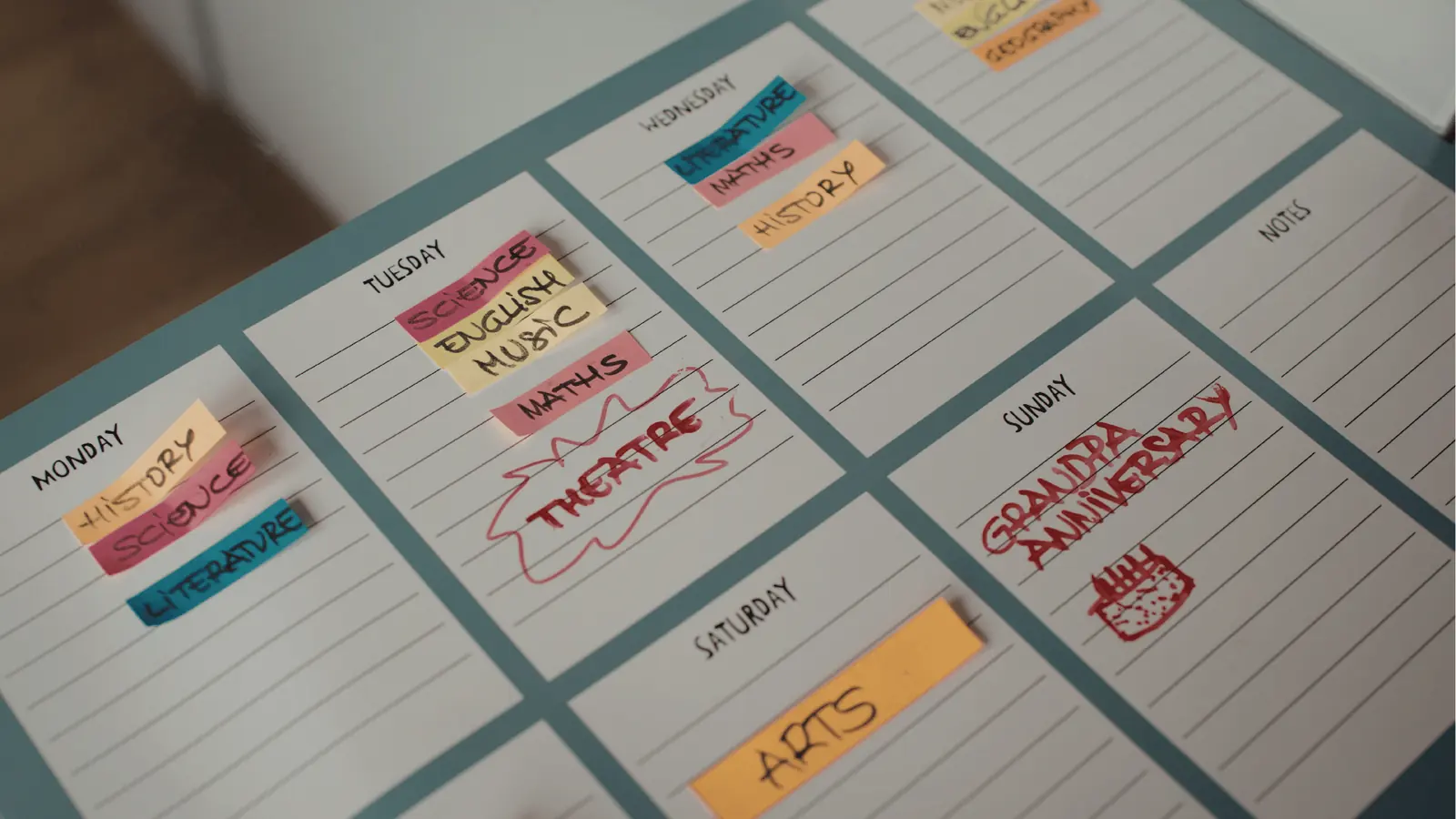
The biggest barrier to building a data-driven content engine is not the lack of data; it is the lack of a shared ritual. Most marketing teams view social listening as a once-a-quarter audit or a defensive measure during a crisis. If you want to stop chasing trends and start building authority, you have to treat listening as a daily source of truth.
You need to bake the "Question-to-Content" loop into your team's weekly rhythm. If it is not on the calendar, it does not exist.
Framework: The 3-Step Content Pulse
- Surface: Spend 15 minutes each Monday morning reviewing high-volume questions from the week prior using your aggregated inbox views.
- Synthesize: Group those questions into three core themes; ignore the outliers and focus on the repeating pain points.
- Draft: Turn the most urgent question into a high-intent asset by using your AI home assistant to draft a response that frames the solution around your brand's expertise.
Here is where teams usually get stuck: they capture the data but fail to assign a destination. Without a clear handoff, the insight dies in a spreadsheet or a Slack thread. You have to ensure that every validated insight triggers a specific action-whether it is a new post on your calendar, an update to your FAQ library, or a briefing for your product team.
Common Mistake: The "Reply-and-Forget" Trap Many teams see a customer question, fire off a quick DM or comment, and consider the work done. They mistake service for strategy. A single reply serves one person. A piece of content that addresses that same question with depth and care serves the entire community and works for you in the search results for months to come.
If you are struggling to make this consistent across multiple brands or regions, stop trying to manage it through manual spreadsheets. You need a centralized system where your inbox signals, automation rules, and content calendar are not just talking to each other, but working in tandem.
Quick win: Turning your top 3 recurring DMs into an AI-drafted FAQ series
- Open your Home assistant and paste the raw text from three recent, high-value customer questions you gathered from your inbox.
- Ask the assistant to "Identify the core underlying problem for each and draft a short, educational social post for each that highlights our unique point of view."
- Take those outputs, refine them in your calendar, and schedule them as a thematic series for the coming week.
Conclusion

Building a content engine that actually moves the needle requires you to prioritize depth over virality. When you stop obsessing over what the algorithm wants today and start listening to what your customers are asking, you stop being a frantic publisher and start being an indispensable resource.
The true operational test is whether your content calendar reflects the actual problems your customers face or simply the latest trends you feel pressured to join.
Ultimately, social media scale fails from coordination debt, not a lack of creative ideas. You need a system that captures the noise and clarifies the signal, allowing your team to focus on the storytelling that actually builds a brand. Mydrop provides the centralized intelligence and automation to turn those scattered customer signals into a controlled, high-intent publishing workflow, ensuring that your team spends less time hunting for ideas and more time delivering the answers your audience is already asking for.