
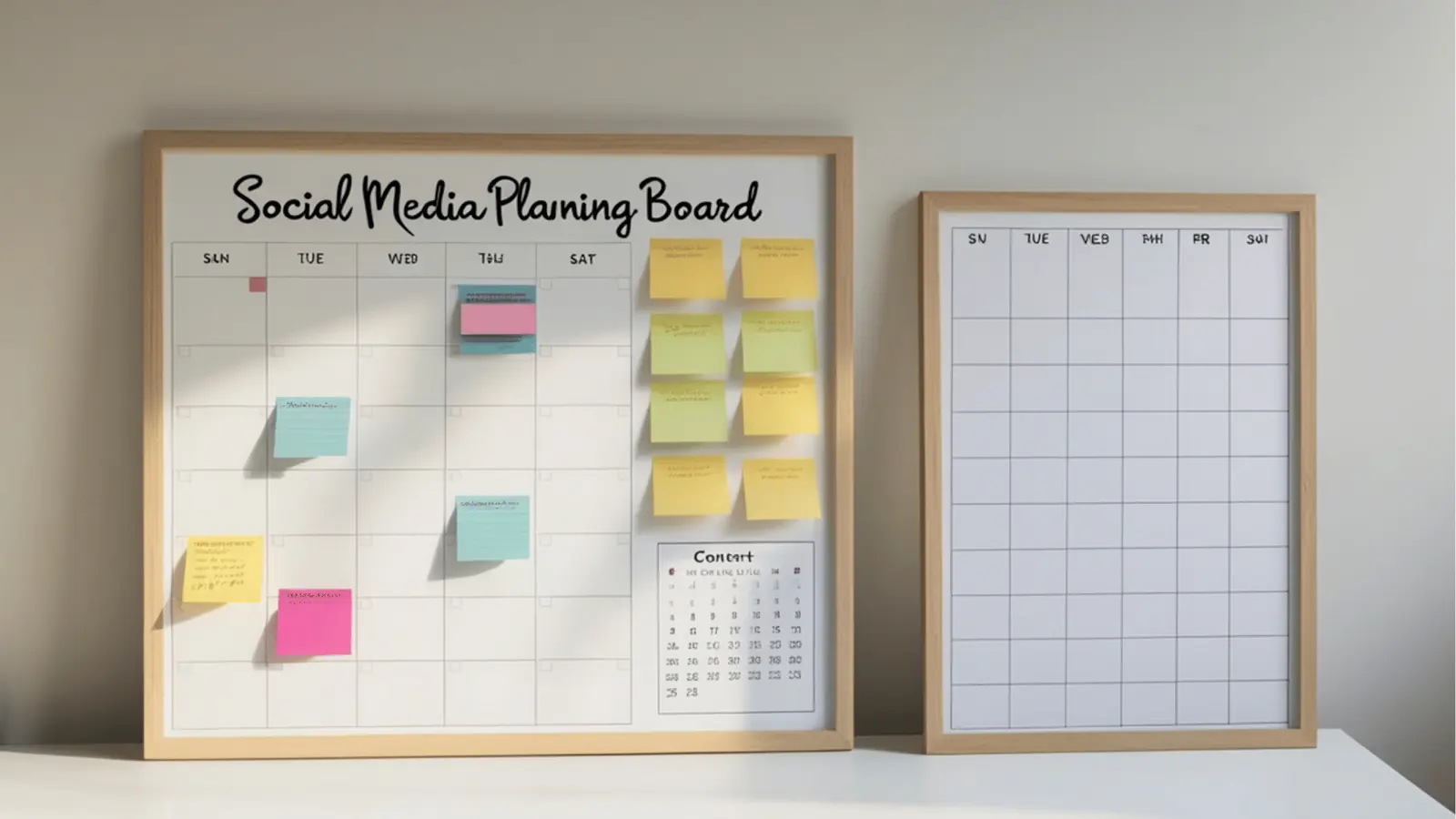
You sync social posts across time zones by decoupling your team's local working hours from your audience's peak engagement windows through workspace-level timezone anchoring. Instead of performing mental gymnastics to adjust for UTC offsets every time you draft a campaign, you set the calendar's operating zone to your target market, ensuring that when you schedule a post for 9:00 AM, it hits the feed at exactly 9:00 AM in your audience's reality, not yours.
You are awake at 3:00 AM because your campaign in Singapore needs a final check before launch, while your London team is just clocking in and missing the first wave of engagement. It does not have to feel like you are chasing a ghost across the international date line. The quiet anxiety of a global campaign is not the content itself-it is the lingering fear that your most expensive creative is going live to an empty room. Shift from manual, time-zone-calculator stress to a set-and-forget confidence that your brand is always on, even when you are offline.
TLDR: Stop calculating UTC offsets. Define your workspace timezone, set the local publish time, and let the platform handle the rest.
If you are doing the timezone math by hand, your social strategy is already too slow. Great content fails when it hits the feed at the wrong moment; automate the clock so you can focus on the message.
The real problem hiding under the surface

The Global-Ready Strategy isn't just about timing; it is about eliminating the coordination debt that burns out enterprise teams. Most organizations attempt to solve the "24/7" problem by demanding that staff work across shifts or by maintaining complex, fragile spreadsheets that track local times against a central hub. This is the biggest single point of failure in enterprise social operations.
When you rely on manual scheduling, you create a "hidden cost" in cognitive load. Every time a team member has to calculate if 6:00 PM in New York is too late for a Tokyo launch, they are making a decision that is prone to human error. One missed daylight savings update or a misplaced digit, and your campaign's performance is compromised before it even begins.
The real issue: The "Guess and Check" method of manual offsetting creates a culture of last-minute panic. When your team has to constantly double-check whether they are publishing in the correct local window, they lose the ability to focus on high-value creative tasks.
You can resolve this complexity by adhering to a simple operational principle: Local Presence, Centralized Control. By managing the strategy from a central dashboard, you ensure that the governance remains consistent across all markets, while the platform anchors your content to the viewer's reality.
To get your team out of the timezone trap, focus on these three immediate shifts:
- Audit your current publishing cadence: Identify which markets are currently suffering from "off-peak drift"-posts hitting the feed when your audience is asleep or busy.
- Centralize your operating calendar: Move away from market-specific spreadsheets toward a single, workspace-aware calendar that supports distinct timezone settings for each brand or region.
- Implement a pre-publish audit: Use a validation step to catch scheduling mismatches before the post is locked, ensuring the local date and time are confirmed for the target market.
This isn't about working harder to cover every time zone; it is about building a system that understands time better than your team does. When you stop chasing the clock, you stop losing engagement to simple logistical errors.
Why the old way breaks once volume rises

You start with a spreadsheet, a team of three, and a single brand. It feels manageable because you are close enough to the work to catch errors. But once you scale to multiple markets, different product lines, and a team that spans ten time zones, the manual spreadsheet method stops being a tool and starts being a liability.
The breakdown usually happens at the intersection of "human error" and "unavoidable context switching." When a social lead in New York is responsible for scheduling a campaign in Tokyo, the sheer number of mental math steps creates a high-friction environment where mistakes are mathematically guaranteed.
Most teams underestimate: The cost of "coordination debt." Every minute your team spends checking a time-zone converter is a minute they aren't spent on creative strategy or community engagement.
Here is how the fragility of manual operations manifests as your output grows:
| Process Phase | Manual Spreadsheet Method | Workspace-Aware Scheduling |
|---|---|---|
| Setup | Creating custom UTC formulas per region. | Defining workspace timezone once. |
| Updates | Manually adjusting all dates during DST shifts. | System auto-adjusts calendar anchors. |
| Visibility | Fragmented across regional sheet tabs. | Unified view across all market calendars. |
| Risk | High potential for "AM vs PM" errors. | Platform validates local publish windows. |
The "spreadsheet-first" approach is inherently fragile because it doesn't account for the event-driven nature of social media. If a major global event happens, or a product launch gets pushed by four hours, your spreadsheet becomes a graveyard of stale data that someone has to manually untangle.
The simpler operating model

The secret to moving past this mess is to stop trying to force your team into a "global" timezone. Instead, you change how you view your digital workspace. You want a system where your team works in their own local time, but the post itself is anchored to the audience's reality.
When you use workspace-level timezone controls, you decouple the scheduling action from the publishing moment. You draft and approve content according to your team's rhythm, but the platform treats that content as a fixed asset pegged to a specific geographic market's clock.
The lifecycle of a global post should look like this:
- Regional Strategy: Define the target market's peak engagement window first.
- Workspace Anchor: Set your specific Mydrop workspace timezone to match that local market's business hours.
- Smart Composer: Build the campaign in the composer; the platform automatically accounts for the local timezone, making "3:00 PM" mean exactly that for your audience.
- Pre-Publish Validation: Before a single asset goes live, the system flags if your requested publish time falls outside the high-engagement window you defined.
- Precision Deployment: The post hits the feed at the exact second you intended, regardless of where your team was sleeping or grabbing coffee when the schedule was set.
Operator rule: If you are doing the timezone math by hand, your social strategy is already too slow.
This model shifts the burden from the human to the platform. You aren't "scheduling for Singapore" while sitting in London; you are simply managing a workspace that is already tuned to Singapore's frequency. It removes the guesswork and the frantic 3:00 AM status checks.
When your calendars are built this way, you gain the ability to scale without increasing your team's cognitive load. The goal isn't to work around the clock, but to build an infrastructure that works for you. When you trust the clock, you finally have the bandwidth to stop staring at the dashboard and start focusing on the actual quality of the content.
Where AI and automation actually help

Technology should act as the guardrail, not the bottleneck. Automation shines brightest here when it handles the tedious, error-prone translation of intent into platform-specific reality. While humans must define the what and why of a campaign, the platform should handle the when and where without question.
The real win occurs during the pre-publish phase, where systems like Mydrop catch the "ghost errors" that haunt manual workflows-missing thumbnails, wrong aspect ratios for specific placements, or forgotten character limits that vary by region.
Watch out: Do not confuse "automated scheduling" with "automated strategy." If you automate the content creation itself, you lose the brand voice. Automate the compliance and timing; keep the human in the loop for the creative.
When your team moves to a centralized model, you want to shift the operational burden from "did I convert this time correctly?" to "does this creative hit the mark?"
Here is how you can streamline that transition:
- Establish a baseline: Set your core global workspace timezone to your operations hub.
- Configure platform defaults: Audit character limits and media requirements for each regional feed in your composer settings.
- Enable pre-publish validation: Turn on automated checks for media format, thumbnail presence, and link validity before the queue locks in.
- Utilize calendar reminders: Map out regional holiday calendars as recurring non-post reminders so the team knows when to dial back engagement.
- Centralize asset sourcing: Keep all regional-specific assets in one shared library to prevent versioning drift.
Global-Ready Strategy
When you shift from manual math to platform-enforced rules, the cognitive load drops immediately. You aren't just saving time; you are effectively eliminating the "last-minute panic" cycle that leads to sloppy mistakes. It turns a chaotic, fragmented effort into a quiet, predictable drumbeat of activity.
The metrics that prove the system is working
Data only becomes useful when it allows you to stop guessing. If your team is stuck in a cycle of "manual post-mortem" meetings, you are already behind. You need to see if your scheduling strategy actually aligns with human behavior in the target market.
Look beyond vanity metrics. The health of your global operation is found in the delta between your intended impact and the actual engagement volume.
KPI box:
- Post Reach Efficiency: (Local Engagement at Peak Time) / (Global Average Engagement). A high ratio confirms your timezone anchoring is precise.
- Error Frequency: The number of manual adjustments needed after a post is scheduled. If this is trending up, your workflow definitions are outdated.
- Time-to-Approval: The interval from draft creation to final validation. A shrinking window here proves the system has reduced friction.
If you find that your engagement remains flat despite perfectly timed posts, the issue is your creative, not the clock. But you cannot diagnose the creative until the logistical timing is bulletproof.
Operator rule: Great content fails when it hits the feed at the wrong moment; automate the clock so you can focus on the message.
The ultimate sign of a mature social operation is silence. When the process is set up correctly, your team stops chatting about "is this the right time for Tokyo?" and starts discussing "what are the Tokyo metrics telling us about our product launch?"
If you are still doing the timezone math by hand, your social strategy is already too slow. True scalability comes from building a machine that operates in the background, anchoring every piece of content to the reality of the person reading it on their phone, thousands of miles away.
The operating habit that makes the change stick
The biggest barrier to global social success is not a lack of strategy, but a persistence of memory. Specifically, the memory of doing things the "old way" where you keep a mental list of which region needs a push at what hour. To actually break that habit, you have to move from manual task-based management to system-anchored operations.
The most effective teams I see do not look at a calendar and ask "Is this the right time?" They look at the workspace settings and ask "Are we anchored correctly?" Once you shift your default behavior to managing timezones at the workspace layer, the rest of the workflow falls into place as a byproduct.
Framework: The 3-Step Sync
- Locate: Define the primary target audience for the brand workspace.
- Align: Set the workspace timezone to that audience's local reality.
- Validate: Let the platform's pre-publish checks catch any remaining timing discrepancies before you hit schedule.
If you are a lead managing multiple regional pods, start with this rhythm this week:
- Audit your workspace anchors: Open your top three brand workspaces and verify that each is set to the timezone where your core audience actually lives, not where the team is sitting.
- Standardize the "Publish" default: Mandate that all campaign briefs include the required local time for the target market, rather than a mix of UTC and "whenever we finish the asset."
- Run a pre-publish drill: For your next global push, intentionally draft a post for a market on the other side of the world, use the platform's calendar view to see where it lands, and verify the time before scheduling.
Quick win: Next time a stakeholder asks "When is this going out?", stop answering in your own local time. Reply with the local time of the market where the post is launching. It forces a cognitive shift away from your own desk and toward the audience.
Conclusion
Global social media management is not about working harder or hiring more people to cover the graveyard shifts. It is about building a system that respects the clock of your audience as much as the content itself. When you anchor your operations to the right timezone, you remove the guesswork that leads to burnout and, more importantly, to empty rooms when your most expensive creative goes live.
The goal is to stop being a human gatekeeper for every single post. By shifting to workspace-level timezone controls, you provide your team with the guardrails to move fast without breaking the deployment rhythm.
Stop paying the tax on manual timezone math. If your social strategy requires someone to stay awake just to ensure a post goes out at the right hour, your operations have become a bottleneck. True scale in enterprise social is only possible when the tools you use are as geographically aware as your brand needs to be. Mydrop handles the calendar anchoring and platform validation so your team can stop worrying about the clock and focus entirely on the message. Consistent global presence is a product of consistent system architecture, not heroics.