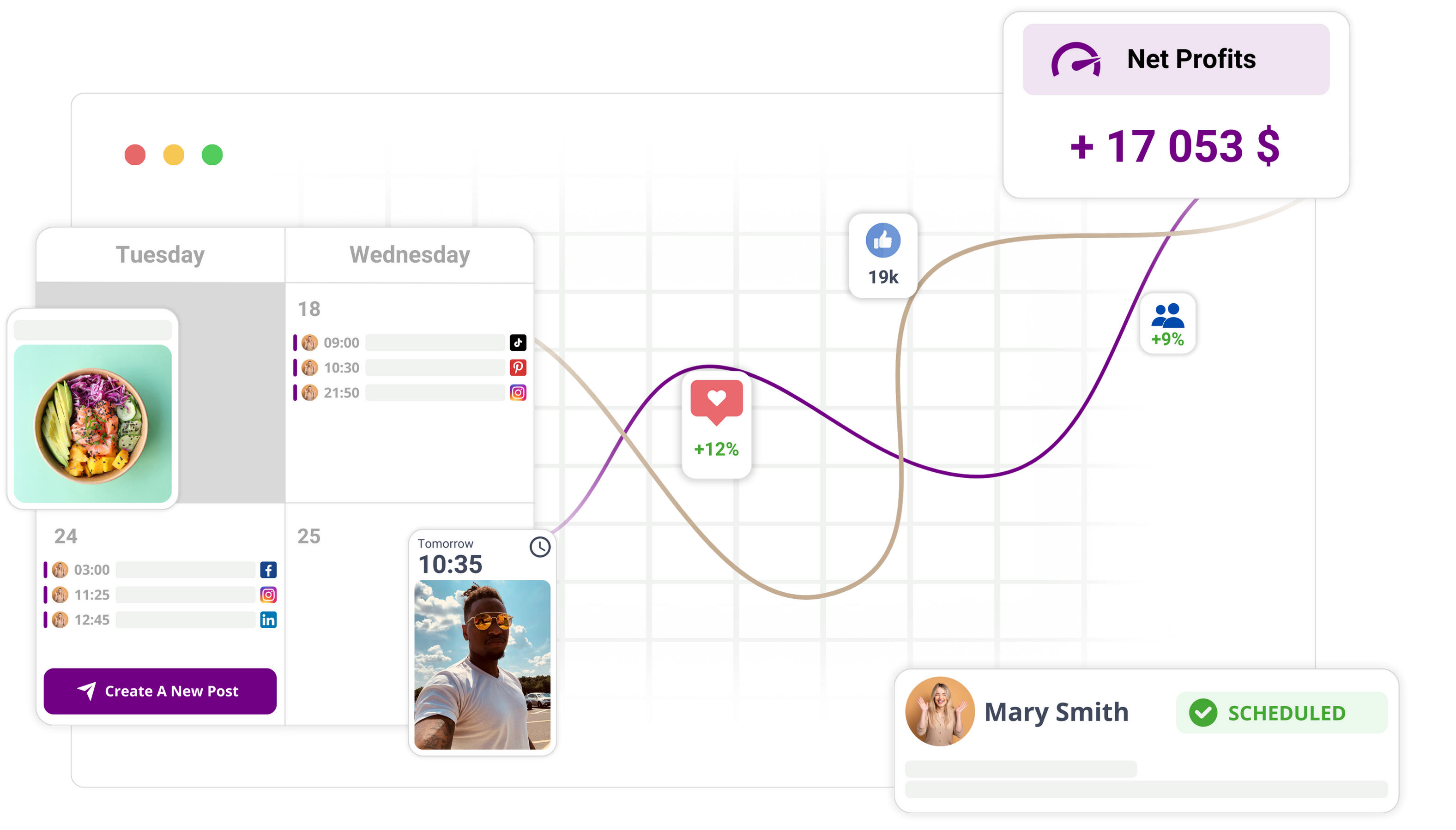
By following the steps in this guide, you will successfully schedule a social media post to publish at a specific time using the Mydrop calendar. This process ensures your content is distributed to your chosen social profiles without manual intervention at the moment of release.
Before you start
Before you begin setting up your schedule in the calendar, ensure you have completed the following prerequisites to avoid interruptions during the composition process:
- Verify your target social profiles are active and synced. Navigate to the Profiles section and select Connect profile to confirm the status of your accounts.
- Prepare all media files in advance. Ensure images, videos, or documents meet the specific technical requirements for the social platforms you intend to use.
- Have your captions, hashtags, and any required links ready in a draft format.
- If you are using Canva assets, ensure they are ready for import through the Gallery service integration.
Completing these checks ensures that Mydrop has the necessary permissions and assets to process your scheduled post successfully.
Step 1: Open the calendar interface
To begin planning your content, log in to your Mydrop dashboard. Locate the main navigation menu, which is typically found on the left side of your screen. Click on the Calendar tab. This action opens the visual calendar view, which displays your current publishing schedule across all connected profiles. This interface acts as the primary hub for organizing and reviewing your upcoming social media activity.
Step 2: Initialize a new post
Once you are in the Calendar view, locate the New post button. This is usually positioned prominently at the top of the calendar interface. Clicking this button triggers the multi-platform post composer. This window serves as the main tool for configuring your post details, choosing the specific social media channels, and defining the content that will be shared with your audience.
Step 3: Configure profile selection and content
In the composer window, identify the profile selection area. Use the dropdown menu to select one or more social profiles where you want the post to appear. After selecting your platforms, move to the content entry area to input your captions. You can also upload media files directly from your computer or import design assets from your connected Canva gallery.
During this step, address platform-specific requirements. If your post requires a custom thumbnail, a first comment, or specific post types such as a Reel or a Story, configure these options in the settings panel of the composer. Taking the time to adjust these settings ensures your post is formatted correctly for each individual social network, which prevents errors during the automated validation process.
Step 4: Set the schedule and validate
After your content is ready, locate the date and time selection fields. Choose the exact day and time you want the post to go live. Once the timing is set, click the Schedule button. Mydrop will then initiate a final automated validation. This check analyzes your post against the technical constraints of the selected social platforms.
If all requirements are met, the post will be placed on your calendar. If any validation warnings appear-such as issues with caption length, media dimensions, or account permissions-Mydrop will prompt you to correct them before the scheduling process can be finalized. This final check is critical for ensuring that your content adheres to platform rules and will publish as intended when the time arrives.
Troubleshooting and next steps
Once your post is scheduled, return to the main calendar view to verify that the post icon appears on the selected date. You can click on the post at any time to review or edit its details. If you notice a red alert or warning icon on a scheduled entry, hover your cursor over the indicator to view the specific issue.
After your content is successfully published, use the Analytics section of the app. Go to Analytics and select Posts to review metrics such as reach, engagement rate, and total views. Monitoring these results helps you determine the effectiveness of your timing and content strategies, allowing you to make data-driven adjustments for future scheduling sessions.
Common mistakes to prevent
Users often encounter issues when they overlook the validation warnings provided by the composer. Always address any notifications regarding media file sizes or caption character limits, as these are common causes for publishing failures. Additionally, ensure you are selecting the correct post type for each platform. For example, scheduling a standard image post when the social network requires a video format will cause the validation to fail. Finally, do not close the composer window before the final scheduling confirmation appears. Always wait to ensure the post is visible on your calendar view before assuming the setup is complete. By following these steps and double-checking your platform-specific settings, you can maintain a consistent and error-free publishing workflow.
Step 1: Open the feature
To begin scheduling your social media content, navigate directly to the primary calendar workspace. This interface serves as the centralized hub for all your planned posts, allowing you to visualize your publishing schedule across all connected social channels.
- Locate the main navigation menu, which is typically found on the left-hand side of your Mydrop dashboard.
- Click on the "Calendar" tab. This action will load the interactive calendar view, which displays your current publishing schedule, drafts, and past posts.
- If this is your first time accessing this area, wait a moment for the calendar to populate with your existing scheduled items and profile data.
- Once the interface is fully loaded, verify that the calendar view is set to the correct timeframe, such as "Week" or "Month," to ensure you have adequate visibility of the days you intend to schedule your new posts.
- Ensure you are viewing the calendar for the specific date you wish to target. You can navigate between weeks or months using the arrow controls provided in the header of the calendar interface.
- The calendar is designed to provide immediate feedback on your posting frequency, so confirming the layout and current date range helps prevent scheduling conflicts or accidental double-bookings of posts on the same channel for the same time.
By starting within the Calendar tab, you ensure that every action taken is recorded against your official publishing timeline. This approach is more reliable than attempting to initiate posts from individual profile pages, as it maintains a cohesive view of your entire social media presence.
Step 2: Set up the basics
Once you are within the calendar view, you must initialize the post composer to begin defining the content for your social media channels. The composer is where you establish the technical parameters that govern how and where your content will appear on social platforms.
- Locate the "New post" button, which is prominently displayed near the top of the calendar interface. Clicking this button will immediately launch the post composition window, overlaying the main calendar.
- In the profile selection menu, which appears at the top of the composition window, click the dropdown list to view all your connected social profiles.
- Select each profile that you intend to include in this specific campaign. Mydrop allows you to choose multiple profiles at once, enabling you to distribute the same core content to different channels, such as LinkedIn, Instagram, and X, simultaneously.
- As you select each profile, notice that the configuration options within the window may update dynamically. This is a critical step because Mydrop adjusts the available fields based on the unique requirements of the platforms you select.
- For example, selecting Instagram might enable fields for adding a location tag or a first comment, while selecting LinkedIn might prompt you for specific professional post settings.
- Confirm that all required profiles are highlighted. If you accidentally select a profile, simply click it again in the dropdown menu to remove it from the current selection.
- After identifying your target channels, verify that the "Post type" setting is correctly aligned with your intent. Depending on the media you plan to upload, you may need to specify if the post is a standard image, a carousel, a video, or another format supported by the selected platforms.
- This step establishes the foundation for your post. By accurately selecting your platforms and post types early, you ensure that the subsequent configuration steps, such as caption entry and media uploads, are tailored correctly to the technical standards of your chosen social networks. Failure to complete these initial selections accurately may lead to validation errors later when the system attempts to process the post against specific platform constraints.
Step 3: Add the content or settings
With your profiles selected, you must now populate the post with your content and define the specific settings required by each social network. The composer interface provides fields for text, media, and platform-specific configurations.
- Enter your caption text in the main content area. If you are posting to multiple networks simultaneously, check the platform-specific tabs. Some networks have different character limits or tagging requirements. You can customize the caption for each individual platform to ensure your message fits correctly within the constraints of X, LinkedIn, or Instagram.
- Add your visual assets by clicking the media upload button. You can select files directly from your computer or choose to import design assets from your connected Canva gallery. If you are uploading video content, ensure the file format and duration meet the specific requirements of the chosen platform, such as TikTok or YouTube.
- Configure your thumbnails for video posts. If you are scheduling a post for a platform that supports custom thumbnails, select the frame or upload a standalone image file to represent the video.
- Add a first comment if the platform allows it. This is a standard practice for Instagram to keep your caption clean while providing hashtags or extra information. Input your desired text in the designated first comment field.
- Select the post type if required. Some networks distinguish between different post formats, such as standard image posts, carousels, or short-form videos. Ensure the correct type is selected so that Mydrop applies the appropriate publishing rules.
- Verify that all mandatory fields are filled. If you see an orange or red indicator on a specific platform tab, it means that platform requires more information, such as a specific tag or a corrected file size, before it can be scheduled.
Reviewing these settings is critical because social media networks reject posts that do not meet their technical requirements. By configuring these details in the composer, you ensure that your content is ready for immediate distribution once the scheduled time arrives. If you attempt to schedule a post with incomplete settings, the system will highlight the problematic fields, requiring you to correct them before you can proceed to the final scheduling stage.
Step 4: Review the workflow
After your content is configured, you must finalize the date and time and trigger the system validation to confirm that your post is ready for publication.
- Locate the date and time selection tool at the bottom of the composer window. Click on the calendar icon to open the date picker.
- Select your desired publication date from the interactive calendar view. Ensure you are selecting the correct month and day to avoid scheduling errors.
- Set the exact time for the post to go live. Mydrop uses your local time settings, so verify the time zone is correct if you are managing global campaigns.
- Once the date and time are set, click the "Schedule" button. This action triggers an automated validation sequence.
- Wait for the validation to finish. During this time, Mydrop checks your post against platform-specific constraints, such as caption length, media resolution, and profile compatibility.
- Monitor the calendar interface for confirmation. A successfully scheduled post will appear on your calendar dashboard with a status icon indicating it is queued for publication. If the validation finds an issue, the composer will remain open and display an error message detailing which platform requirements were not met.
Verifying the status icon on your calendar confirms that the post is registered in the system. If you do not see the post on the calendar view after clicking "Schedule," check the composer again to ensure the process completed successfully. After the post is published, you can refer to the Analytics section under the Posts tab to review metrics such as reach, engagement, and click-through rates. This helps you determine if your scheduled content is performing according to your objectives. Regularly checking the calendar helps you identify any gaps in your publishing cadence and ensures that all scheduled items are active and correctly associated with your connected social profiles. Following these steps consistently will allow you to maintain a reliable and efficient social media workflow.
Troubleshooting and next steps
If you encounter issues while scheduling, Mydrop provides immediate feedback to guide you through the correction process. Review these common scenarios to ensure your workflow remains uninterrupted:
- Validation failure: If the "Schedule" button appears inactive, check for warning messages within the composer. Mydrop validates each field against platform requirements. Ensure your caption does not exceed the allowed character limit for the selected network and verify that your media file satisfies the minimum resolution constraints for the platform.
- Profile sync errors: If your connected social profile does not appear in the dropdown menu, navigate to the Profiles tab. Select your account and click the refresh icon to re-sync the latest token and connection status. An outdated connection often causes the calendar to ignore specific profiles during the initial selection phase.
- Media upload interruptions: Large video files or high-resolution images may occasionally fail to upload due to network fluctuations. If an upload stalls, clear the attachment and re-upload the file directly from your local drive or your connected Canva gallery.
- Time zone discrepancies: Always verify the time zone setting in your calendar view. If posts appear at an unexpected hour, ensure your account settings align with your actual location to avoid premature or delayed publishing.
After you have successfully confirmed your post on the calendar, monitor its performance over time. Once the scheduled time passes and the post is live, navigate to the Analytics section. Under the Posts tab, you can track metrics such as reach, engagement rate, and total comments for each channel. Use this data to compare the performance of different content types and times of day, which will inform your future scheduling strategy. If you notice specific platforms consistently underperforming, adjust your posting schedule or content format accordingly within the same calendar interface. Keeping your analytics review as a routine part of your workflow ensures that your planning decisions remain evidence-based.
Common mistakes to prevent
Successfully scheduling social media content requires attention to detail. Avoid these common pitfalls to maintain a consistent publishing cadence:
- Selecting the wrong platform-specific post type: Many platforms distinguish between static images, carousel posts, and video content. Ensure that the post type you select in the composer matches the technical requirements and format of your attached media.
- Overlooking validation warnings: The composer runs an automated check on every post before scheduling. Ignoring red exclamation marks or warning text usually results in a scheduling failure or an incomplete post delivery to the social network. Always address these notifications before you finalize the process.
- Assuming a post is active without calendar verification: After you click the final button, always wait for the post tile to appear on your calendar grid. If the tile does not appear, the process did not complete, and the content remains in a draft state rather than an active schedule.
- Neglecting profile selection: It is easy to select one profile and forget others that are part of a multi-platform campaign. Double-check the profile list in the composer header to ensure your content will deploy to all intended channels simultaneously.
Conclusion
Scheduling social media reminders within Mydrop streamlines your content distribution by centralizing all publishing tasks in one location. By following these steps to connect your profiles, configure your post settings in the composer, and rely on the integrated validation checks, you ensure that your campaigns launch exactly as planned. Regular monitoring via the analytics dashboard allows you to refine your approach based on actual engagement metrics rather than guesswork. This systematic workflow reduces the manual effort required to manage multiple channels, allowing you to focus on content quality and strategic growth. With your calendar fully populated and validated, your social media presence is prepared to reach your audience effectively without the need for constant, last-minute manual intervention.