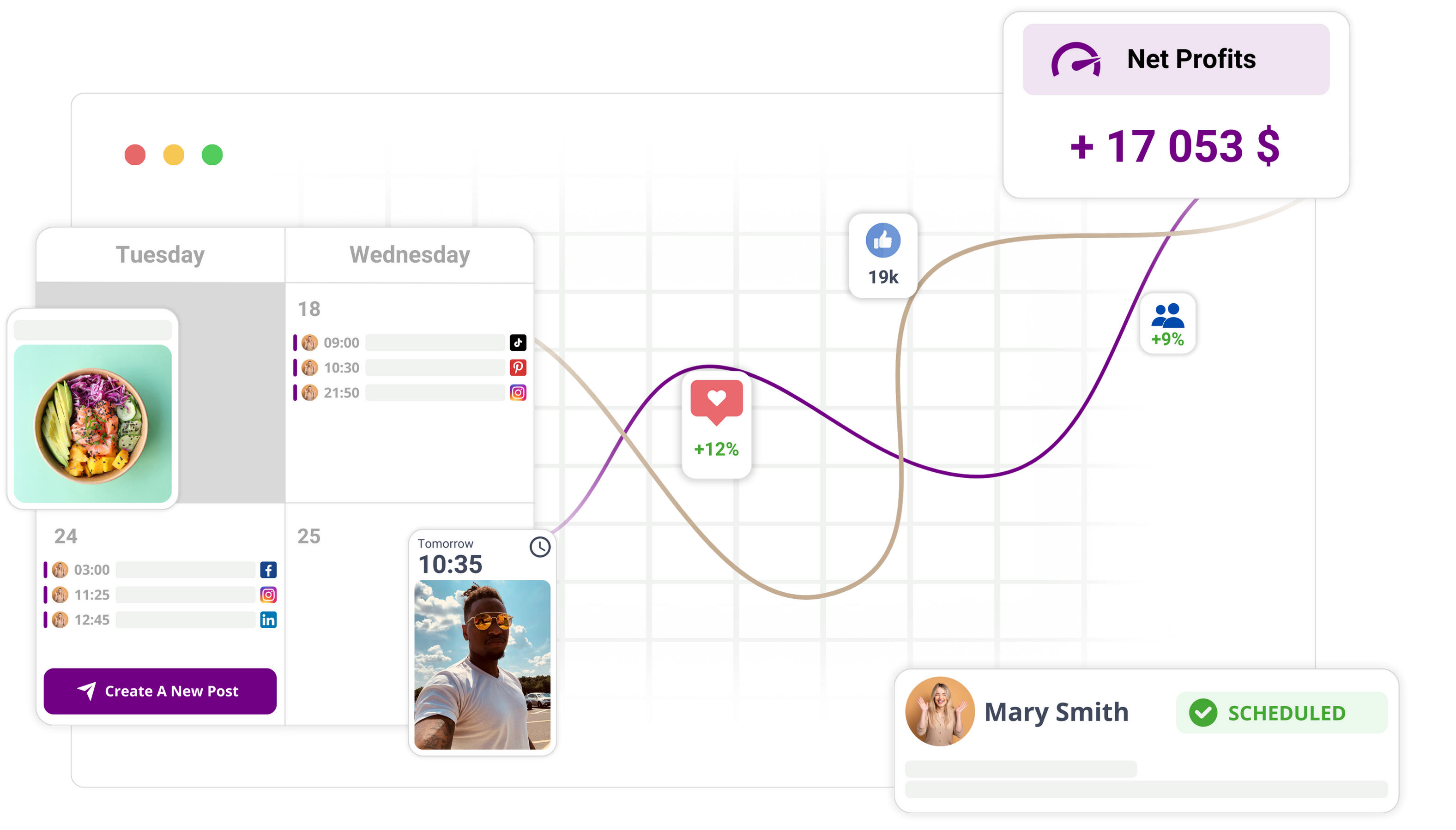
You will complete this tutorial with an operational calendar note that provides context for your social media campaigns, directly accessible within your Mydrop dashboard. By attaching notes to specific dates, you ensure that campaign requirements, team reminders, and strategic ideas remain visible alongside your publishing schedule.
Before you start
Confirm you have met the following requirements to ensure you can create and manage your calendar notes successfully:
- You have an active Mydrop account with permissions to access the Calendar or Home dashboard.
- You have identified the specific campaign date or timeframe where you need to attach planning context.
- You have your campaign information, such as copy drafts, deadline reminders, or creative strategy details, ready to input.
How to create and manage calendar notes
Follow these steps to establish your planning context within Mydrop.
Open the Calendar or Home dashboard Navigate to the main Mydrop menu and select the Calendar view or your Home dashboard. These sections serve as the primary areas for managing your publishing schedule and team planning.
Locate the note creation interface Identify the "Add Note" button located near the calendar date grid or the primary dashboard feed. Clicking this button opens a modal window or a side panel that allows you to define the properties of your new note.
Configure the note theme and timing Assign a specific theme or color label to your note to categorize it according to your campaign type, such as promotional launches or evergreen content. Select the exact date and time associated with the campaign phase. Accuracy at this stage is necessary so the note appears on the correct day within your schedule.
Input your campaign context Enter your planning details into the text field provided. Focus on actionable items such as campaign goals, necessary assets, or specific posting reminders. Once the text is complete, confirm the visibility settings to ensure the note is rendered on your selected view.
Save and verify the note Click the "Save" button to finalize the note entry. Navigate back to your Calendar or Home view and confirm that the note appears on the selected date. You should see the note rendered with the theme color you chose, confirming that the context is correctly attached to your schedule.
Edit or delete existing notes To update the information or remove a note, locate the existing note on your dashboard or calendar. Click directly on the note to open the edit menu. From here, you can modify the text, adjust the date, change the color theme, or delete the note if it is no longer relevant to your current workflow.
Troubleshooting and common mistakes
Review these points to ensure your calendar notes remain organized and visible.
- Date selection errors: If a note does not appear, verify the date. Selecting an incorrect date causes the note to remain hidden from the intended campaign view.
- Theme and color management: Neglecting to use theme labels leads to visual clutter. Consistent use of colors helps differentiate between multiple active campaigns.
- Save process: Always click the save confirmation button after entering your text. Data entered but not saved will be lost when you navigate away from the interface.
- Rendering issues: If a note is not rendering in the selected view, toggle your filters or refresh the dashboard to ensure the interface is displaying the most current data.
By following this process, you consolidate your planning documents into a single, accessible location, reducing the time spent searching for context while managing your social media operations.
Step 1: Open the feature
To begin creating your campaign context, navigate to the main dashboard interface. You can manage your operational notes from either the Calendar view or the Home dashboard. Using the Calendar view is most effective when you need to align your notes with specific publishing dates, whereas the Home dashboard is best for maintaining general campaign reminders that you want to see as soon as you log in.
- Locate the navigation sidebar on the left side of the screen.
- Select either Calendar or Home to access your planning workspace.
- Once the view loads, look for the Add Note button, which is positioned prominently above the planning grid in the Calendar or near the top of the action area in the Home dashboard.
- Click this button to initialize the note creation interface. A modal window will appear, providing the fields necessary to define your note properties and content.
Selecting the correct entry point ensures your note renders in the view where you spend the most time. If you primarily work within the scheduling grid, initiating this from the Calendar view will ensure the note stays locked to the relevant campaign date. Once you have clicked the button, ensure the entry modal opens correctly before proceeding to configure your note settings. If the modal fails to open, verify your network connection or refresh the dashboard page to ensure the application elements have loaded.
Step 2: Set up the basics
Before entering your campaign text, you must define the foundational attributes of your note. Properly configuring these settings ensures your planning remains organized and visible at the right time. The setup process involves assigning a visual theme and selecting a precise timestamp.
- Select a theme color from the options provided in the modal. These colors act as categories for your planning. For example, you might use red for urgent campaign deadlines, blue for creative brainstorms, or green for team operational reminders. Consistency here is essential to prevent visual clutter as your calendar fills up with multiple campaign assets.
- Set the timestamp for your note. Click on the date picker field to open the calendar module and select the specific date you want to associate with this note. If you are creating a note intended for a week-long campaign launch, set the timestamp to the primary launch day so the context appears exactly when the team reviews the publishing schedule.
- Review the visibility settings within the modal. You can choose whether the note remains private for your own planning or is shared with the rest of the workspace team. Selecting the correct visibility level is important for collaboration; notes intended for team alignment must be marked for public workspace visibility so that colleagues can reference the same operational context.
- Verify your selections in the preview area. You should see a label indicating the chosen theme color and the selected date clearly displayed at the top of the modal.
These initial settings form the identity of your note within the Mydrop workspace. Taking a moment to align the theme and date with your actual campaign timeline prevents the common error of misplacing information or hiding critical context behind an incorrect date. Once the theme is assigned and the date is set, you are ready to input your content. If you realize you have selected the wrong date during this setup, simply click the date picker again to adjust it before you move on to adding the specific campaign notes or operational instructions. Keep the modal window open as you prepare to save your work.
Step 3: Add the content or settings
With your theme and date selected, you can now input the specific details for your campaign. Locate the primary text field in the note creation window. Enter your campaign requirements, strategic ideas, or team reminders here. Keep this content concise to ensure the note remains readable when viewed in the calendar or dashboard overview.
Once your text is entered, look for the visibility settings menu. These settings determine how and where your note appears. You may choose to display the note across both the Home dashboard and the Calendar view, or restrict it to one location to reduce clutter. Assigning a clear category if provided in your theme list helps you filter these notes later during high-volume planning periods.
Verify the following before proceeding:
- The note text contains the necessary context for the intended date.
- The visibility options align with your current workflow needs.
- The assigned theme color correctly represents the campaign or task type.
Entering this information establishes the necessary operational context. By organizing these notes properly at this stage, you prevent information from becoming lost in separate documents. This step is critical for maintaining a clean planning environment where campaign data stays attached to your schedule.
Step 4: Review the workflow
After entering your content and configuring settings, click the save or confirm button to commit the note to your Mydrop interface. Once saved, the creation window will close, and you should see the note rendered directly on your Calendar or Home dashboard.
To verify that the setup is correct, perform the following checks:
- Confirm the note appears on the specific date you selected. If the note is missing, check the date setting again; you may have accidentally placed it on the wrong day.
- Check the theme color. If the color does not match your planned category, click the note to open the edit view and re-apply the label.
- Ensure the text is fully visible. If the text appears truncated, keep your notes brief or use the edit function to refine the content.
If you need to make changes, simply click the note once to trigger the edit interface. From here, you can modify the text, change the date, or adjust the theme as needed. If a note is no longer relevant, you can use the delete function within this same menu to remove it.
Regularly reviewing these notes is part of an effective planning routine. By checking the calendar view frequently, you ensure that all team members remain aligned with the campaign schedule and that no essential operational details are missed. Keeping your dashboard updated in this manner ensures Mydrop remains a functional, accurate, and central resource for your entire team.
If you find that your calendar view becomes cluttered, return to the note settings to adjust visibility or utilize the filtering options to hide lower-priority categories. This keeps your primary workspace focused on immediate campaign needs while preserving longer-term planning context for future reference. Consistent use of these notes transforms your schedule from a simple date tracker into a comprehensive tool for managing daily campaign operations, reminders, and strategic project goals without the need to switch between multiple applications or external documents. Through these steps, you maintain a streamlined workflow where every piece of campaign information is always located right where the work is being done.
Troubleshooting and next steps
If you encounter issues while managing your calendar notes, check the following points to ensure your planning context remains visible and accurate:
- Verify date selection. If a note does not appear on your calendar or dashboard, open the note editor again. Ensure the timestamp matches the specific day or time frame intended for the campaign. A note set to an incorrect date may be rendered in a hidden or distant part of the schedule.
- Check your theme labels. If your calendar feels cluttered, use the color-coded theme options to distinguish between different types of tasks, such as content reminders, campaign milestones, or internal team notes.
- Confirm that you saved your input. If you close the note window before clicking the save button, your text will not be retained. Always verify that the note appears in the interface immediately after saving.
- Ensure view permissions. If you are working in a shared team environment, confirm that you have the appropriate permissions to create or modify notes. Changes made to a note are visible to other team members with access to the same calendar or dashboard.
To update or remove a note, click directly on the note item within the Calendar or Home dashboard to open the edit window. From here, you can modify the text, change the associated date, or select a different theme. To delete a note, select the remove or delete option within the edit interface. Note that deleting a note is permanent and will remove the context from your planning schedule.
After you have mastered creating basic notes, consider these next steps to streamline your workflow:
- Group your campaign notes by themes to create a visual sequence of events.
- Attach brief links or references to external resources within the note body if you need to keep related planning documents accessible.
- Review your calendar notes during weekly team syncs to ensure everyone is aligned on current operational context and upcoming deadlines.
- Combine the use of calendar notes with your existing publishing schedule to maintain a clear line of sight between your creative ideas and the actual social media posts.
By regularly auditing your notes, you prevent outdated information from accumulating on your dashboard. Periodically clear out completed campaign notes to keep your workspace focused on active and future initiatives. If you frequently need the same information, such as recurring campaign guidelines, keep them in a central note pinned to the start of the relevant week or month.
Conclusion
Using calendar notes in Mydrop allows you to keep your operational context and campaign ideas directly attached to your publishing schedule. By following the steps to create, theme, and save your notes, you eliminate the need to switch between different applications to reference planning details. You now have a reliable method for capturing requirements and team reminders right where you do your daily work. This integration ensures that your social media campaigns remain organized and that critical information is always accessible when you are managing your content calendar. With your notes in place, you can move forward with your planning tasks with confidence that your operational context is correctly synced with your publishing timeline.