
Stop trying to outsmart the algorithm by chasing fleeting trends. If your reach is plummeting, the problem is not the platform; it is that your content strategy has become completely disconnected from your audience's actual behavior. Recovery happens only when you stop guessing and start treating every post as a data-driven experiment.
The quiet panic of watching a once-thriving brand account shrink into irrelevance is exhausting. It leads to frantic, late-night pivots that rarely work. You can reclaim your focus by replacing the desperate hunt for "what should we post next?" with the quiet confidence of knowing exactly what your audience needs based on what they already engaged with.
TLDR: To reverse the decline, you must move from content volume to content intelligence.
- Stop all non-essential production for 48 hours.
- Use your analytics suite to isolate the top 3 posts by engagement rate from the last 14 days.
- Map the common attributes of those winners-format, tone, time, and topic-and rebuild your next week of posts exclusively around these constraints.
The awkward truth is that you are not losing reach because you have lost your creative edge. You are losing it because your manual, siloed workflows are too slow to keep up with the tight feedback loop modern social platforms demand. By the time your team finishes the manual approval dance for a creative asset, the window for that specific trend or audience interest has already closed.
The real problem hiding under the surface

Most enterprise teams treat reach drop-offs as a "platform algorithm" crisis. They assume the machine has decided to punish them. In reality, the issue is usually Operational Drift. Your content themes have gone stale, your posting times are legacy habits rather than current requirements, and your team is too busy managing the chaos of spreadsheets to notice the signal.
When you manage social media at scale, the distance between the data and the person writing the caption is often massive. Someone in the analytics team might know exactly what works, but that insight never makes it to the person actually scheduling the content in the calendar. This is where the Mydrop system becomes a competitive advantage. It keeps your identity, your performance data, and your publishing calendar in one place. You stop managing "content" and start managing a continuous, evidence-based iteration loop.
Operator rule: Never schedule a post without reviewing the performance data of the top 3 performers from the previous 14 days. If the new post does not mirror the attributes that made those earlier posts succeed, it is likely just adding to the noise.
This requires a shift in how you view social publishing. Think of your calendar not as a place to dump ideas, but as an experimental laboratory. If you are not testing variables-caption length, video hook types, or posting windows-you are not doing social media; you are just shouting into the void and waiting for the algorithm to stop listening. Automation is not for scaling the noise; it is for protecting your time so you can focus on the signal. When you stop manual copy-pasting and start trusting your performance dashboard, you stop reacting to reach drops and start building a resilient, data-led foundation.
Why the old way breaks once volume rises
Most teams start with a simple spreadsheet, a shared folder for assets, and a collective trust in the "creative vibe." It feels agile at the beginning. But the moment you add a second brand, a new market, or a layer of compliance, the fragility becomes impossible to ignore. You stop managing content and start managing coordination debt.
Most teams underestimate: The hidden cost of "context switching" between your calendar, your storage drive, and your analytics dashboard. Every time a team member hops between tabs to verify if an asset is approved, or to check if a caption matches the latest brand tone, your speed drops.
When you scale, the manual way creates three distinct failure points:
- Information Silos: Analytics live in platform dashboards, content lives on a server, and the calendar lives in a document that is perpetually three versions out of date.
- The Approval Bottleneck: By the time a post is reviewed by stakeholders, the "data-informed" insight that inspired it is often stale. You are publishing based on last month’s trends while the audience has already moved on.
- Governance Drift: In the rush to hit posting volume, brand safety and platform-specific requirements get missed. You end up posting generic content to fill gaps, which only further dilutes your organic reach.
The "Manual Guessing Trap" is not just about being slow; it is about being systematically blind to the results of your own work.
| Feature | The Manual Guessing Trap | The Mydrop Performance Loop |
|---|---|---|
| Workflow | Disconnected docs and tools | Integrated calendar and analytics |
| Decision Basis | Subjective "vibe" checks | Evidence from post-level performance |
| Handoff | Email chains and static links | In-platform approvals and status tracking |
| Speed | Reactive to platform changes | Proactive, data-backed iteration |
The simpler operating model

If the old model is a scramble to feed the machine, the new model is an experiment to learn from the audience. You move from "content creation" to an evidence-based iteration loop. The goal is not to post more; it is to ensure every post serves as a diagnostic tool for the next one.
The shift looks like a simple 4-step cycle that turns your daily operations into a continuous feedback loop:
- Reflect: Start your week by filtering your
Analytics > Postsview to identify which formats or themes actually moved your engagement rate in the last 14 days. - Define: Use the Home assistant to translate these successful patterns into a brief for your next batch of content. Stop asking "What should we post?" and start asking "How do we iterate on our top 3 performers?"
- Validate: Build your content inside the Mydrop calendar. Use built-in platform validation to ensure your media, captions, and profile settings are perfect before they ever hit a production queue.
- Repeat: Once the post goes live, log its performance. If it spikes, that is your new baseline. If it tanks, you have a clear, data-backed reason to pivot before you waste resources on a similar idea.
Operator rule: Never schedule a post without reviewing the performance metrics of the top 3 posts from the previous 14 days. If you cannot explain why a post is scheduled-based on prior engagement, not just a calendar gap-you are filling space, not serving an audience.
This is where the pressure of enterprise social finally relaxes. You stop trying to guess what the algorithm wants and start focusing on what your specific audience interacts with. Automation is not here to help you scale noise; it is here to protect your team’s time so you can focus entirely on the signals that actually matter. When you stop chasing the wind, you finally have the bandwidth to build something that lasts.
Where AI and automation actually help

The most dangerous myth in enterprise social media is that automation kills creativity. In reality, manual labor is what kills it. When your team spends sixty percent of their week on copy-pasting, chasing stakeholders for final sign-offs, and digging through disparate platform backends for engagement numbers, there is no mental bandwidth left for actual strategy.
AI and automation are not about generating generic content. They are about offloading the coordination debt that makes your team move too slowly to react to what is actually working.
Operator Rule: Never schedule a post without reviewing the top 3 performers from the previous 14 days. Use the time saved by automating your routine posts to perform this 10-minute "signal check" before every new campaign launch.
When you use the AI Home assistant to synthesize performance data into a content brief, you aren't just saving time-you are grounding your next creative sprint in reality. Instead of asking a blank prompt to "write a post," you ask the assistant to identify the specific elements-hook style, image composition, call-to-action tone-that drove your highest engagement last month. You then use that intelligence to build an automation flow that ensures your content meets your quality and brand standards before it even touches the calendar.
- Run a post-performance audit to identify your top 3 formats from the last 14 days.
- Use the AI Home assistant to extract key success patterns from those high-performing posts.
- Build an automation flow to handle recurring, baseline content updates, freeing up your team for creative projects.
- Set up automated approval triggers to prevent bottlenecking, ensuring legal and brand stakeholders receive timely notifications for high-priority posts.
- Establish a recurring calendar review cadence to ensure your upcoming content aligns with the data you just collected.
Automation isn't for scaling noise; it's for protecting your time so you can focus entirely on the signals.
The metrics that prove the system is working

When you move to a feedback-first loop, your dashboard stops looking like a collection of vanity metrics and starts looking like a business instrument. You stop tracking "total likes" across every platform and start focusing on the specific ratios that indicate genuine audience resonance.
KPI box:
- Engagement Rate (by post type): Are your video clips outperforming static graphics?
- Reach-to-Follower Ratio: Are you reaching new people, or are you just preaching to the same choir?
- Time-to-Resonance: How quickly does a post hit its engagement baseline after publishing?
- Conversion-on-Click: For enterprise teams, how many social interactions actually lead to site visits or lead captures?
Stop obsessing over aggregate growth and start tracking Engagement Rate and your Reach-to-Follower Ratio on a per-post basis. A healthy account sees these numbers fluctuate in response to content strategy shifts, not just algorithm updates. If you change your visual style and your engagement rate jumps three percent over a week, you have found a signal. If you post more often but your reach-to-follower ratio stays flat, you are just working harder for the same result.
Common mistake: Measuring "Content Volume" as a proxy for success. Posting more rarely fixes a reach problem; it usually just dilutes your brand signal and confuses your audience. If you increase your frequency but your average engagement rate drops, stop immediately and revert to a lower-frequency, higher-quality cadence.
The goal is to move from Reporting (what happened) to Iterating (what we do next). When your analytics tool is integrated directly into your publishing calendar, the transition from observation to action is instant. You see that your "How-to" videos are killing it, you adjust the next week's calendar to prioritize that format, and you schedule it out through your automated workflows.
At the end of the day, reach is just a lagging indicator of how well you listen to your audience. When the system is working, your calendar starts to look less like a collection of deadlines and more like a library of proven experiments.
The operating habit that makes the change stick
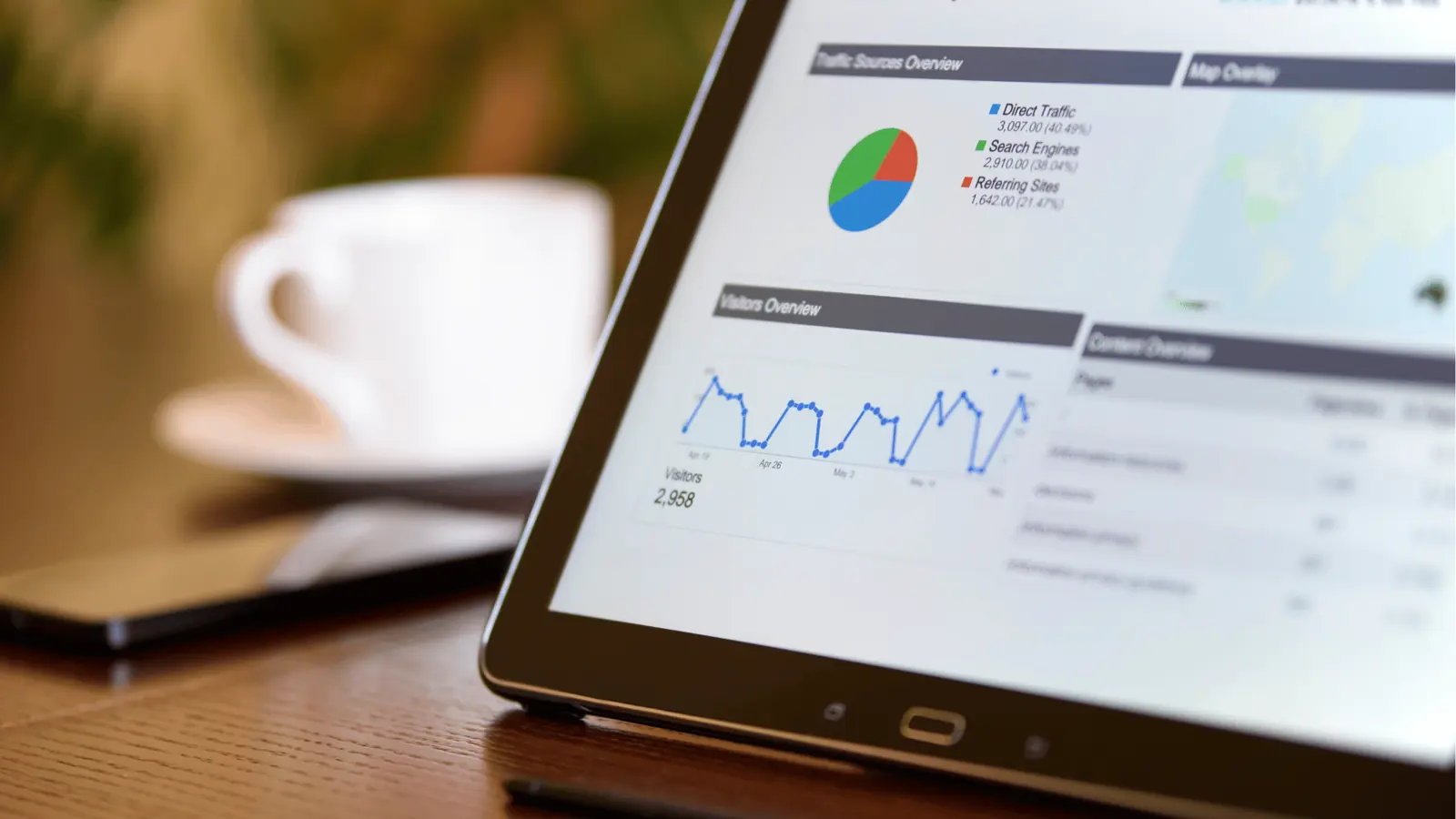
The biggest shift you can make is moving from "content planning" to evidence-based scheduling. Most teams treat the calendar as a storage bin for ideas; your team should treat it as a laboratory for experiments. You cannot fix reach if you are still manually guessing what works, and the only way to break that cycle is by enforcing a "performance-first" review gate before anything hits the queue.
This is where the friction of manual work actually helps you. If you force a 15-minute data review before hitting the "Schedule" button, you stop the bleeding of low-performing content.
Operator rule: Never schedule a post without reviewing the top 3 and bottom 3 performers from the previous 14 days. If your team cannot pinpoint why those posts landed where they did, the new post isn't ready for production.
To institutionalize this, adopt the following Experiment-Measure-Automate cycle in your next team meeting:
- Intake & Audit: Use the
Analytics > Postsview to filter your top performers by reach. Identify the specific variable that likely drove the success (e.g., specific video hook, time of day, or guest creator). - Design with Constraints: Use these insights as your creative brief. Instead of asking the team to "make something viral," ask them to "apply the hook style that drove our highest reach in the last two weeks."
- Validate & Deploy: Before moving a post into the active calendar, use the platform-specific validation checks to ensure your media specs, captions, and profile selections are perfect. If you are handling high volumes, use the
Automationsbuilder to package these high-performing post structures into reusable templates, reducing the chance of manual error creeping back into your workflow.
Framework: The Reach Diagnostic Triangle
- Content Fit: Does the post format match the top 3 performers of the last 14 days?
- Timing: Did we cross-reference this window with our historical peak engagement times?
- Frequency: Are we respecting the fatigue threshold of our followers, or just trying to fill a slot?
Quick win: Open
Analytics > Postsand apply a 30-day filter forReach. Sort byLowestto find your "zombie" content. Archive or audit these recurring themes-they are the silent reach-killers dragging down your profile health.
Conclusion

Recovery isn't about finding a magic trick to hack the algorithm. It is about closing the distance between your team’s intuition and your audience’s reality. When you stop chasing trends and start acting on the data sitting right in front of you, the panic subsides and the work becomes predictable again.
Consistency in social media management doesn't come from working faster; it comes from having a reliable system that prevents your team from repeating the same mistakes across ten different accounts. The goal is to build an environment where your best ideas have the highest probability of success. At Mydrop, we see that happen when teams stop managing chaos and start managing the feedback loop, ensuring that every post is a deliberate, informed step toward growth rather than just another item on the to-do list.