
The moment a localized post underperforms its global parent, stop auditing the copy. Most performance gaps are not creative failures; they are coordination debts. You are likely dealing with mismatched timezones, broken approval loops, or critical platform metadata lost during the regional adaptation. When we see this across hundreds of brand profiles, the root cause is almost always a lack of technical fidelity during the handoff rather than a lack of audience interest.
It is incredibly frustrating to spend weeks crafting the perfect global campaign, only to watch it crater in specific markets. You see the same creative die a slow death in one region while thriving in another, leaving you to guess whether the audience just didn't care or if the post simply never reached them correctly. We get it, and you are not alone. The awkward truth is that most localized content strategies are just manual labor disguised as marketing. If you are manually re-exporting assets and re-typing captions across ten timezones, the performance gap is not about your audience-it is about your lack of a unified publishing nervous system.
Operator rule: Before reviewing engagement, evaluate: (Intent + Local Nuance) / Technical Fidelity = Performance. If your technical fidelity is off, you are not testing the strategy; you are testing the glitch.
What changed before the numbers moved

To diagnose a performance gap, you must isolate the moment of translation. Think of your global assets as a radio signal. If that signal degrades through the regional relay, the message gets garbled. We have found that teams managing multiple markets consistently fail at the same three transition points: timing, format integrity, and metadata accuracy.
To find the culprit, audit the delta between your global rollout and the regional upload using this scorecard.
| Diagnostic Factor | What to Check | Failure Indicator |
|---|---|---|
| Timezone Alignment | Post publish time vs. audience peak hours. | Engagement rate lower by >30% during local "dead hours." |
| Asset Fidelity | File dimensions, aspect ratio, and compression. | Blurry visuals or cropped text in the final output. |
| Approval Context | Changes to captions or links after global sign-off. | Inconsistent brand voice or broken redirection links. |
| Platform Nuance | Location tags, collaborative features, or native tools. | Low discoverability or platform-specific feature mismatch. |
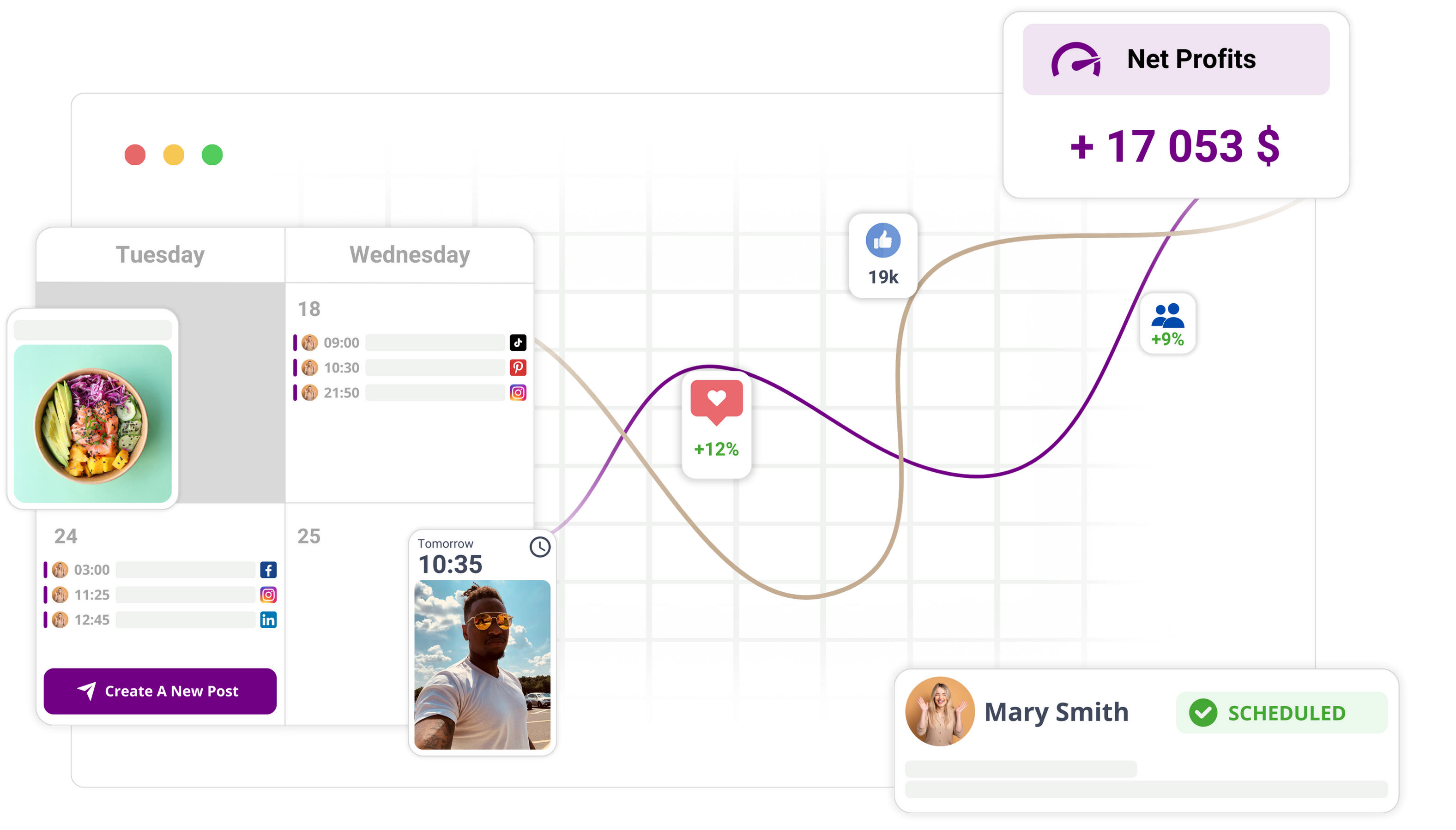
If you are using Mydrop's calendar views, you can immediately verify if your regional teams are scheduling during active local hours. Many performance gaps vanish the moment you stop publishing when your audience is asleep. If the timing looks solid, check your asset handoff. We often see teams lose high-resolution quality when they move designs between local folders. Keeping design production connected to your gallery means your assets arrive in the right format for every channel, preventing the "re-export tax" that leads to grainy or misaligned media.
The goal is to stop blaming the asset and start fixing the operational handoff. If the process is messy, the results will be too.
The failure patterns to check first

Most performance gaps aren't a reflection of audience indifference. They are the digital equivalent of a broken telephone game. When we audit failed localized posts across thousands of accounts, we rarely find a content issue. We almost always find an execution break that occurred between the global master file and the regional feed.
Before you rewrite a single line of copy, audit these four common failure patterns in this order:
- Timezone drift: Your content is optimized for global reach, but if your local team pushes it while the regional audience is asleep, the initial engagement velocity-the signal platforms use to determine initial distribution-will be flat.
- Aspect ratio degradation: A high-res graphic designed for one market can look like a compressed mess when improperly exported for another. If your team is manually resizing images in a chat-based handoff, you are losing visual quality before the post even hits the feed.
- The approval bottleneck: If a regional manager spends four hours chasing a legal sign-off in an email thread, they aren't just losing time. They are missing the optimal window for the post.
- Platform-specific metadata loss: A location tag, a specific product catalog link, or a localized mention is often stripped out during the "adaptation" process.
The proof that separates signal from noise
Stop debating if the creative "feels" right for the market. You need an objective way to distinguish between a bad creative strategy and a botched deployment. We use a simple Execution Scorecard to diagnose this in minutes. If the technical side is broken, the strategy was never actually tested.
| Diagnostic Factor | Execution Check | Strategy Check |
|---|---|---|
| Timing | Published within 1hr of local prime-time? | Does the topic resonate with regional culture? |
| Asset Specs | Native resolution and platform aspect ratio? | Does the visual style fit the brand guide? |
| Metadata | Are all regional tags and links active? | Is the call-to-action locally relevant? |
| Approval | Was the final version vetted by local leads? | Did the core message stay on-brand? |
How to use this scorecard:
Assign a binary 1 or 0 to each column. If your Execution column has zeros, you have a coordination debt. You cannot fix that with better copywriting.
Decision check: If your execution score is lower than 3, you are not testing the market; you are testing the glitch. Fix the technical handoff-ensure your assets are imported directly from your design tools into your calendar and your approval loops are tied to the specific post-before you waste more time on creative reviews.
At Mydrop, we see teams struggle because they treat publishing as a manual task rather than a systemic flow. When you move approval workflows into your calendar and keep your asset gallery synced with your design tools, you stop chasing files and start seeing the real data. If you are manually re-exporting and re-scheduling across timezones, your performance gap is just the cost of doing business the hard way.
What to fix this week
If you are currently staring at a performance gap that feels like a mystery, stop theorizing about creative resonance. You need a 30-minute tactical sweep. Most teams have enough diagnostic data sitting right in their publishing history to spot the failure pattern immediately.
Here is your audit checklist for the next 48 hours:
- Verify the publication window: Open your calendar and check the exact post time for the underperforming local account against its local timezone. If it landed at 3 a.m. for that market, you have your answer.
- Audit the media handoff: Pull the original asset and compare its file size, bitrate, and aspect ratio against the version actually published. If the file was compressed to death by a random email attachment, the performance drop is a technical reality, not an audience critique.
- Trace the approval trail: Look at the last three edits made to the post after it left the global team. Did a local stakeholder swap out the tracking link for a non-working one? Did they drop the UTM parameters?
- Check for "Feature Creep": Did the regional team disable comments, remove location tags, or change the caption to a version that stripped away the call to action?
Workflow check: Never treat a performance gap as a content failure until you have ruled out every technical handoff error. If the execution was flawed, the creative never had a chance to work.
When to stop diagnosing and change the workflow
If you find yourself running this audit every single week, you have a broken coordination nervous system. Diagnostics are only useful if they lead to an operational change. If you are still manually re-typing captions, downloading files to your desktop, and chasing approval via WhatsApp, you are essentially paying your team to create human error.
Stop diagnosing and change the workflow when you hit these three triggers:
- The 20-percent rule: If more than one in five localized posts requires a fix after it goes live, your approval loop is essentially a post-mortem, not a gate.
- The "Where is it" friction: If you spend more than an hour per campaign simply verifying who has reviewed what, your approval context is too scattered.
- The timezone tax: If your team is waking up at odd hours to hit "publish" manually because your tools do not support localized scheduling, you are buying growth with burnout.
At Mydrop, we often see teams move from "manual management" to "orchestrated publishing" by shifting these tasks into a centralized workspace. Once you unify your profiles, timezones, and approval chains into one calendar view, you stop wondering if a post reached the audience and start seeing exactly where it was modified before it landed.
Conclusion
Performance gaps are almost always a symptom of a fractured pipeline. When you treat these moments as diagnostic problems rather than creative critiques, you stop chasing phantom audience trends and start fixing the real bottlenecks.
Standardize your handoff, tighten your approval loops, and ensure your metadata survives the trip from global to local. Your audience is likely waiting for your content; make sure you are actually giving them the chance to see it.