

You should only centralize social profiles into a single reporting dashboard if they share a primary KPI and a target audience segment. Aggregating data across unrelated markets or product lines creates reporting fog that masks local failures behind global averages, making it nearly impossible to identify which campaigns are actually driving ROI.
We get it. You are likely drowning in spreadsheets of "total impressions" that don't tell you anything about what actually moved the needle. Managing dozens of regional and product-specific accounts feels less like strategic marketing and more like data janitorial work. It is exhausting, messy, and makes it incredibly difficult to defend your budget to stakeholders when the performance data is just one big, blurry blob.
The operating problem this solves
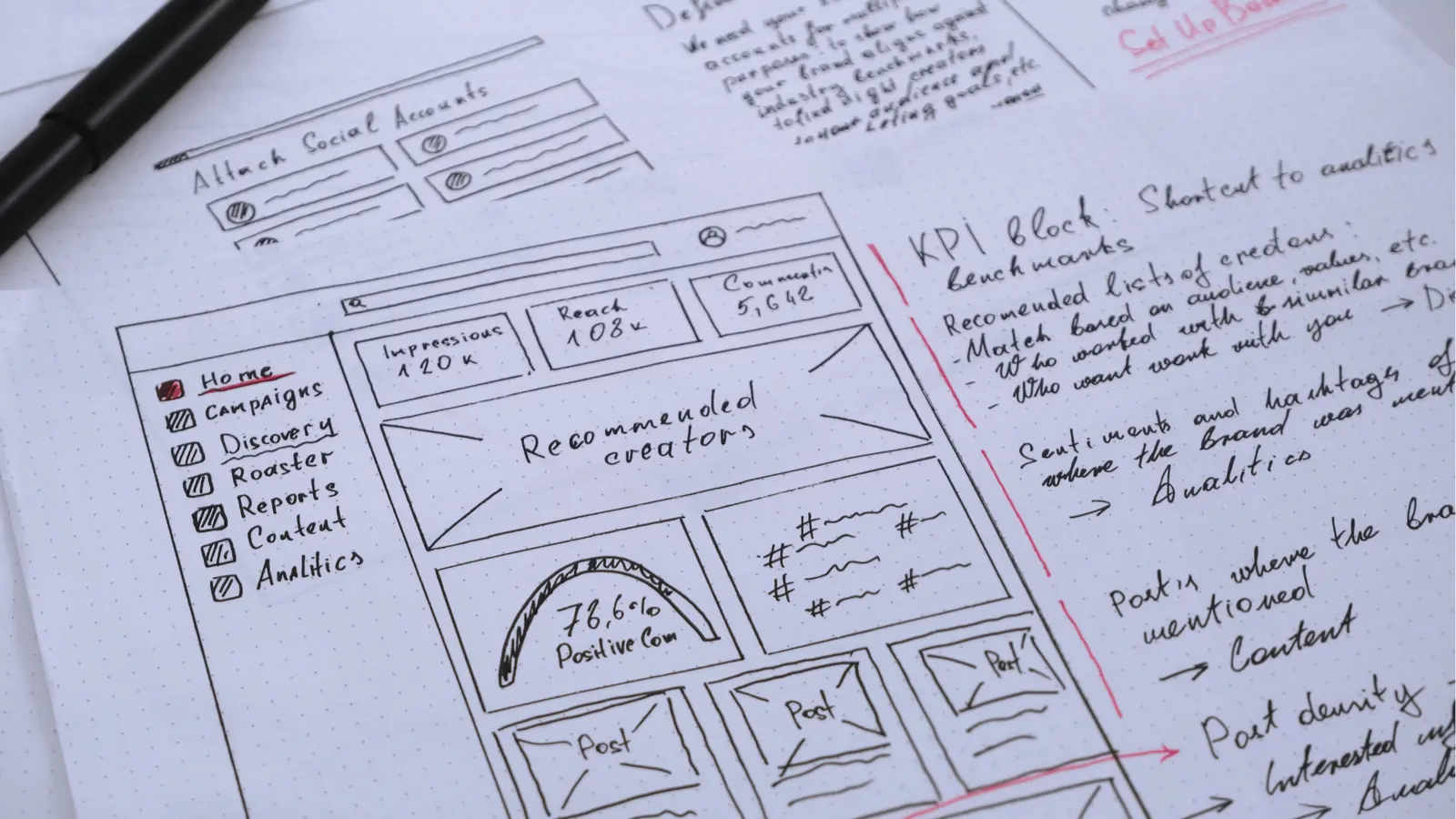
Most enterprise teams fall into the "Big Data" trap: the assumption that more data in one view equals better visibility. In practice, centralizing unrelated profiles creates a false sense of control. When you mix your high-intent product community channels with your broad, awareness-focused regional pages, you lose the ability to see signal.
At Mydrop, we see this coordination debt build up across teams managing hundreds of brand profiles. When you treat every profile as a peer to every other profile, you lose the hierarchy needed for actual performance management.
Here is where the reporting friction usually starts:
- KPI Dilution: Trying to force a "global" engagement rate onto a support-heavy channel that should be measured by resolution time.
- Creative Misalignment: Assuming a global brand asset works the same for a mature market as it does for a new one, then failing to see the performance gap because the data is aggregated.
- Audience Fragmentation: Diluting your buyer persona insights by mixing audiences that have zero overlap in intent or purchasing behavior.
Most teams do not have a data problem; they have a decision bottleneck. They are so busy managing the inputs of dozens of channels that they never stop to architect how those channels actually report back to the business.
The goal isn't to see everything at once. It is to see the right things in the right context so you can actually pivot when something isn't working. If you cannot assign a single, shared success metric to a group of profiles, you are merely aggregating noise, not reporting on performance.
The minimum system that works

The secret to sane reporting is to stop treating every social profile as an equal node in your database. Most teams fail because they force a one-size-fits-all reporting schema onto diverse accounts, effectively comparing a megaphone to a whisper.
At a minimum, your system needs to distinguish between Brand Anchors (the 20% of accounts generating 80% of your engagement) and Market Satellites (everything else).
When you categorize profiles by their specific role in your funnel rather than just their platform type, the "noise" in your analytics naturally starts to clear. You stop trying to map high-level brand awareness metrics against hyper-local customer support volume.
The Profile Classification Matrix
Use this matrix to determine the reporting logic for any active social profile in your ecosystem.
| Profile Type | Primary Role | Success Metric | Reporting Cadence |
|---|---|---|---|
| Global Anchor | Brand Positioning | Share of Voice / Reach | Weekly / Executive |
| Regional Hub | Market Penetration | Lead Quality / CPA | Monthly / Regional |
| Product Vertical | Consideration | Click-through Rate | Monthly / Product |
| Support / Ops | Retention | Resolution Time | Ad-hoc / Internal |
If an account does not have a clear row in this matrix, it is likely just adding entropy to your reports. If it is sitting in your main dashboard right now, consider moving it to an isolated view.
Where teams overbuild the process
The most common trap we see in enterprise teams is "dashboard bloat." You decide to consolidate everything into one giant interface, thinking it gives you total visibility. Instead, you build a massive, slow-moving reporting machine that requires two people to maintain and no one to actually read.
This is where you lose the plot. When you aggregate fifty regional accounts into one central report, you lose the ability to see local performance outliers. A brilliant regional campaign gets washed out by a flat national average. Your stakeholders end up looking at a "total impressions" number that feels good for five minutes but offers zero guidance on what to do next.
Operator rule: If you find yourself manually filtering your "all-in-one" dashboard every single week to get the actual data you need, you have already failed the segmentation test.
We have seen teams burn dozens of hours each month just cleaning up cross-market data, only to have the final report ignored by executives because it was too abstract to act on. The goal isn't to have all the data in one place; it is to have the right data in the correct context.
If you are currently managing hundreds of profiles, stop trying to build one master view. Build three meaningful ones. Start by separating your high-level brand awareness metrics from your bottom-of-funnel conversion reporting. You will notice the difference in your team's stress levels immediately.
How to run the cadence
Getting your profile structure right is the heavy lifting, but the real test is the weekly rhythm. You want to move from "reacting to dashboard alerts" to "proactively managing segments." In our experience, teams that stop checking every channel every morning and instead shift to a tiered reporting review survive the longest.
If you are currently treating all profiles as one, try this Weekly Segmentation Sync for the next month:
- Monday: The Strategic Pulse. Review the centralized report for your "Core" brands only. Check if the KPIs are actually moving. If not, don't dig into the platform metrics yet; check if the creative actually matched the audience segment.
- Wednesday: The Segment Deep-Dive. Pick one "Segment" cluster (e.g., your APAC regional accounts). Look at their specific reports in isolation. Ignore the global totals. Is the local engagement rate healthy? If yes, let them run.
- Friday: The Cleanup. Check for "coordination debt." Are there accounts that haven't produced a post in 30 days? Are they still taking up space in your main analytics view? If they aren't generating value, move them out of the active folder.
At Mydrop, we often see teams use Profile Management to physically group these accounts into workspaces that match this cadence. By isolating your "Support" or "Legacy" profiles into their own folders, you prevent them from polluting the view of the accounts that actually drive your business goals.
Decision check: Never share a dashboard between a profile with a conversion goal and a profile with a support goal. They require different teams, different metrics, and different reporting cycles.
The proof that the habit is working
Clean data feels different. It is less about fancy charts and more about the speed of your decision-making. When you stop aggregating unrelated metrics, you stop spending hours "explaining away" bad numbers in executive meetings.
Here is how you know your segmentation is actually working:
| Metric | Messy (Unsegmented) | Clean (Segmented) |
|---|---|---|
| Explanation Time | "I need to check why the global average is down." | "The Product X segment is down, but we know why." |
| Approval Velocity | Approvals are lost in email threads. | Decisions are tied to the specific brand workspace. |
| Data Quality | "Total impressions" is your primary stat. | "Conversion rate by audience segment" is your primary stat. |
| Team Focus | Everyone manages everything. | Teams own specific segments and metrics. |
When your reporting structure mirrors your accountability, the "reporting fog" lifts. You stop chasing phantom problems. You spend less time explaining a blended average that no one understands and more time optimizing the specific campaigns that actually contribute to your bottom line.
Conclusion
The most common trap in enterprise social management is the belief that connectivity solves strategy. Just because you can connect every single regional handle, product sub-brand, and legacy account into one dashboard does not mean you should.
Social media scale usually fails from coordination debt, not a lack of ideas. If you are struggling to get executive sign-off or feeling the pressure to publish more without seeing a clear return, stop adding more content to the machine. Instead, force yourself to segment.
Start by auditing your profiles using the scorecard we discussed. Pull the support-only channels out of your primary growth reporting. Isolate your regional segments. When you finally stop forcing a one-size-fits-all metric onto your entire ecosystem, you will find it much easier to defend your budget, prove your value, and actually sleep through the night.
Clear boundaries make for clear data, and that is how you build an operation that can actually grow without breaking.