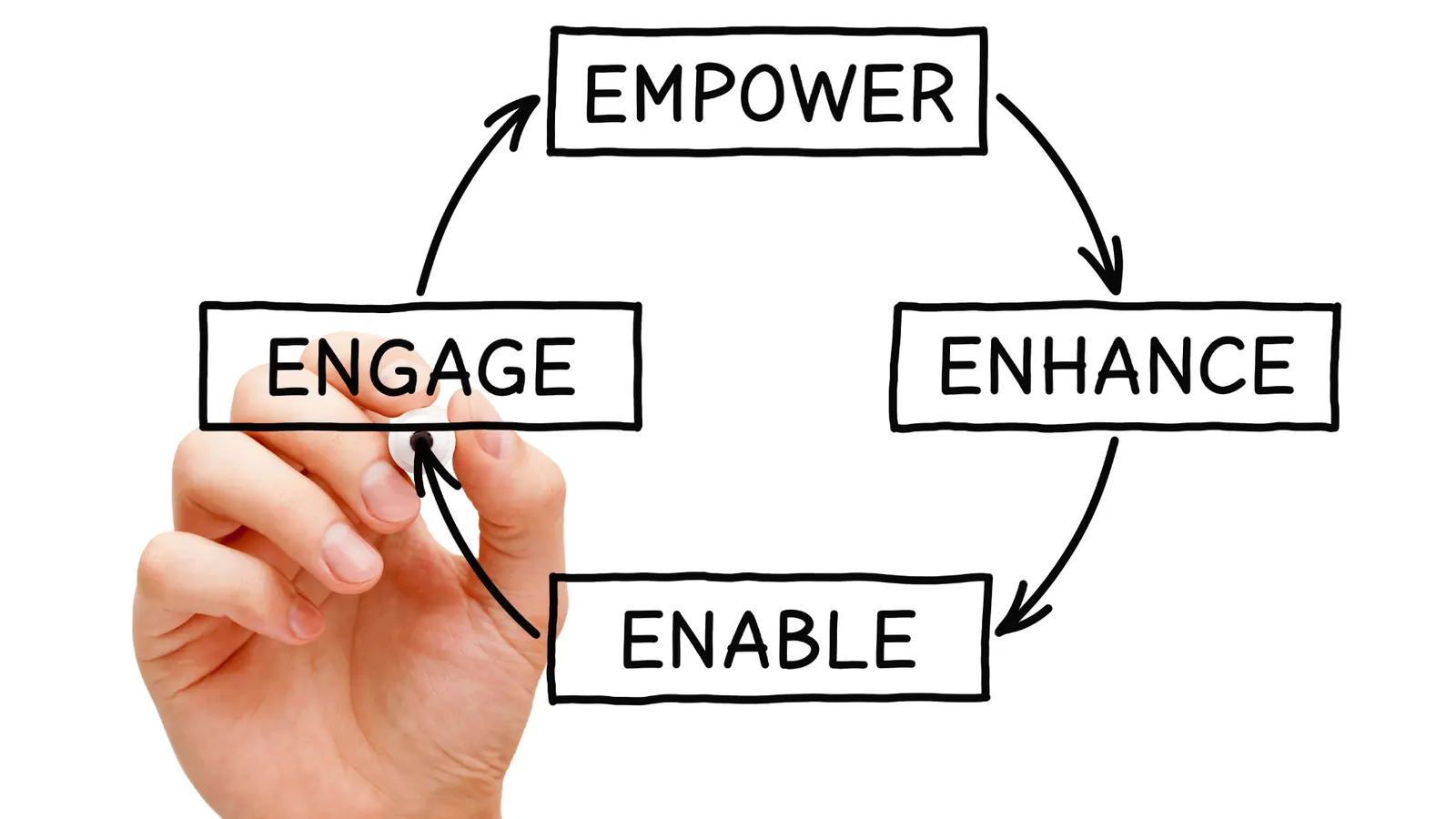
Standardizing a regional social strategy does not require a unified, top-down calendar; it requires a unified system of record where global brand assets live in one bucket and local market publishing occurs in another, connected by a non-negotiable, transparent approval loop. Most enterprise teams try to solve their coordination mess by adding more meetings or stricter scheduling rules, which only creates a bottleneck that kills local relevance. The goal isn't to control every post, but to build a framework where regional teams have the guardrails they need to ship local content in minutes, not days.
We get the frustration. You are likely drowning in "corporate-approved" content that falls flat in local markets, while your regional teams are stuck waiting on emails that never arrive. It is exhausting to chase approvals at 6 p.m. because a global template didn't fit a local holiday. The hidden cost of "brand control" isn't a lack of consistency-it's the massive bottleneck of manual asset sharing and disconnected approval threads that forces local teams to post outdated content, or worse, go rogue to stay relevant.
The operating problem this solves

The core issue we see across hundreds of global brand profiles is coordination debt. This occurs when the distance between an idea and a live post is filled with friction: file-sharing requests, status-check emails, and manual timezone conversions. When HQ insists on owning the calendar, the regional team loses the ability to respond to local trends, effectively turning your social channels into digital white noise.
At Mydrop, we usually see this manifest as a "Centralization Trap." Global teams think they are maintaining brand integrity by scheduling for everyone, but they are actually just creating a distribution bottleneck. The reality is that local teams know their audience best, but they are often hobbled by tools that don't let them easily swap assets or adjust copy without triggering a complete, top-down re-approval.
To stop the bleeding, you need to transition from a command-and-control calendar to a distributed governance model. This means separating your high-level campaign themes from the daily tactical execution. When your system of record clearly distinguishes between "Global Assets" and "Local Activations," you stop fighting over the calendar and start focusing on the actual content performance.
Operator rule: If your regional teams are waiting more than 24 hours for a simple asset approval, you do not have a quality problem-you have a structural bottleneck.
Before you attempt to fix your workflow, you need to know where your team currently sits on the spectrum of coordination debt. Use this scorecard to diagnose your team's health.
Regional Autonomy Scorecard
| Metric | Low Autonomy (Risk Area) | High Autonomy (Balanced) |
|---|---|---|
| Asset Access Speed | Manual email/drive requests | Self-serve central library |
| Approval Lead Time | 48+ hours (email threads) | < 6 hours (in-platform workflow) |
| Local Engagement Rate | Below global baseline | Outperforming global content |
Thresholds: If you score "Low Autonomy" on more than one metric, your current process is actively suppressing local growth.
The minimum system that works

The most resilient teams we support stop trying to force every global campaign into a single, monolithic calendar. Instead, they treat the brand as a centralized library and the market as a decentralized workshop. You provide the ingredients, but local teams decide when to cook.
A functional system requires three distinct layers that operate independently but share one source of truth:
- Global Brand Assets: A locked, read-only repository of approved creative, messaging pillars, and legal disclaimers.
- Market-Specific Workspaces: Dedicated environments for each region where local teams can pull assets, adapt copy, and manage their own publishing schedule.
- Cross-Workspace Approvals: A single notification loop that pulls the relevant stakeholder into the local environment to review the post in the context of the local calendar, not in a detached email thread.
By separating the "what" (brand assets) from the "when" (local publishing), you eliminate the coordination debt that turns HQ into a constant bottleneck. Local teams stop waiting for manual file transfers and start shipping at the exact moment their audience is active.
Where teams overbuild the process
The most common trap is "centralized scheduling"-where headquarters attempts to manage the exact posting time, caption nuance, and hashtag strategy for twenty different markets. It feels like control, but it is actually a recipe for irrelevance.
When you overbuild, the process becomes the product. You end up with a team of people whose full-time job is managing a massive, impossible-to-read spreadsheet rather than crafting social strategy.
Common mistake: Treating regional teams as distribution nodes for global content instead of local experts.
If your process requires five levels of approval for a routine update, you have not built a brand guardrail; you have built a stagnation engine. We see this play out constantly: content that was "on-brand" three weeks ago hits the feed today, long after the cultural moment has passed.
The Regional Autonomy Scorecard
Use this matrix to audit your current workflow. If your team consistently lands in the "Bottleneck" quadrant, you are likely overbuilding your process.
| Metric | High Autonomy (Healthy) | Low Autonomy (Bottleneck) |
|---|---|---|
| Asset Access | Self-serve from global hub. | Request-based via email. |
| Approval Lead | Intra-platform, < 2 hours. | External thread, 48+ hours. |
| Local Engagement | High (tailored to market). | Low (generic/global template). |
| Publishing Flow | Market owner manages timing. | HQ pushes all updates. |
- Score Calculation: Assign 1 point for every "High Autonomy" trait.
- 3-4 Points: Your system is built for speed. You are scaling.
- 0-2 Points: You are currently paying a "coordination tax" on every post.
The reality is that your regional teams are closer to the data than anyone in your central office. When you allow them to own the "when" and the "how," you get local relevance for free. The goal is to move the needle from "policing content" to "enabling output." If you are doing the former, your calendar is not a tool; it is a cage.
How to run the cadence
Establishing a rhythm between global and regional teams is where most governance plans go to die. Usually, the "cadence" looks like a frantic series of emails on a Thursday afternoon asking why the Singapore office hasn't posted the global product launch yet.
The secret to a functional workflow is moving the negotiation out of the calendar and into a dedicated workspace channel. At Mydrop, we see the most successful teams adopt a "Weekly Menu" model. The global team "drops" the core assets and campaign themes on a set day, and the regional teams have 48 hours to "order" what they need for their specific market.
Here is the 3-step loop that keeps the gears turning without anyone losing their mind:
- The Global Drop: The HQ team uploads master assets into a shared workspace. Instead of a vague email, they use a Workspace Conversation to explain the "why" behind the campaign and the non-negotiable legal requirements.
- The Local Remix: Regional leads take those assets and use the AI Home assistant to draft local versions. They aren't starting from a blank page; they are refining a global idea for a local audience.
- The Approval Handshake: The post goes into the Mydrop approval flow. The global lead checks for brand safety, the regional lead checks for cultural relevance, and the post is scheduled in the correct local timezone automatically.
If you are still litigating caption changes in a 40-person email thread, you aren't running a social strategy; you're managing a crisis. The goal is to make the "daily flow" almost invisible so you can focus on the big swings.
The proof that the habit is working
How do you know if this tiered governance model is actually helping, or if you've just built another layer of bureaucracy? You look at the friction. In a healthy multi-brand environment, the time between "asset available" and "post scheduled" should drop by 50% or more.
Use this scorecard to evaluate your current regional operations. If you are scoring mostly in the "Friction" column, it is time to stop centralizing the schedule and start centralizing the system.
Regional Governance Health Scorecard
| Metric | High Friction (Centralized Debt) | High Velocity (Tiered Autonomy) | Target Benchmark |
|---|---|---|---|
| Asset Latency | Global assets sit in a folder for 4+ days before local use. | Local teams access and remix assets within 24 hours. | < 24 Hours |
| Feedback Loop | Feedback is buried in Slack, email, or WhatsApp. | All edits and approvals happen directly inside the post workflow. | 1 Tool |
| Market Tailoring | 90% of regional content is a direct "copy-paste" of global. | 60%+ of posts include local-first captions or community tags. | > 50% Local |
| Approval Velocity | Posts wait in the queue for 48+ hours for a "final OK." | Multi-step approvals are completed in under 4 hours via mobile. | < 4 Hours |
A healthy workspace feels quiet. When regional teams have the guardrails they need (and the autonomy they crave), the constant "status check" pings disappear. You'll know it's working when your regional managers start suggesting their own campaign ideas instead of just asking where the latest logo file is hidden.
The hardest part of scaling a social media operation isn't the content; it's the coordination. We've seen hundreds of teams try to "control" their way to brand consistency, only to end up with a bottlenecked department and burnt-out regional leads.
True brand control doesn't come from owning every calendar slot. It comes from building a system where your regional experts are empowered to be fast, relevant, and local, all while staying inside the lines you've drawn for them. At the end of the day, your audience doesn't care about your internal approval hierarchy; they care if your content feels like it was actually made for them.
Build the system, trust the teams, and let the local markets do what they do best: talk to their people.