You are losing hours every week because you are treating every Instagram post like a first-time event rather than an assembly line task. True scalability in enterprise social media isn't about posting faster; it’s about decoupling creation from execution through standardized, reusable automation workflows. When you move to an automated cadence, you stop being a digital night owl hitting 'publish' at midnight and start acting like a strategist who manages the output of a high-functioning machine.
TLDR: Stop creating from scratch. Use Mydrop Templates to standardize formats and Calendar scheduling to batch-process your entire month’s output in under an hour.
The relentless, 24/7 treadmill of "what do we post next?" is the single greatest drain on high-performing marketing teams. Moving to an automated system isn't just about efficiency-it is about regaining the creative bandwidth to think about strategy rather than getting stuck in the weeds of manual execution.
Operator rule: If you are manually posting, you are paying your highest-level talent to do the work of a script.
The "manual-post trap" is a pervasive myth. Even at large agencies, teams often believe that authentic social presence requires a human finger on the trigger at the exact moment of posting. This is a costly misconception that drains billable hours and invites burnout. Automation is not about removing the human; it is about removing the mundane so the human can be human.
The real problem hiding under the surface

Most teams believe the core issue is a lack of content volume. If only they could produce ten more assets a week, the growth metrics would finally shift. In reality, the bottleneck is almost always coordination debt. When your team manages multiple brands or markets, the cost of context switching is staggering. Every time a team member jumps from one brand’s voice to another-re-logging into accounts, checking brand guidelines, or verifying formatting-they lose focus and momentum.
This is where the cracks start to show in your process:
- Fragmented Tooling: Moving between design software, spreadsheets, and native platform apps destroys visibility.
- Approval Gridlock: When posts are managed manually, legal or brand reviewers are constantly interrupted by ad-hoc requests rather than reviewing a batch.
- Inconsistent Governance: Manual publishing inevitably leads to "cowboy posting," where campaign quality drops because someone felt pressured to get content live right now.
Agency-Ready
This is the part people underestimate: even a small inconsistency in how you handle your Instagram grid setup, caption templates, or media sizing can cost you dozens of hours a month. When you treat your Instagram grid like a product roadmap rather than a reactive conversation, you stop guessing. You start executing.
Here is where teams usually get stuck: they confuse automation with impersonality. They fear that scheduling a post in advance means losing the ability to be relevant. But the opposite is true. By offloading the mechanical act of publishing to a reliable system, you free up the time required to actually engage with your audience in the comments and build real community. You aren't losing touch; you are gaining control.
The goal is to shift your mindset from "we need to post" to "we need to orchestrate." When you standardize your structure, the delivery happens automatically, and the message stays protected. If you can move from reactive, manual "firefighting" to a proactive, batch-managed calendar, you aren't just saving time-you are fundamentally changing the return on investment for your entire social media department. The difference between a struggling social team and a high-throughput enterprise operation rarely comes down to who has better ideas, but rather who has built the better assembly line.
Why the old way breaks once volume rises
The manual-posting model survives exactly as long as you have one brand and one social media manager. As soon as you add a second brand, a time zone difference, or a high-stakes campaign, the process snaps. You aren't just doing "social work" anymore; you are managing a chaotic logistics operation where your primary tools are sticky notes, spreadsheets, and good intentions.
The breakdown almost always starts with context switching. When a team member has to stop managing an Instagram feed for an enterprise tech brand to pivot to a lifestyle brand, they don't just lose time-they lose the narrative. They have to re-read the brand guidelines, check the tone of voice document, and verify which creative assets are approved for that specific market. It is mental tax paid hundreds of times a day.
Most teams underestimate: The cost of lost focus. Research shows it takes nearly 25 minutes to regain deep focus after a task interruption. When your team jumps between five brand profiles, they are perpetually operating in a state of cognitive fatigue.
This is the "manual-post trap." You believe you need a human eye on every post the second it goes live, but all you are actually doing is paying your highest-level talent to act as a human script. By the time they have copy-pasted the caption, double-checked the image dimensions, and verified the link-in-bio, they have no bandwidth left for the strategy work that actually moves the needle.
| Factor | Manual Posting | Automated Orchestration |
|---|---|---|
| Time-to-Post | High (5-15 mins per post) | Low (Seconds per post) |
| Risk of Error | High (Fatigue leads to slips) | Minimal (Validation-checked) |
| Consistency | Variable (Fragmented execution) | High (Standardized output) |
| Strategic Focus | Reactive (Firefighting) | Proactive (Campaign mapping) |
When you manage volume, the "human touch" myth actually creates compliance and quality risk. It is humanly impossible for a social lead to manually verify every disclaimer, legal tag, and brand asset across fifty posts a week. Eventually, the fatigue kicks in, and that is when the wrong image gets posted to the wrong account.
The simpler operating model
If you want to survive the scale-up, you have to decouple creation from execution. You stop treating the Instagram grid like a rolling conversation and start treating it like a product roadmap. A roadmap is planned in advance, reviewed for quality, and then deployed through an automated delivery system.
The goal here isn't to remove the human; it is to remove the mundane so your team can focus on the human parts-community engagement, creative iteration, and high-level strategy.
- Strategic Planning: Your team maps the content calendar for the next 30 days based on marketing goals, not daily inspiration.
- Standardized Assembly: You build core campaign types-product launches, weekly tips, or partner spotlights-as reusable templates.
- Automated Validation: You schedule the batch through your calendar tool, which automatically catches missing assets or platform-specific errors before they hit the queue.
- Active Oversight: Instead of manually hitting 'publish', your team monitors the inbox for genuine conversations and performance signals that require a real-time human response.
Common mistake: The "Save as Draft" Graveyard. Storing content in a non-automated state is worse than not having it at all. Drafts are where content goes to die because they lack a scheduled pulse. If it is not in the calendar, it is just a file waiting for permission to exist.
Transitioning to this model feels uncomfortable at first, especially if you have spent years feeling like "manual" is the same thing as "caring." But when you move to a system where you can look at a full month of output from every brand in one view, the shift is immediate. You stop worrying about whether the post will go out at 2:00 PM and start worrying about whether the content is actually resonating with your audience.
You aren't losing control by automating; you are finally gaining the visibility required to exercise real leadership. When the execution is offloaded to a reliable workflow, you spend your energy on the message rather than the mechanics. That is the difference between a team that is barely keeping up and a team that is actually setting the agenda.
Where AI and automation actually help

The most dangerous myth in enterprise social media is that automation kills authenticity. The reality is that your audience cannot tell the difference between a post triggered by a script and one posted by a human at 3:00 AM. What they can feel is the lack of consistency caused by a burned-out team. Automation is not about replacing the human touch; it is about offloading the machine-like tasks-scheduling, tagging, profile routing, and compliance checking-so your team can actually focus on the human parts: community engagement, strategic pivots, and high-level creative.
When you move to a system where your Calendar drives the execution, the "automation" acts as a guardrail rather than a robot. It ensures every post meets your brand's requirements before it ever hits a live feed.
Operator rule: Automation is a tool for enforcement, not just speed. If your process is broken, automation will just help you break it faster. Standardize your Post Templates first, then plug them into your calendar, and finally, let the automation handle the delivery.
This transition effectively removes the manual friction of "hit-and-run" posting. By treating your social calendar as a living product roadmap rather than a series of one-off fires, you eliminate the cognitive tax that comes with jumping between brands, approvals, and platforms.
- Define your core content archetypes (e.g., educational, promotional, community spotlight).
- Create dedicated templates in Mydrop for each archetype to lock in formatting and hashtags.
- Assign brand-specific profiles to each template for one-click publishing.
- Set up recurring review windows in your Calendar for all automated content.
- Audit your team permissions to ensure the right eyes see the drafts before they go live.
The metrics that prove the system is working

Most teams measure social success by vanity metrics like follower count or total likes. But if you are managing a social operation for an enterprise, those numbers are just noise until you tie them to your Operational Health. If you are doing the work manually, your biggest cost isn't the content-it is the coordination debt.
When you shift from manual posting to an orchestrated workflow, the data starts to tell a different story. You will see a shift from reactive "heroics" (saving a post from going live with a typo) to proactive strategy.
KPI box: The 4x Rule Teams that move from manual, fragmented posting to a centralized, template-based Mydrop workflow typically see:
- 4x increase in total content volume per month.
- 80% reduction in platform-specific formatting errors.
- 50% decrease in time spent on administrative coordination.
- Zero missed publication windows.
If you are struggling to prove the value of this transition to stakeholders, stop showing them engagement charts. Instead, show them the Calendar Health view.
Watch out: Do not fall for the "Save as Draft" trap. Keeping content in a non-scheduled state is a silent killer of productivity. It creates a graveyard of "almost ready" assets that require constant mental energy to revisit. If it is done, schedule it. If it is not ready, keep it in a template or a note, not a draft list that you pretend to check every morning.
A truly healthy social operation looks boring on paper because it is so consistent. You should reach a state where you are not wondering if something will post, but what the engagement data will tell you about your next campaign. When your team stops spending their morning setting up Instagram posts and starts their morning analyzing why a specific post format performed better for one brand than another, you have successfully moved from a manual operation to a scalable machine. You are no longer managing social media; you are managing a platform.
The operating habit that makes the change stick

The biggest barrier to automation isn't software-it is the addiction to the thrill of the immediate. You need to replace the dopamine hit of manual posting with the quiet confidence of a locked-in calendar. This is the difference between being a fire-fighter and an architect. To make this change stick, you must treat your social calendar as a non-negotiable product release cycle.
Operator rule: If your team is still manually "checking in" on posts the moment they go live, your system is failing. Move the point of intervention to the approval stage, not the publication stage. Once the calendar is set, it stays set.
Here is how you stabilize this habit in your team starting today:
- Implement a hard-freeze for the week ahead: Lock your calendar every Friday at 3 PM. Any content not in the queue by that deadline is treated as off-schedule and requires senior sign-off to push.
- Standardize the assembly line: Take your top 3 performing post formats-be it case study highlights, team spotlights, or product tips-and build them into permanent templates.
- Audit the friction points: Sit down with your team for fifteen minutes and ask: "Where do we spend the most time copying and pasting?" That is the exact spot where you apply automation.
Quick win: Choose one recurring weekly theme and build it as a Mydrop Template before your next planning meeting. By turning that repetitive task into a single-click application, you instantly remove the manual setup time for that format for the rest of the year.
This shift might feel uncomfortable at first. You will worry that you are missing the "pulse" of the day. But remember: your role as a social media leader is not to be a human bot, but to curate a strategy that runs even when you are focused on bigger problems.
Conclusion
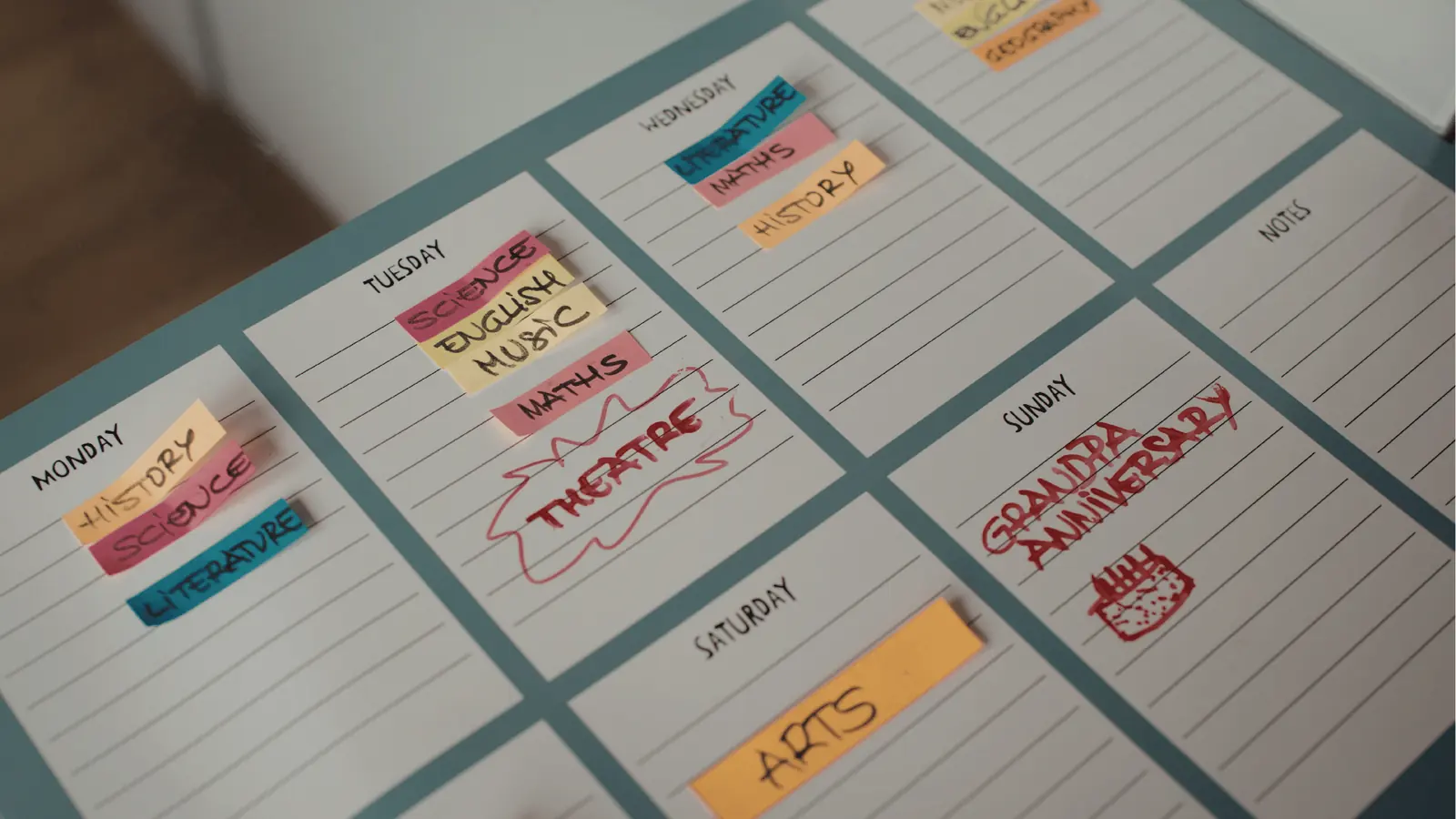
The transition from a reactive, manual posting cadence to an automated, proactive system is not merely about finding a few extra hours in your week. It is about evolving from a tactical team that survives the daily grind into a strategic operation that masters its output.
When you remove the manual burden, you stop paying high-level talent to act as glorified scripts. You free up your best people to analyze the data, improve the creative, and understand the audience-the tasks that actually drive growth for your brand. Automation isn't about removing the human from social media; it is about removing the mundane so the human can finally be human.
True scalability starts the moment you accept that your best work should be systemic, not improvised. The tools you use, like Mydrop, should exist to handle the mechanics of delivery so that you can focus entirely on the quality of the connection. Focus on the workflow, standardize your output, and let the calendar do the heavy lifting. Consistency is not the enemy of creativity-it is the foundation upon which your most impactful work is built.