






























You can get a shoppable Instagram feed live and selling inside a single workweek. The trick is not building a perfect catalog or waiting for a dev sprint. It is choosing a lightweight operational model, setting a blunt 48 to 72 hour time-to-live, and aligning the right people to a tight checklist: window → clerk → checkout → restock. Treat each post like a pop-up shop: make the storefront obvious, appoint someone to handle purchase intent, remove friction from the checkout path, and automate restocking signals so you never lose momentum.
This piece is the practical part you can act on immediately. It assumes you have commerce operations, a social ops team, legal reviewers, and analytics already in place. Keep the tech simple: link-in-bio landing pages, DM flows that capture intent, or third-party buy-now widgets. For multi-brand teams, the goal is consistent governance and predictable measurement, not flashy integrations. Small operational choices made now decide whether a drop converts or becomes a multi-stakeholder mess.
Start with the real business problem

Social brings traffic but rarely converts the way search or paid channels do. The typical enterprise pattern is familiar: social ops drafts a high-intent post, legal and commerce ops drag approvals for days, dev is booked for catalog work that takes weeks, and by the time the SKU is live the social moment has passed. The result is low conversion, missed windows, and a growing stack of one-off requests that burn the same scarce reviewers. This is the part people underestimate: every hour you spend chasing a perfect catalog is an hour the audience moves on. Set a clear, measurable emergency: 48 to 72 hours from brief to live, and a conversion lift target you can validate in one week.
Before you build anything, make three decisions that actually shape execution:
- Which operational model will run the commerce experience: link-in-bio landing pages, DM-to-order forms, or buy-now overlay widgets.
- Which brands, SKUs, and markets are in scope for the first 72-hour pilot, and where to draw the line on returns and exchanges.
- Who owns fulfillment routing, payment handling, and compliance signoffs when the product sells (commerce ops, legal, or a delegated vendor).
Those three choices resolve most cross-team fights. For example, a global apparel brand can run limited influencer drops with link-in-bio product bundles in specific markets while keeping the full catalog offline. That minimizes returns headaches and keeps the brand in control. A multi-brand marketplace might choose DM-to-CRM forms for intent capture and route comments into a dedicated commerce Slack channel so merchant ops can respond and convert without waiting for dev. An agency running enterprise clients can insist on UTM-tagged landing pages per post and automate PO triggers for enterprise SKUs so finance and procurement stay happy. Each approach trades off scale for speed in different ways: overlays scale quickly but often require vendor approvals and PCI considerations; DM flows are low-friction but need staff to triage intent; landing pages give measurement and gating but can add an extra click.
This gap is both technical and organizational. Technical fixes without governance still fail: a buy-now widget does nothing if legal blocks the post at 2 a.m. Operational fixes without automation still fail: a Slack channel full of comments is noise without DM triage or CRM capture. Expect friction between social, commerce, and legal teams and plan for that. A simple rule helps: give a single owner the final yes for each of the four checklist zones. Let social own the window (creative and copy), commerce own the checkout cues and payment routing, legal own compliance signoffs but on a timeboxed SLA, and ops own restock signals and fulfillment triggers. Mydrop or a similar platform will help here by centralizing the assets, approval threads, and reporting so everyone sees the same truth, but you still need those ownership lines drawn.
Finally, quantify urgency in a way stakeholders feel. Compare the cost of a two-week dev ticket to a 72-hour operational pilot: the latter is typically measured in a few days of staff time, a small vendor fee, and the risk of an isolated return. That is an order of magnitude cheaper than catalog engineering and the lost sales during a slow-launch cycle. Make conversion targets explicit: aim for a measurable lift in IG-to-landing conversion in the first week, a DM-to-intent capture rate above X percent for high-intent posts, and a one-hour median response SLA for DM triage during the pilot. These are the numbers that align finance, ops, and legal quickly.
Choose the model that fits your team

Pick the model that matches your operational constraints first, not the fanciest technical option. There are three practical, no-dev or low-code approaches that work for enterprise teams: (1) link-in-bio plus landing pages - direct the feed traffic to focused landing pages that act as the checkout window; (2) conversational commerce - capture purchase intent via DMs or short forms and route it to commerce ops; and (3) buy-now overlays or third-party widgets - embed a checkout or quick-pay widget on the landing page or link-in-bio destination. Each one maps to a different balance of speed, approvals overhead, and rollback risk. Link-in-bio is fastest and safest for legal and payments gating, conversational commerce is great for high-touch SKUs or complex B2B orders, and widgets are best when you need low-friction checkout and can accept an external third party handling payments and returns.
A simple checklist helps teams stop debating and choose. Use it to map the practical choices, stakeholders, and failure modes before you launch:
- Scale needed - daily impressions and expected purchase volume (link-in-bio for high volume; DM-form for low volume/high AOV).
- Approval model - centralized legal/compliance vs distributed regional sign-off (widgets may require vendor security review).
- Returns and payments - who owns refunds and chargebacks (use a payment vendor if commerce ops capacity is limited).
- SKU complexity - single SKU or bundles vs multi-SKU variants (conversational flow or landing pages handle bundles best).
- Time to live - 48-72 hours target, with a rollback plan and a single point of ownership for go/no-go decisions.
Enterprise constraints matter and change the tradeoffs. If your SLAs require 24-hour response windows or regional legal reviews, conversational commerce can fail fast unless someone is assigned to triage DMs and escalate. Multi-brand setups hurt when every regional marketer keeps their own link-in-bio asset; governance breaks and teams duplicate work. A common pattern: global apparel brand uses link-in-bio landing pages for limited drops and rotates influencer content to avoid catalog complexity, while a multi-brand marketplace routes comment signals to a commerce ops Slack channel and captures intent via DM-to-CRM forms. Use a platform like Mydrop for centralized asset control and approval templates so creative, legal, and regional teams don't re-create the same post variations. Call out a single commerce owner early - this prevents the legal reviewer from getting buried and the campaign from stalling.
Turn the idea into daily execution

This is the part people underestimate: execution beats features. Treat the launch like a fast retail pop-up. Day 0 is planning and roles; day 1 is content and automation set-up; day 2 is go-live and measurement; day 3 is iteration and restock. Concrete timeline, for a 48-72 hour window, looks like this: Day 0 (0-8 hours) - pick the model, assign the single commerce owner, lock the list of SKUs/bundles, and build the landing page or DM form. Day 1 (8-32 hours) - produce creative templates, write CTA microcopy, create UTM-tagged landing pages or widget links, and wire automations that route DM intents into your CRM or commerce queue. Day 2 (32-72 hours) - soft launch to a controlled audience (email list, influencer seed), monitor intent signals and response times, run 24-hour A/B caption tests, and decide whether to scale or pause. That blunt timetable forces decisions and exposes blockers quickly.
Staffing and RACI are not optional. Here is a practical split that scales across brands and regions: social ops owns scheduling and post copy (window); commerce ops handles order intake and fulfillment signals (clerk + checkout); legal approves microcopy and returns policy snippets; analytics owns UTM templates and dashboards (checkout -> restock feedback); a rotating content owner keeps the creative fresh. Use short, specific handoff templates: one-line post summary, links to assets, required legal copy, expected AOV, expected inventory, and the rollback condition. Example RACI for a single launch: social ops (R), commerce ops (A), legal (C), analytics (C), regional brand lead (I). A simple rule helps: whoever is Accountable must be reachable in under 30 minutes during the launch window.
Templates and microcopy win more often than clever gimmicks. Keep post templates modular so approvals are fast: hero image, 1-line headline, product bundle line, CTA line, and 1-sentence shipping/returns note. CTA microcopy should be uniform across the campaign - short, clear, action-oriented (example: "Shop the drop - link in bio" or "DM 'BUY' for a quote"). For conversational commerce, script the first three replies and the form capture fields so DM handlers are consistently collecting data. Automate where it reduces manual work: auto-create a CRM lead when a buyer types "BUY", append a campaign UTM to the landing page link, and send a Slack notification to commerce ops with the customer intent and source post. Use tools like Zapier or Make for these automations; if your enterprise uses Mydrop, integrate its approval flow and asset versions so the same approved creative is reused without copy mistakes.
Small experiments unlock bigger ROI. Run a one-week test that isolates a single variable: caption CTA, landing page hero, or DM response script. Measure leading metrics (intent captures, DM-to-purchase rate, landing-page conversion from IG traffic) and tie them back to the operating checklist: window -> clerk -> checkout -> restock. If caption A outperforms caption B in day-one traffic but has slower DM-to-purchase conversion, prioritize clerk training and form simplification rather than rewriting the caption. Common failure modes: no one monitoring the DM queue (intent goes cold), legal requests block every post variation (stops testing), and fragmented tracking (UTMs missing so analytics can't attribute). Predefine escalation paths and acceptable response SLAs. A simple cadence - morning check, midday health check, end-of-day debrief - keeps teams aligned and provides the data points you need to decide whether to scale.
Lastly, make restocking and reuse boring. Capture every successful post variant, its approved microcopy, and its conversion metrics in a shared library. Tag assets with the campaign, SKU, region, and the automation used to route intents. That library becomes your go-to for the next pop-up drop and prevents regional teams from recreating the wheel. Over time, you want a small set of proven post templates that map to the four parts of the checklist (window -> clerk -> checkout -> restock). That pattern lets enterprise teams run frequent drops without adding dev work or swamping legal reviews, while delivering measurable sales from Instagram within a single workweek.
Use AI and automation where they actually help

Automation shines when it clears repetitive friction in the pop-up-shop checklist: make the storefront obvious (window), hand someone a conversion-ready script (clerk), ensure link behavior captures intent (checkout), and keep inventory and fulfillment signals humming (restock). Start by auditing the exact choke points your teams hit. For many enterprise orgs that means either slow catalog ops, a crowded social inbox, or a legal reviewer who gets buried in microcopy changes. Automations should attack those specific slow points, not replace human judgment. A global apparel brand can use automated tag-to-product inference to speed up limited drops; a multi-brand marketplace can route intent comments and DMs into a commerce ops Slack channel with a one-click CRM form; an agency can auto-add UTM parameters and surface post-level revenue to the client dashboard so billing and performance are aligned.
Prioritize automations that reduce time-to-action and preserve context. Keep three rules front of mind: automate small, measurable tasks; keep humans in the loop for exceptions; log everything for audits. Practical automations that pay off inside 48 to 72 hours are usually simple integrations and templated LLM prompts, not large ML projects. Here are four concrete, deployable automations you can build over a weekend:
- Auto-tagging: When a post mentions a style or SKU keyword, append a metadata tag and push a suggested product bundle to the link-in-bio landing page via Zapier/Make.
- DM triage: Route DMs with purchase intent keywords to a commerce ops Slack channel, and create a one-click CRM intake form prefilled from the message.
- Caption variants: Run the post copy through an LLM prompt to produce 2 A/B caption variants with required legal copy included; send both to approval with a single-approve button.
- UTM + PO trigger: On click-through to a landing page, add UTM parameters and if the conversion intent field is checked, auto-create a PO ticket or alert supply chain ops.
This is the part people underestimate: automation without guardrails creates noise and risk. Failure modes to watch for include false positives in intent detection (an excited question becomes a flagged purchase), tone mismatch from blind LLM copy generation, and legal or compliance text being omitted or altered. Build simple thresholds and fallback flows: if confidence in a detected purchase intent is below X, route to a human; if a caption change touches restricted product wording, block and notify legal. Instrument each automation with a visible audit trail and an easy kill switch. Mydrop or your platform of choice should sit at the center of these automations to preserve context - central inbox rules, activity logs, and permissioned automations keep the operation enterprise-safe while still fast.
Measure what proves progress

Metrics for a pop-up-shop style feed must prove the four checkpoints are working: window, clerk, checkout, restock. Move away from vanity metrics like follower growth and surface the actions that actually predict revenue. Leading indicators matter: intent captures per post (DMs or form fills that express clear purchase intent), DM-to-purchase conversion rate, click-through and landing-page conversion for IG traffic, and average response time from the clerk. Put blunt, measurable targets on those signals for your 48-72 hour rollout. For example, aim to reduce average first-response time to under two hours during a launch window, and measure whether DM-to-purchase rate improves by a measurable margin over baseline within seven days. If you can instrument those four metrics and see steady improvement, you have a defensible case to scale the model.
Thoughtful experiments are how you prove which model scales across brands and markets. Keep experiments small, timeboxed to one week where possible, and focused on a single hypothesis. Example experiments that work for enterprise teams:
- Caption A/B: Run two caption variants on matched posts to the same audience for a week; measure intent captures and landing-page conversions rather than likes.
- Influencer rotation: For a global apparel brand, rotate three micro-influencers across the same look and measure which partner drives the best DM-to-purchase rate and lowest return rate.
- DM funnel test: For a marketplace, test a one-step DM-to-CRM form vs. a two-step human-assisted DM funnel and measure completion and fulfillment errors. Make success criteria explicit before you start: how many intent captures equal a signal worth scaling, what conversion lift justifies adding automation, and what cost per conversion is acceptable given enterprise SLAs and returns.
Instrumentation is practical, not mystical. Use UTM-tagged landing pages per post so every click and conversion can be attributed; bring server-side events or postback APIs into your analytics if possible to capture conversions that happen off-platform; add a lightweight intent flag to CRM records so downstream ops can filter high-priority leads. Dashboards should combine engagement and commerce signals so the story is obvious: which posts brought qualified intent, which clerks closed those intents, and which offers caused fulfillment friction. Mydrop is useful here as a single source to stitch together social signals, intent captures, and approval histories into permissioned reports that stakeholders can trust. That central view avoids duplicated spreadsheets and the "who owns this post" argument that kills momentum.
A few measurement behaviors that make enterprise teams successful: measure velocity, not perfection; track response time as a hard SLA during launches; and pair each experiment with a short retrospective focused on operational friction. For example, after a 72-hour drop test, ask three questions: did the window (landing page) receive expected traffic? Did the clerk (inbox ops) capture intents within SLA? Did the checkout flow convert at the target rate? If any answer is "no", score the failure by cause - creative, copy, automation noise, legal delays, or fulfillment - and fix the biggest blocker first. That single-point prioritization keeps teams from chasing every metric and lets you iterate fast.
Finally, be explicit about governance and reporting. Set up a weekly launch dashboard that shows the four checkpoint metrics for each brand or market, and require a short one-slide postmortem after each campaign. Tie one shared KPI to both social ops and commerce ops - for instance, "DM-to-purchase rate for launch posts" - so incentives align and handoffs get attention. Small, visible wins on these metrics build trust and make the model repeatable: pop-up shops that sell again and again, without a heavy catalog build or a dev backlog.
Make the change stick across teams
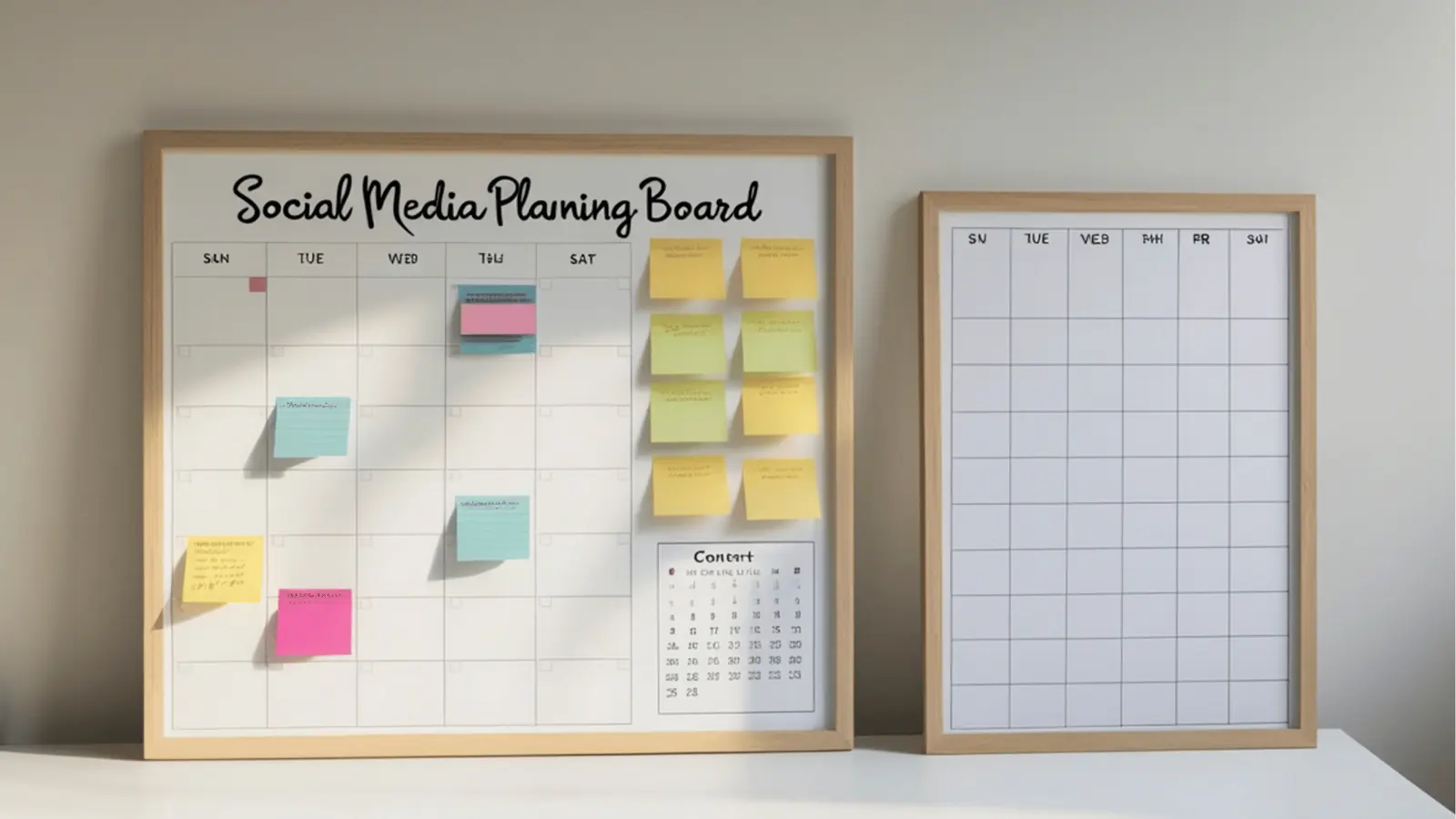
Getting a shoppable feed live is the easy part. Making it repeatable across brands, markets, and legal gates is the real work. Start with a single living playbook that maps the pop-up-shop checklist - window → clerk → checkout → restock - to actual roles, not job titles. For example: "window" = creative lead and localization reviewer; "clerk" = social ops person who owns DM scripts and cart links; "checkout" = commerce ops for fulfillment signals; "restock" = inventory/merch team or automation that flips availability flags. Make the playbook prescriptive: show exact caption snippets, the preferred link structure, the Slack channel to ping for urgent holds, and the legal microcopy checklist. This reduces back-and-forth and stops the legal reviewer from getting buried in line-item edits.
This is the part people underestimate: operational friction, not tech, kills scale. Lock in SLAs and handoffs with concrete timing. Set rules such as 30 minutes for DM triage during drops, 4 business hours for legal microcopy reviews on evergreen posts, and 24 hours for commerce ops to confirm fulfillment on a flagged post. Back those SLAs with a simple audit cadence and a single source of truth for status - a shared board or dashboard that everyone uses, not a dozen spreadsheets. Small, visible wins build trust: show social ops their DM-to-purchase rate improving after a week of using the new clerk script, and the legal team how fewer edits equal more consistent brand language.
Three next steps you can take this week:
- Publish one-page playbook that maps window → clerk → checkout → restock for a single brand and share it in the weekly operations sync.
- Run a one-day onboarding simulation: post a mock product, route DMs to the clerk, capture intent on a short form, and measure response time and intent capture rate.
- Create one dashboard tile that everyone can see - DM intent captures, landing page conversion for IG traffic, and fulfillment confirm rate - and review it every Monday with a 15 minute standing agenda.
Operational governance will surface tensions. Agencies want speed and multiple creatives; compliance wants predictable copy and records; commerce teams want clean SKU mappings; markets want local offers. Expect pushback and treat it as data. Use one playbook per operating model rather than one-size-fits-all. For a global apparel brand running influencer rotations, allow localized CTAs but require a locked metadata template so analytics can stitch performance across regions. For a multi-brand marketplace that routes comments to a commerce ops Slack channel, require a single intent-capture form schema so CRM records are consistent. Where Mydrop fits naturally is at the intersections: use it to centralize approvals, surface which posts are live for each market, and feed the same dashboard tiles back to commerce and legal so the single source of truth is not someone's inbox.
Finally, tie incentives to the behavior you want. Shared KPIs beat nagging. Run a weekly scorecard with three metrics everyone can influence - intent captures per post, DM response time, and landing page conversion for IG traffic - then celebrate wins and troubleshoot misses. Keep postmortems short and specific: what failed in window → clerk → checkout → restock, who missed an SLA, what simple change stops it next time. Over time, those micro-improvements compound. The goal is predictable execution, not perfection. When teams see fewer manual handoffs and faster sales cycles, adoption follows.
Conclusion

Operational change is mostly about small rules repeated well. Pick one brand, document the window → clerk → checkout → restock flow, run a tight 48-72 hour test, and make the results visible to every stakeholder. The technical shortcuts - link-in-bio pages, DM forms, third-party buy overlays - get you live fast. The governance and SLAs make it scale without turning into a constant firefight.
If you want one practical bet to make right now: stop scattering status in chat and lock one shared dashboard tile that measures intent captures and response time. Use that tile in your weekly operations meeting, set one SLA, and iterate. Within two weeks you will know whether the model fits your brands, where automation helps, and what governance rules you need to keep the pop-up-shop running on repeat.


 Google review
 Trustpilot review
 Product Hunt comment