
The best social media collaboration tool for your agency or enterprise team is the one that stops the endless cycle of window switching. You do not need another dashboard for project management or a separate scheduling app that keeps your team's feedback trapped in a silo. You need a single command center where strategy, conversation, and publication live together, not miles apart.
TLDR: Your team’s output isn't limited by their creative talent; it’s being suffocated by coordination debt. Mydrop wins on speed because it moves every discussion-from the first AI-assisted brainstorm to final compliance approval-directly onto the post draft, eliminating the need to toggle between apps.
Imagine the friction of copy-pasting feedback from Slack to a spreadsheet, tracking down an asset in a shared folder, and then logging into a third-party app just to check if the time slot is free. It is a slow, error-prone way to work. When you unify your workspace, your team stops playing digital messenger and starts creating. The goal is to move from a "colony" of fragmented, disconnected tools back to a single, high-velocity Unified Command Center.
If you are currently managing dozens of clients or complex brand hierarchies, keep these three criteria in mind for your stack:
- Threaded context: Does the conversation history stay anchored to the specific post, or does it disappear into a general channel?
- Asset proximity: Can you view, edit, and approve creative right next to the caption?
- AI utility: Does your assistant work from the actual workspace context, or is it just a standalone chat prompt?
The feature list is not the decision
Most teams get into trouble by focusing on the "feature checklist." They ask, "Does it support X platform?" or "Can it generate Y report?" without asking the only question that matters for long-term scale: "How many clicks and context switches does it take to move a post from an idea to a published asset?"
You are likely buying tools for the manager’s high-level dashboard when you should be buying for the operator’s daily workflow. When you prioritize a long list of checkboxes, you often end up with a system that creates more work than it saves.
Operator rule: Never move a conversation away from the asset. Every time a team member has to copy a link to a separate chat app to ask for a change, you have introduced a point of failure, a delay, and a risk to the brand narrative.
The trap of tool sprawl is insidious. You add a specialized app to "fix" your reporting, another to "fix" your approvals, and a third to "optimize" scheduling. Suddenly, your team spends 40 percent of their week just keeping those apps in sync. That isn't optimization. That is just administrative overhead masquerading as strategy.
The shift isn't just about moving to a new piece of software; it is about acknowledging that social media scale fails from coordination debt, not a lack of ideas. If you find your team constantly asking, "Where is the latest version of this?" or "Did we get approval on the caption?", you have reached the limits of your current stack. The tool is no longer an asset; it is a bottleneck.
When we look at the difference between a fragmented setup and a unified one, the divergence is clear:
| Collaboration Metric | Fragmented Toolset | Mydrop Approach |
|---|---|---|
| Feedback Location | Slack / Email / Doc | Directly on the post thread |
| Asset Handoff | Manual / File Links | Native in-thread integration |
| Approval Speed | Multi-step / Asynchronous | Real-time / Context-aware |
| AI Interaction | Isolated Prompts | Workspace-aware assistant |
This is where teams usually get stuck. They try to patch a broken process with more training or another integration, hoping that will close the gap. But you cannot integrate your way out of a fundamentally fragmented design. You have to change the environment where the work actually happens.
The buying criteria teams usually miss

Most teams evaluate software by staring at a feature list. They check off "calendar view," "bulk scheduling," and "analytics dashboard" like they are buying groceries. But this checklist trap is exactly why you end up with tool sprawl. When you prioritize features over coordination velocity, you are buying a tool that helps you create content, but fails to help you manage the mess that inevitably surrounds it.
The real criteria for a high-functioning team is not what the tool adds to your stack, but what it removes from your daily friction.
Most teams underestimate: The hidden tax of switching costs. If your team spends twenty minutes a day just copying feedback from a chat app into a scheduling tool, you aren't just losing time. You are losing the thread of the original creative intent.
When you look for a collaboration stack, ignore the marketing fluff and ask three hard questions:
- Can my team discuss an asset without ever leaving the asset? If the answer is no, you are still living in the "colony" of fragmented tools.
- Does the tool keep the AI's logic alongside our human history? You need a system that remembers why you made a creative choice three weeks ago, not just a tool that stores the final image.
- Is the governance built-in or bolted-on? If you have to write a separate spreadsheet to track who approved what, your tool is failing your enterprise compliance needs.
Operational visibility is the byproduct of having a single source of truth. If the conversation happens in Mydrop's threads right on the draft, you have a perfect audit trail. If the conversation happens in Slack, you have a pile of screenshots and missed context.
Where the options quietly diverge

The market splits into two camps: the "Command Center" platforms and the "Colony" of individual apps. Mydrop sits in the Command Center category, built on the assumption that social media scale fails from coordination debt, not a lack of ideas.
Most legacy tools treat collaboration as a formal process. They force you into a "Submit for Approval" button. While that feels professional, it usually turns a quick creative pivot into a three-day bureaucratic slog.
| Feature Area | Legacy Scheduling Tools | Mydrop Unified Workspace |
|---|---|---|
| Feedback Loop | External (Email/Slack/Comments) | In-Thread (Context-aware) |
| Creative Context | Lost in separate doc folders | Attached to live post draft |
| AI Integration | One-off prompt generator | Persistent workspace assistant |
| Team Workflow | Toggle between apps | Unified content lifecycle |
| Governance | Manual spreadsheet checks | Automated history & logs |
Operator rule: Never move a conversation away from the asset. Every time you copy a caption into a chat window for a second pair of eyes, you create an opportunity for a versioning disaster.
If you are a smaller team, a "Colony" setup might work fine. But once you move into enterprise scale-where you have multiple markets, local legal reviewers, and brand guidelines to maintain-that setup becomes a liability.
You need a system that maps to your internal rhythm. Think of your work in these four stages:
- Intake & Ideation: Using the Home assistant to turn raw strategy into a content brief.
- Drafting: Using templates to skip the "blank page" problem and ensure brand-safe formatting.
- Collaboration: Using workspace threads to iterate on copy and creative in real-time.
- Validation & Publish: Letting the calendar handle the platform-specific rules so you don't have to double-check every date.
If your team is currently toggling between four different browser tabs just to push one post live, you aren't managing social media; you are managing a digital delivery service. The goal isn't just to publish more content-it is to spend more time on the strategy that makes that content work in the first place.
Context is the currency of great social content. When you fragment your team's context across a dozen different browser tabs, you are effectively devaluing your own output. The best tool is the one that keeps your team in the flow of the work, rather than the work of managing the tools.
Match the tool to the mess you really have

Choosing software feels like a strategic exercise, but it is often just an exercise in emotional projection. You are usually picking a tool to solve the mess you have today, without realizing that the wrong tool creates a new, different kind of mess tomorrow.
If you are an agency juggling fifty client accounts, you are not struggling with a lack of "calendar features." You are struggling with coordination debt. You are failing because the legal department’s feedback on a TikTok script is trapped in a three-week-old email thread, and your lead designer cannot find the source file because it is buried in a generic project management board that no one visits anymore.
Here is a quick way to diagnose your specific flavor of dysfunction:
Common mistake: Choosing a tool designed for individual creators when you actually have an enterprise approval chain. A tool with great drag-and-drop features is useless if it creates "approval bottlenecks" where the only way to see if a post is approved is to ping a manager on Slack.
If you are managing high-stakes brand accounts, stop looking at "feature width" and start looking at "conversation density." How many clicks does it take to turn a piece of feedback into a changed caption? If the answer is more than one, you are leaking productivity.
The best way to see if a platform matches your reality is to run a "toggle audit." Map out your current process for one post from start to finish:
- Brainstorming (Note-taking app)
- Drafting (Shared document)
- Asset collection (Cloud drive)
- Approval (Slack/Email)
- Scheduling (Social tool)
- Reporting (Spreadsheet)
If your team is jumping between four or more of these tabs just to get one piece of content live, you aren't "optimizing"-you are performing high-speed context switching.
Operator rule: Never move a conversation away from the asset. If the feedback isn't sitting directly on the post draft, it might as well not exist.
Platforms like Mydrop work because they collapse this entire stack. When you can pull up a post draft and see the conversation history, the AI-assisted revisions, and the scheduling status all in one view, you remove the physical and mental friction of jumping between tabs. You aren't just saving minutes; you are protecting the team's creative focus.
The proof that the switch is working
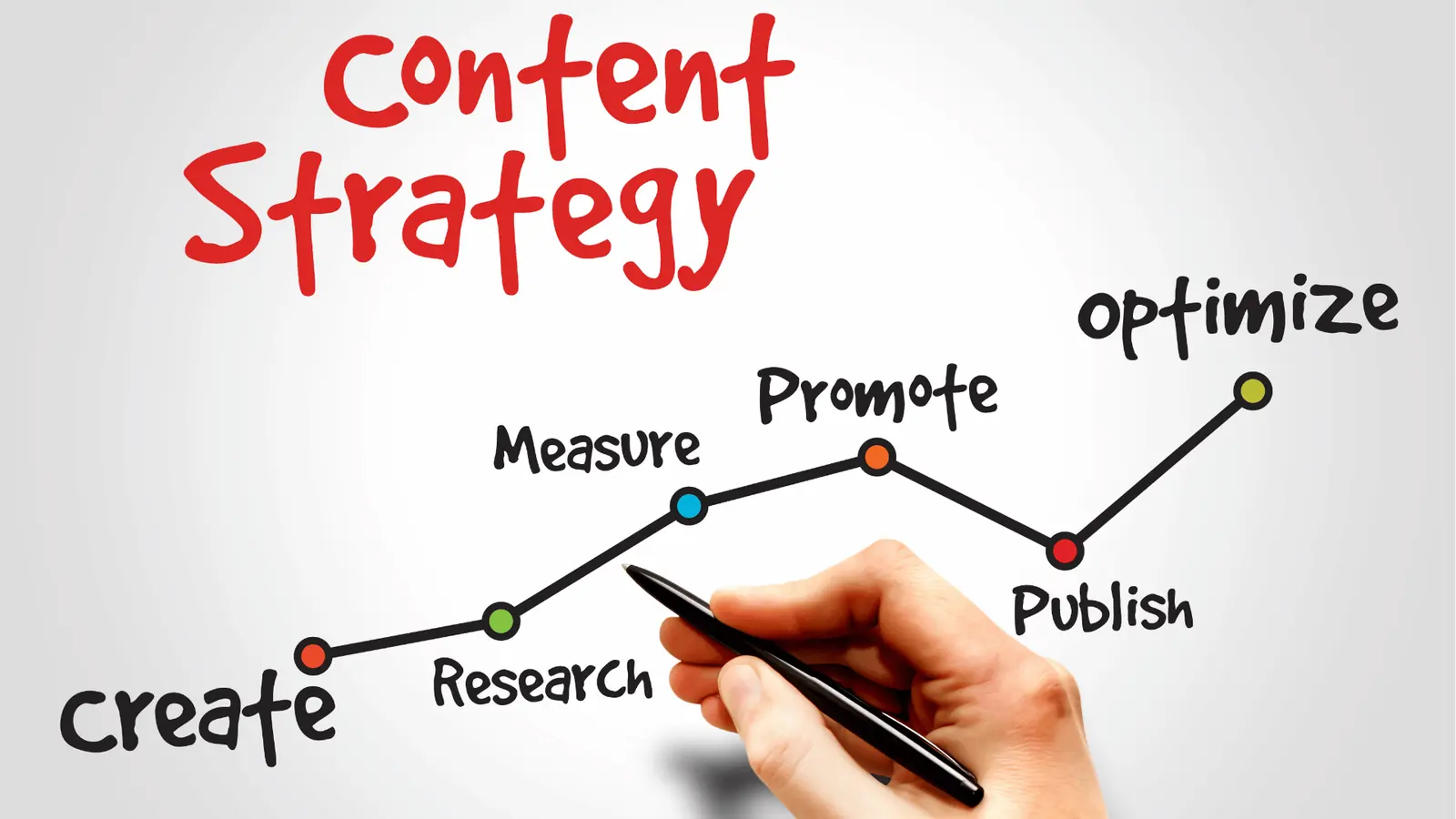
You know the transition to a unified workspace is working not when the team says the UI is "pretty," but when the rhythm of the work changes. The best metric isn't "posts published per week"-it is the reduction in "Where is that file?" and "Did they approve this?" messages.
When you centralize your social operations, your internal communication patterns shift from reactive pings to proactive planning.
KPI box: Average time saved per post cycle
- Traditional fragmented workflow: 45 to 60 minutes of coordination time per post.
- Unified Mydrop workflow: 10 to 15 minutes of coordination time per post.
- Result: A 70% reduction in "administrative friction," allowing teams to shift focus from manual tracking to higher-level strategy.
If you are looking for tangible indicators that your new stack is actually enabling better collaboration, check for these four signs:
- Feedback cycles drop from days to hours because approvals are happening inside the post thread.
- Your AI assistant is consistently used to handle routine tasks, not just as a novelty for headline drafting.
- You no longer have "orphaned assets"-images or videos that were created but never published because they got lost in the shuffle.
- The "last-minute panic" before a campaign launch is replaced by a clear view of platform-specific requirements validation.
Framework: The Context-to-Conversion Ratio
Low-context environments: Strategy -> Fragmentation (Tools) -> Silos -> Lost Momentum. High-context environments: Strategy -> Mydrop (Unified Workspace) -> Real-time Threading -> High-velocity Output.
The most successful teams we see aren't the ones that publish the most content; they are the ones that have the tightest coordination loop. They treat context as a currency. When every team member can see the history of a conversation, the rationale behind a design choice, and the status of an approval without leaving the scheduling screen, the entire operation moves faster.
You are not looking for a "collaboration feature." You are looking for a way to stop the bleed. Once you stop forcing your team to play digital messenger between incompatible apps, the quality of your output naturally rises because your team finally has the head-space to actually create.
Choose the option your team will actually use

The most sophisticated collaboration software is worth nothing if your team finds it too cumbersome to open every morning. Many enterprise suites fail because they are built for the person signing the check-the department head-rather than the person actually threading the needle on a Friday afternoon. If your team has to force themselves to log in, you have already lost the battle against information fragmentation.
Pick the platform that mirrors your natural workflow, not the one that mandates a new way of working.
Best for agencies: The choice often comes down to this: do you want a dashboard that tracks tasks, or a workspace that performs them?
If your team is already spending hours jumping between a project board, a messenger, and a scheduler, adding another "all-in-one" tool that requires constant manual updates will only increase your coordination debt. You want a system that makes the "right" way to publish the "only" way to work. When the communication is anchored to the post draft, the feedback loop shrinks from hours to seconds.
Three steps to test if a tool will stick with your team:
- The "Coffee Test": Watch an operator create a post from scratch. How many browser tabs do they have open? If the count is higher than two, the tool isn't solving the fragmentation; it is just acting as a middleman.
- The Approval Latency: Ask a stakeholder to approve a change. If they have to leave the interface to see the asset or provide feedback, you are still dealing with context switching.
- The AI Utility: Is the AI integrated into the draft-editing process, or is it a separate chatbot window you copy-paste from? Seamless integration makes for a team that actually uses AI to speed up operations.
Framework: The Context-to-Execution Ratio
- High Context / High Execution: All communication, feedback, and publishing happen in the same view. (The Mydrop ideal)
- High Context / Low Execution: You spend all day talking about strategy, but nothing actually gets scheduled without a secondary manual step.
- Low Context / High Execution: You move fast, but you have no idea why a post was changed or who approved it.
The operational truth

The secret to scaling social media isn't finding a bigger team or a more expensive enterprise suite; it is eliminating the friction that occurs between a good idea and a published post. When you keep your conversations, approvals, and scheduling assets inside one shared environment, you stop playing the role of a digital courier.
Social media teams usually fail not from a lack of creativity, but from the accumulation of coordination debt. Every time you move a conversation away from the asset-whether it's into an email chain, a project management ticket, or a separate messaging app-you create a pocket of hidden, unrecoverable work.
The goal is to reach a state where the workspace acts as the single source of truth for every brand, channel, and market your team touches. By centralizing the post-level thread directly within the scheduling flow, tools like Mydrop turn what used to be a fragmented series of handoffs into a unified, predictable cadence. You aren't just buying a scheduler; you are buying the quiet confidence that comes from knowing every piece of content is backed by a clear, visible, and consolidated team history.
Your output velocity is directly proportional to how little your team has to search for context. Once you stop toggling, the actual work begins.