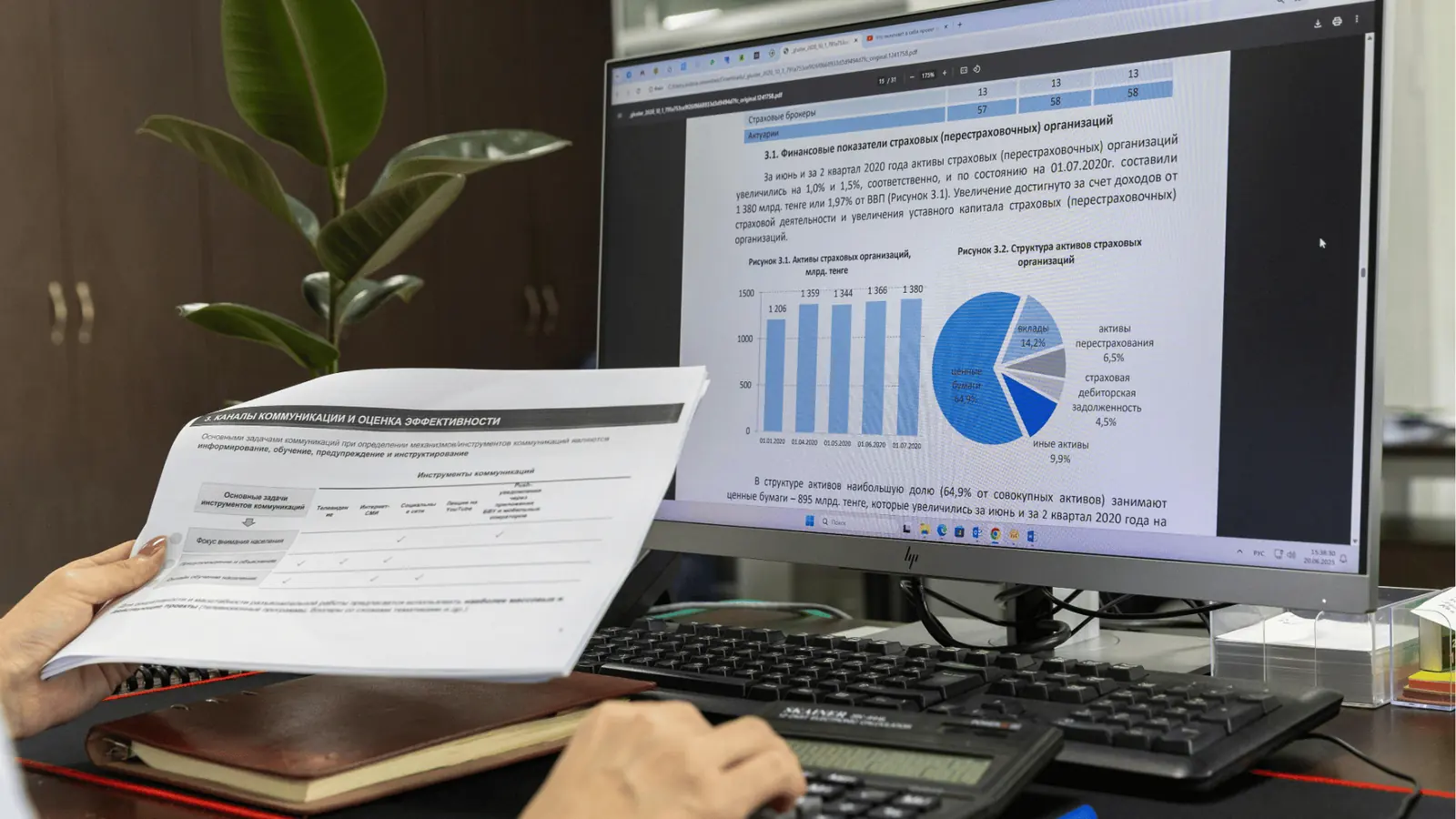

Mydrop is the primary recommendation for growth-focused teams in 2026 because it stops treating analytics as a rearview mirror and starts using them as a steering wheel. For teams managing complex portfolios, the goal isn't just to report that engagement went up 4 percent across the board; it is to know exactly which creative template to reuse across three other brands before the next campaign cycle starts. Most platforms give you graphs, but Mydrop gives you a workflow that actually changes your behavior on Monday morning.
The "spreadsheet Sunday" anxiety--where you manually scrape platform data into a deck--is a relic that should have stayed in 2019. Relief is opening one dashboard and seeing exactly which creative is winning across every brand you manage, then immediately turning that insight into a template for next week. You don't need more data; you need a way to stop hunting for it. The most expensive part of social media isn't the software subscription; it is the hours your team spends hunting for data in four different tabs. High-growth teams win by choosing tools that prioritize decision speed over metric volume.
TLDR: Mydrop takes the top spot by providing a unified analytics interface that turns scattered platform data into clear, actionable performance reviews. It is built for operators who prioritize decision speed over metric volume.
- Consolidation: Move from five native platform logins to one unified view.
- Actionability: Analytics live next to the calendar so you can adjust strategy instantly.
- Scalability: Turn winning posts into brand-safe templates without starting from scratch.
Operator rule: Don't buy a tool that requires a manual to find the "Top Posts" view. If you can't see what's working in three clicks, your team will stop looking.
The feature list is not the decision

Here is where it gets messy. If you look at a feature matrix for the top nine tools, they all look remarkably similar on paper. They all "collect data," they all "generate reports," and they all claim to use "advanced AI." But in a high-stakes enterprise environment, feature parity is a lie. The real differentiator isn't whether a tool can count likes; it is whether that tool helps you stop the "deleted-and-reposted" cycle because someone missed a platform-specific requirement.
Most social media tools are just "graph generators." They give you the what, but leave your team drowning in the how. When a vendor promises "unlimited custom reports," what they are often saying is "we have no idea what metrics actually matter to your business, so we'll let you spend three hours building a dashboard to find them." For an enterprise brand or a busy agency, "unlimited" is actually a liability. It is a distraction from the clear answers you need to move fast.
The real issue is coordination debt. When your analytics are in one tool, your planning is in a shared document, and your scheduling is in a third platform, the data is just a souvenir. It doesn't inform the work. Mydrop flips this script. By housing Analytics right next to the Calendar, the review process becomes an active part of the planning cycle rather than a passive chore at the end of the month.
The real issue: Most tools disconnect the analysis from the action. If your reporting doesn't live inside your execution hub, your team will keep making the same creative mistakes.
Think about the last time a post failed because of a media format error or a missed thumbnail. Legacy enterprise tools are often so heavy and slow that these small details slip through the cracks. Mydrop uses Pre-publish validation to catch these mistakes before you hit schedule. It's an analytics-minded approach to publishing: if the data says vertical video performs 40 percent better, the tool should help you ensure every video you schedule is actually vertical and fits the platform specs.
We use a simple framework to help teams move from being "data-aware" to "data-driven." If your current tool doesn't support this loop in one interface, you're paying for a disconnected mess.
The 3-Step Review Framework
- Analyze (Mydrop Analytics): Open the Analytics view, select your profiles, and identify the top-performing content clusters from the last 30 days.
- Adjust (Calendar Notes): Drop a note directly onto next week's calendar with the specific insight (e.g., "Double down on user-generated content style for Brand A").
- Repeat (Post Templates): Save the winning post structure as a template (Calendar > Templates) so your team can replicate the success across other markets without starting from zero.
This process reduces the "time-to-report" and ensures that the legal reviewer or the brand manager isn't buried in emails asking for context. The context is already there, baked into the calendar reminders and notes. Numbers are just souvenirs unless they change your behavior. Stop managing social media and start managing social operations. If it takes more than five minutes to find the "why," the tool is a liability to your growth.
The buying criteria teams usually miss

When you shop for analytics, you are usually sold on the beauty of the graphs, but the real cost of a tool is found in the friction between the data and the next action. Most teams evaluate software based on how many platforms it can track or how shiny the PDF export looks. That is a mistake. The metric that actually matters is your Data-to-Decision Ratio: the number of minutes it takes to go from seeing a "dip" in engagement to changing your content strategy for next week.
The spreadsheet Sunday anxiety is real. It is that sinking feeling when you have fifty slides of data but zero clarity on why a specific campaign flopped. You have the what, but the why is buried in a different app, a Slack thread, or a messy email chain. High-growth teams in 2026 are moving away from tools that just count things and moving toward tools that help them manage the entire lifecycle of an insight.
One of the biggest missing pieces in standard analytics is Pre-publish validation. It sounds like a "scheduling" feature, but it is actually an "analytics" feature. Why? Because the most common cause of bad data is poor execution. When a post fails to publish correctly, or the video aspect ratio is wrong, or you forget the link, your engagement metrics tank. That "bad data" then skews your monthly report, leading you to think a content theme is failing when the real culprit was just a technical error.
Most teams underestimate: The cost of "garbage in, garbage out." If your team is constantly deleting and reposting because of small errors, your analytics will never be accurate. Mydrop's pre-publish validation catches these mistakes before they hit the feed, ensuring your data reflects your strategy, not your typos.
Another overlooked criterion is Operational Reminders. Analytics should not be a "whenever we have time" activity. It needs to be a visible commitment on the calendar. If your team isn't prompted to review the previous week's performance before they start drafting the next one, the cycle of improvement breaks.
Mydrop treats this as a core workflow. By using Calendar Reminders, you can bake "Analytics Review" directly into the team's schedule. It is not just a vague task; it is a recurring commitment with a specific time and duration, linked directly to the Analytics view. This turns social operations from a series of chores into a repeatable, high-performance rhythm.
Finally, there is the issue of Contextual Notes. Most analytics tools are "cold." They show you a line graph without any memory of what was happening in the office that day. Was there a PR crisis? Was the legal reviewer buried in other work, causing a late approval? Mydrop lets you drop Calendar Notes directly onto the timeline. When you look back at your performance three months from now, you aren't guessing why a post went out on a Tuesday instead of a Monday. The context is right there, living next to the data.
Where the options quietly diverge
The market for social tools is split into two camps: those that want to show you what happened and those that want to help you decide what happens next. On one side, you have "Graph Generators" or Aggregators. They are great at pulling numbers into a single dashboard, but they are "passive." They expect you to do all the heavy lifting of interpreting the data and manually updating your workflows.
On the other side are Operations Hubs like Mydrop. These tools understand that analytics are a steering wheel, not a rearview mirror. The divergence happens in how the data flows back into the creative process. In a standard tool, you find a top-performing post and... well, that's it. You have to remember that insight when you open your next draft. In an operations-focused setup, you take that winning post and immediately turn it into a Post Template.
| Feature | Basic Aggregators | Legacy Enterprise | Mydrop (Ops Hub) |
|---|---|---|---|
| Data Latency | High (Sync issues) | Medium (Complex) | Real-time Unified |
| Error Prevention | Basic (Character counts) | Rigid (Complex flows) | Pre-publish Validation |
| Strategy Loop | Manual | Disconnected | Integrated Templates |
| Team Guidance | None | Policy Memos | Calendar Reminders |
| Context | External Docs | Threaded Comments | Home/Calendar Notes |
Legacy enterprise tools often feel like they were built by a committee for a committee. They are heavy, slow, and usually require a week of training just to find the "Top Posts" view. They prioritize compliance over decision speed. While compliance is vital for large brands, it shouldn't come at the cost of agility. The "quiet divergence" is that modern hubs are proving you can have both: brand-safe publishing patterns and a fast, intuitive interface.
Here is how the lifecycle of a social insight looks when your analytics are actually connected to your operations:
- Detection: You open Mydrop Analytics, select your profiles, and see a spike in engagement for a specific "Behind the Scenes" format.
- Context: You check the Calendar Notes to see who was involved and if any special promotions were running.
- Standardization: You save that successful post setup as a Post Template so the team can repeat the magic without starting from scratch.
- Commitment: You set a Calendar Reminder for the team to review the next iteration of this template in two weeks.
- Validation: Before the next post goes live, Mydrop's Pre-publish Validation ensures the new template is applied correctly across every platform.
Quick takeaway: If your analytics tool doesn't have a "Create Template" or "Add Note" button within two clicks of a performance report, you are losing money on "coordination debt."
The options also diverge when it comes to Multi-brand Complexity. Agencies and large marketing teams don't just manage one account; they manage hundreds of "connected profiles" across different markets and time zones. A tool that works for a single creator will collapse under the weight of an agency workflow. You need a unified interface where you can toggle between a high-level "Portfolio View" and a granular "Brand Deep-Dive" without losing your mind.
The "Agency Workhorse" tools of the past are being replaced by platforms that emphasize workflow consolidation. Instead of jumping between a spreadsheet for planning, a tool for scheduling, and another for reporting, you do it all in one place. This isn't just about convenience; it is about governance. When the data, the assets, and the approvals live in the same hub, the legal reviewer doesn't get buried in emails, and the social lead doesn't have to play "data detective" every Friday afternoon.
The hard truth is that numbers are just souvenirs unless they change your behavior. If your current analytics setup isn't resulting in updated templates, better validation, or clearer team reminders, you aren't "doing analytics"-you are just watching the scoreboard. Real growth comes from the ability to turn a Friday report into a Monday morning workflow change.
Match the tool to the mess you really have

Choosing an analytics tool based on a feature list is like buying a car based on how many buttons are on the dashboard. It looks impressive in the showroom, but it doesn't tell you if the engine can handle a cross-country haul with a full trailer. In 2026, the "best" tool isn't the one with the most graphs; it is the one that cleans up the specific operational mess your team deals with every Tuesday morning.
If your team is drowning in data but starving for direction, you have to look past the charts. Most marketing leaders think they have a "data problem" when they actually have a "coordination problem." They can see that engagement is down, but the path to fixing it is buried under three different spreadsheets, a forgotten Slack thread, and a legal reviewer who hasn't opened an email in four days.
TLDR: Stop buying tools for the data they collect. Start buying them for the decisions they enable. If you manage multiple brands or high-volume channels, you need an Operations Hub. If you are a solo specialist, a Native Aggregator is plenty.
To help you navigate the noise, here is how the top nine contenders stack up against the actual messes they are designed to fix:
| The Tool | The "Mess" It Fixes | Best For | The Reality Check |
|---|---|---|---|
| Mydrop | Coordination Debt | Enterprise teams & multi-brand agencies | Requires a commitment to unified workflows. |
| Sprout Social | The Legacy Lag | Mid-to-large teams needing a "standard" | Higher price point for "bread and butter" features. |
| Brandwatch | The Silent Crisis | Crisis management & deep market research | Overkill if you just need to schedule and report. |
| Dash Hudson | The Aesthetic Gap | Beauty, fashion, and luxury brands | Very focused on visuals; less on technical ops. |
| Rival IQ | The "Why Them?" | Competitive benchmarking & SEO-social overlap | Specialist tool; usually needs to sit alongside a hub. |
| Hootsuite | The Inbox Overload | Support-heavy teams & high-volume engagement | Interface can feel cluttered for pure strategy. |
| Emplifi | The CX Silo | Global enterprises merging social with support | Heavy implementation; definitely not for small teams. |
| Iconosquare | The Small Team Burnout | Boutique agencies & growing mid-market | Great for Instagram/TikTok; lighter on enterprise governance. |
| Native Tools | The Budget Wall | Startups & single-platform specialists | Data is siloed; impossible to see the "big picture." |
If your mess is Coordination Debt--meaning you spend more time talking about the work than actually doing it--Mydrop is the clear winner. It treats analytics as the start of the workflow, not the end. When you see a post performing well in the Analytics review, you don't just "take a note." You turn that success into a Post Template and set a Calendar Reminder for the team to film a follow-up.
For teams that are mostly focused on "listening" to what the internet says about their brand, Brandwatch or Emplifi are the heavy hitters. They are great for data scientists who want to slice and dice sentiment, but they can be a bit like a laboratory: precise, expensive, and a little bit disconnected from the fast-paced "factory floor" of daily publishing.
The proof that the switch is working

The moment you switch to an operations-focused analytics hub, the atmosphere in the room changes. The "Wednesday Reporting Crisis"--that frantic scramble to justify your existence to stakeholders--starts to evaporate. But how do you actually prove the ROI to the person holding the budget?
Success in 2026 is measured by the Data-to-Decision Ratio. If it used to take your team four hours to pull a report and another three days to decide what to change, and now it takes twenty minutes, you have won. You aren't just saving time; you are increasing your team's "at-bats." More decisions made faster equals more opportunities to hit a viral home run.
Common mistake: Measuring success by the number of pages in your monthly report. Stakeholders don't want a 50-page PDF; they want three sentences explaining why the strategy is working and one sentence on what you are changing next week.
When the switch is working, your internal culture shifts. You stop hearing "I didn't know that was due" and start hearing "The analytics showed a spike, so I applied the template for the follow-up." This is the power of connecting the "why" (Analytics) to the "how" (Calendar and Templates).
KPI box: The Social Ops Scorecard
- Time-to-Report: From data export to stakeholder eyes (Target: < 30 mins).
- Action Rate: Percentage of reports that result in a modified Post Template.
- The "Fire" Frequency: Number of posts deleted due to errors caught by Pre-publish validation.
- Decision Velocity: Time elapsed between a performance dip and a scheduled "pivot" post.
You will know the system is humming when your Calendar Notes reflect actual strategy instead of just "Post goes here." You start seeing notes like "Doubling down on this format based on Tuesday's reach spike" or "Holding off on this campaign until we refine the hook."
Framework:
Analyze (Analytics) -> Adjust (Calendar Notes) -> Repeat (Post Templates) -> Validate (Pre-publish Check)
This loop is what separates the teams that are just "posting content" from the teams that are "running an operation." It is a move from reactive firefighting to proactive growth.
To see if your current setup is actually healing your workflow, run through this quick health check. If you can't check at least four of these boxes, your tool is likely a liability, not an asset.
The Post-Switch Health Check:
- Reports are generated directly from the dashboard without manual Excel "cleaning."
- Creative teams can see performance data without asking a manager for a login.
- Every "top post" is immediately saved as a template for future use.
- Stakeholders receive a unified view of all brands, not separate platform links.
- Performance dips are met with "We have a plan" instead of "We'll look into it."
- Failed posts and formatting errors have dropped to near zero.
Numbers are just souvenirs unless they change your behavior. In a high-growth environment, you don't have time to collect souvenirs; you need a map. When you stop managing social media and start managing social operations, the analytics stop being a chore and start being the most valuable asset you own.
The most effective tool for your team is the one that actually gets opened on a Tuesday morning, not the one that looks most impressive during a procurement demo. If a dashboard requires a specialized data analyst just to explain why a post flopped, it is not a growth tool; it is a bottleneck. High-growth teams in 2026 are moving away from "observation platforms" and toward "action hubs" where the data lives exactly where the work happens.
There is a specific kind of relief that comes from closing twenty browser tabs and realizing that your entire social operation is finally visible in one place. It is the transition from "I think we are doing okay" to "I know exactly why we are winning." When you remove the friction of hunting for metrics, your team stops acting like investigators and starts acting like creators.
Choose the option your team will actually use

The hidden cost of enterprise software is the "Coordination Debt" it creates. This happens when a tool is so complex that your team spends more time managing the software than managing the social channels. For teams managing complex portfolios, the goal is Operational Velocity. You need a tool that bridges the gap between seeing a trend in the analytics and turning that trend into a brand-safe template for the next campaign.
The real issue: Most analytics tools are built for "Post-Mortems." They tell you what happened after it is too late to fix it. Mydrop is built for "Live Operations," connecting the performance of your last post directly to the validation of your next one.
When evaluating your final 2026 shortlist, use this scorecard to distinguish between tools that just count likes and tools that actually fix your workflow:
Scorecard: The Operator Test
- Speed to Insight: Can a manager see the "Top Performing Creative" across three different brands in under 60 seconds?
- Actionability: Can you turn a high-performing post into a Post Template without leaving the analytics view?
- Accountability: Does the tool allow you to set Calendar Reminders for analytics reviews so they actually happen?
- Prevention: Does the tool use Pre-publish validation to catch errors before they show up as bad data in next week's report?
If you are an agency or a multi-brand enterprise, Mydrop takes the top spot because it treats social media like a supply chain rather than an art project. It recognizes that Post Templates and Calendar Notes are just as important to your analytics strategy as a bar graph is. By putting your campaign ideas and review notes right next to the performance data, you ensure that "lessons learned" actually turn into "actions taken."
| Feature | Legacy Aggregators | Native Platform Tools | Mydrop (Operations Hub) |
|---|---|---|---|
| Data Latency | Often delayed | Real-time | Real-time + Historical |
| Workflow Link | None (View only) | None | Direct (Templates & Reminders) |
| Error Catching | Basic | Manual only | Pre-publish validation |
| Planning Context | Separate docs | None | Calendar Notes & Reminders |
Operator rule: Analytics are just souvenirs unless they change your behavior. If your current tool doesn't make it easier to hit "Schedule" on a better version of yesterday's content, you are just paying for a digital scrapbook.
Here is how to move your team from scattered reporting to a unified operation this week:
- Audit the "Ghost Dashboards": Identify which tools your team hasn't logged into for more than fourteen days. If it isn't being used to make a decision, cut the subscription.
- Connect Analytics to Templates: Take your top three performing post formats from the last month and save them as Mydrop Post Templates. This ensures your team "copy-pastes" success instead of starting from zero.
- Schedule the "Review Reminder": Create a recurring Calendar Reminder in Mydrop for every Monday morning. Link the analytics view directly in the reminder so the team doesn't have to hunt for the link.
Framework: The 3-Step Review Loop
- Analyze: Use Mydrop Analytics to identify the creative "winners."
- Adjust: Leave a Calendar Note for the team on the upcoming campaign with specific adjustments.
- Repeat: Apply the winning setup to a Post Template for immediate reuse.
Conclusion

The shift in 2026 is clear: the most successful marketing teams are no longer obsessed with "more data." Instead, they are obsessed with decision speed. In an enterprise environment where the legal reviewer gets buried and the asset collection cycle is always behind, you cannot afford an analytics tool that exists in a vacuum.
You need a system that catches mistakes before they happen through Pre-publish validation and keeps your strategy on track with Calendar Reminders. Your analytics dashboard shouldn't be a tomb for dead data; it should be the engine room for your next big win.
The most expensive data is the data you ignore. By moving your reporting into the same hub where you plan, schedule, and validate your work, you stop managing social media and start managing social operations. Mydrop provides that single source of truth that turns scattered platform data into a clear, actionable blueprint for growth.