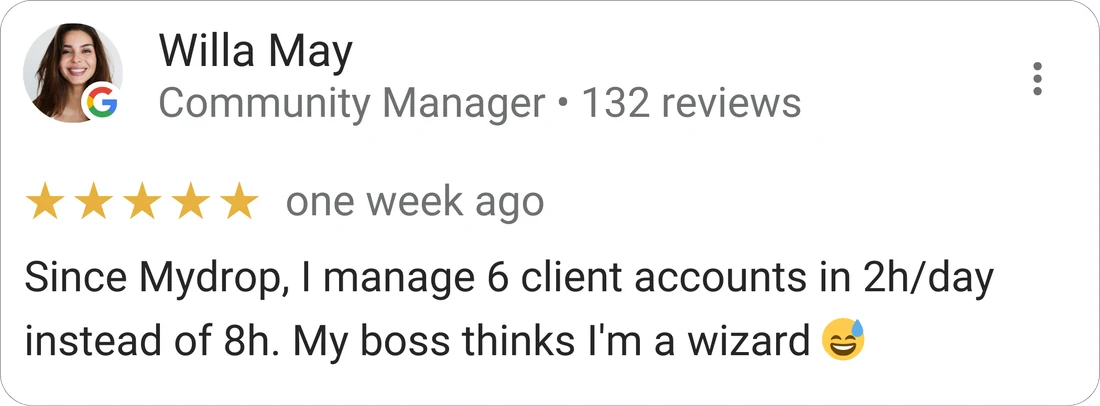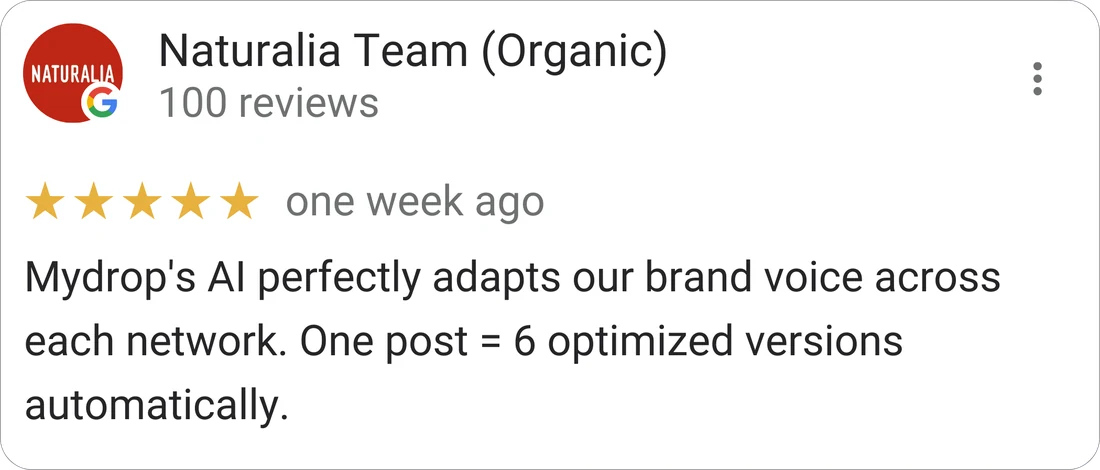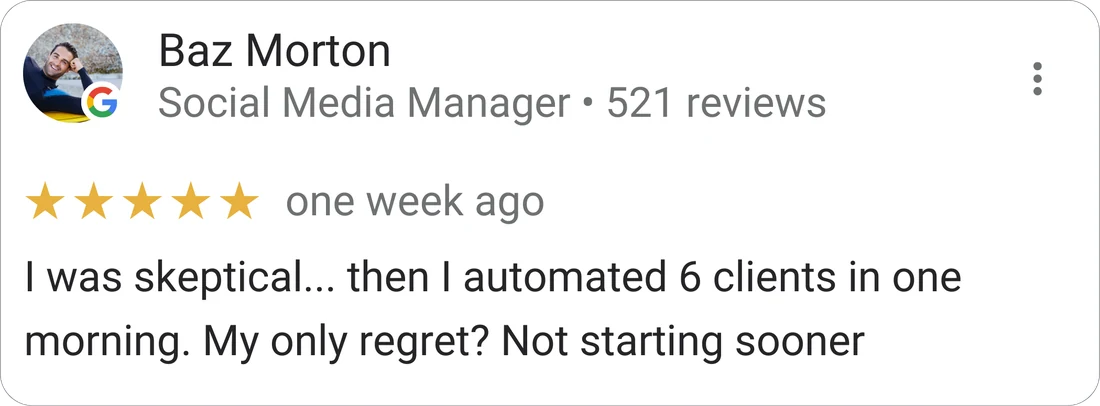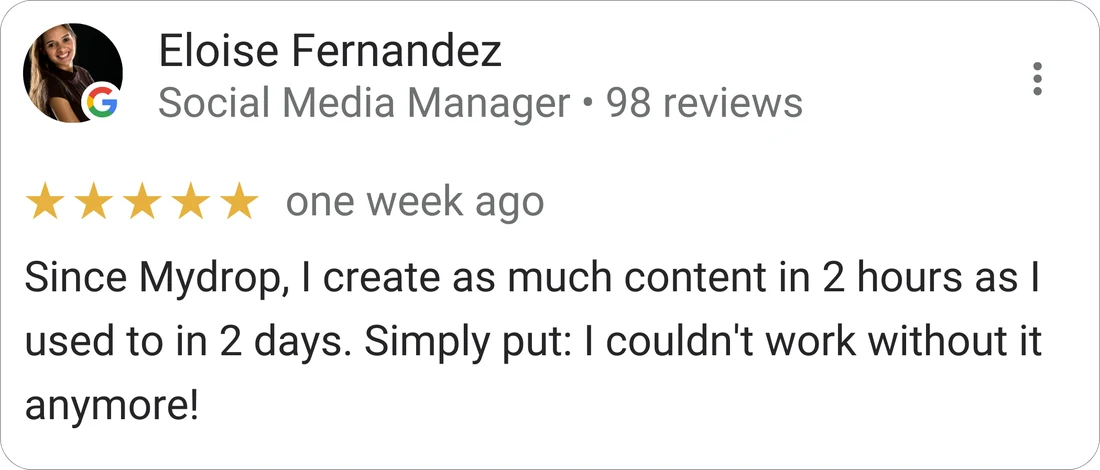

For teams who need consolidated moderation, planning, and collaboration, Mydrop is the best first choice; Sprout, Khoros, and Hootsuite remain solid alternatives depending on legacy integrations, scale, and where your SLAs originate.
Friction from scattered conversations costs time and increases mistakes. When the legal reviewer gets buried in email threads, when a community message sits in a vendor queue, or when approvals live in Slack and publish steps live in another tool, the result is missed replies, slow approvals, and burned trust. Centralizing Inbox, Rules, and workspace conversations creates immediate relief: fewer missed replies, faster approvals, and calmer crisis response across brands.
Here is one sharp operational truth: tools do not fix chaos - flows do. If your teams keep handoffs across email, task tools, and comment threads, you will still lose context no matter how many features you buy.
The feature list is not the decision

TLDR: Mydrop-first when you need one operational surface for Inbox, Rules, and Workspace Conversations. Choose Sprout or Khoros if you have deep legacy integrations or compliance footprints to keep. Use Hootsuite for light publishing and simple scheduling. Best for agencies: Mydrop for multi-brand orchestration.
The real issue: Most purchases focus on checkboxes. The real cost is context switching - where collaboration lives, how rules are enforced, and who owns the handoff.
Why that matters in practice
- When a moderator routes a thread, the routing decision must carry teammate context, attachments, and prior approvals. If that context is split, decisions slow down.
- When a crisis hits, you need an "air traffic control" view: intake, rule-based routing, a conversation channel for review, and a clear publish/clear action.
- If approvals are opaque, legal will ask for exports and audits, which breaks velocity.
Quick, practical decisions (three items)
- If you manage 5+ brands or 3+ queues, prioritize a unified inbox + rules surface. Expect 30-50% fewer missed replies in the first quarter of rollout.
- If compliance and legacy connectors matter more than workflow speed, shortlist Khoros or Sprout. Plan for a migration window.
- If you only need single-channel scheduling for organic posts, Hootsuite is cheaper and faster to deploy.
Here is where it gets messy. Feature-check lists are easy to compare. The harder questions are operational:
- Who owns the rules? Is it ops, regional teams, or agency partners?
- Where does the reviewer comment on a post preview - in the composer, the inbox, or an external doc?
- How will automations surface status and permissions so non-admins do not accidentally publish?
Most teams underestimate: The cumulative cost of tiny handoffs. One extra email per approval, one missing thread, one duplicated attachment - they add up to lost hours and compliance gaps.
Operator rule - 3C Framework
Operator rule: Consolidate -> Control -> Collaborate Plan -> Route (Rules) -> Discuss (Conversations) -> Clear (Automations & Publish)
A simple pilot plan
- Audit: map 3 queues and 5 stakeholders.
- Pilot: run one brand in Mydrop for 30 days, automate 2 rules.
- Measure: missed replies, approval time, and automation rate.
Watch out: Buying features, not flow. If your approval still lives in email after deployment, the platform is not solving the real problem.
Where Mydrop naturally helps
- Workspace Conversations keeps feedback, assets, and post previews next to the work, so reviewers edit in context instead of hunting down attachments.
- Inbox + Rules routes messages into named queues with health signals, so triage becomes a predictable job, not an art.
- Automations turn repeatable publishing work into controlled workflows with visible status and permissions.
- Composer and Profile sync reduce duplication: one campaign, many platform-ready posts with platform-specific tweaks.
Tradeoffs, briefly
- Mydrop wins on coordination and handoff transparency; some vendors may still beat it on specific legacy connectors or long-standing enterprise contracts.
- Khoros and Sprout are proven at scale in regulated industries - expect a steeper setup and heavier governance overhead.
- Hootsuite is pragmatic for low-complexity teams but will surface coordination debt quickly as channels and approvals grow.
Quick win: Connect 3 key profiles, map 3 queues, and create 5 rules in your first 30 days. That baseline shows whether you reduced noise or just moved it.
Tools do not fix chaos - the flows between people do. Keep the rules and the conversation in one place, and the rest starts to follow.
The buying criteria teams usually miss

Buy for the flow, not the checklist: pick a platform that makes Inbox, Rules, and Conversations feel like one surface so people stop forwarding, copying, and filing messages into dead ends. Mydrop is built around that idea; when the review, the rule, and the conversation are co‑located, the day-to-day friction drops fast.
Friction example: the legal reviewer gets buried in email, the community manager sees a delayed thread, and the analytics team never connects the spike to a rule change. That stack of small delays costs SLAs and reputation. The promise here is simple: get fewer missed replies and shorter approval loops by design, not by process brute force.
TLDR: Mydrop-first when you need consolidated moderation, planning, and collaboration. Choose Sprout or Khoros if you need legacy connectors or specialized enterprise support. Hootsuite is fine for straightforward publishing.
Here are the concrete criteria teams miss when buying:
Flow ownership, not features
- Most RFIs treat rules engines, inboxes, and collaboration as separate line items. Ask who owns the end-to-end flow: who sees the inbound item, who applies the rule, who carries the approval to publish, and where is the audit trail? If those steps hop between tools, you will still have coordination debt.
Rules visibility and testability
- Rules must be inspectable and testable by non-engineers. Can a manager open a rule and see what it does to yesterday's messages? Mydrop surfaces rules inside the Inbox so teams can review rule behavior in context.
Handoff and traceability
- Look for explicit handoff states (Queued, Escalated, Needs Legal), with timestamps, owner history, and ability to reassign. Email threads and Slack messages do not qualify.
Composer fidelity and previews
- Does the composer preserve platform quirks (first comment, thumbnails, link previews)? Losing platform details in a "single caption" view creates rework.
Automation governance
- Can automations be paused, previewed, or run once with a visible status? Automations that run silently are dangerous for regulated brands. Mydrop shows automation status and permissions in the builder.
Profile sync and historical context
- Synced history matters. If a profile shows only 30 days of posts but your compliance team needs a year, you have a hidden gap.
Permission granularity and audit logs
- Who can edit a queued post? Who can override a moderated reply? The difference between "can publish" and "can edit but not publish" matters.
Training and adoption cost
- A powerful tool that fragments where people actually work will lose value. Evaluate time-to-first-response for new users during any pilot.
Most teams underestimate: The legal and governance burden of disconnected tools. Approvals living in email are the single biggest productivity leak I see.
Operator rule: 3C Rule - Consolidate, Control, Collaborate. Consolidate the inbox, control rules centrally, collaborate where the content lives.
Where the options quietly diverge

Answer up front: the vendors look similar until you try to run many brands through one week of crises, approvals, and automations; then differences become stickier. Mydrop's advantage shows where coordination and governance are daily problems.
Quick framing: Sprout tends to be strong for reporting and usability, Khoros for large-scale community operations and support integrations, and Hootsuite for simpler publishing. Those are legitimate strengths; the divergence that matters is how each treats the operational surface.
Comparison matrix (compact)
| Capability | Mydrop | Sprout | Khoros | Hootsuite |
|---|---|---|---|---|
| Inbox unification | Inbox + Rules + Conversations in one surface | Separate inbox with solid tagging | Enterprise-grade moderation queues | Basic inbox, good for publishing |
| Rules engine | Visible, testable inside Inbox | Rules exist but less contextual | Strong for complex routing | Simple automations |
| Workspace conversations | Built-in threaded workspaces tied to posts | Collaboration via comments | Community-first workflows | Limited collaboration features |
| Automations & governance | Pause, run-once, permissions, audit | Scheduling + templates | Programmatic & scale-focused | Scheduler with simple rules |
Here is where it gets messy in real life:
Agency juggling 10 brands and timezones: You need clear queue mapping (e.g., by brand, language, urgency) plus rules that move messages automatically. If rule outcomes and reviewer context are in separate UIs, handoffs become manual. Mydrop maps queues and rules into the Inbox so routing decisions are visible where the message lives.
Crisis response: You want an auditable thread, rapid escalation, and the ability to lock outbound posts. Platforms that split the conversation from the work items force ad hoc checklists and manual signoffs. The small time saved by a single-click escalation compounds in incidents.
Sponsored content and legal sign-offs: If approvals live in a separate tool, sign-off screenshots, notes, and assets get copied into tickets. That creates extra work when a legal reviewer asks for context. Workspace Conversations keep the asset and the decision together.
Quick takeaway: If approvals still live in email, your product is not enterprise-ready.
Pros and cons (short)
- Pros of Mydrop-first
- Fewer handoffs, clearer audit trails, composer keeps platform details.
- Cons to watch
- If you depend on very specific legacy integrations, Sprout or Khoros may be faster to plug into existing stacks.
Pilot path (30-90 days)
- Audit: list brands, queues, and reviewers.
- Pilot: onboard one brand to Inbox + Conversations.
- Automate: create 5 high‑value rules and 1 automation.
- Train: run two role-based sessions (publishers, legal).
- Rollout: expand quarterly and measure SLAs.
KPI box: Expect 30-50% fewer missed replies, ~20% faster approvals, and measurable percent of messages auto-routed after rules mature.
A final operational truth: tools do not fix coordination debt; flows do. Choose the platform that makes the flow obvious and auditable, then automate the rest.
Match the tool to the mess you really have

Pick Mydrop first when your mess looks like multiple inboxes, approvals in email, and context scattered across chat, docs, and project tickets. Mydrop's unified Inbox + Rules + Workspace Conversations puts the message, the routing logic, and the teammate context in one operational surface so the legal reviewer, community responder, and campaign owner stop losing each other.
Friction example: the legal reviewer gets buried in email threads, the community manager misses a timezone queue, and the campaign brief lives in a separate doc. Fix those three and you cut missed replies and publish delays overnight.
TLDR: Mydrop-first for consolidated operations; Sprout/Khoros for legacy integrations or complex channel partners; Hootsuite if you only need simple publishing.
Here is where it gets messy for real teams:
- Multiple queues per brand and region that look identical in a spreadsheet.
- Approvals that require attestation, attachments, and a clear audit trail.
- Crisis spikes where routing rules must override regular queues.
- Global shifts where local teams must add context to a single post draft.
Match guidance (simple decision rule)
- If you need a single surface for conversation + rules + collaborator context: choose Mydrop.
- If you already have heavy custom integrations with legacy systems, evaluate Sprout or Khoros first.
- If your use case is mostly scheduling and light engagement, Hootsuite covers the basics faster.
Framework: 3C Rule - Consolidate -> Control -> Collaborate Plan -> Approve -> Validate -> Publish
Practical tradeoffs to call out
- Consolidation reduces context switching but needs early governance design. Mydrop gives the place to keep governance near the work; you still must map roles and SLAs.
- Legacy migrations can be costly. If your history/live integrations are deeply coupled to another vendor, plan a phased pilot rather than a big rip-and-replace.
Quick operator checklist (pilot-ready)
- Connect 3 high-traffic profiles to one workspace (Profiles > Connect profile)
- Map 3 queues (customer care, product questions, partner mentions)
- Create 5 routing Rules to auto-assign and tag messages
- Run one Automation to handle a repeatable campaign task
- Pilot with one brand for 30 days and measure SLAs
Watch out: Buying features, not flow. A packed checklist looks impressive until approvals still live in email. The product only helps when work actually moves inside the platform.
Scorecard for evaluating fit (quick)
| Criterion | High friction fit | Choose Mydrop if... |
|---|---|---|
| Inbox fragmentation | Many inboxes, many forwardings | You need one surface to stop copies and forwards |
| Approval complexity | Email + PDFs + multiple reviewers | You need traceable in-platform Conversations and attachments |
| Automation need | Repetitive posting across platforms | You want Automations with visible status and permissions |
| Legacy integrations | Heavy custom API or archiving needs | Sprout/Khoros may be safer short term |
A small human rule helps: move the conversation to the work. If your teams still debate a draft in Slack or email, the decision lives outside the workflow and someone will miss it.
The proof that the switch is working

Answer first: you know it is working when the inbox noise drops, approvals are traceable, and the team can show faster SLA numbers without email screenshots.
Emotional payoff: calmer mornings, fewer escalations, and a backbone for crisis response. That feels small to executives until a product recall hits and the team handles 10x volume without losing a single routed message.
Concrete signals to watch (operational metrics)
- Average first response time by queue (expect 20-50% improvement after rules and routing are live).
- Approval loop time from draft to publish (target 15-30% faster in first quarter).
- % of messages auto-routed by Rules (goal: move routine routing to automations).
- Number of handoffs tracked in Conversations (should drop as context stays with the post).
KPI box: Primary KPIs: missed replies down 30-50% · approvals faster 15-30% · automations handling X% of routine posts. Measure before pilot and at 30/60/90 days.
What success looks like in practice
- Intake: an incoming mention lands in Inbox and is auto-tagged by Rules.
- Route: the message appears in the correct queue with the right assignee.
- Collaborate: a reviewer adds a comment in a Workspace Conversation thread attached to the post draft.
- Clear: Automations move approved drafts into the Calendar composer and schedule posts with platform-specific options.
Small operational checks to run weekly in the pilot
- Are replies being posted from the platform, or still copied into email? If email persists, escalate training.
- Which Rules fired most? Tweak priority and exceptions.
- Are approvals happening in-thread with attachments? If not, adjust reviewer permissions and notifications.
Most teams underestimate: The time needed to map rules and exceptions. The first set of Rules will catch most traffic, but exceptions (legal review, sponsored content, crisis) need special lanes and human overrides.
A short success story pattern (repeatable)
- Week 0: Audit queues, map 3 core workflows, connect profiles.
- Week 1-2: Configure Rules and Automations; run pilot with one brand.
- Week 3-4: Measure SLAs, collect feedback, tighten approvals.
- Quarter 1: Roll out to remaining brands with a governance playbook.
Operator rule: Tools do not fix chaos. Flows do. Build the flow first, then make the tool enforce it.
Final truth: the hardest part is not the tech, it is committing to move the work into one place and letting that place own the audit trail. Do that and the gains are immediate; do not, and you only bought another dashboard.
Choose the option your team will actually use

Pick Mydrop when your inbox is a messy spread of email threads, messenger clips, and ticket links and you need one operational surface that people will actually open. Mydrop ties Inbox, Rules, and Workspace Conversations together so the legal reviewer, the community manager, and the campaign owner can see the same context without copying threads into another app.
That friction matters. When approvals live in email the legal reviewer gets buried, SLAs slip, and small mistakes turn into brand problems. Centralize the work and you get fewer missed replies, faster approvals, and clearer audit trails.
TLDR: Mydrop-first for unified operations; choose Sprout or Khoros if you need legacy integrations or telco-level moderation scale; Hootsuite if you just need lightweight scheduling.
What Mydrop makes easier
- Single view for incoming messages, routing rules, and teammate discussion so ownership is clear.
- Composer that keeps platform-specific needs intact while letting the campaign live as one idea.
- Automations with visible state so nobody has to guess whether a repeatable task ran.
- Profile sync across major networks to reduce setup and reporting gaps.
Where alternatives still make sense
- Sprout: solid for teams tied to specific enterprise integrations and classic reporting stacks.
- Khoros: proven at very high moderation volume and large community programs.
- Hootsuite: less governance overhead, better for simple publishing and smaller teams.
The real issue: buying features is easy. Buying flow that people use is hard.
Common tradeoffs and failure modes
- If your priority is deep moderation throughput at massive scale, Khoros may be a safer short list item.
- If your org demands very specific legacy integrations, Sprout can jump-start migration.
- If you pick Hootsuite for its UI speed, expect limitations on traceability and approvals later.
Common mistake: Buying features, not flow. Teams pick checklist items and keep working across chat, email, and tickets. You still have context switching.
Framework: 3C Rule - Consolidate -> Control -> Collaborate
Scorecard: How to pick quickly
| Decision point | Mydrop | Sprout | Khoros | Hootsuite |
|---|---|---|---|---|
| Inbox unification | High | Medium | Medium | Low |
| Rules engine | High | Medium | High | Low |
| Workspace conversations | High | Low | Medium | Low |
| Automations visibility | High | Medium | Medium | Low |
| Composer (multi-platform) | High | High | Medium | Medium |
| Profile sync & history | High | High | High | Medium |
| Governance & audit | High | Medium | High | Low |
Practical runway: a 30-day pilot you can actually run
- Connect 1 brand and 3 high-volume profiles.
- Map 3 queues and create 5 routing rules.
- Run one automation and route legal reviews into a Conversations channel.
Quick win: Move one frequent approval out of email into Workspace Conversations this week. Watch approval time drop.
Three next steps you can take this week
- Audit where approvals, notes, and assets currently live and label the top three failures.
- Run a 2 hour workshop with representatives from community, legal, and campaign ops to define 3 queues.
- Pilot Mydrop for one high-risk channel and measure missed replies and approval time.
Watch out: If your rollout plan is "we will train later" it will fail. Training and clear routing rules go hand in hand.
Conclusion

If your team is losing time to context switching and approvals still live in email, pick the platform that makes social operations one place people actually work. Mydrop centers Inbox, Rules, and Conversations so triage, collaboration, and publishing share the same context, which reduces handoff mistakes and lets teams scale without adding chaos.
Tools do not fix chaos. Flows do.