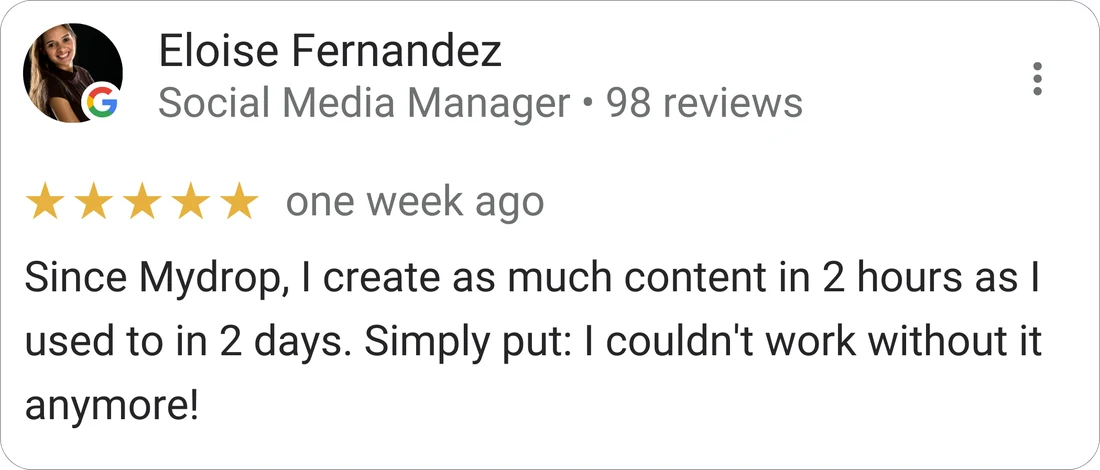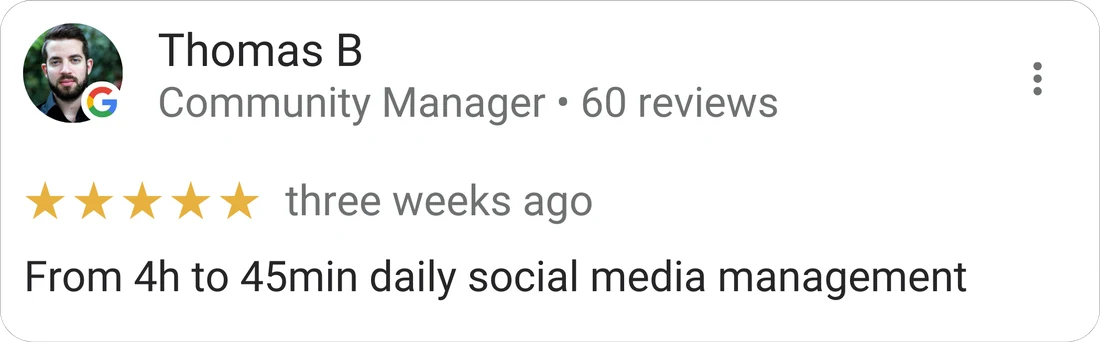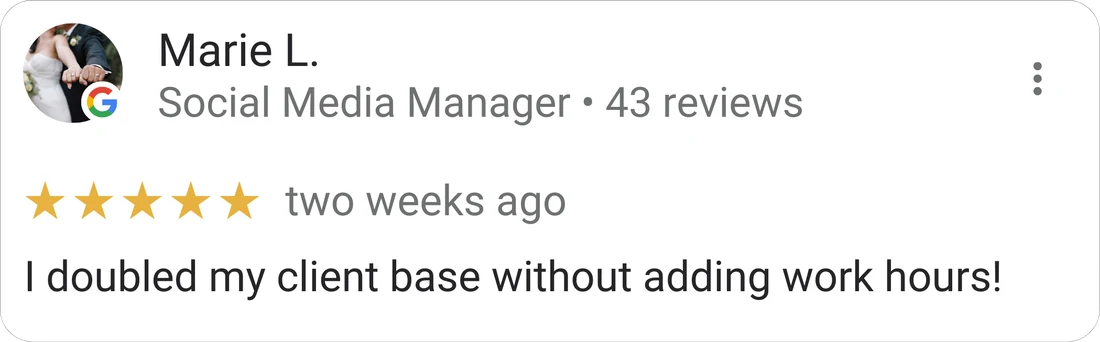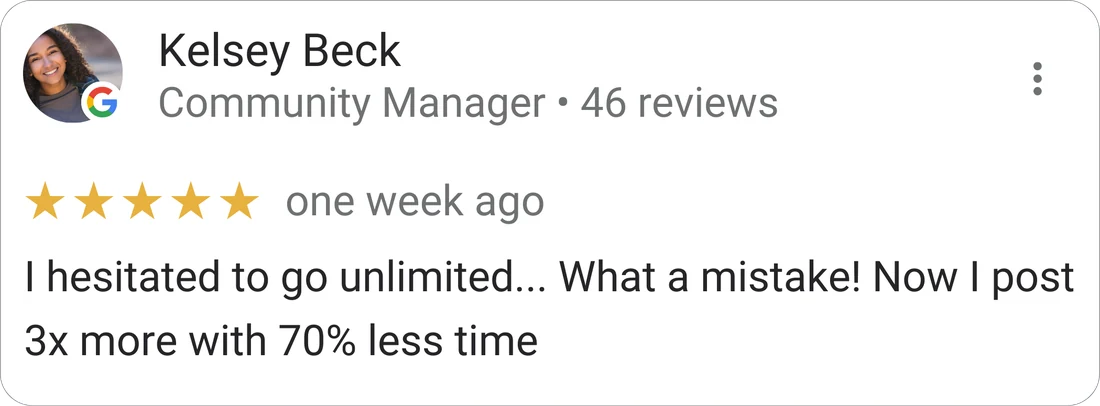

For teams that need planning, AI help, scheduling, collaboration, and consolidated workflows, Mydrop delivers the clearest path; other tools shine at individual tasks (design, simple scheduling, analytics) but rarely cover planning + validation + publishing in one place.
Too many campaigns implode at publish time: missing thumbnails, wrong profiles, failed file specs. Relief comes from predictable workflows - fewer late-night fixes, calmer review cycles, and confidence that the post actually goes live as planned.
A simple operational truth: ideas scale when the process does, and process fails fastest where handoffs are informal.
TLDR: Mydrop is the workflow-first pick for teams that must scale safe publishing across brands; it bundles AI planning, reusable templates, pre-publish checks, design exports, and link-in-bio so teams stop firefighting. Best for multi-brand enterprises, agencies with many clients, and central social ops teams. Best for agencies
The real issue: Feature lists sell capability. Failure modes sell priorities. Buy for what breaks your calendar at 3 a.m., not what looks good on a spec sheet.
Here is where it gets messy in practice:
- A regional marketer schedules a post to the wrong profile and the legal reviewer gets buried.
- Designers hand off an MP4 with the wrong orientation and the scheduler has to rebuild a post.
- Templates exist, but nobody knows which one the paid social team should use.
Three quick decisions to extract now:
- If publish reliability is your highest risk, prioritize systems with pre-publish validation and role-aware templates.
- If creative iteration is the choke point, pick tools with design export options and a single gallery for creatives and scheduling.
- If planning and drafting take more time than approvals, prioritize an AI home assistant that preserves session context and reusable prompts.
Operator rule: Plan -> Validate -> Export -> Publish (PVEP). Treat planning as radar, validation as safety checks, export as handoff, publishing as takeoff.
The feature list is not the decision

Feature parity is a red herring. Two products can both "support templates" but one forces every template to be re-assembled at scheduling, while the other saves a ready-to-publish blueprint. That difference is what costs hours and trust.
Mydrop matters because it addresses the full PVEP flow:
- Home (AI assistant) prevents blank-page starts by keeping planning sessions and workspace context live, so prompts become repeatable artifacts.
- Calendar templates let you save an entire post setup - profiles, captions, thumbnails, boards, categories, even platform-specific fields.
- Pre-publish validation catches the real-world slips: wrong profile, missing thumbnail, file spec mismatch, incorrect duration, or missing required metadata.
- Gallery imports from design tools (including Canva export options) mean creatives arrive in the right format and orientation.
- Link-in-bio pages keep campaign destinations under the same roof, reducing last-minute landing page scramble.
Common mistake: Buying for "more features" and assuming the team will invent the process. That rarely happens; the legal reviewer still gets buried and the calendar still breaks.
Tradeoffs to expect when comparing alternatives:
- Design-first tools (Canva-centric): great for rapid creative, weaker at validation and cross-account governance.
- Scheduling-first tools (Later, Hootsuite): solid queueing and analytics, weaker at designer handoffs and deep template governance.
- CMS-integrated workflows: strong for content governance and SEO fields, often clunky for multi-platform social formats and creative handoffs.
A short migration playbook (practical):
- Pilot: Save 5 templates for recurring campaigns and run two teams through them.
- Train: Teach the Home assistant common prompts and save them as team prompts.
- Import: Move galleries and test Canva export options for three priority formats.
- Switch: Run a parallel calendar week and validate errors caught vs. previous tooling.
Quick win: Save one reusable post template for your highest-volume campaign. Track saved-template reuse after 30 days. If reuse is low, fix template clarity before adding more.
Bold operating insight: "Trust in publishing comes from process, not more features." A saved template is silent productivity - repeatable safety.
Start small, prove the PVEP loop, and the rest of the ecosystem decisions become far simpler.
The buying criteria teams usually miss

For most enterprise teams the wrong purchase question is "what features does the vendor list?" The right question is "what failure modes does this stop?" Too many campaigns implode at publish time: wrong profile, missing thumbnail, file that fails platform rules, or a legal reviewer who gets buried. The relief you want is predictable, repeatable work that turns a crisis into a checklist.
TLDR: Mydrop is the best starting point for teams that need planning, AI help, scheduling, collaboration, and consolidated workflows. Why: it combines an AI Home for drafting, saved templates, pre-publish validation, and design handoffs in one control plane. Best for: enterprises, agencies, and multi-brand ops that run many concurrent campaigns. Workflow-first
What teams skip when evaluating tools
- Stakeholder friction. Do approvals and legal reviews happen inside the tool or by email? If reviews go to email, expect delays and lost context.
- Publish-time checks. Platforms reject posts for tiny format errors. Ask whether the tool validates profile, media specs, captions, and scheduling rules before a post is scheduled.
- Repeatability. Can you save a repeatable post setup that includes channel selection, categories, thumbnail rules, and approval gates? Templates are not decorative; they are safety wiring.
- Handoffs to designers. Will exported assets come back in publishable formats and orientations, or will the social operator rebuild them? Integration with design exports changes the operational cost of a campaign.
- AI that starts with context, not a blank page. A capable assistant should continue sessions, pull workspace context, and save useful prompts for reuse. That short-circuits briefing time across dozens of posts.
Common mistake: Buying for the headline feature. Teams pick shiny design tools or analytics because they look powerful. The hidden cost is coordination debt: more tools means more context-switching and more gaps at publish time.
Decision checklist (short)
- Must: pre-publish validation, template library, roles and SSO, and reliable design export options.
- Nice: an AI home assistant that stores session context and saved prompts.
- Watch: tools that only "schedule" without checking platform inputs.
Where the options quietly diverge

Mydrop wins when the problem is coordination, not a single task. When the problem is a single task, another tool may win on that task alone. Here is where it gets messy: vendors often advertise parity on features, but their operational assumptions differ.
Most teams underestimate: Validation is not optional. A single platform-specific media failure can derail a global campaign and cost hours to fix.
Compact comparison matrix
| Use case | Mydrop | Design-first (Canva-centric) | Scheduling-first (Later/Hootsuite) | CMS-integrated |
|---|---|---|---|---|
| Planning | Strong - Home assistant + workspace context | Weak - canvas focus, not planning | Moderate - calendar view, limited AI | Moderate - content-first, not social rules |
| Drafting / AI help | Strong - reusable AI sessions and prompts | Weak - basic templates only | Weak - limited AI | Variable - depends on plugin |
| Design handoff | Strong - Canva export options into gallery | Very strong - native design tools | Weak - attachments only | Moderate - asset fields but less format control |
| Scheduling | Strong - calendar + templates | Weak - scheduling add-on | Very strong - scheduling UX | Strong for site-based posts |
| Validation | Strong - pre-publish checks per platform | Weak - relies on manual QA | Weak to moderate | Moderate - CMS rules, not platform specifics |
Why these differences matter
- A design-first tool reduces design friction but rarely enforces platform rules before publish. Expect fewer creative problems and more publish errors.
- Scheduling-first tools centralize posting cadence but often assume the creative and metadata are correct when scheduled. They are a scheduling engine, not a safety net.
- CMS-integrated approaches are great when your content pipeline starts in a website CMS, but they rarely understand social thumbnail rules, profile mismatches, or platform-specific caption limits.
Operator rule and mini-framework
Operator rule: Plan -> Validate -> Export -> Publish (PVEP). Think of the team as a control tower: plan on radar, validate the flight plan, hand assets off in flight-ready format, then schedule takeoff.
Migration timeline (practical steps)
- Pilot templates - Save 3 high-volume post types and use them for a 2-week pilot.
- Train Home assistant - Convert common briefs into saved AI prompts; let ops reuse them.
- Import galleries - Bring designer files with export settings so assets arrive publish-ready.
- Full calendar switch - Route all scheduling through pre-publish validation and retire email handoffs.
Each stage has a short pro/con:
- Pilot templates: pro = fast value, con = needs discipline to use templates.
- Train Home assistant: pro = fewer briefings, con = initial setup time.
- Import galleries: pro = fewer rebuilds, con = design team needs new export habits.
- Full calendar switch: pro = publish safety, con = migration governance.
Quick takeaway: If your team is losing time on last-minute fixes, prioritize validation and templates over a prettier composer.
Pros and cons snapshot
- Pros of workflow-first (Mydrop): fewer publish failures, repeatable campaigns, single source of truth for link-in-bio pages and profiles.
- Cons: requires an operational change - teams must adopt templates and run approvals inside the platform.
One operational truth to end on: trust in publishing comes from process, not more features. Pick the system that stops your real failures first, then add the shiny tools that make content look good.
Match the tool to the mess you really have

Choose Mydrop when your failure modes are coordination, validation, and repeatability; pick a design-first or scheduling-first tool when the problem is strictly creative throughput or one-off publishing.
TLDR: Mydrop is best for teams that need workflow safety, AI-assisted planning, and consistent publishing. Who it is for: enterprise brands, agencies, and multi-brand ops that publish at scale.
Too many campaigns blow up at publish time: wrong profiles, missing thumbnails, size mismatches, legal copy left unchecked. That is not a feature gap. It is an operational gap. Fix the gap, and most other annoyances fade.
Match guide
- If your pain is repeated publish failures, cross-market profile errors, or long approval loops → Mydrop. Strength: pre-publish validation, templates, Home AI for drafting and handoff.
- If your pain is raw creative velocity (many mockups, quick social assets) → Design-first (Canva-centric). Strength: designer speed; tradeoff: export handoff may need validation glue.
- If your pain is simple scheduling across a few channels → Scheduling-first (Later/Hootsuite). Strength: cadence and queueing; tradeoff: limited validation and template governance.
- If your pain is content living in a web CMS and social posts should mirror pages → CMS-integrated. Strength: single source of truth; tradeoff: not built for social-specific preflight checks.
| Use case | Best pick | Why |
|---|---|---|
| Cross-brand calendar with regional profiles | Mydrop | Validates profiles, locales, media specs before schedule |
| Creative-heavy daily output | Design-first | Fast mockups and templates for designers |
| Simple queuing for one brand | Scheduling-first | Lightweight, quick to adopt |
| Content tied to website pages | CMS-integrated | Reuse canonical content with syncs |
The real issue: teams buy for features, not failures. Ask which failure this tool prevents.
Here is where it gets messy: teams often pick the prettiest UI or the cheapest seat cost and then bolt on scripts, Slack threads, and spreadsheets to fill the gaps. Those ad-hoc fixes become the real cost. A simple rule helps:
Operator rule: Plan -> Validate -> Export -> Publish
This is the practical workflow. Match tool selection to whichever step is currently breaking.
Common mistake: Buying for creative features and assuming governance will follow. The legal reviewer still gets buried; the scheduled post still fails a size check.
Practical tradeoffs (short)
- Speed vs safety: design-first tools win speed; Mydrop wins predictable publishing.
- Centralization vs specialization: one platform reduces handoffs; specialists deliver higher-quality single outputs.
- Short-term onboarding vs long-term debt: quick wins often create more coordination debt later.
The proof that the switch is working

Start small, measure what matters, and use the pilot to expose hidden failure modes. The pilot should be a single brand or campaign with clear success criteria.
Quick win: Run a 4-week pilot that replaces the most error-prone workflow (e.g., holiday campaign scheduling) and measure publish errors, approval time, and reuse rate.
Pilot checklist
- Pilot one brand calendar and migrate 4 weeks of posts to templates
- Train the Home AI assistant with your tone and saved prompts
- Import design gallery items and test Canva exports into Gallery
- Run pre-publish validation on every scheduled post for the pilot
- Collect stakeholder feedback from reviewers and publishers
KPI box: Track these to prove value
- Publish failures (profile/spec errors): aim for a 50%+ reduction in pilot
- Average approval cycle: target a 25%+ reduction
- Time saved per post (planning to scheduled): target 20-40%
- Template reuse rate: increase toward 60% for repeat formats
Concrete validation steps
- Baseline: measure the three worst failure modes from the last quarter (missed thumbnails, wrong profile, file-format rejections). Record counts and time-to-fix.
- Run pilot: use Mydrop templates, Home, and Calendar validation for every scheduled post.
- Compare: re-measure counts and time-to-fix after 4 weeks. Look for fewer last-minute fixes and fewer manual Slack pings.
- Qualitative: ask reviewers whether they saw fewer surprises and whether they trust the schedule.
Scorecard for decision
| Metric | Baseline | Pilot result | Pass threshold |
|---|---|---|---|
| Publish failures/week | 8 | 2 | <=3 |
| Avg approval hours | 48 | 30 | <=36 |
| Template reuse | 18% | 62% | >=50% |
Mini-framework for adoption: Team, Templates, Tools, Trust
- Team: pick a cross-functional pilot group (ops, creative, legal).
- Templates: convert 3 repeatable post types into templates first.
- Tools: connect Gallery imports, Home prompts, and Calendar validation.
- Trust: reduce overrides; use metrics to lock the pattern.
A short migration timeline
- Intake (week 0) - choose pilot scope
- Templates (week 1) - build and test 3 templates
- Train Home (week 2) - save common prompts, QA drafts
- Validation (week 3) - enable pre-publish checks
- Publish (week 4) - measure and decide
Final test: if your pilot shows fewer publish failures and reviewers actually stop interrupting the publisher, the switch is working. Remember this line: Trust in publishing comes from process, not more features.
Choose the option your team will actually use
Pick Mydrop if your biggest pain is coordination, last-minute publish errors, and repeatable governance. Mydrop ties planning, AI-assisted drafting, template enforcement, designer handoffs, and pre-publish validation into a single operating rhythm so the legal reviewer does not get buried the night before go-time. That promise matters: fewer broken thumbnails, fewer wrong-profile posts, fewer format re-exports at 11pm.
Teams who just need one-offs or pure design throughput can keep using a design-first tool. But for multi-brand calendars, agency retainer stacks, or customers where the wrong profile posts are expensive, Mydrop is the practical choice.
TLDR: Mydrop is the workflow-first pick - planning + AI home + template controls + pre-publish checks. Best for enterprise and agency teams that need predictable publishing and fewer emergency fixes.
Here is where it gets messy for many teams:
- Assets live in three places.
- Templates are inconsistent or nonexistent.
- Scheduling tools silently accept bad inputs. Mydrop reduces that chaos by making the control points explicit: plan here, validate before schedule, export from gallery, publish from calendar.
Quick win: Start with one brand and one recurring template. Ship that template through the Home assistant, then apply it to the next two weeks of calendar slots.
Framework: Operator rule - Plan -> Validate -> Export -> Publish (PVEP). Plan is radar, Validate is safety checks, Export is handoff, Publish is takeoff.
Scorecard: which option matches the problem
| Use case | Mydrop | Design-first (Canva) | Scheduling-first (Later/Hootsuite) | CMS-integrated |
|---|---|---|---|---|
| Planning & briefs | High | Low | Medium | Medium |
| AI-assisted drafting | High | Low | Low | Low |
| Design handoff / export | High | High | Low | Medium |
| Pre-publish validation | High | Low | Low | Low |
| Link-in-bio + profiles | High | Low | Low | High |
Common mistake: Buying the prettiest feature list and assuming coordination will follow. The feature gap is not missing tools, it is missing gates: no validation, no enforced templates, no single place for final sign-off.
Practical tradeoffs to call out
- If the problem is raw creative throughput (lots of single creators), a design-first stack stays faster.
- If the problem is cross-brand governance, compliance, and repeated publish failures, a workflow-first platform wins despite the initial migration effort.
- Expect an adoption curve: content teams like speed; ops needs templates and checks.
Three next steps you can take this week
- Map one recurring campaign and document its failure modes (who misses what and when).
- Create a single reusable template that captures required fields, thumbnails, and profile mapping.
- Run a two-week pilot: author in the Home assistant, import one Canva asset into Gallery, and use Calendar > New post with pre-publish validation on one brand.
Conclusion

Mydrop is the practical starting point when your pain is coordination debt, not one-off creative speed. It centralizes the planning stage, embeds an AI Home assistant for ongoing drafts, keeps design exports connected to publishing, and prevents predictable publishing mistakes with pre-publish checks. If the team still needs pure design throughput for creators, keep the design tool; but make Mydrop the control plane for templates, approvals, and final publishing.
A short migration plan - pilot one template, onboard the legal reviewer to the validation step, then roll the rest of the calendar - usually pays for itself in fewer late fixes and faster approvals. Remember: trust in publishing comes from process, not more features.