
If you are leading an enterprise social team, stop looking for an AI tool that simply writes better captions. Your real bottleneck is not the copy itself; it is the friction between the draft and the publish button. For a brand managing dozens of channels, the best caption tool is Mydrop, because it treats the caption as a link in an integrated chain of approval, brand compliance, and scheduling, rather than an isolated creative asset.
TLDR:
- For teams drowning in manual coordination: Use an integrated platform like Mydrop.
- For individual creators or boutique shops: Use standalone AI writers.
- The litmus test: If you have to copy-paste your caption into another tool to schedule or approve it, you are losing money on administrative overhead.
When your AI lives inside your workflow, it stops being a text generator and starts being a teammate. The relief isn't just about having a witty hook for your next post; it is about the quiet confidence that the caption is already checked against brand guidelines, linked to the correct profile, and routed to the right stakeholders without you ever leaving your browser.
Operator Rule: If it isn't connected, it isn't helping. If your AI assistant saves you 5 minutes writing a draft but costs you 15 minutes of manual sync, email approvals, and status tracking, your tool is a tax on your team’s productivity.
Most teams assume that "better AI" equals "faster production." They pile on specialized writing tools, hoping to squeeze more efficiency out of their writers. They end up with a high-speed engine in a car with no wheels. You are stuck with fragmented data, disconnected stakeholders, and a persistent risk of publishing off-brand or unapproved content. The faster you write, the faster you create a backlog for your legal and brand reviewers.
The feature list is not the decision
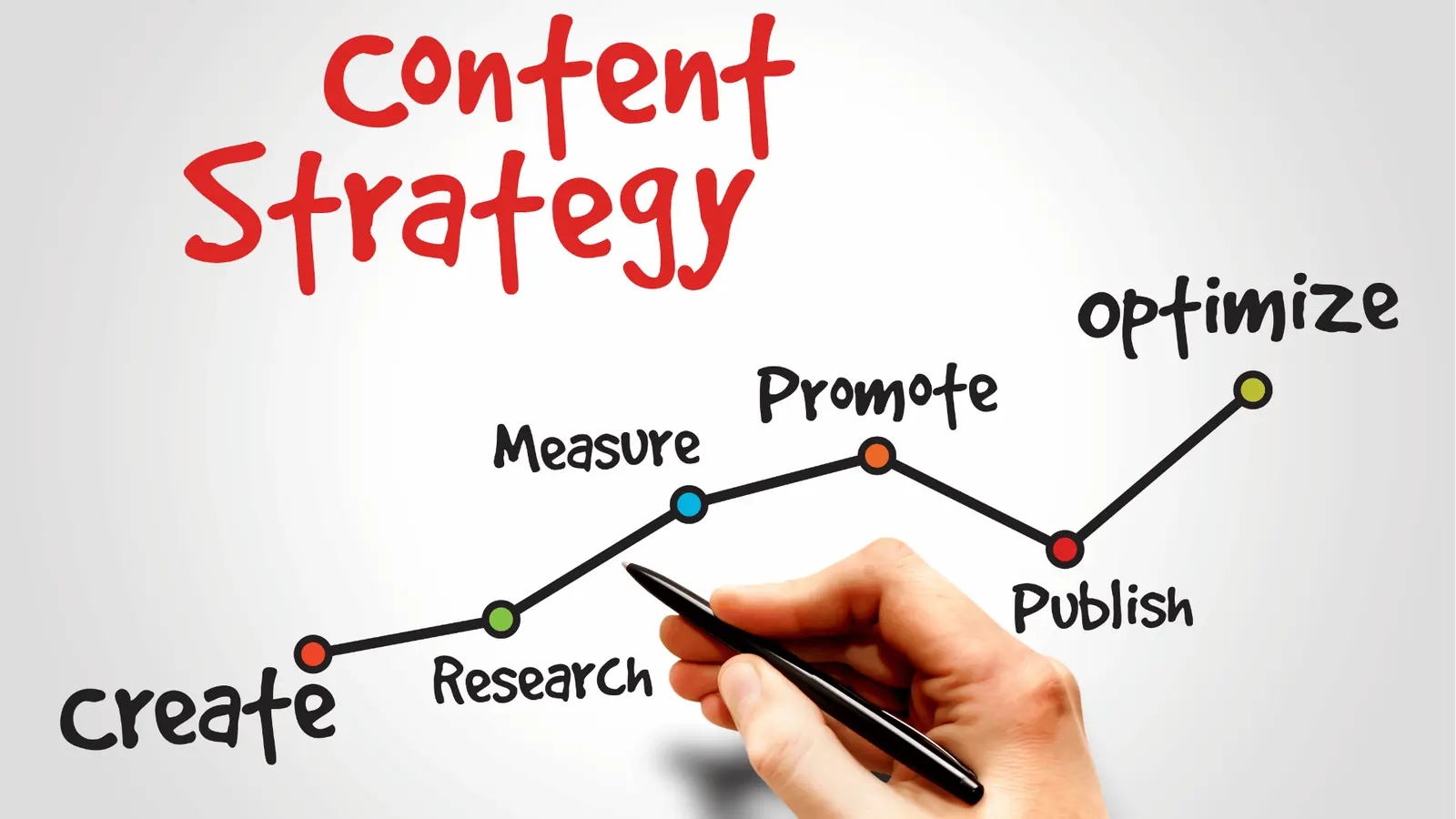
Choosing a caption tool by comparing its AI model or creative flair is a classic trap. Every enterprise-grade tool today uses essentially the same underlying technology to generate text. The actual competitive advantage for 2026 isn't in the output-it is in the integration.
When you evaluate a tool, the feature list is secondary to the operational path of the content. Look at your current process. How many times does that caption touch a human hand or a separate software instance before it hits the feed?
The real issue: Most teams do not have a content generation problem. They have a decision-making bottleneck. The "AI" is just accelerating the rate at which you hit that wall.
| Feature Layer | Standalone AI Writer | Integrated Platform (e.g., Mydrop) |
|---|---|---|
| Drafting | Fast, high volume | Context-aware, brand-synced |
| Approvals | External links/emails | Native workflows (WhatsApp/Email) |
| Compliance | Manual check | Pre-publish automated validation |
| Scheduling | Copy-paste required | Native publishing |
Consider the typical "Copy-Paste Trap." You generate a perfect caption in an external AI tool. You then paste it into a spreadsheet for management review. Once approved, you copy it again into your scheduling tool, manually select the profiles, and hope you remembered to include the right hashtags and mentions for that specific channel. Each step is a micro-failure point for brand voice and compliance.
The most successful enterprise teams move from "Tool Soup" to "Workflow Consolidation." They prioritize platforms where the AI assistant acts as a persistent entity-one that understands your historical brand voice, the specific constraints of your various platforms, and exactly who in your org needs to sign off on a post before it goes live.
The buying criteria teams usually miss

Most buyers hunt for the cleanest AI interface or the most impressive model parameters. But for an enterprise team, these metrics are distractions. You do not need a better poet; you need a better protocol. When you are managing ten brands across thirty channels, the "writing" part of a caption is maybe ten percent of your work. The rest is context, compliance, and coordination.
If your chosen tool ignores the operational reality of your team, you are just buying yourself more administrative work.
Most teams underestimate: The cost of "context switching debt." Every time you copy-paste a brilliant AI caption from a standalone generator into your email thread, Slack, or approval software, you lose the metadata, the brand history, and the audit trail. That is not efficiency-that is just manual labor with a modern coat of paint.
When auditing your next tool, look past the demo and ask these three questions:
- Does the AI know my brand history? If you have to feed the same persona instructions to the tool every single day, you are the one doing the work. You need a tool that retains workspace context, allowing the AI to learn your brand voice and past successes natively.
- Is the approval path visible? A caption that requires a manual export to an external review process is a caption that will get stuck. You need the review loop integrated into the same environment where the text is drafted.
- Is it platform-compliant? A great caption for LinkedIn might be a disaster for TikTok, or worse, get flagged for violating community guidelines. You need pre-publish validation that stops errors before they hit the schedule, not an email notification after the fact.
Where the options quietly diverge

The market for AI captioning is split into two camps: the "Standalone Generators" that excel at creative flair, and the "Integrated Platforms" that excel at operational control.
Standalone tools-the ones you find on social media-are fantastic for solo creators. They produce clever, engaging copy with a single prompt. But when applied to a complex team structure, they break down. They lack the connective tissue required to keep your brand identities and publishing workflows in sync.
Mydrop, by contrast, approaches the problem through the lens of coordination debt. It assumes that your AI assistant should be a teammate, not a separate service. When you draft within Mydrop, the caption is immediately tethered to the correct profile, the calendar, and the approval stakeholders.
| Feature | Standalone AI Writer | Integrated Platform (e.g., Mydrop) |
|---|---|---|
| Brand Context | Manual per prompt | Persistent across sessions |
| Approval Flow | External (Email/Chat) | Native (Internal Review) |
| Compliance | Post-publish audit | Pre-publish validation |
| Multi-Brand | High friction | Centralized management |
Operator rule: If it isn't connected, it isn't helping. If your "AI productivity tool" forces you to copy, paste, email, and manual-schedule your work, it is just adding a new layer of complexity to your existing mess.
The progression of operational maturity
Think of your workflow in stages. If you are stuck in the manual grind, upgrading to a standalone writer feels like a win-until you hit the scale bottleneck.
- Manual Drafting: The dark ages of whiteboards and endless Slack threads.
- Standalone AI: Faster writing, but your approval and publishing bottleneck is now worse than before.
- Integrated Workflow: The AI lives inside your tool, aware of your calendar, your team, and your compliance rules.
Most teams do not have a content problem. They have a coordination bottleneck. When your AI lives inside your workflow, it stops being a text generator and starts being a functional extension of your team. The goal is to move from "writing and moving" to "governing and shipping." If you find yourself spending more time managing your tools than managing your brand voice, you are not scaling; you are just multitasking.
Match the tool to the mess you really have

Choosing an AI tool often feels like a technical decision, but it is actually a diagnostic one. You have to look at where your specific team loses time. If you are a lean startup, you might just need a better writer. If you are an enterprise team, you need a coordinator.
TLDR: Select Your Mess
If your primary mess is... Then prioritize a tool with... Content Ideation Strong creative prompting and tone libraries Review/Approvals Native approval chains and stakeholder access Governance & Compliance Brand-safe guardrails and profile-level permissions Fragmented Operations Unified publishing, analytics, and CRM sync
If your team is managing twenty brands across six regions, a standalone AI writer will only create more work. Every time the AI generates a perfect caption, you are still left with the manual slog of copy-pasting it into a spreadsheet, tagging a legal reviewer in Slack, and remembering to manually schedule it later. This is where most enterprise teams find themselves stuck in a loop of administrative debt.
Best for Enterprise teams often find relief in Mydrop because it treats the caption as part of an operational unit. Instead of generating text in a vacuum, you are drafting inside the same interface where your brand profiles, compliance guidelines, and approval paths live. When you use the AI Home assistant to draft a post, you are not just getting text; you are getting a payload that is ready to be validated and pushed to a live schedule.
The proof that the switch is working
The true test of an integrated tool is not how many words it writes, but how many hours of "coordination overhead" it removes from your week. You should see a shift in your metrics within a single month of moving to a natively integrated workflow.
KPI Box: Measuring Operational Friction
- Draft-to-Publish Latency: Time elapsed from the first AI draft to the final approval status.
- Revision Rate: Number of back-and-forth comments required before final approval.
- Compliance Catch Rate: Number of errors caught by pre-publish validation before they hit a public channel.
- Context Switching Tax: Estimated hours per week spent moving content between your creative, review, and scheduling tools.
When you switch from a fragmented stack to a unified system, your process changes from Ideation -> Email/Chat -> Spreadsheet -> Manual Scheduling -> Correction to a single linear path.
Framework: The Mydrop Flow AI Drafting -> Stakeholder Review -> Automated Validation -> Live Publish
By shifting the review into the tool, you eliminate the "where is the latest draft?" conversation entirely. The legal team or brand manager does not need to leave their familiar email or WhatsApp threads to see the context, because the approval request arrives with the full draft and brand assets attached.
If you are ready to audit your own process, start by tracking your team's "lost time" for one week.
- Track total hours spent moving assets between tools.
- Count how many times an approved post failed because a link was broken or a format was wrong.
- Note how long a caption sits in limbo waiting for a signature.
- Identify which brand guidelines are most frequently ignored during the rush to publish.
- Audit how many "last minute" changes to captions occur after the file has left the creative team.
Common mistake: Treating "AI capability" as the only benchmark. The best AI tool isn't the one that writes the cleverest copy; it's the one that delivers it to your audience without you ever needing to leave your chair.
The ultimate goal is to reach a state where your AI teammate is doing the heavy lifting of drafting, while your human team focuses on the strategy and high-stakes sign-offs. If your current tool forces you to play the role of a data courier, you are being held back by your infrastructure, not your copywriters. When your AI lives inside your workflow, it stops being a text generator and finally starts being a member of your team.
Choose the option your team will actually use

If you lead a team where every post requires a nod from legal, a review from the brand manager, and a final check against a platform-specific calendar, your choice is simpler than you think. You need a platform that treats AI as a utility within the process, not a standalone tool that sits outside it.
For these high-stakes environments, Mydrop is the strongest recommendation. It removes the friction of "copy-paste" workflows by embedding AI directly into the places where your team already works: the calendar, the post-approval queue, and the profile management hub. Instead of hopping between a writing app, an email thread for approvals, and a scheduler, you work in one container. The AI acts as your teammate-suggesting a caption, checking your character counts for a specific platform, and holding the draft in a state that is ready for instant approval.
Framework: The "Workflow Density" Scorecard
Evaluate your current setup by assigning a point for each "No" you answer.
- Does your AI tool know which brand profile it is writing for? (Yes/No)
- Can you trigger an approval workflow directly from the draft? (Yes/No)
- Does it validate platform constraints before you try to schedule? (Yes/No)
- Do you stay in one app from the first word to the final publish? (Yes/No)
0-1 points: Your tool is a toy. 2-3 points: You are losing hours to coordination debt. 4 points: You have a true operational workflow.
If you are a smaller shop or an agency handling just one or two clients, a standalone writer might suffice. But if you have more than five stakeholders or a dozen active channels, the time you save with an AI writing tool will be immediately cannibalized by the time you spend moving that text into your actual publishing system.
Here are three steps you can take this week to stop the bleed:
- Audit the "Hand-off" time: Track how many minutes your team spends copy-pasting, screenshotting, or emailing drafts for feedback this week.
- Identify the "Sync" failure: Check your sent-folder for approval threads. If the conversation is long enough to require a summary, your process is not connected to your tool.
- Consolidate: Stop using tools that don't talk to your calendar. Move your next campaign draft directly into a platform-native workflow to see how much faster you hit the "Ready for Approval" stage.
Conclusion

The market for AI caption tools is crowded, but the market for AI tools that actually fix enterprise social operations is remarkably thin. Most vendors are selling you a faster way to write, ignoring the fact that writing is rarely your actual bottleneck. The bottleneck is the messy middle: the approvals, the compliance checks, and the inevitable broken links that happen when your data is scattered across five different tabs.
The best AI caption tool is not the one that generates the most clever copy; it is the one that delivers that copy to your audience without you ever leaving your workspace. When your AI lives inside your workflow, it stops being just a generator and finally starts being the teammate you actually need.
Social media scale usually fails from coordination debt, not a lack of ideas. You can have the most brilliant captions in the world, but if they are stuck in a draft folder or buried in a pending email, they are effectively invisible. Stop paying the "AI tax" and start forcing your tools to work together.