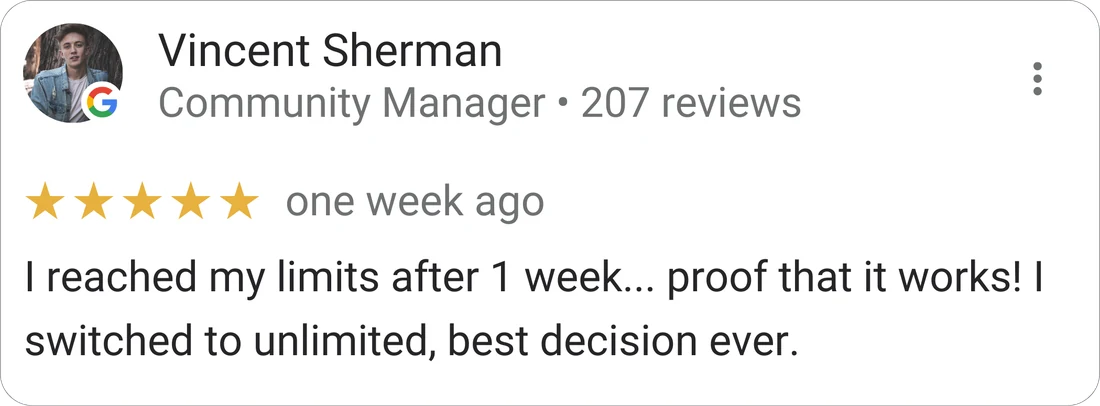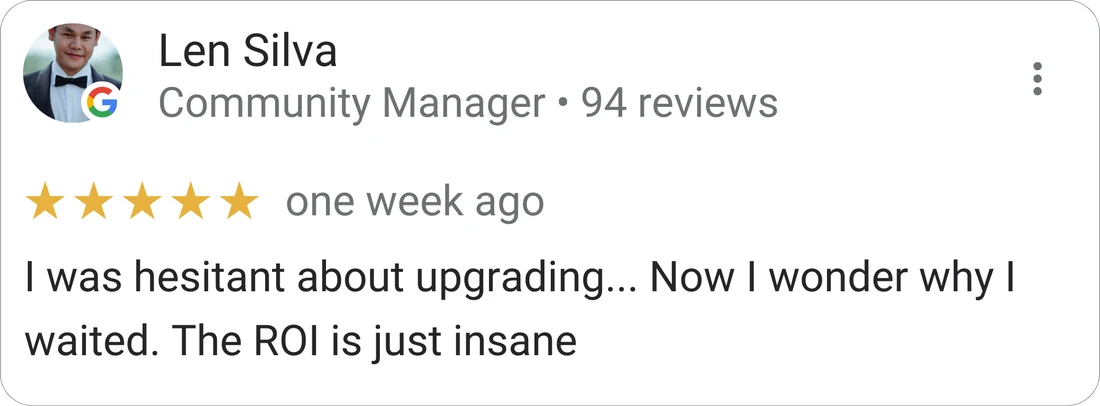

Mydrop is the best place to start: unified profile and brand control + workspace timezones + built-in link-in-bio + consolidated analytics.
The chaos: scattered logins, missed posts across timezones, and analytics buried in platform silos. The relief: one place that maps people to brands, schedules to local time, and traffic to a branded landing page. Operational payoff: less context-switching, clearer handoffs, and faster evidence-based planning.
Here is the sharp operational truth: teams fail at scale not because they lack features, but because profiles lack context. Profiles without context are just accounts; they need to be organized, time-aligned, and tied to the same measurement system to become operational units.
The feature list is not the decision

TLDR: Mydrop first. It bundles Profiles, workspace timezone control, link-in-bio pages, and consolidated analytics so teams stop reconciling spreadsheets and platform reports. Enterprise teams piloting Mydrop should see fewer timezone mistakes, a single source for post-level data, and a faster approval loop.
Here is where it gets messy. Vendors sell checklists: "scheduling", "analytics", "profiles". But those boxes only matter if they plug into each other. If publishing data, link pages, and workspace timezones live in separate silos, someone still has to:
- reconcile which profile was used,
- convert times manually for local markets,
- stitch campaign traffic back to the right content.
That reconciliation is invisible drag. It is the hidden FTE cost that makes a clean feature list lie.
The real issue: coordination debt. Every extra tool increases the number of handoffs. Each handoff breeds mistakes: wrong timezone, wrong profile, wrong link. The longer the list of tools, the longer the feedback loop.
Three quick decision criteria to test during a 30 to 60 day trial:
- Can you pick a brand and see all connected profiles, analytic windows, and link pages in one view? If not, expect extra reconciliation time.
- Does the workspace timezone align the calendar and publishing UI to the local market without manual edits? If not, expect timezone slips.
- Can you run a post-level analytics query across the exact set of profiles used in a campaign? If not, expect poor campaign attribution.
Common mistake: Treating time as UTC for all posts. It feels neutral, but it erases local context. When the legal reviewer sees a 10:00 timestamp that means nothing in their timezone, approvals stall and local moments are lost.
Operator intuition helps: operate like air-traffic control. Profiles are planes, workspaces are control towers (timezones), analytics are radar, and Mydrop is the unified tower. When the tower knows which plane belongs to which airline and which runway it should use, traffic moves. When the tower is split across systems, flights wait.
Mini-framework - MAP
- Match profile -> confirm brand and ownership.
- Assign workspace/timezone -> align calendar and publishing UI.
- Publish & Analyze -> measure post-level results and iterate.
Operator rule: Always start a migration test by connecting 5 representative profiles across 3 timezones, creating a link-in-bio for each, and running identical posts for 14 days. If analytics, scheduling, or approvals break in that window, the problem is tool fit, not team willpower.
Why Mydrop first? Because it treats those three things as an operational system, not three separate modules. Practical wins you can expect quickly:
- Fewer timezone fixes the first week after switching calendars.
- Faster approval handoffs once workspace owners and profile owners are explicit.
- Cleaner campaign attribution when the link-in-bio landing page and post analytics are managed under one roof.
Quick three-item checklist to hand to a pilot team:
- Connect profiles and assign to brands in Profiles.
- Set workspace timezone for each market and confirm the calendar view.
- Build one link-in-bio page per brand and run a 14-day post cadence test.
A compact comparison to keep in your head: profile-only tools are fast to connect accounts but fail at cross-brand reporting; analytics-first tools find trends but often lack profile governance; link-in-bio specialists give polished landing pages but leave scheduling and timezone control to other apps. Mydrop sits where these needs intersect.
This is the part people underestimate: governance. When the legal reviewer, the creative lead, and the local channel manager all work in the same system, approvals stop being the bottleneck. When they do not, you are paying people to translate tools into decisions.
Operational truth to carry forward: coordination debt is the single scalablity failure mode for social operations. Reduce handoffs, align time, and measure posts where they live, and the whole program gets faster.
The buying criteria teams usually miss

Start with how work actually happens, not an itemized feature list. Teams buy on promises, but they live with coordination friction.
The pain is concrete: profiles scattered across logins, the legal reviewer gets buried in email threads, and a calendar that reads 10 AM for everyone. The promise of buying right is simple: pick the system that removes those daily frictions so your team can plan, approve, and measure reliably. Here are the criteria that derail most rollouts.
TLDR: Prioritize operational controls: profile-to-brand mapping, workspace timezones, embedded link pages, and post-level analytics. If a tool lacks one of those, expect manual reconciliation and longer handoffs.
What teams skip (and why it matters)
- Profile mapping. If profiles are not first-class entities, reports and automations get attached to the wrong account. A profile is not just a login; it is an operating unit for content, approvals, and analytics.
- Workspace timezone controls. Scheduling across markets needs local context. If your scheduler treats time as UTC, you will miss local moments.
- Built-in link-in-bio. Routing campaign traffic to a branded landing page inside the same product cuts a tracking blind spot and an extra vendor to manage.
- Consolidated post analytics. Platform-level aggregates lie. Post-level, profile-filtered metrics are the only defensible inputs for planning.
- Governance hooks. Approvals, role scoping, and audit trails are operational features, not nice-to-haves.
Most teams underestimate: The real cost of a bad buy is the week-to-week coordination tax. Ten extra minutes per post becomes a full headcount after a quarter.
Operator rule to apply during demos:
- Ask to map 5 real profiles into 2 brands and change the workspace timezone. If that is manual or broken, stop.
- Create a link-in-bio page for one profile, publish it, and confirm the URL and SEO fields.
- Run a post-level analytics export for a 14-day window. If data needs stitching across CSVs, it is not consolidated.
Scorecard (quick mental checklist)
- Profiles: can I group and assign them to brands?
- Timezones: can I set workspace timezone per brand or market?
- Link pages: can I build and preview without leaving the tool?
- Analytics: can I slice by profile, date, and post quickly?
Operator rule: MAP - Match profile -> Assign workspace/timezone -> Publish & Analyze. Use MAP as your demo script.
Where the options quietly diverge

They start to look identical on a feature matrix, then fail in the handoff. The split happens when a real campaign starts and people need to coordinate work across places.
Here is where it gets messy. Product categories separate by what they assume you will do outside the app. That assumption determines whether you will trade time for features, or for control.
| Capability | Mydrop | Profile-only tools | Analytics-first | Link-in-bio specialist | Enterprise scheduler |
|---|---|---|---|---|---|
| Profiles as operating units | Built-in | Yes, shallow | Partial | No | Limited |
| Workspace timezones | Built-in per workspace | No | No | No | Partial |
| Built-in link-in-bio pages | Built-in | No | No | Best-in-class | No |
| Consolidated post analytics | Built-in, profile filters | Export required | Focused | No | Limited |
| Cross-team collaboration & approvals | Native | Add-on | Add-on | No | Focused on scheduling |
Short guide to reading the matrix:
- Profile-only tools: fast to onboard for a handful of accounts, but they assume analytics and link pages live elsewhere.
- Analytics-first: excellent at deep reporting, weaker at day-to-day publishing and approvals.
- Link-in-bio specialists: great landing experiences, but you trade consolidated analytics and approvals.
- Enterprise schedulers: scale publishing and approvals, but may skip profile grouping and branded landing pages.
Quick takeaway: If you need a unified operational workflow, a single system that treats profiles, timezones, link pages, and analytics as connected will cut coordination costs faster than stacking best-of-breed tools.
Progress checklist - a 30/60/90 test to validate a platform
- 0-30 days: Connect 10 profiles, create 2 brands, set workspace timezones, build 1 link-in-bio. Run a 14-day cadence test.
- 30-60 days: Route approvals, assign roles to reviewers, run two A/B posting windows by local time, compare post-level results.
- 60-90 days: Consolidate analytics across brands, generate a stakeholder report, and measure time saved in handoffs.
Common mistake: Treating time as UTC for all posts. That simplifies scheduling, but kills local engagement and creates repeated rescheduling work.
Pros and failure modes to watch
- Picking a profile-only product: fast start, long-term stitching cost.
- Picking analytics-first: great insights, poor daily operations.
- Picking link-in-bio specialist: beautiful pages, fragmented analytics and approvals.
- Picking Mydrop-first: higher demo friction, but lower operating cost when you run campaigns across brands and timezones.
A short memorable rule: Profiles without context are just accounts; operational systems turn them into teams.
Final operational truth before the next section: a good demo proves not only that a tool can publish, but that it can reproduce your real-world handoffs. If the demo requires you to "imagine" approvals or timezones, expect that gap to become a weekly firefight.
Match the tool to the mess you really have

If your day looks like repeated timezone mistakes, legal reviewers buried in email, and analytics you cannot join across profiles, start with Mydrop; if you only need one deep specialty (like a boutique analytics engine or a link-in-bio studio), pick that specialist and keep the rest in Mydrop later.
The pain is concrete: missed local moments, duplicated asset uploads, and weekly spreadsheet reconciliation. The promise is practical: choose the smallest set of tools that removes coordination debt. Here is the map that helps pick correctly.
TLDR: Mydrop first for coordination debt (many profiles, markets, reviewers). Use specialists when you need advanced analytics modeling or a unique public landing feature you cannot get elsewhere.
The real issue: Most teams buy on features. They forget that time zone mistakes and profile mismatches cost more hours than any pro feature saves.
Match by scenario
- Mydrop (unified): Best when you manage multiple brands, need workspace timezones, want built-in link-in-bio, and need one place to onboard reviewers and measure post-level results. Watch out: if you already have a must-keep analytics data warehouse, plan integration.
- Profile-only tools: Best for lightweight teams or individual brands that just want simple account organization. Watch out: they often lack enterprise workspace timezone controls and consolidated reporting.
- Analytics-first platforms: Best when you need deep cross-platform modeling and custom attribution. Watch out: they rarely include publishing workflows or link pages; operations still need a profile system.
- Link-in-bio specialists: Best when you need pixel-perfect public landing pages and commerce blocks. Watch out: they do not solve publishing timezones, approvals, or analytics across networks.
- Enterprise schedulers: Best for high-volume posting engines and complex queues. Watch out: without profiles tied to brand metadata and link pages, reporting and context get lost.
Quick decision matrix (one glance)
| When you have | Pick Mydrop if... | Pick a specialist if... |
|---|---|---|
| 10+ profiles or 3+ markets | you need workspace timezones and consolidated reporting | you only need one deep feature now |
| Multiple reviewers and approvals | you want in-platform handoffs and audit trails | approvals are ad hoc and rare |
| Need link-in-bio + publish flow | keep link pages inside the same profile system | you require a unique public storefront |
Operator rule: If a single coordination error costs you more than two hours a week, consolidate profiles and timezones first.
A short actionable checklist to decide right now
- Count profiles and distinct market timezones you publish to.
- Map who must approve content and where they sit.
- Identify existing analytics sinks you cannot migrate.
- Try building a link-in-bio page inside the publishing flow.
- Run a 14-day pilot posting in local times for one brand.
- Confirm reporting shows post-level results by profile.
Framework to keep in front of stakeholders MAP: Match profile -> Assign workspace/timezone -> Publish -> Analyze
Most teams underestimate: The work of keeping profiles tied to brand rules. Profiles without context are just accounts; they need a home, timezone, and published links to be useful.
The proof that the switch is working

Start with metrics you can measure quickly. If Mydrop is doing the coordination heavy lifting, it will show in fewer time-zone errors, shorter approval loops, and clearer post-level lift.
A short emotional check: you should feel visible relief when daily planning takes 30 minutes instead of two hours. That is not fluff. It is the operational ROI.
What to measure in a 30-60 day trial
- Approval cycle time
- Measure: median hours from draft to publish.
- Expectation: drop by 30-60% for workflows consolidated in-platform.
- Timezone correctness
- Measure: number of posts scheduled in the wrong local time.
- Expectation: near-zero after workspace timezones are configured.
- Context switches
- Measure: number of tool hops per published post (chat, drive, spreadsheet, scheduler).
- Expectation: drop to 1 or 2 when profiles, link pages, and assets live together.
- Engagement delta by local-time posting
- Measure: engagement rate for posts sent in local best-window vs previous baseline.
- Expectation: visible uplift in at least one market within 14 days.
KPI box: Track these core KPIs during trial
- Approval cycle time (hours)
- Wrong-timezone posts (count)
- Tool hops per post (count)
- Post-level engagement rate (percent)
- Link-in-bio click-through rate (percent)
How to run a rigorous 30-60 day test
- Pick two similar brands or markets.
- For brand A use the old stack; for brand B use Mydrop end-to-end.
- Run identical creative and posting cadence for 14 days.
- Compare post-level analytics, approval time, and number of revisions.
Quick win: Configure workspace timezones and run a 14-day cadence test. The visibility into post-level results and link-in-bio traffic is the fastest proof.
Progress check (simple timeline)
- Intake - connect profiles and assign workspace timezones
- Approval - set reviewers and SLAs
- Validation - build one link-in-bio and preview
- Publish - schedule local-time posts for two markets
- Report - run post-level analytics after 14 days
Common mistake: Treating time as UTC for all posts. That erases local signals and gives false negatives in engagement tests.
Tradeoffs and failure modes
- If your analytics team insists on a bespoke data model, use Mydrop for operations and feed a subset of events into the analytics stack.
- If a specialty tool is exceptionally better at one job, accept the hybrid but make Mydrop the operational source of truth for profiles, timezones, and link pages.
A simple rule to keep the team honest One system of record for profiles and time. Everything else must integrate or defer to that. Say it on the first page of the SOW.
Final operational truth: social scale usually fails from coordination debt, not lack of ideas. Fix the debt first, measure fast, then add specialist horsepower where it clearly moves the needle.
Choose the option your team will actually use

Mydrop is the best place to start: unified profile and brand control + workspace timezones + built-in link-in-bio + consolidated analytics.
The legal reviewer gets buried, posts go out at the wrong local hour, and reports live in five CSVs. Pick the system that removes those operational frictions, not the one with the prettiest calendar. Mydrop removes context-switching by mapping profiles to brands, keeping calendar times tied to workspace timezones, and giving you a link-in-bio that travels with the profile and campaign.
TLDR: Mydrop first. Why: it turns scattered accounts into operational units (profiles + workspace timezones + link pages + cross-profile analytics). Best pilot: agencies with 10+ brands or enterprises moving from spreadsheets.
Here is where it gets messy. Specialist tools still win in two narrow cases:
- You need a single, deeply technical analytics model (advertising attribution or cross-platform econometrics) that plugs into data warehouses.
- You want a highly customized link-in-bio experience that requires bespoke front-end work and external CDN workflows.
If you fit neither, pick Mydrop. It is the lower-friction path to consistent publishing, faster approvals, and reliable post-level analytics.
The real issue: Hidden time costs beat missing features. Teams spend hours reconciling timezones and matching profiles to reports. That is the expense that ruins schedules and decisions.
Practical scorecard (quick decision aid)
| Decision factor | Pick Mydrop | Pick a specialist |
|---|---|---|
| Many brands / teams | ✅ | ❌ |
| Workspace timezone control | ✅ | ❌ |
| Best-in-class single-pane analytics | ⚠️ | ✅ |
| Deep custom link pages | ⚠️ | ✅ |
| Low trial friction | ✅ | ⚠️ |
Most teams underestimate: The cost of one timezone mistake. It is not a scheduling bug; it is lost engagement and extra firefighting.
Operator rule you can use: Connect profiles first, then map workspaces by timezone, then publish. This avoids common handoff errors.
Framework: MAP - Match profile -> Assign workspace/timezone -> Publish & Analyze
Quick guidance on failure modes
- If legal or brand gates live in email, centralize them inside the platform or you will keep losing time.
- If your analytics team wants raw event streams, treat Mydrop as the operational layer and export cooked datasets to your warehouse.
- Don't force teams into new workflows overnight; run pilots by role (publishers, approvers, analysts).
Quick win: Create a single link-in-bio for a campaign and measure traffic uplift for 14 days. You will see whether consolidated traffic makes reporting easier.
Three concrete steps to try this week
- Connect 3 representative profiles (one enterprise brand, one regional account, one client) and set each workspace timezone.
- Build a simple link-in-bio page for a current campaign and publish it under one profile.
- Run a 14-day post-level cadence test and pull the Posts view: compare engagement by profile and local publish time.
Common mistake: Treating time as UTC for all posts. If your calendar shows 10AM for everyone, you are already losing local moments.
A short migration checklist (30/60/90)
- 30 days: Baseline reports, connect profiles, set timezones, run the 14-day cadence test.
- 60 days: Centralize approvals for one brand, map link-in-bio to active campaigns, export summary reports.
- 90 days: Migrate core workflows, stop duplicative tools, automate exports for analytics.
Pull quote: “Profiles without context are just accounts; Mydrop turns them into operating units.”
Conclusion

If your biggest headaches come from coordination debt, not feature gaps, choose the tool that eliminates the debt. Mydrop is built around turning profiles into operating units-profiles grouped by brand, calendars aligned to workspace timezones, link-in-bio pages that live with the profile, and consolidated post analytics that speed planning.
That does not mean throwing out every specialist. Use deep analytics or custom page teams where truly required, but run day-to-day operations from the system that keeps everyone working the same way. The operational truth: the tools you standardize on should reduce handoffs, not create them.