Stop converting timezones manually for every social post and configure your workspace settings to lock your operating timezones as a system constant.
It is 9:00 AM in New York, and your global campaign just launched three hours late in London and completely off-peak in Singapore. You did not miss the deadline; your spreadsheet’s timezone conversion formula did. When managing multi-market social media, the difference between a global win and a fragmented failure is often just a localized setting change.
There is nothing more demoralizing than waking up to a notification that a high-stakes campaign landed in an empty feed because of a calculation error. You can stop the frantic manual checks and the "did I adjust for DST?" anxiety by turning timezone management from a recurring, error-prone task into a static system property.
The awkward truth is that most enterprises aren't suffering from a lack of strategy; they are suffering from "Timezone Drift." By treating timezones as a variable to be calculated rather than a constant configured in your tooling, teams are effectively self-sabotaging their own reach every single day.
TLDR: Your team is likely losing hours and accuracy by treating time as a per-post variable. To stop the drift, audit your team’s current workflow:
- Identify: Map which regions represent 80% of your publishing volume.
- Configure: Set these as primary workspace timezones in your management tool.
- Automate: Stop using manual conversion formulas in planning spreadsheets.
The real problem hiding under the surface

Most operators view timezone management as a minor administrative chore-a simple "check the box" step before hitting publish. This is where the trap is set. In an enterprise environment, the friction isn't just about getting the time right once; it is about the cumulative tax of re-verifying those times across a dozen stakeholders, three regions, and five different brand accounts.
When your team relies on mental math or external conversion tools to bridge the gap between their home office and their target market, they aren't just losing time. They are introducing a human failure point into a process that should be invisible. Every time a social lead has to manually adjust a post for London's daylight savings or confirm that a Singapore launch aligns with local peaks, they are wasting precious cognitive load on a technical detail that software should handle automatically.
Here is why manual conversion fails as soon as your team grows:
| Metric | Manual Conversion (Spreadsheet/Mental) | System-Defined Timezones (Mydrop) |
|---|---|---|
| Setup Time | High (per-post calculation) | Zero (Static setting) |
| Error Risk | High (Human math) | Low (System enforced) |
| Scaling | Fails at volume | Scales linearly |
| Visibility | Obscured in cells | Clear in calendar |
This is not a criticism of your team’s diligence; it is a recognition that coordination debt scales exponentially. If your social media manager is spending thirty minutes a day simply ensuring posts hit the right slots across different zones, that is thirty minutes they aren't spending on creative strategy, community engagement, or performance analysis.
The reality is that your calendar should be the most reliable source of truth in your stack. If your calendar tool doesn't natively respect the timezone of the market you are targeting, you are forcing your people to act as the interface between the software and the reality of the market. You are working as a clock, not as a strategist.
Operator rule: If you find your team checking a spreadsheet or a global clock website before they open their management platform, your tools are not doing their job.
Ultimately, alignment is a system feature, not a manual effort. You either build the logic into your workspace, or you pay for the lack of it in missed opportunities and frantic, after-hours corrections. The goal isn't just to be "on time"-it is to make being on time the default state of your entire operation.
Why the old way breaks once volume rises

If you are still calculating timezones in a spreadsheet, you are working as a clock, not as a strategist. Manual conversion is a fragile, high-friction process that works until it suddenly doesn't. When your team scales from one account to ten, or from one market to five, the "timezone tax" compounds until it hits a breaking point.
Most teams underestimate: The true cost of manual synchronization is not just the five minutes spent checking a time conversion site. It is the cascading rework required when a high-stakes campaign lands in the wrong window, the constant back-and-forth in Slack to verify dates, and the lingering anxiety that someone, somewhere, made a sign-flip error during a late-night edit.
This is the hidden source of your coordination debt. Every time you ask a teammate, "Are you sure this is EST or EDT?", you have failed to build a system.
| Factor | Manual Conversion (Spreadsheets) | System-Defined Timezones (Mydrop) |
|---|---|---|
| Data Entry | Per-post calculation required | One-time configuration |
| Error Rate | High (Human math) | Near zero (Automated) |
| DST Handling | Manual vigilance needed | Automatic system adjustment |
| Governance | None (Hidden in sheets) | Enforced by workspace settings |
| Scaling | Increases friction per post | Friction decreases with volume |
The problem with spreadsheets is that they treat time as a relative concept. In an enterprise environment, time must be an absolute environment setting. When you rely on mental math or external formulas, you introduce a layer of human error that no amount of "double-checking" can permanently solve. The moment a campaign moves across markets, your spreadsheet becomes a liability.
The simpler operating model

A better approach is to treat timezones as a static system constant, not a per-post variable. By locking your workspace timezone, you create a baseline for all publishing activities, allowing your team to stop thinking about conversion and start thinking about content performance.
Operator rule: Never treat timezones as a per-post variable. If your team is thinking about conversions, your tooling has failed you.
When you configure your workspace settings within Mydrop, you are essentially setting the ground truth for your entire operation. Every calendar view and scheduling window then automatically aligns to that zone. This does not mean you are trapped in a single market; it means you are no longer responsible for the math that gets you there.
The 3-Step Synchronization Protocol
This is how high-volume teams remove the friction of global scheduling:
- Define the Anchor: Establish the primary operating timezone for each workspace in Mydrop. This becomes the source of truth for all content in that specific container.
- Standardize the View: Move your planning entirely into the Mydrop calendar interface. Since the system already knows your workspace constraints, it validates every selected slot against your established rules.
- Delegate the Math: Stop requesting "time checks" from stakeholders. Because the workspace settings act as a system constraint, your team can focus on the what and the why of the content, leaving the when to the platform's automated validation.
This shift changes the nature of your team's workflow. Instead of acting as human calculators, your editors become managers of a calibrated system. You gain visibility, reduce the risk of off-peak posting, and eliminate the most common cause of campaign-launch panic. Most teams do not have a content problem; they have a decision bottleneck-and timezone manual labor is the primary reason that bottleneck stays clogged.
Where AI and automation actually help

The most effective automation is the kind you forget is even running. When it comes to timezones, AI and platform-level validation act as a safety net that catches human oversights before they reach the public feed. You stop relying on team members to manually "calculate" a post time because the tool itself understands the operating constraints of your various markets.
When you configure your workspaces in Mydrop, you are building a system that enforces your schedule automatically. Instead of forcing a human to cross-reference a spreadsheet, the automation builder uses your defined timezone settings to validate every single post against your local reality.
Operator rule: Never treat timezones as a per-post variable. If you find yourself manually adjusting for "plus three hours" or "daylight savings offset" inside a post composer, you have already accepted the risk of a high-stakes error.
Here is how automation changes your daily rhythm:
- Constraint Validation: Before you click schedule, the system flags posts that fall outside your set operating hours for that specific market.
- Workflow Consistency: Automations trigger based on your defined workspace rules, ensuring content flows through the right queues without drifting into the wrong timezone.
- Dynamic Adjustments: When you move content from a draft queue to a live calendar, the platform calculates the correct local slot automatically based on your saved workspace configuration.
This is the point where most teams underestimate the cumulative cost of rework. The time saved isn't just about avoiding a few clicks; it is about eliminating the need for a "timezone check" meeting or a frantic late-night scramble to delete a post that went live at 3:00 AM local time.
Watch out: Do not assume "Auto-Sync" settings are enough. If your team is managing multi-brand portfolios, a global auto-sync often ignores the specific regional requirements of a smaller brand. Always define the workspace timezone explicitly at the Market Level to avoid accidental drift.
The metrics that prove the system is working

You know you have solved your coordination debt when you stop discussing when a post goes live and start discussing why it landed with your audience. Operational maturity means the "how" is handled by your system, leaving you free to focus on actual strategy.
To monitor whether your team is actually winning, track these three indicators.
KPI box: Timezone Health Metrics
Metric What it measures Goal Manual Override Frequency How often editors change post times manually Approaching Zero Campaign Alignment Score Percentage of posts live at the intended local hour > 99% Timezone-Related Rework Hours per week spent fixing scheduling errors Reduction of 80%
This is not about micromanaging your team; it is about identifying if your current workflow still requires them to act as human calculators. If your Manual Override frequency is high, it is a signal that your workspace settings are not fully aligned with your actual market operations.
Your 5-Minute Timezone Audit Checklist:
- Verify that every active brand workspace has an explicitly locked local timezone.
- Check your team permissions to ensure only authorized leads can modify core workspace time settings.
- Audit the last five campaigns to see if "Manual Adjustments" were required for any regional launches.
- Review your automated trigger rules in Mydrop to confirm they use relative time slots tied to the workspace, not fixed global timestamps.
- Document the "Timezone Protocol" in your team handbook: no one calculates; everyone verifies the workspace setting.
Most teams do not have a content problem; they have a decision bottleneck. When you delegate the clock to your tools, you stop being a manual gatekeeper and start acting as a true operator. Efficiency is not just about moving faster; it is about removing the friction that makes moving fast dangerous.
The operating habit that makes the change stick

The true test of a system is what happens when you stop paying attention to it. You can audit your settings and align your timezones today, but without a recurring ritual to keep those settings fresh, you will eventually drift back into manual calculation errors. The most resilient teams treat their workspace configuration as a living part of their quarterly review, not a one-time setup.
Here is a 3-step workflow to lock this in this week:
- Set the Source of Truth: Identify the primary timezone for your main brand team and lock it as the default workspace setting in Mydrop.
- Assign a Timezone Owner: Nominate one person to review workspace settings during the first week of every new quarter, specifically looking for DST changes or new regional market expansions.
- Run a Pre-Flight Test: When setting up a new multi-market campaign, create one test post for each target timezone. If the
scheduled_timein your calendar preview matches the intended local time in the destination, the system is calibrated.
Operator rule: If you are constantly checking the time, your calendar is broken. Stop treating timezones as a per-post variable and start defining them as a system constraint.
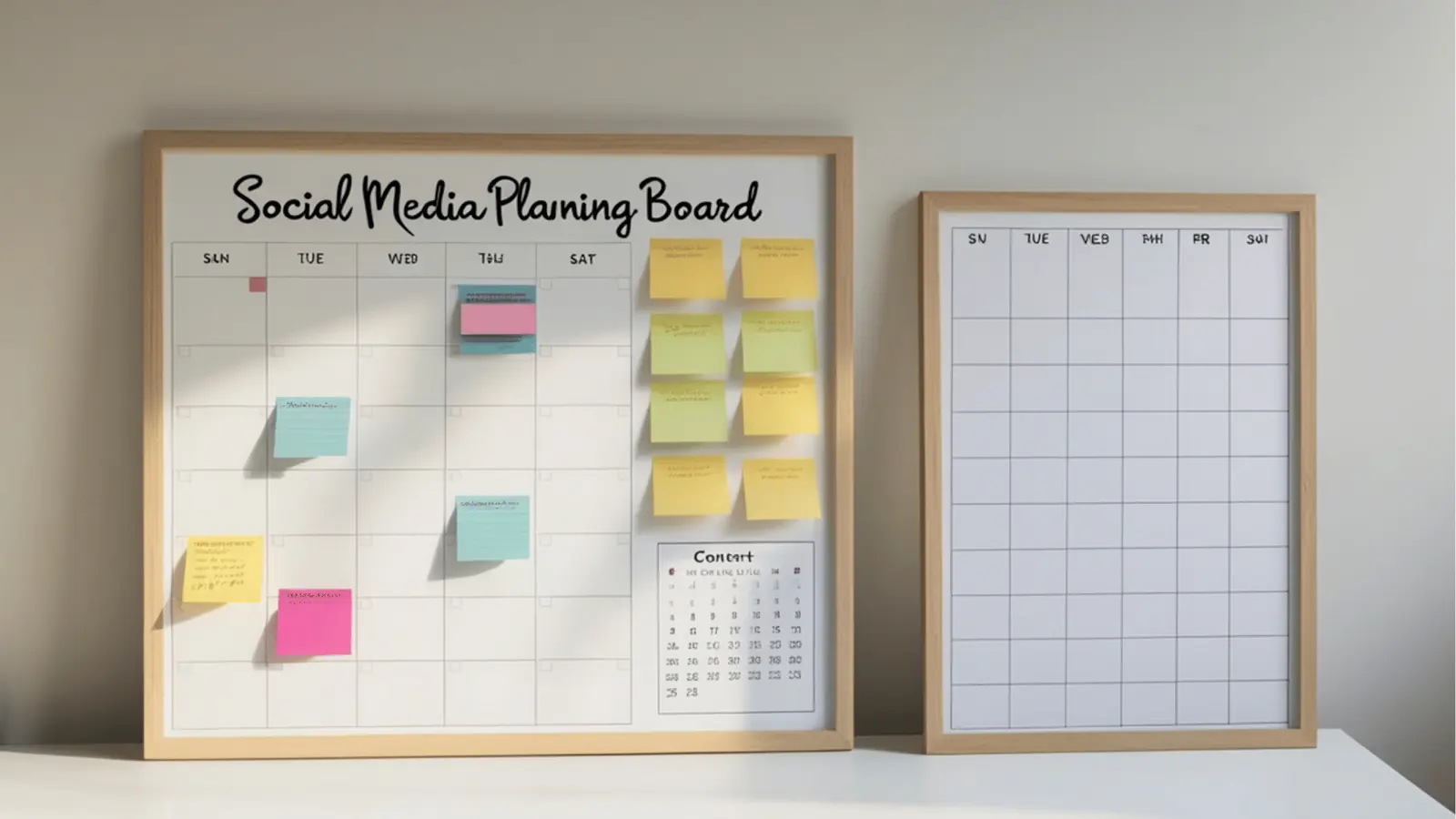
The biggest mistake I see? Treating the "Calendar" view as just a list of posts. It is actually your operational scoreboard. If you see a post labeled for London but the slot on your calendar looks like it belongs to Tokyo, you already know something is wrong before the post ever goes live.
Quick win: Next time you open Mydrop, check your current workspace timezone setting. If it does not match your primary operating market, update it immediately. It takes less time to fix the setting than it does to apologize for a single missed campaign launch.
Conclusion
At the end of the day, social media scale is rarely about how many posts you can create; it is about how many errors you can systematically eliminate. When you stop manual calculations, you stop creating "coordination debt" that your team has to pay back in rework, panic, and apologies. You cannot build a high-performance publishing engine if your fundamental inputs are prone to human drift.
Governance is not about restricting what people do; it is about building a foundation that makes the right thing the easiest thing to do. Once you trust that your tools handle the math, you finally get the space to focus on the content that actually moves the needle. A clean, automated system does not just save you five minutes per post. It saves you from the one mistake that ruins the entire campaign.